On a solid winter swell, Makaha can jump from playful shoulder-high peelers to 15-foot faces in a day, which tells you everything about this coast. You paddle out under dry west-side light, hear sets thump on the reef, and watch long lines bend in from the northwest. Get the swell, wind, and tide right, and the wave feels generous. Miss one detail, and Makaha humbles you fast.
Key Takeaways
- Target winter swells from November to February, especially N–NW groundswells around 300°–330° with 14–20+ second periods for Makaha’s best walls.
- Go when winds are light E to ENE offshore, ideally 5–10 knots; avoid strong trades or W/NW onshore winds.
- Time sessions around mid to high tide, especially an hour before or after high, for cleaner peel and less reef exposure.
- On bigger days, sit wider at the Outer Point, watch long lulls, and aim to exit toward the sandy zone near Clausmyers.
- Check NOAA buoys, Surfline or Magicseaweed, webcams, and lifeguard updates to confirm swell angle, period, crowd, and safety.

Surfing Lessons in Waikiki with Hawaii Firefighters
Learn how to surf with a local firefighter of Hawaii. Many off duty firemen enjoy their days off surfing and teaching others their passion out there i...
When Is Makaha Surf Best?
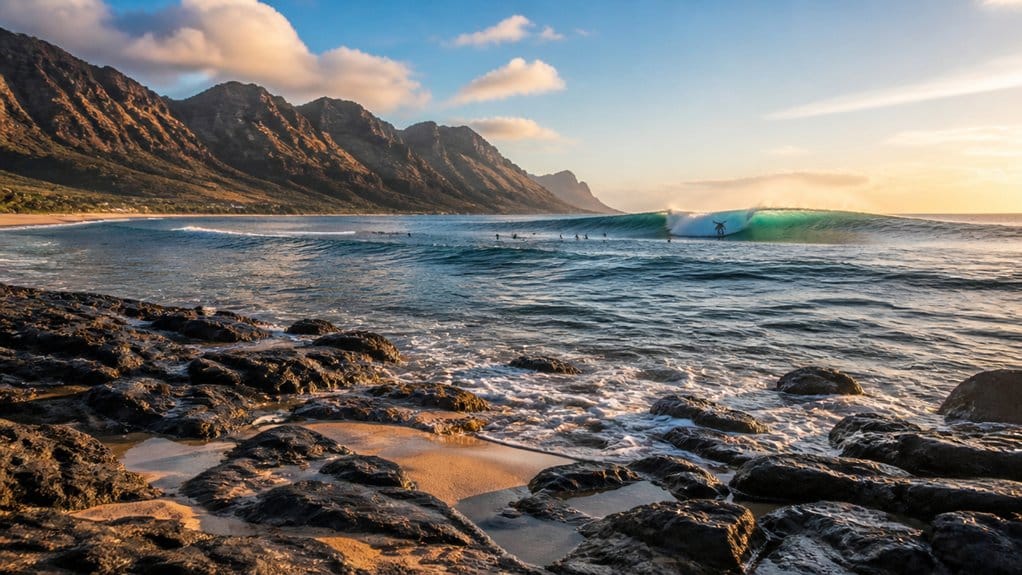
If you want Makaha at its best, winter is the window to watch. From November through February, you’ll see the most consistent energy roll in, and Makaha starts to show its real character. The lineup looks sharper, the water sounds louder, and every set feels like it means business.
You should watch forecasts closely before you go. Long-period swell over 14 seconds usually signals serious power, and that can turn an ordinary morning into a big wave day. Some winters stay playful with more manageable surf, while rare storm seasons push Makaha into giant territory that locals still talk about for years. If you want cleaner, more rideable days, look for moderate surf and sensible wind. Bring patience, sunscreen, and a little humility. The reef doesn’t grade on effort. Beyond the surf itself, Makaha Beach is known for its laid-back west Oahu charm and scenic shoreline.
Which Swell Direction Lights Up Makaha?
Winter gives Makaha the stage, but swell direction decides whether the show really turns on. You’ll score the best Makaha Wave when strong NW to WNW lines up with the reef. That angle lets the Bowl and Point peel into long right walls.
| Direction | What you’ll see | Result |
|---|---|---|
| NW | Reef lines up | Long rides |
| WNW | Outside peaks grow | Best shape |
| W | Break shifts out | More size |
| NNW | Sections shut down | More closeouts |
Aim for 14 to 20+ second swell periods. That’s when walls stand tall and organized. In big winters, North Pacific storms can send Makaha into 20 to 30+ foot faces. Think powerful, roaring sets and a lineup that suddenly looks very serious. More north usually means less magic. While you’re watching the lineup, give any basking green sea turtle at least 10 feet of respectful space.
What Wind Keeps Makaha Clean?
What keeps Makaha clean when the swell finally shows up? At Makaha Beach, you want light offshore winds from the east to northeast, ideally around 5 to 10 knots. Those breezes groom the face and leave the water glassy instead of choppy. You’ll hear that smooth hiss on the wall and see cleaner lines stack into the Point and Bowl.
Once east-northeast trades push past 15 to 20 knots, the surface starts to texture and the right sections can pinch shut. Northwest or west winds blow onshore here, so they usually make even good high surf feel lumpier and less predictable. For your first paddle out, pairing these wind calls with first session tips can help you pick a safer, cleaner window. On big winter swells, you might luck into a local calm spell from an eddy, but your safest bet is still light ENE to NE wind. That’s the magic window.
How Tides Change Makaha
At Makaha, you’ll notice high tide gives the reef more cushion, so the Point and Bowl peel cleaner and let you chase longer, smoother walls on big winter swells. Drop into low tide, and the lineup can turn lumpier and hollower fast, with waves dumping harder on the shallow reef and making every mistake feel expensive. If you time your session around the hour before or after high tide, you’ll usually give yourself a better shot at the good stuff and less time getting introduced to sharp lava. Nearby Nanakuli Beach Park brings more West Side vibes if you want to round out your beach day before or after checking Makaha.

Honolulu: Pacific Star Sunset Dinner Cruise and Show
Indulge in the original Pacific Rim cuisine, where each dish serves as a gateway to the rich flavors of the region...

Oahu: Atlantis Submarine Adventure in Waikiki
Explore Waikiki’s marine mysteries while diving more than 100 feet underwater in an air-conditioned, eco-friendly...

3 Zipline Adventure (Optional Waikiki Shuttle for 10am Tour)
Experience the thrill of soaring through the jungle on Coral Crater’s 3 Zipline Adventure. Glide across three exci...
High Tide Effects
When the tide fills in at Makaha, you’ll see the lineup slide closer to shore and the reef lose some of its sharp definition. That softer contour can mute the Point and Bowl, trimming peel and making sections feel shorter. On a big winter swell, even a small tide jump changes the whole mood at big Makaha.
| High tide clue | What you’ll notice |
|---|---|
| Lineup shifts shoreward | Takeoff zone creeps in |
| Reef looks smoother | Point and Bowl blur |
| Bigger surge arrives | Currents pull harder |
| Huge NW swell plus high tide | Outside sets dump fast |
Like Electric Beach, Makaha can demand extra awareness when currents strengthen around reefs and shoreline structure.
If you paddle out during solid north or northwest surf, stay alert. Higher water can turn promising peaks into heavy, closeout drops over deeper reef. You’ll hear more rumble, feel stronger sweep, and want extra caution.
Low Tide Changes
As the tide drops, Makaha shows its sharper side. At low tide, the reef gets shallower, and the Point, Bowl, Blowhole, and Inside Reef stand up fast. You’ll notice steeper faces, quicker drops, and waves that dump closer to coral. Even the Biggest Wave can feel more hollow and urgent.
- Takeoffs shift outside, so you’ll paddle several yards seaward.
- Wipeouts sting more because there’s less water over reef.
- Currents can tug you toward the Point or rocky shore.
- Big winter swells reward experienced riders on thicker boards.
You should plan your line early and know your exit before you commit. If you get caught inside, expect a longer swim and a louder soundtrack of exploding whitewater. Makaha stays beautiful, but low tide asks better timing and cooler nerves. As one of the standout Waianae beaches on Oahu’s west side, Makaha rewards surfers who respect both its beauty and its changing conditions.
How Makaha Breaks on Big Days
Watch Makaha on a giant northwest or north swell and the lineup changes shape in front of you. On truly big days, Makaha turns into a right point with four running sections: Point, Bowl, Blowhole, and Inside Reef. As the swell grows, those lines start to blur.
When period and direction click, you get huge peeling walls and a deep Bowl that can hold near 25 feet. Some waves break hundreds of yards wide, starting far outside where the blue water begins. The faces look glassy, then the lip suddenly detonates. You’ll notice cross-currents pulling hard, shallow reef near the Bowl, and the rocky edge by Clausmyers waiting for mistakes. Big strategy stays simple: wait for fewer, larger sets, commit to a deep drop, ride plenty of board, and expect a long, churning swim back. For a different North Shore-style escape, Turtle Bay Oahu is another spot worth keeping on your radar.
Where to Sit in the Makaha Lineup
Once you understand how Makaha breaks on size, lineup position starts to make sense. On big northwest swells, you’ll want the outer Point, just seaward of the reef edge where the blue water starts and the longest rights begin to peel. If you want heavier, hollower waves, edge a few board lengths farther out and right of the Peak so you don’t get sucked into the Bowl. On giant days, never forget that veterans often sit wide and deep, waiting patiently rather than scrapping inside.
At Makaha, the smart sit is wide and patient, near the blue-water Point, not clawing inside toward the Bowl.
- Blue water marks the sweet spot at Makaha
- The reef edge feels sharp and alive beneath you
- Inside lines look easier but can turn ugly fast
- Locals on longboards often show the safest zone
Like Pipeline on Oahu’s North Shore, Makaha rewards patience, local awareness, and a healthy respect for powerful Hawaiian surf.
If you can’t reach the Point, choose the shoulder-to-inside reef and respect established zones always.
Still comparing Makaha Surf?
Ask for tour ideas, hotel suggestions, or a simple trip plan that combines both.
Trip Helper
How to Read Makaha Sets
You’ll read Makaha best when you track how the sections wake up and how the swell angle bends them, because this break often builds later into the morning on strong North or NW pulses. Watch where the Point, Bowl, Blowhole, and Inside Reef start linking up, and notice when bigger days push the takeoff far outside the usual reef. If the faces stay smooth and peel with purpose, you’ve got a real set on your hands. Comparing Makaha’s timing with the Oahu North Shore can help you understand how different coastlines respond to the same North or NW swell.
Section Timing
Usually, Makaha tells you what kind of day it wants through the set rhythm. During winter months, you’ll often see a steady morning build, then the biggest pulses arrive late morning. That timing is part of Makaha surf history, and it rewards patience. Big sets usually stack in groups. A large lead wave may bait you, but the trailing one can stand taller if you’re ready.
- At the Point, you’ll spot cleaner early waves sliding in with shine.
- At the Bowl and Inside Reef, later sections hit thicker and meaner.
- On huge days, the break starts way outside where blue water darkens.
- A low rumble and glassy walls mean the next set could get serious.
Like Shark Cove Beach, Makaha demands that visitors understand ocean conditions before getting too comfortable near the water.
Paddle out early, sit wider than usual, and commit only when your gear and nerve match.
Swell Direction Clues
A compass helps here. Makaha lights up when strong N to NW groundswells hit from about 300° to 330° true. That angle lets waves wrap the Point and Bowl and peel with purpose, unlike plenty of North Shore surf that just heaves and runs.
You should also watch the period. Long pulses at 14 to 18 seconds or more usually mean cleaner walls that hold shape across the reef. If the sea stays glassy, even with size, you’re likely looking at rideable sets. If it turns choppy or onshore, expect closeouts.
Notice where each set first breaks. When waves start detonating outside the usual blue-water line, swell is extreme and takeoff zones shift. Track the interval and currents, then choose a deeper, safer paddle-out with better timing. For comparison, North Shore Oahu is known for must-see beaches, food stops, and quick sights where surf energy can look very different from Makaha.
Which Board Works Best at Makaha?
Pick the right board at Makaha and the whole wave starts to make more sense. On typical days, you’ll feel best on a 9 to 11 foot log. It gives you paddle power, glide, and useful longboard tuning for those peeling walls. When winter swells jump, step up to a heavy 11-footer with volume, solid board construction, and a scooped nose for pearling prevention on steep takeoffs.
- Small to medium surf rewards a stable longboard and smooth trim
- Big days call for fewer, larger boards with strong paddle speed
- Experienced surfers can ride 8 to 9 foot step-ups or sharp shortboards
- Extra thickness and dependable fins help you hold faster, hollower sections
Like Waimea Bay, Makaha can swing from manageable surf to powerful winter waves, so match your board and experience level to the day’s conditions.
You’ll hear the sets rumble outside, see dark blue bumps stack up, and know your board choice really matters today.

Pearl Harbor Complete Experience Passport
Visit All 4 Museums in One day on this tour, tickets and admissions are included. See how the US entered into and en...

Pearl Harbor USS Arizona Memorial & Battleship Missouri
Visit USS Arizona and Battleship Missouri, as they represent both the beginning and the end of World War II. The acc...

Oahu: Roundtrip Shuttle From Waikiki to Dole Plantation & Haleiwa
Skip Circle Island and visit two of the most popular places to visit here on the Island of Oahu. Experience a unique...
How to Handle Makaha Reef and Currents
Before you paddle out at Makaha, scout the reef from shore and watch whether the Point, Bowl, Blowhole, or Inside Reef is lighting up. You’ll also want to track the cross-currents and that shoreward rip near the Point, because it can slide you a long way down the break before you know it. If the swell looks bigger than usual, sit wider than the normal lineup and plan your exit toward the sandy zone near Clausmyers, not the rocks. Like nearby Kaena Point, this exposed coast can bring strong sun, wind and tide-pool hazards, so pack protection and avoid wandering onto slippery reef between sessions.
Reading Reef Sections
Once you’re sitting outside at Makaha, the reef starts to read like a map with moving borders. Use reef markers, line choices, and visual cues to tell Point from Bowl, Blowhole, and Inside Reef before you paddle. On big northwest swells, those sections blur and the blue water line can mark the real outside.
- Point feathers first, with long walls and a wider shoulder.
- Bowl looks like a funnel, where committed drops matter and hesitation gets loud.
- Blowhole can appear suddenly down the line, throwing whitewater across your path.
- Inside Reef feels closer and shallower, with more texture under the surface.
Watch shoreline spectators, listen for lifeguard radio chatter, and note where experienced locals sit. Start from the safest entry during lighter current windows, then angle for the shoulder, not the dumping peak. If you’re driving up the coast after checking town or other breaks, plan around Waimea Bay parking because peak surf days can fill early and push visitors toward overflow options.
Managing Rip Currents
Reading the sections is only half the job at Makaha. You also need channel spotting and a calm read on the water. Scan for churning, discolored streaks, foam lines, or a glassy lane between breaking waves. Those rip channels can become your easiest path out and your safest route back in.
On big winter swells, the reef and bay can send you racing shore parallel toward Kaena Point. If a rip grabs you, don’t sprint for shore. Paddle diagonally along the beach toward a sand channel or the inside reef, then angle in. Before you paddle out, ask lifeguards and regulars about current landmarks like Clausmyers and the rocky point. Just as Pearl Harbor timing can make a visit smoother, choosing your paddle-out window around tides, wind, and crowd flow can make Makaha more manageable. In giant sets, use a smart flotation strategy. Ride enough board to rest, regroup, and avoid becoming tomorrow’s fish tale.
Who Should Surf Makaha?

Charge into Makaha only if you’ve already got solid big-wave experience or you’re a confident intermediate-to-advanced surfer who stays calm when the ocean gets loud. Here, local etiquette matters as much as skill. You need mental preparation for steep faces, rough hold-downs, and long swims over reef and shorebreak.
- Read the lineup first. Point, Bowl, Blowhole, and Inside Reef all break differently.
- Bring a serious gear checklist. On giant days, you’ll want a long, high-flotation board with plenty of nose scoop.
- Paddle out with trusted local partners when possible, or go when lifeguards are on duty.
- Respect closures and warnings during extreme swells. Makaha has a history of wild winter events.
Set against Makaha Valley, the break is part of a place shaped by deep history, natural beauty, and local culture.
If cross-currents, reef, and turbulent wipeouts sound shaky, save this wave for another day and come back stronger.
Can Beginners Surf Makaha Safely?
If Makaha sounds like a proving ground for experienced surfers, you’re right, but that doesn’t mean every day here is off-limits to beginners.
You can surf here safely on small-to-medium days if you stay on the inside and treat the place with respect. Skip winter northwest swell peaks, when outer breaks jump to 20 to 40 feet and the reef gets brutally shallow. You’ll want local guidance, a watchful lifeguard, or an instructor, and you should never paddle out alone. Avoid the Point, Bowl, and Blowhole, where currents pull hard and mistakes get expensive fast. Before you go, run an equipment checklist: longboard or foam board, reef booties, and reef-safe sunscreen. Check surf reports and tide, listen closely, and practice bailout techniques, because Makaha can change moods quickly and coral never forgives.
When Is Makaha Too Big to Paddle Out?
You’ll know Makaha is too big to paddle when storm swells shove the break far outside the reef, the Point and Bowl start closing out, and the lineup turns glassy but heavy with thick, dumping lips. If sets are peeling at roughly 20 to 25 feet or more on the outer reef, cross-currents are tugging hard, and rescue crews are staging on shore, that’s your cue to stay dry. On truly historic days, like Makaha’s giant north and northwest swells, you shouldn’t test your luck unless you’re built for brutal wipeouts, a long swim, and serious big-wave equipment. It’s a different setup from the Banzai Pipeline, whose famous surf spot sits on Oahu’s North Shore.
Warning Signs
When Makaha starts looking less like a lineup and more like open-ocean machinery, that’s your cue to slow down and read the signs. You’re not chasing glory here. You’re reading emergency signals and respecting real marine hazards before they turn your session into a rescue.
- Kaena Point has waves washing over the road, and storm-scale north or northwest swell is lighting up the coast.
- Sets are closing out the North Shore while Makaha’s Point and Bowl detonate far outside the normal reef line.
- Police barricades appear, lifeguards stage trucks onshore, or radio chatter mentions shoreline evacuation and partial evacuations.
- Cross-currents drag swimmers toward Kaena Point, locals stay home, and someone mentions helicopters with a straight face.
If you’re planning a Waianae Coast day trip, check ocean and road conditions before committing to Makaha when big swell is running.
If you see that mix of size, distance, and official concern, don’t paddle out.
Historic Outer Limits
Although Makaha has a heroic reputation, its outer limit arrives fast once storm-scale north or northwest swell pushes the lineup far beyond the usual reef. You feel those historic limits when long-period energy turns the sea glassy yet menacing and outer peaks start detonating hundreds of yards outside the normal zone.
For most paddlers, the line is around 25-foot surf holding shape and throwing fast hollow walls at the Bowl or Point. Past that, you won’t paddle into the drop, and getting caught inside becomes a brutal lottery. That’s how storm lore was built in 1969, when outer breaks ran 30 to 50 feet. If roads close, radios order evacuations, or whitewater washes over Kaena Point, stay dry. When Makaha is maxed out, Oahu’s North Shore viewpoints can be a safer way to watch the island’s biggest waves from land. Unless you have giant boards, elite skill, and rescue backup, Makaha’s telling you no today.

Oahu 5-in-1 Deluxe Cruise: Turtle Snorkeling & Ocean Activities
In addition to the amazing turtle snorkeling in the beautiful waters of Waikiki, our 135-passenger boat offers a uni...

Oahu: Germaine's Luau
Come visit us at Germaine's Luau, where you will experience a traditional Hawaiian Luau on our beachfront property o...

Oahu: Full or Half Day Grand Circle Island Tour
Choose from two exciting ways to experience Oahu's top attractions, scenic beauty, and local culture.Option 1: Dol...
How Locals Time Waves at Makaha

Often, locals at Makaha time their sessions by reading a few clear signals instead of chasing every lump on the horizon. You watch seasonal patterns first. Long-period NW to NNW swells, around 15 to 20 seconds, wrap the point best. On giant days, mid to high tide helps waves peel farther and softens shallow reef consequences.
- You study the blue-water edge when sets start breaking far outside the inside reef.
- You count long lulls, then swing on the third or fourth set for cleaner walls.
- You notice lifeguard movement, radio warnings, and shorebreak pounding with a low thunder.
- You respect local etiquette and spot access, because timing also means knowing when not to paddle.
If Kaena Point road washes over or La Jolla and Cove roar, you know monster timing has arrived.
Where to Check Makaha Surf Conditions
Reading Makaha well starts before you wax up, and the best check is a mix of screens, charts, and local voices. Start with surf forecasts like Surfline, Magicseaweed, or Beaches. You’re looking for NW-to-N swell angles, solid size, and long-period energy.
Next, pull tide and wind charts. Makaha likes a mid to incoming tide, and light ENE or offshore winds can turn the bay glassy. Check buoy readings from North Pacific NOAA stations too. When you see 15 to 20-plus seconds with a strong NW pulse, pay attention.
Then use local webcams and Facebook surf groups for real-time views of the lineup, crowd, and shorebreak. Finish with lifeguard updates or a quick call to a surf shop. They’ll tell you what’s actually rideable today. If you’re checking surf on Oahu, knowing where Diamond Head sits can also help orient you to the island’s better-known coastal landmarks.
Common Makaha Surf Mistakes to Avoid
Before you paddle out at Makaha, know that the bay punishes small mistakes fast. On big northwest days, poor line selection can put you too deep at the Bowl or Point, trapped inside and dragged across reef by ripping currents. Do your equipment checks before wax hits deck. A board with real paddle power, flotation, and nose scoop matters here.
- Scout tide, reef depth, and your exit strategies before suiting up.
- Paddle wide outside the peak instead of charging straight into closeouts.
- Wait for the right set. Don’t swing at every wave on giant days.
- Ask locals about priority, hazards, and any lifeguard warnings.
The same mindset that keeps visitors safe at the North Shore’s Banzai Pipeline applies here: watch first, understand the break, and don’t underestimate powerful reef surf.
You’ll surf smarter when you respect the shallow shelf, listen to the lineup, and accept that two great waves can beat ten bad ideas.
Frequently Asked Questions
Are Surf Lessons Available Near Makaha Beach?
Yes, you’ll find surf lessons near Makaha Beach year-round, including Beginner clinics, Private coaching, and Adaptive programs. You’ll get safety briefings, gear, and local guidance, though instructors may cancel lessons when surf gets too dangerous.
Do I Need a Permit to Surf at Makaha?
No, you don’t need a permit to surf Makaha recreationally. But here’s the catch: if you organize a special event, run lessons, or enter protected areas, you’ll likely need commercial permits. Check current county rules first.
Where Can I Rent Surfboards in Makaha?
You can rent surfboards from beachfront shops in Makaha, nearby Waianae, or Kapolei outfitters. Ask local shapers for recommendations, reserve overnight rentals early in winter, and confirm leash, wax, fins, plus longboard or big-wave options.
Is Parking Easy to Find at Makaha Beach?
No, you won’t usually find parking easily at Makaha Beach, especially on big surf days. Arrive before sunrise, use street parking carefully, check meter locations, and consider shuttle access or carpooling when lots fill up.
What Should I Bring for a Makaha Surf Session?
Bring a sturdy longboard or gun, reef booties, and strong leash. Prioritize Leash selection, Reef protection, and Hydration strategy: pack high-SPF reef-safe sunscreen, water, wax, phone, and maybe a helmet for bigger winter days.
Conclusion
At Makaha, a 16-second northwest swell can turn an ordinary morning into long, ruler-edged walls that seem to run forever. You’ll score more when you watch the wind, wait through the set, and paddle out with a plan. Check the cams, glance at the flags, and note the lifeguard tower before you wax up. Then listen for that deep boom on the reef, stroke wide, and let patience do the work.
Surfing Lessons in Waikiki with Hawaii Firefighters
Learn how to surf with a local firefighter of Hawaii. Many off duty firemen enjoy their days off surfing and teaching others their passion out there i...