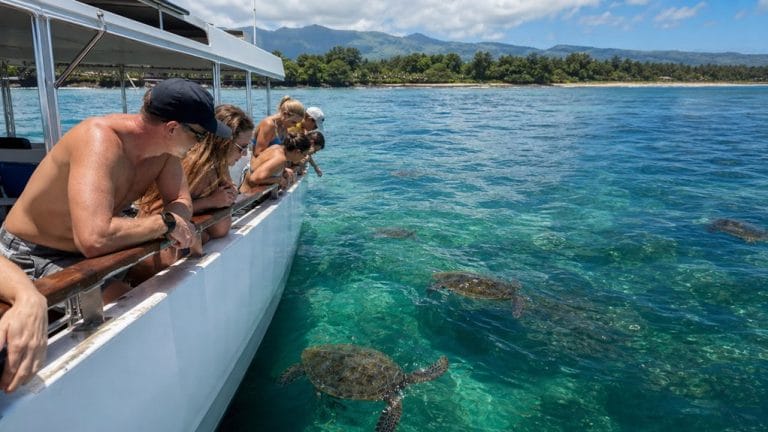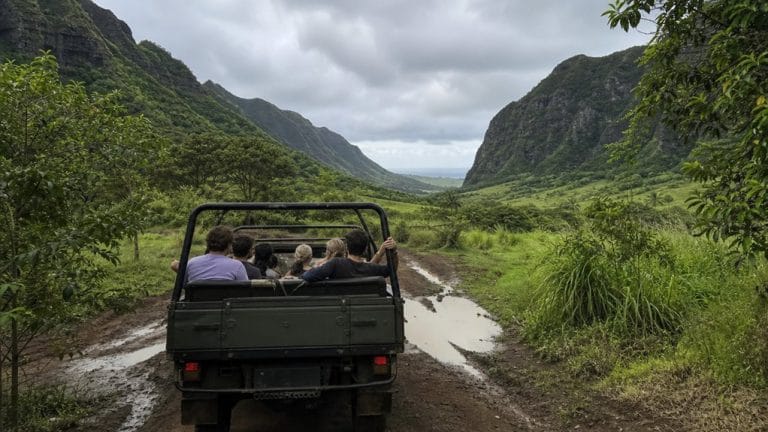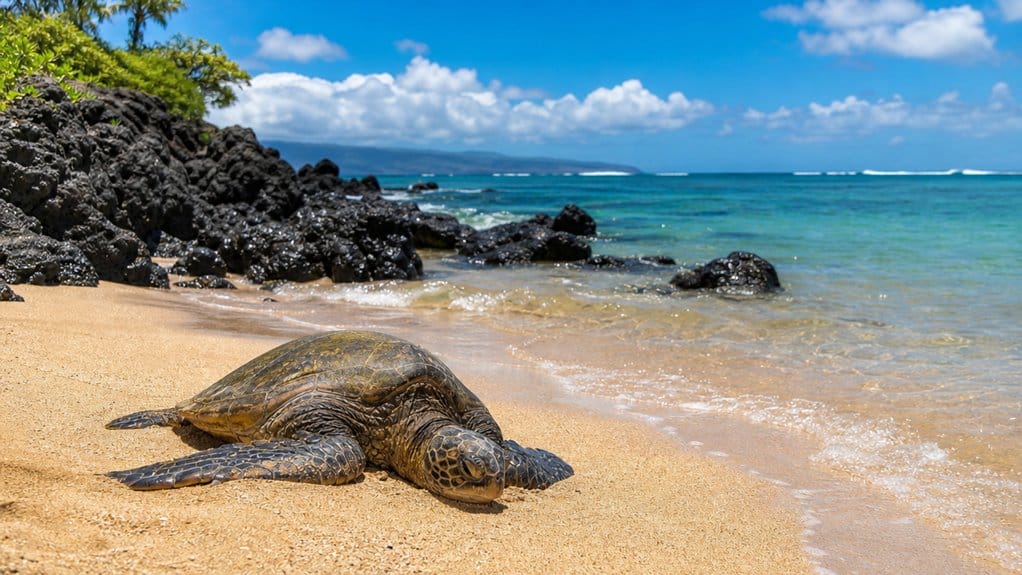
If you want your best shot at seeing sea turtles on Oahu, start where the island slows down and the surf does the talking. You can watch honu haul out on North Shore sand at Laniakea, or slip into clear water at Hanauma Bay and scan the reef edge for a slow green shape. Go early, keep your distance, and bring patience. The best spots aren’t all obvious, and that’s where your plan gets interesting.
Key Takeaways
- Laniakea Beach on the North Shore offers Oahu’s best shore sightings, especially 6–8 AM when turtles often bask on the sand.
- Hanauma Bay and Kailua Beach’s outer reef are top snorkeling spots, where turtles are usually seen grazing in deeper channels and reef edges.
- Sharks Cove and Turtle Town offer excellent in-water turtle encounters, with calmer summer mornings providing the clearest and safest conditions.
- Summer, especially May through September, and early mornings generally bring calmer water, better visibility, easier parking, and stronger turtle-viewing odds.
- Stay at least 10 feet away, never touch or feed turtles, and follow rope barriers, posted rules, and volunteer or ranger guidance.

Waikiki Turtle Snorkeling & 6-in-1 Adventure with Free Pickup
Experience a special turtle snorkeling adventure in Waikiki aboard a smooth and comfortable catamaran. This all-in-one 6-in-1 ocean tour includes snor...

Hanauma Bay Snorkeling from Waikiki
Experience Hanauma Bay the easiest way with Waikiki’s most reliable Hanauma Bay shuttle. Our early 5:40 AM pickup...

Oahu: Grand Tour Around Island with Snorkeling
Come join on a circle island adventure led by some of Hawaii’s most knowledgeable local guides and experience brea...
Waikiki: Turtle Canyon Snorkel Adventure on Oahu
Enjoy an exclusive snorkeling adventure in Waikiki with small group sizes for a comfortable and VIP experience. You...
Where Are the Best Turtle Spots in Oahu?
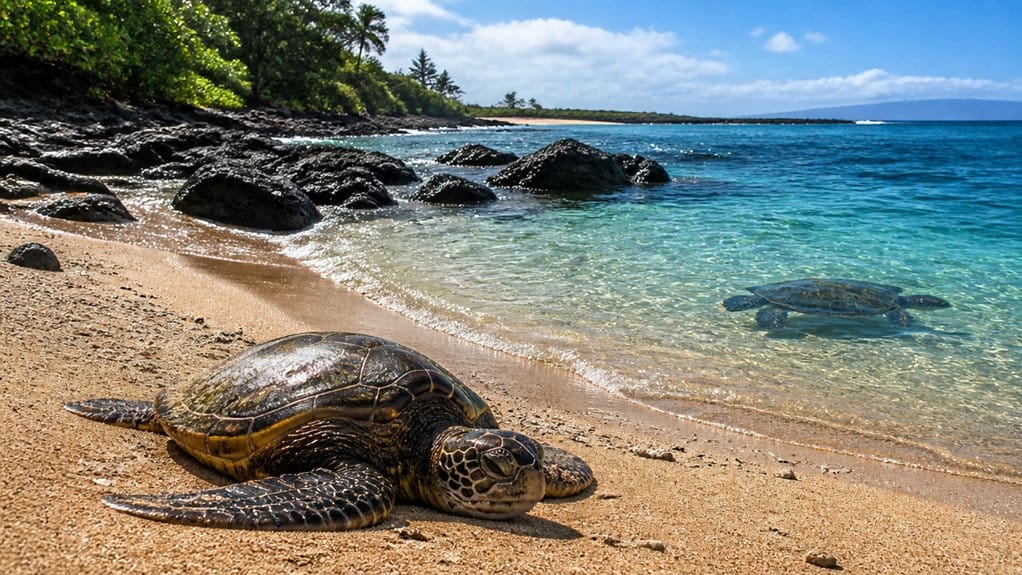
On Oahu, turtle spotting feels a bit like following a quiet island treasure map. You can trace it from Laniakea Beach, where Hawaiian green sea turtles haul onto the sand, to Turtle Town off Waikiki, where morning boat trips reach a reef cleaning station below clear blue water.
For a quick overview, many local guides highlight the 7 best places to see turtles on Oahu before you choose your route.
You’ll find more chances at Hanauma Bay, where calm channels along the outer reef often reveal turtles grazing. Just reserve ahead and watch the required video before you go. At Sharks Cove, summer brings gentler water over lava ledges where honu feed and tuck into rocky pockets, so reef shoes help. If you want a wilder scene, head to Kaʻena Point early. The trail feels raw and windy, the water flashes deep cobalt, and crowds barely whisper nearby.
Which Oahu Beach Has the Best Turtle Odds?
If you want the strongest beach odds, you’ll usually start at Laniakea on the North Shore, where honu often sprawl on the sand and the early light makes an arrival before 8 AM worth the alarm. Hanauma Bay can reward you too, but you’ll usually need to snorkel beyond the shallows to spot turtles cruising the reef instead of napping on shore. Your chances also shift with the season, since calm summer water opens up more reef-edge viewing and turns a good turtle morning into a very lucky one. Many visitors know Laniakea Beach as Turtle Beach because it’s one of Oahu’s classic North Shore spots for seeing honu resting near the shoreline.
Laniakea Beach Advantage
Laniakea Beach earns its “Turtle Beach” nickname for a reason. On Oahu’s North Shore, Laniakea Beach is your best bet for spotting Hawaiian green sea turtles hauled onto the sand. Nearby reef algae feeding grounds keep turtles returning, so this turtle beach feels unusually reliable.
For the strongest odds, arrive early and watch them bask between 6–8 AM. You’ll usually find easier parking then, plus turtle ambassadors setting up ropes and sharing sighting updates. Stay at least 10 feet back because touching or crowding honu is illegal. Bring polarized sunglasses or a zoom lens so you can see shell patterns and sleepy flippers from outside the barrier. In summer, calmer water can help if you snorkel. In winter, shore sightings still happen, even with louder surf nearby often. After your turtle stop, nearby Haleiwa makes it easy to find places to eat within walking distance.
Hanauma Bay Chances
Often, Hanauma Bay gives you some of Oahu’s best in-water turtle odds, especially when you want to snorkel rather than wait for a beach basking show. Inside this protected marine preserve, you’ll usually spot Honu cruising over clear reef and grazing algae near deeper channels.
- Reserve online early for entry.
- Watch the mandatory educational video.
- Arrive before parking fills, often by 9 AM.
- Swim beyond the inner reef while snorkeling.
Your best chances at Hanauma Bay come near the outer reef, where sea turtles forage in blue-green water above coral ledges. Onshore lounging happens less often here than at Laniakea, so keep your eyes underwater. Give turtles 10 to 15 feet of space, skip touching or feeding, and use reef-safe sunscreen. Hanauma Bay is closed Mondays and Tuesdays, with public entry generally available Wednesday through Sunday from 6:45 AM to 1:30 PM under its conservation management rules. Your reward might be a calm, unhurried glide past your mask.

Oahu: Cage-Free Shark Swim on the North Shore
Experience the ultimate Oahu shark dive with this North Shore shark tour family. Swim cage‑free with sharks in the...

Pearl Harbor, Dole, and Polynesian Cultural Center from Waikiki
Join us on an unforgettable day at three of Oahu’s most popular attractions: Pearl Harbor, Dole Plantation, and Po...

Oahu: Kualoa Ranch UTV Raptor Tour
Traveling with family and friends? You can enjoy the fantastic Multi-passenger UTV Raptor experience with your entir...
Seasonal Viewing Factors
While no beach can promise a turtle on cue, Oahu does have clear patterns that can tilt the odds in your favor. For shore sightings, Laniakea Beach leads the pack. In calm summer viewing months, especially May through September, you’ll often have your best luck between 6 and 8 AM, when basking honu use the sand like a sun deck.
If you want to snorkel instead, Turtle Canyons and Electric Beach boost your chances year-round. Morning water is usually clearer and calmer, so an early morning trip helps. Winter surf can shrink turtle time on shore and make North Shore stops rough or unsafe. That’s why haul‑out beaches matter in summer, while warm-water spots stay reliable across seasons. Late afternoon can also work, but before 8 AM still gives you the strongest odds overall. No matter the season, keep a respectful distance and choose safe turtle snorkeling practices so honu can rest, feed, and swim without stress.
Why Laniakea Beach Is the Best Shore Spot
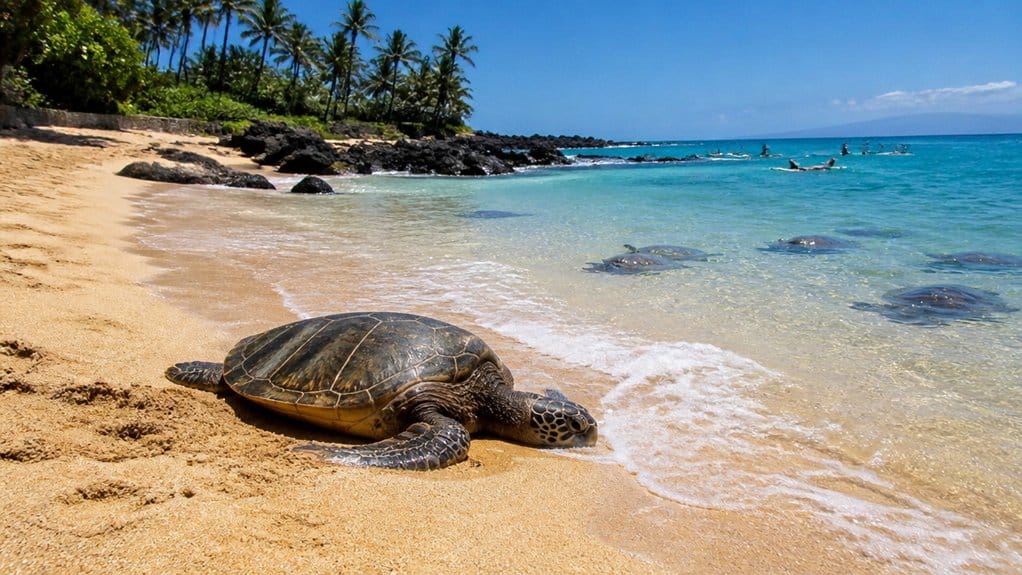
At Laniakea Beach, you’ve got your best shot at seeing honu basking right on the sand, especially in calm summer weather when the shore feels still and the water stays clear and shallow. You can spot them easily from shore, and if you arrive before 8:00 AM, you’ll usually find parking, fewer people, and volunteer ambassadors setting up rope lines and sharing the rules. Keep your 10-foot distance and check surf conditions first, because when the waves get rowdy, the turtles often skip the beach too. If you’re planning more Oahu activities after turtle watching, Ko Olina Golf Club is another island favorite known for its scenic charm.
Reliable Basking Sightings
Usually, Laniakea Beach gives you Oahu’s most dependable shore sighting of Hawaiian green sea turtles, with honu hauling onto the sand to bask on many mornings. On the North Shore, you’ll often spot basking turtles after early feeding in shallow water rich with reef algae.
- Arrive from 6:00 to 8:00 AM for your best odds.
- Early light also helps you find parking before crowds build.
- Lower surf makes sea turtles more likely to stay ashore.
- Keep the recommended viewing distance of 10 feet.
Volunteer ambassadors often rope off resting honu and answer questions. Follow their lead. In Oahu, it’s illegal to touch, harass, or ride sea turtles, so bring a zoom lens instead. You’ll get better photos, and the turtles won’t give you side-eye. As one of the best turtle beaches on Oahu, Laniakea is a top choice for travelers hoping to see honu from shore.
Easy Shore Viewing
Often, Laniakea Beach gives you the easiest and most reliable shore view of Oahu’s honu, with Hawaiian green sea turtles stretched on the sand or grazing on the reef just offshore.
For simple shore viewing, few places match Laniakea Beach. You can often spot sea turtles from the sand without needing fins, perfect timing, or much luck. On calm days, the water turns glassy and you may see dark shells drifting over the reef like slow moving stones. On shore, turtle ambassadors set rope barriers and answer questions, so the scene feels organized instead of chaotic. Follow their lead, keep distance, and never block a turtle’s path to the ocean. Bring a zoom lens rather than stepping closer. If you want an easy, memorable turtle stop, arrive early and let the beach do the work. Nearby Haleiwa adds surf town charm and local culture to a North Shore turtle-viewing day.
Still comparing Oahu Sea Turtle Viewing And Turtle Canyon Snorkeling?
Ask for tour ideas, hotel suggestions, or a simple trip plan that combines both.
Trip Helper
Early Arrival Advantage
If you get to Laniakea Beach between 6:00 and 8:00 AM, you give yourself the best shot at seeing honu stretched across the sand before the day gets noisy. That window rewards you with morning calm, softer light, and a better chance at parking along Kamehameha Highway before spaces disappear.
- You may catch turtles basking before crowds gather.
- You can hear briefings from volunteer ambassadors and respect ropes.
- You get cleaner photos with polarized sunglasses or a zoom.
- You may enjoy better snorkel visibility nearby in calm summer water.
If your trip also includes Kaneohe Bay, remember that the Kaneohe Sandbar changes with the tide and is best planned around calmer morning conditions.
Where to Snorkel for Turtles at Hanauma Bay
Head out early at Hanauma Bay, and you’ll give yourself the best shot at spotting honu in the water instead of just hearing about them later. This protected preserve sits inside a volcanic cone, and the best snorkel zone for turtles isn’t the sandy edge. You’ll want the deeper channels and outer reef, where honu forage.
| Spot | Why it works |
|---|---|
| Inner reef | Shallow, busy, fewer turtles |
| Deeper channels | Better visibility, more feeding areas |
| Outer reef | Common honu foraging zone |
| Entry rules | Reservation and mandatory educational video |
Arrive before 9 AM for parking and calmer water. Reservations open 2 days in advance at 7:00 am Hawaii Standard Time, so set an early alarm if you want a morning slot. Use reef-safe sunscreen, stay in designated areas, and keep 10 to 15 feet away. At Hanauma Bay, patience pays off. You’re searching blue water, coral texture, and a sudden turtle glide.
Is Sharks Cove Good for Turtle Snorkeling?
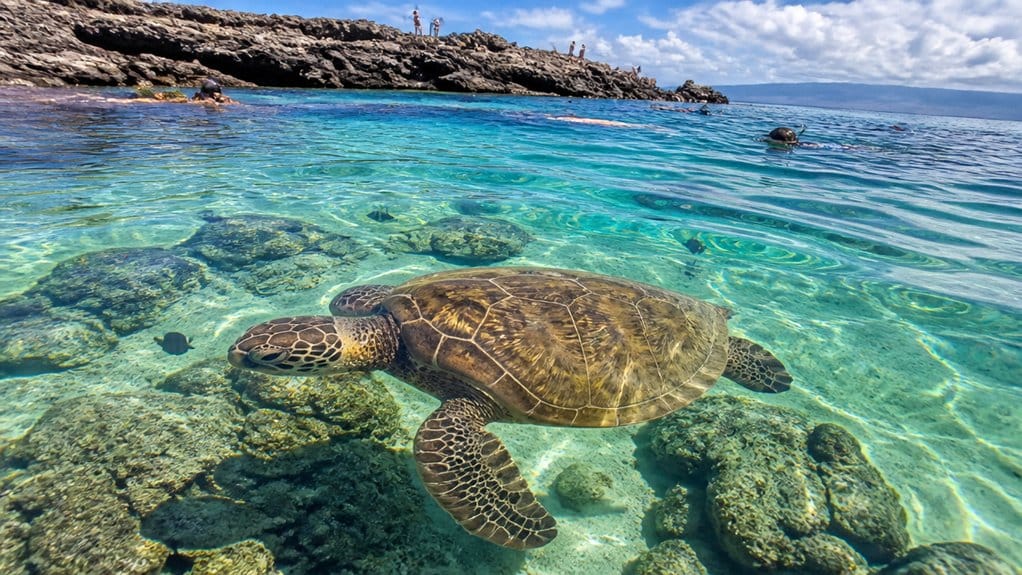
Why do so many snorkelers rate Sharks Cove for turtle sightings? On Oahu’s North Shore, Sharks Cove gives you clear water, lava ledges, and caves where Hawaiian green sea turtles feed and shelter. If you want turtle snorkeling with drama, this conservation district delivers.
- Visit from May to September for calmer, safer water.
- Wear reef shoes because the entry is shallow, rocky, and slippery.
- Arrive early since parking disappears fast on busy mornings.
- Follow turtle-viewing etiquette and stay 10 feet away.
You’ll enjoy Sharks Cove most if you’re a confident swimmer. The terrain gets uneven, and some spots turn deeper than they first look. A guide or local advice helps. Use reef-safe sunscreen, keep your distance, and let the turtles cruise like the true locals they are. There are no lifeguards at Sharks Cove, so check conditions carefully before entering.
Can You See Turtles at Kaʻena Point?
Yes, you can often see turtles at Kaʻena Point, especially in the coastal waters near Oahu’s wild western tip. At Kaʻena Point State Park, honu and other Hawaiian green sea turtles regularly cruise the shoreline, and the setting feels rugged, quiet, and far from the usual crowds.
You’ll earn the view with a trail hike of 2.5 miles each way from Keawaʻula or Mokuleʻia. The path is exposed and uneven, so start early, carry 2 to 3 liters of water, wear sturdy shoes, and bring sun protection. In December in Waikiki, winter weather is typically warm but can bring occasional showers, so checking the forecast before a coastal outing is smart. Kaʻena Point is also a protected Natural Area Reserve, which means you should pack out trash and follow posted guidance. If you spot turtles, give them at least 10 feet of space. Don’t touch, chase, or play underwater paparazzi.

Honolulu: Pacific Star Sunset Dinner Cruise and Show
Indulge in the original Pacific Rim cuisine, where each dish serves as a gateway to the rich flavors of the region...

Oahu: Atlantis Submarine Adventure in Waikiki
Explore Waikiki’s marine mysteries while diving more than 100 feet underwater in an air-conditioned, eco-friendly...

Oahu's Stunning Views: Half-Day Scenic Tour with 7 Lookouts
Bless your eyes with Oahu's most beautiful wonders. We take you to the MOST IMPRESSIVE SCENEARIES of this island on...
When Is Makapuʻu Best for Turtle Spotting?
Usually, Makapuʻu is best for turtle spotting in the two- to three-hour window around low tide, when honu slip into the tidepools and rocky coves to graze on exposed algae.
To boost your odds, plan smart:
- Go near sunrise for calmer water and fewer people.
- Aim for summer, especially May through September.
- Check surf forecasts before you head out.
- Wear water shoes on the sharp, slick lava rock.
At Makapuʻu, early light often reveals clear pools, green algae, and the dark shapes of turtles cruising slowly through the tidepools. The nearby Makapuʻu Point Lighthouse Trail is also a popular paved coastal hike with sweeping ocean views, making it an easy add-on before or after turtle watching. Winter can bring rough swell and strong trade winds, so access gets trickier fast. Even on a good morning, sudden waves can surprise you. Keep a respectful distance and let the turtles do their quiet breakfast thing.
See Turtles at Waiʻalae Beach Park
Patience pays off at Waiʻalae Beach Park, where East Oahu’s lively nearshore reef draws Hawaiian green sea turtles in to graze on algae just beyond the sand. If you go on weekday mornings before 10 AM, you’ll usually find easier parking, gentler water, and better odds of seeing green sea turtles near the reef edge.
Enter through the main sandy beach and skip the rocky sections, since lava rock can slice feet and damage coral. Once you’re in, snorkel reef edge and swim parallel to it rather than straight out. That track gives you a better view of feeding honu while helping you keep a respectful 10 feet away. Waiʻalae is one of several top snorkel spots around Oahu where patient swimmers may encounter turtles in their natural habitat. Wear a rash guard, apply reef-safe sunscreen 20 minutes early, and bring a buddy. Turtles appreciate polite company, and frankly, so does your future self.
Is Makaha Beach Good for Turtle Sightings?
Often, Makaha Beach rewards early risers with some of Oahu’s best turtle watching. On the waianae coast, you’ll often spot honu offshore where they graze near snorkel reef edges. Your best odds come with early morning visits before 10 AM, when water stays calmer and visibility sharpens.
- Check surf reports first.
- Ask lifeguards about recent sea turtle sightings.
- Snorkel reef edges and deeper channels.
- Bring reef-safe sunscreen and reef shoes.
Summer usually gives you clearer, safer conditions at Makaha Beach. Winter can turn rough fast, with strong waves that lower visibility and raise risk. Known for the charm of Makaha Beach, this west Oahu spot also makes a rewarding stop for scenery between turtle sightings. Keep your distance from turtles and let them cruise by on their own schedule. If luck’s with you, you’ll catch a slow green shape drifting through blue water like an old local.
Can You See Turtles at Kailua Beach?
You can spot Hawaiian green sea turtles at Kailua Beach now and then, but you’ll need a little luck since sightings aren’t as reliable as at Oahu’s better-known turtle spots. Your best shot comes on calm summer mornings before 10 AM, when the water turns glassy and turtles may forage near the outer reef edge. Kailua Beach also has its top calm-day spots for snorkeling when conditions are gentle and visibility improves. Bring a snorkel or binoculars to scan farther offshore, and if you see one, give it at least 10 feet of space and let the turtle enjoy its breakfast in peace.
Turtle Sighting Chances
Sometimes Kailua Beach rewards early risers with a glimpse of a Hawaiian green sea turtle, especially during the calm summer months, but sightings here aren’t as reliable as at Laniakea or Turtle Canyons.
You’ll boost your odds by thinking like a patient scout:
- Go in the early morning, when light winds smooth the water.
- Try snorkeling toward the outer reef where turtles graze on algae.
- Ask lifeguards about recent sporadic sightings before you head out.
- Keep 10 feet (3 meters) away if you spot one.
Kailua Beach can feel quiet at dawn, with pale water, soft trade winds, and long views offshore. Checking ocean conditions before you swim or snorkel can help you choose a calmer, safer time to look for turtles. Some days you’ll see nothing but glittering swell. Other days, a turtle surfaces once, then slips under like a small green submarine. That’s part of the charm.
Best Snorkeling Areas
Out beyond Kailua’s bright shallows, the outer reef gives you the best shot at spotting a honu. At Kailua Beach, the offshore reef system sometimes draws Hawaiian green sea turtles to graze near the deeper edge. You’ll want an early-morning start, ideally between 6 and 8 AM, when the water looks clearer and the beach still feels hushed.
For snorkelers, the move is simple. Swim past the shallow lagoon toward the deeper reef edge, and enter through sandy patches to protect coral and your toes. Wear a rash guard and reef-safe sunscreen, then maintain distance if a turtle appears. Ten feet is the rule. Ask lifeguards or local vendors about recent sightings before you head out. If luck runs thin, pair Kailua with nearby Lanikai or a guided tour. Kailua is also a popular launch point in many Oahu kayaking routes, so watch for paddlers when swimming near the reef.
When Is the Best Time to See Turtles?
Often, the best turtle days on Oahu come when the ocean looks relaxed and the shoreline feels quiet. You can spot turtles year-round, but summer months usually give you calm seas and better in-water visibility. For basking, aim for early morning or late afternoon, when the sand is cooler and beaches feel hushed.
- Arrive at Laniakea Beach by 6 to 8 AM for reliable on-sand sightings.
- Book morning snorkel tours to Turtle Canyons for strong offshore odds.
- Skip rough winter days, when North Shore surf cuts visibility and access.
- Check surf reports and lifeguard updates before you go.
If you stay flexible and time your visit well, you’ll boost your chances. A guided turtle snorkeling trip can also help you find safe viewing spots while keeping respectful distance from the animals. Bonus: fewer crowds mean more waves, less chatter, and no elbow duels today.
What Are Oahu’s Turtle Viewing Rules?
To watch Oahu’s sea turtles the right way, you need to stay at least 10 feet back and keep your hands and snacks to yourself. If you spot rope barriers or turtle ambassadors at beaches like Laniakea, follow their directions and never block a turtle’s slow trip across the sand or through the shallows. You’ll also protect the reef by using reef-safe sunscreen, moving calmly in the water, and not kicking up sand like an overexcited flipper. If you see a hooked, entangled, or injured turtle, call the NOAA Marine Wildlife Hotline at 1-888-256-9840 instead of trying to handle it yourself.

Parasailing Experience in Waikiki, HI
Experience the thrill of Oahu parasailing on this unforgettable 1-hour adventure from Waikiki. Soar up to 1,000 feet...

Waikiki Sunset Cocktail Sail on the Moana Catamaran
All aboard! There is no better place to be during Oahu’s magnificent golden sunsets than on our Waikiki Sunset Cru...

Pearl Harbor Complete Experience Passport
Visit All 4 Museums in One day on this tour, tickets and admissions are included. See how the US entered into and en...
Keep Legal Distance
- It’s illegal to touch or crowd them, even for a photo.
- On shore, do not block path to the ocean, especially during nesting season.
- Use no flash photography and skip bright lights, loud voices, and sudden moves at night.
- Always follow posted rules and ranger or volunteer instructions at protected sites.
If you also encounter a Hawaiian monk seal, keep at least 50 feet away and report sightings to the NOAA Marine Wildlife Hotline.
A calm turtle may look like a sleepy boulder with flippers, but it still needs room. Give it that, and you’ll watch responsibly.
Never Touch Or Feed
Even if a honu glides right past your mask or hauls out on the sand like a sun-warmed stone, don’t touch it or feed it. In Hawaii, it’s illegal to touch, harass, feed, or try to ride sea turtles under state law and the Endangered Species Act. That means don’t touch, even for a quick selfie moment.
Do not feed turtles, either. Snacks change wild behavior and can spread disease. You should maintain distance and keep at least 10 feet away on shore or in the water. If one swims toward you, back away slowly to maintain distance. It’s also smart to avoid flash and sudden moves. Never touch or feed, never chase, and never block a turtle’s path. Follow posted rules and volunteers. Use camera zoom or binoculars to observe turtles closely without approaching them. The ocean has enough drama without you.
Protect Reef Habitat
Protecting the reef means protecting the turtles, too, because honu depend on healthy coral and algae-rich shallows for food and shelter. Your choices in the water matter more than you might think.
- Use reef-safe sunscreens with zinc oxide or titanium dioxide, and let them soak in before you swim.
- For coral reef conservation, avoid touching or feeding turtles and stay 10 feet away on shore or underwater.
- Respect volunteer rope barriers at places like Laniakea and Kaʻena Point. They’re not decorations, and ambassadors expect you to listen.
- Do not block turtle access to the ocean. Keep gear off the sand, fill holes, and skip bright lights at nesting beaches.
If a turtle swims toward you, angle away to give it a clear lane instead of trying to follow or photograph it up close.
Also follow site rules, ranger advice, and orientation videos when required.
What Gear Helps You Spot Turtles?
If you want to spot more turtles with less squinting, a few simple pieces of gear make a real difference. Start with polarized sunglasses. They cut surface glare, so you can notice turtles cruising offshore or popping up to breathe from scenic pullouts.
For underwater views, bring snorkel gear and a waterproof snorkel mask with a tempered-glass lens and comfy skirt. Fit-test it on land and use defog, unless you enjoy staring at your own fog bank. A compact monocular helps you scan reefs and sandy coves from shore without getting closer. Reef shoes protect your feet on rocky entries like Sharks Cove and Electric Beach, letting you reach clearer water safely. If you’re taking photos, pack a telephoto zoom lens, ideally 200mm or more, and keep your respectful distance intact. If you prefer help finding active turtle areas, guided turtle-watching tours on Oahu can pair local knowledge with the right viewing conditions.

Pearl Harbor USS Arizona Memorial & Battleship Missouri
Visit USS Arizona and Battleship Missouri, as they represent both the beginning and the end of World War II. The acc...

Waikiki 2 Hours Friday Night Fireworks Catamaran Cruise
Enjoy the spectacular FRIDAY NIGHT FIREWORKS show along the beautiful coastline of Waikiki while we get up close and...

Oahu: Roundtrip Shuttle From Waikiki to Dole Plantation & Haleiwa
Skip Circle Island and visit two of the most popular places to visit here on the Island of Oahu. Experience a unique...
Are Guided Turtle Tours Worth It?
Good gear helps, but a guided turtle tour often gives you the biggest boost in actually seeing turtles. If you want reliable turtle sightings, guided turtle tours usually beat solo searching. Operators like Living Ocean Tours report 95% plus success at Turtle Canyons, while shore sightings can feel hit or miss.
- You get expert guides who know offshore ledges and deeper reefs.
- You get safer access on snorkel tours, especially if you’re not a strong swimmer.
- Morning departures often mean calmer water, clearer views, and better photos.
- You learn turtle viewing etiquette, including the 10 to 15 foot distance rule.
In the shore vs boat debate, boat trips often win for consistency. For travelers on the Windward Coast, Kaneohe Bay boat rentals can also make it easier to explore calm bay waters and nearby reef areas. You also get reef-friendly guidance and fewer guesswork moments. That’s worth plenty.
How to Plan a One-Day Turtle Route
For the best shot at a full turtle day, start at Laniakea Beach before 8:00 AM, with the sweet spot from 6:00 to 8:00 when Hawaiian green sea turtles are most likely to be basking on the sand and parking is still manageable.
Afterward, choose snorkeling. Book Turtle Canyons or a guided morning boat trip for calm water and excellent odds. Around midday, swing through Haleʻiwa for lunch, or head to Sharks Cove in summer if you want reef snorkeling. Arrive early, wear reef shoes, and expect sharp lava rock underfoot. Later, cross to the windward side and time Kailua or Makapuʻu tidepools for the two to three hours around low tide. You’ll usually find calmer water then. If you want another North Shore stop to orient your route, Turtle Bay Oahu is quick and easy to find. Follow viewing etiquette always. Stay 10 feet back, never touch or feed turtles, use reef-safe sunscreen, and check surf forecasts first.
Frequently Asked Questions
Are Hawaiian Sea Turtles Endangered or Protected?
Yes, you’re seeing protected sea turtles: Hawaiian green turtles have threatened endangered status, while rare hawksbills are endangered. You must respect legal protections as conservation efforts address population trends, nesting habits, and human threats like harassment and debris.
What Should I Do if a Turtle Approaches Me?
When a turtle approaches, you’re a quiet guest in its blue living room: stay calm, maintain distance, give space, observe quietly, avoid touching, don’t feed, and back away slowly so you won’t block its path.
Can Kids Safely Join Turtle Snorkeling Excursions?
Yes, your kids can safely join turtle snorkeling excursions if you choose guided tours with age limits, use proper child gear and flotation devices, provide adult supervision, follow shallow routes, and keep inexperienced swimmers onshore.
How Does Weather Affect Turtle Visibility Around Oahu?
Like checking your smartphone, you’ll spot more turtles during calm weather; seasonal currents, wind driven swell, storm runoff, algae blooms, and visibility reduction hide them, while warmer water temperature and clear, early mornings improve your chances.
What Other Marine Life Might I See With Turtles?
You’ll often spot reef fish with turtles, plus spinner dolphins, manta rays, tropical rays, and occasional reef sharks. In crevices, you might get octopus sightings too, especially near reefs, channels, ledges, and deeper cleaning stations.
Conclusion
If you want your best shot at seeing Oahu’s sea turtles, start at Laniakea at sunrise and watch the sand turn into a quiet stage for honu. Then slip into Hanauma Bay or Sharks Cove with your mask and reef-safe sunscreen. Keep your distance and let the island set the pace. With a little patience and an early alarm, you’ll find turtles here like green commas in Oahu’s bright blue sentences.
Waikiki: Turtle Canyon Snorkel Adventure on Oahu
Enjoy an exclusive snorkeling adventure in Waikiki with small group sizes for a comfortable and VIP experience. You get up-close views of Hawaii’s v...

Waikiki Turtle Canyon Snorkel Turtles Guaranteed
Explore Turtle Canyon with Island Splash Tours and discover Hawaiian green sea turtles and tropical fish off Waikiki...
Waikiki Turtle Snorkeling & 6-in-1 Adventure with Free Pickup
Experience a special turtle snorkeling adventure in Waikiki aboard a smooth and comfortable catamaran. This all-in-o...

Experiences to explore
 Explore experience ↗
Oahu North Shore Fun: Waimea Waterfall & Turtle Snorkeling
◷ 9 hr
Experience Oʻahu’s famous North Shore with stops at Waimea Valley, Haleiwa Town, and legendary surf beaches like Banzai Pipeline and Su
From $167.53 USD
View dates Explore experience ↗
Oahu Catamaran Snorkel Tour: See Turtles 100% Guaranteed
◷ 2 hr
Experience one Viator's 2025 Top 20 Best Excursions in the country. This Oahu Catamaran snorkel tour offers unbeatable value and family
From $39.99 USD
View dates Explore experience ↗
North Shore / Waimea, Falls Day & Swim with Turtles
◷ 8 hr
Aloha a private or small group tour is the safest way to visit Oahu . We will start in the historic town of Haliwia and stoping at the
From $150.00 USD
View dates