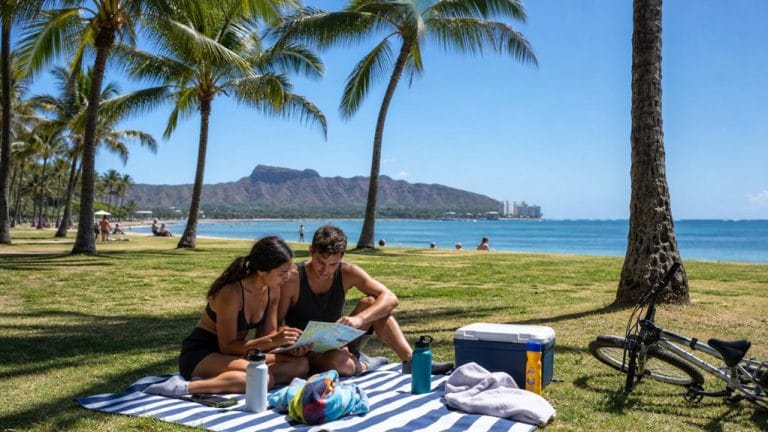
Like Goldilocks with a room key, you don’t want Waikiki too low or too high. A floor in the mid-teens often gives you softer street noise, a wider strip of blue water, and a lanai that feels calm at sunset. Go much higher and the view turns cinematic, but the wind picks up and elevator waits can test your aloha spirit. The sweet spot depends on what you notice first when you open the door.
Key Takeaways
- Floors 16 and up usually give quieter nights by reducing Kalakaua Avenue noise from buses, sirens, and street performers.
- Floors 20 and higher often offer wider ocean views, longer sunsets, and stronger breezes, especially in ocean-front rooms.
- Mid-high floors around 11–16 balance calmer rooms, decent views, and shorter elevator waits than very high floors.
- Very high floors can mean windier lanais and longer elevator delays, especially during breakfast, check-out, and post-beach rushes.
- Always confirm room orientation, renovation level, and distance from elevator shafts, since unit placement matters as much as floor number.

Oahu: The Magical Mystery Show! at Hilton Waikiki Beach Hotel
Step back in Hawaii's history to 1881 when King Kalakaua visited London. You've found the hidden gem of Oahu. This is Honolulu’s #1-rated evening sh...

Waikiki Sunset Cruise: 2-Hour Catamaran & Swim Adventure in Oahu
There’s no better place to take a dip than the crystal-clear waters of Waikiki—and no better way to experience a...

Waikiki Turtle Canyon Snorkel Turtles Guaranteed
Explore Turtle Canyon with Island Splash Tours and discover Hawaiian green sea turtles and tropical fish off Waikiki...

Oahu Catamaran Snorkel Tour: See Turtles 100% Guaranteed
Experience one Viator's 2025 Top 20 Best Excursions in the country. This Oahu Catamaran snorkel tour offers unbeatab...
Which Waikiki Hotel Floors Are Best?

Which Waikiki hotel floors are best? You’ll usually do best above the 10th to 15th floor, and many travelers aim for a higher floor, especially 16 and up. That sweet spot often cuts down street noise while keeping elevator trips reasonable.
If you’re chasing ocean views, look to floors in the 20s or higher. From there, the water feels wider, the sunset glows longer, and the city lights flicker below like a postcard. Still, very high rooms can get windier, and you may wait a bit longer for the elevator.
For a balanced stay, book a deluxe ocean-view room on floors 16 through 24. You’ll get more space, calmer lanai time, and strong views. Also, skip rooms by elevator shafts. That mechanical hum isn’t aloha at midnight. Waikiki is on Oahu, and Oahu is not the Big Island, so make sure your hotel search is focused on the right island.
Why Higher Waikiki Floors Are Quieter
Because Waikiki never fully sleeps, a higher floor gives you a better shot at actual quiet. Once you’re above about the 10th to 15th floor, the buzz from Kalakaua Avenue usually fades. Many travelers say the 16th floor and up feels noticeably calmer, especially after midnight. If you want an ocean view room, upper floors often give you hush and scenery together.
- Street performers, buses, and sirens sound softer as elevation increases.
- Nightlife noise thins out, so you hear more breeze and less sidewalk chatter.
- You should still check the exact unit, since elevator shafts, service areas, and older interiors can add surprise noise.
High floors aren’t magically silent. Drilling can rise, and strong wind can whip balconies, especially in the mid-20s. Still, sleep usually comes easier up high. Waikiki is a neighborhood, not a city, which helps explain why its hotel towers, nightlife, beaches, and busy streets are packed into such a compact area.
Are High Floors Worth the Elevator Wait?
You’ll often get quieter nights and bigger ocean sunsets on higher floors, but you may also wait an extra 5 to 10 minutes for an elevator when everyone’s heading out. Up high, your lanai can feel breezier than expected, and a room near the elevator shaft can still bring more noise than you’d like. If you want the view without turning every beach run into a small mission, you’ll want to weigh those sky-high perks against easier access on a mid-floor. If you plan to use the trolley often, comparing Waikiki Trolley passes for 1-day, 4-day, and 7-day options can also affect how often you’re coming and going from the hotel.
Elevator Wait Tradeoffs
Move up to the high floors in Waikiki and the payoff often shows up fast: quieter nights, wider ocean views, and less of the street buzz drifting into your room. But the elevator tradeoff is real, especially when breakfast crowds, check-out lines, and post-beach returns hit at once. On the 16th floor and above, the wait can shift from mild to memorable.
- Ask how many elevators serve your tower and whether any run express.
- Expect slower rides to 24th through 30th-plus floors during peak hours.
- Consider mid-high floors around the 11th to 16th if you want calm with less wait.
That middle range often gives you softer traffic noise, solid views, and fewer stops. You still get the Waikiki sparkle, just with less time staring at elevator doors. If you plan to sightsee around Honolulu without driving, factor in lobby timing too, since catching the Waikiki Trolley can make a quick elevator exit feel more important.

Oahu: Roundtrip Shuttle From Waikiki to Dole Plantation & Haleiwa
Skip Circle Island and visit two of the most popular places to visit here on the Island of Oahu. Experience a unique...

Honolulu: Pacific Star Sunset Dinner Cruise and Show
Indulge in the original Pacific Rim cuisine, where each dish serves as a gateway to the rich flavors of the region...

Oahu: Grand Tour Around Island with Snorkeling
Come join on a circle island adventure led by some of Hawaii’s most knowledgeable local guides and experience brea...
Views Versus Access
While the jump to a high floor in Waikiki can feel instantly worth it when the ocean opens up in front of you, the trade is simple: better views and quieter nights usually come with slower elevator runs and a higher room rate.
If you book 16th floor or higher, you’ll usually get broader Ocean Front panoramas and more sky in the frame. That upgrade can add $75 to $150 a night, so make sure the room’s actual angle matches the listing. At places like Waikiki Beachcomber, a partial view can still impress if you value quick beach access and shorter elevator trips. At Outrigger Reef Waikiki Beach Resort, compare rooms and fees carefully so the view premium matches what you actually get. During peak hours, some Waikiki elevators can eat up 5 to 15 minutes round trip. Also check the unit’s condition, since renovations vary. Sometimes the smartest pick isn’t highest. It’s the floor that fits your routine.
Wind And Noise
Height changes more than the view in Waikiki. When you book higher floors, you usually escape more street and traffic noise, especially above the 16th. But by the mid-20s, the wind can get pushy. On some balconies, that ocean breeze feels great for a minute, then sends your napkin flying.
- Avoid rooms by the elevator bank. Mechanical rumble can carry across floors.
- Expect some street sirens and construction noise anyway, even high up on Kalakaua.
- Weigh the view against elevator waits, which can feel slow or downright endless at busy hours.
If you want the sweet spot, choose a renovated unit on a higher floor that isn’t near the elevator. You’ll likely get calmer nights, better comfort, and fewer trade-offs. If you are arriving from HNL, factor your airport transportation timing into check-in plans so you are not stuck waiting around the lobby before your room is ready.
How Wind Changes on Upper Waikiki Floors
Although the views get better as you go up in Waikiki, the wind usually gets bolder too. By the mid-20s, many guests notice stronger trade-wind gusts than they felt lower down. On exposed lanais along Kalakaua Avenue and in beachfront towers, that extra wind can make balconies feel less relaxing and a bit louder.
You might hear chairs scrape, sliding doors rattle, or a steady whistle around the edges. Street noise often fades, but wind noise can take its place. Building orientation matters a lot, though. Two rooms on the same floor can feel surprisingly different if one faces open beach and another sits behind nearby towers or banyan trees. If you’re sensitive, ask for mid-level floors, around 10 through 16, or confirm your balcony direction before you book your room. If you plan a Diamond Head electric bike outing, a mid-level room can also make early departures from Waikiki feel quicker than waiting on crowded upper-floor elevators.
What Views Different Waikiki Floors Offer
If you’re choosing a Waikiki hotel floor for the view, the jump from low to high feels more dramatic than many first-time visitors expect. You’ll notice three clear bands:
- Floors 1–5 put you near palms, pools, and street action, but parked buildings often block wider views.
- Floors 6–15 usually open partial ocean or city scenes, with better angles yet still not the full postcard sweep.
- Floors 16–25 often deliver the classic payoff: broad blue water, cleaner sunset lines, and strong vistas toward the Diamond Head end.
Above that, 26+ can feel huge and cinematic, with ocean and mountain panoramas stretching farther. Still, floor number isn’t everything. A makai-facing room matters most for true ocean-front sightlines, so ask front desk staff to confirm the unit’s exact orientation before you commit. If you plan to spend time outside the room, compare your hotel’s position with nearby Waikiki beach areas, food streets, and walkable stops before prioritizing a higher floor.
Still comparing Waikiki Hotel Floor And Stay Planning?
Ask for tour ideas, hotel suggestions, or a simple trip plan that combines both.
Trip Helper
How to Choose the Best Waikiki Room
So how do you pick the best Waikiki room without turning check-in into a guessing game? Start by aiming above the 10th to 15th floor. Many travelers like 16 and up for less Kalakaua noise and great views toward Waikiki Beach Walk and the water. Ask the desk to confirm your room isn’t beside an elevator shaft. If you plan to shop nearby, rooms facing Kalakaua Avenue may put you close to Luxury Row Waikiki and its designer boutiques.
| Priority | Best pick | Watch for |
|---|---|---|
| Quiet | 16th+ floor | Wind on lanais |
| Fast access | Mid-level floor | Fewer panoramas |
| Best scenery | Ocean-front deluxe | Higher price |
If you’re eyeing floors in the 20s or 30s, expect stronger breezes and some street sound when doors are open. Also confirm the exact view and renovation level, since units can vary a lot by owner.
Frequently Asked Questions
Do Higher Floors Cost Significantly More in Waikiki Hotels?
Yes, you’ll usually pay substantially more for higher floors in Waikiki hotels, especially with ocean views. Your rate depends on market demand, seasonal pricing, and room upgrades, though loyalty perks or slower periods can lower costs.
Which Waikiki Hotels Have the Fastest Elevators?
You’ll usually find the fastest elevators at larger Waikiki high-rises; many run 4–8 cars, cutting waits noticeably. Check elevator speedratings, ask about destination dispatch, and prioritize Hilton, Hyatt, Outrigger, or newer luxury towers with express elevators.
Are Balcony Rooms Safer for Young Children?
Balcony rooms can be safe for young children if you verify childproof railings, use balcony door locks, and enforce supervised balcony time. You should remove climbable furniture, avoid windy high floors, and never leave toddlers alone.
When Is Waikiki Busiest and Noisiest During the Year?
Picture packed beaches and buzzing streets? You’ll find Waikiki busiest and noisiest during peak season: mid-December through March and June through August. Expect extra surges during spring break, holiday weekends, and Japanese Golden Week too.
Can Loyalty Status Help Secure a Better Floor Assignment?
Yes, you can improve your odds with loyalty status. Use elite perks, request status upgrades directly, and confirm preferences early. Your upgrade timing matters most during slower periods, though you should still verify exact floor, view, and noise.
Conclusion
Book smart and Waikiki changes fast. Once you move above roughly the 10th to 15th floor, street noise usually drops enough that waves and trade winds take over, and that shift can shape your whole trip. If you want the sweet spot, aim for floors 16 to 24. You’ll get wider blue-water views, softer night sounds, and manageable elevator waits. Just check the room’s direction and renovation status, unless you enjoy surprise wallpaper with your sunset.
Oahu: The Magical Mystery Show! at Hilton Waikiki Beach Hotel
Step back in Hawaii's history to 1881 when King Kalakaua visited London. You've found the hidden gem of Oahu. This is Honolulu’s #1-rated evening sh...
Waikiki Turtle Canyon Snorkel Turtles Guaranteed
Explore Turtle Canyon with Island Splash Tours and discover Hawaiian green sea turtles and tropical fish off Waikiki...

Oahu Grand Circle Island Experience from Waikiki
Enjoy Grand Circle Island experience tour with breathtaking views of Amelia Earhart Lookout on Diamond Head, admire...
Oahu Catamaran Snorkel Tour: See Turtles 100% Guaranteed
Experience one Viator's 2025 Top 20 Best Excursions in the country. This Oahu Catamaran snorkel tour offers unbeatab...
Experiences to explore
 Explore experience ↗
Waikiki Fireworks Dinner Cruise: Sail & Sparkle on Friday Nights
◷ 2 hr
Experience the magic of Waikiki's Friday-night fireworks from the best seat in the house - on the ocean! Begin with a relaxing sunset s
From $169.95 USD
View dates Explore experience ↗
Waikiki Snorkeling & Ocean Waterpark Adventure from Oahu
◷ 2 hr
Skip the crowded snorkel tours and experience Oahu’s ultimate ocean adventure for families, couples, and guests of all ages. From thril
From $59.00 USD
View dates Explore experience ↗
First-Time Snorkeling + Scuba Adventure in Waikiki with Videos
◷ 2 hr 30 min
Discover the best of Honolulu’s underwater world in one unforgettable experience—perfect for first-timers! This 2-in-1 ocean adventure
See dates for Current pricing
View dates