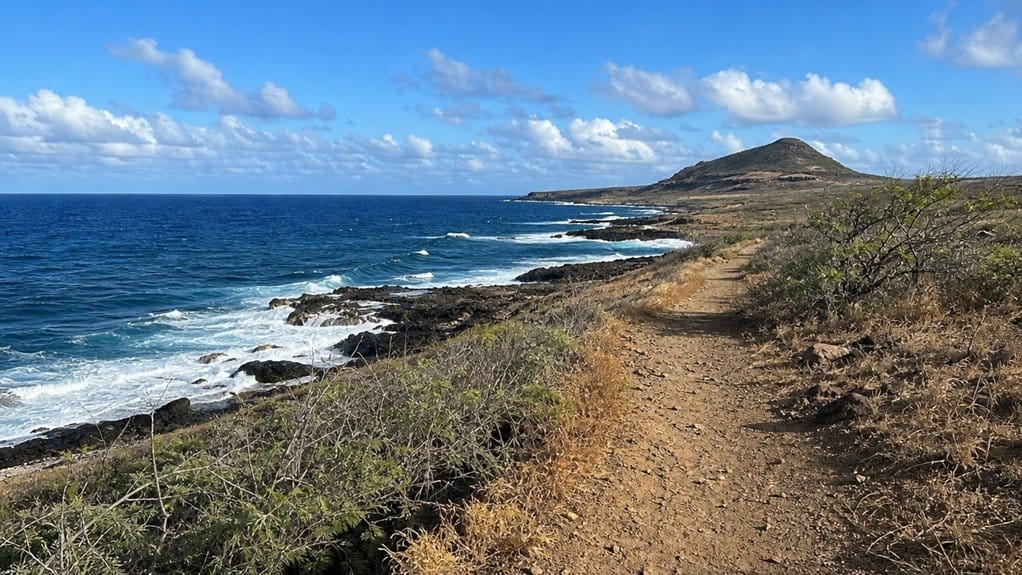
You start Kaʻena Point on a rough coastal track with no shade, big ocean views, and black lava that looks sharp enough to argue back. The walk to the fence is about 2.1 miles and mostly gentle, though the sun can make it feel longer. Along the way, you’ll pass dunes, bits of old railroad, and maybe tide pools if the swell behaves. The real question is which side gives you the better day.
Key Takeaways
- Kaʻena Point Trail is a mostly flat coastal walk with huge ocean views, rough lava shoreline, and a remote feel.
- The main hike is about 2.1 miles each way to the predator-proof fence, with most round trips taking 3 to 4 hours.
- Base difficulty is easy to moderate, but the trail is shadeless, hot, and requires carrying 2 to 3 liters of water.
- The west side feels quieter and more scenic, while the north side is busier but offers more tide pools and monk seal sightings.
- You may see seabirds, whales in winter, old railroad traces, and a sea arch, but check ocean conditions before exploring shore areas.
Which Kaʻena Point Trail Side Is Better?
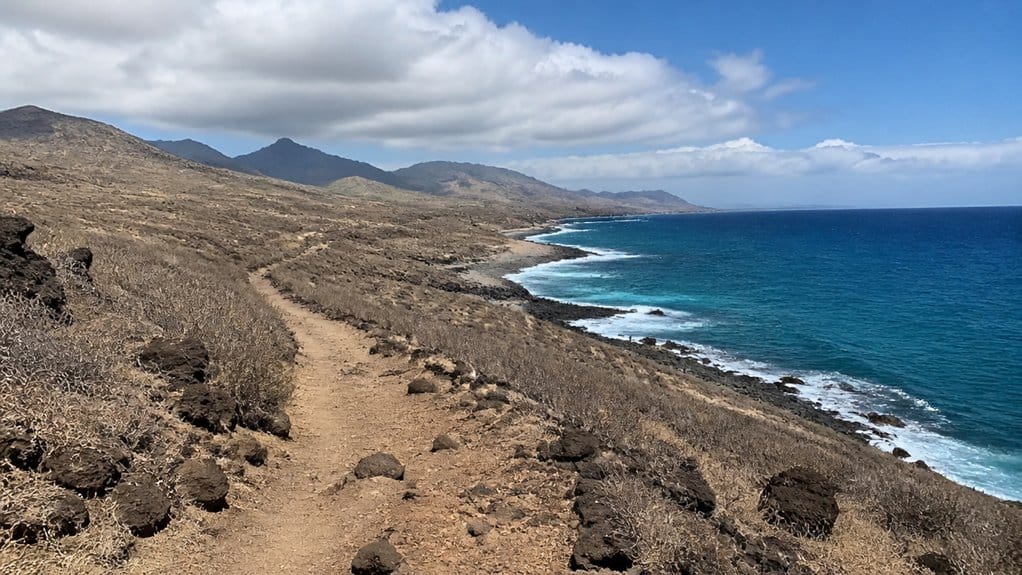
So which side of Kaʻena Point is better? It depends on what you want to notice and remember. If you crave bigger scenery, the West Side usually wins. You get dramatic ridges, bright sun, and a truer trail feel along the Waiʻanae Coast. It’s often quieter too, which makes the ocean sound louder. The Keawaula side also has a comfort station and lifeguard services, which can make it a better fit for some visitors.
If you want more tide pools and a better shot at Monk Seals, go North. That side follows a 4WD access road, feels busier, and can be windier, but the wildlife odds improve. You might also enjoy poking around the rocky shoreline when conditions cooperate. If you’re planning ahead, it also helps to understand the permit reservation process before you go. On the West Side, tide pools look tempting, but the open-ocean swell makes them a no-go. Choose West for views and calm. Choose North for curiosity and seals. No matter which route you choose, keep sun, wind, and tide pool safety in mind because exposure and shoreline conditions can change the experience fast.
How Long and Hard Is the Kaʻena Point Trail?
Although Kaʻena Point doesn’t look like a big mountain hike on paper, it often feels longer than the mileage suggests. On the Kaʻena Point Trail, you’ll usually hear 2.1 miles to the predator-proof fence, but that doesn’t count extra wandering or the Kaʻena Point Pillbox spur.
For most hikers, the round-trip takes about 3 to 4 hours, depending on your pace, photo stops, and how much you explore. The main trail has little elevation gain, so the base difficulty feels easy to moderate. Still, the coast stays shadeless and exposed, and rough footing can slow you down. Like the Makapuu Point Lighthouse Trail, this kind of exposed coastal walk can feel more tiring under the sun than the elevation profile suggests. Near the end, a few narrow, tricky sections demand attention. If you add the pillbox, expect a steeper, rockier 0.4 miles each way and about 520 feet of climbing. That bump pushes the difficulty toward intermediate territory. Some hikers also think of the route as a 10-step hike from parking to the point.
What Will You See at Kaʻena Point?
The payoff starts almost right away. You’re walking beside a volcanic coastline with huge ocean views, rough lava, and a remote feel that’s rare on Oʻahu. Look for native plants like ʻiliahi aloʻe and patches of coastal dune habitat that still survive here.
As you continue, you’ll spot traces of an old railroad in the trail bed and scattered ties. Tide pools appear along parts of the shore, flashing clear water between dark rocks. You may also notice a sea arch just off the trail before the point. If you want another great North Shore wildlife stop, Laniakea Beach is well known for turtle sightings. Wildlife keeps things interesting too. In winter, whales often surface offshore. Seabirds sweep overhead, and some hikers even report albatross. If you’re lucky, you’ll see a Hawaiian monk seal hauled out on the sand, looking gloriously unbothered by your schedule.
Still comparing Kaʻena Point And West Side Nature?
Ask for tour ideas, hotel suggestions, or a simple trip plan that combines both.
Trip Helper
What to Know Before Hiking Kaʻena Point
Before you set out, know that Kaʻena Point feels wilder than many Oʻahu walks and asks for a little planning. In Kaʻena Point State Park, the West side of Ka‘ena Point is mostly shadeless, so start early or near sunset and carry plenty of water, usually 2 to 3 liters. Before heading out, check ocean alerts for unusual conditions and beach advisories that could affect exposed shoreline areas near the trail.
You’ll reach the predator-proof fence at about 2.1 miles, but Kaʻena Point itself starts there, and extra exploring adds distance. If you continue to the Kaʻena Point Pillbox, tack on about 0.4 mile and expect a steep, rocky climb with roughly 520 feet of gain from the fence. Skip the tempting tide pools on the West Kaʻena Point Trail. Open-ocean swell makes them dangerous. On Oʻahu’s North Shore, areas like Sharks Cove can also become hazardous when wave surge builds, especially in winter. If you spot a monk seal, stay 50 feet back. Rangers patrol often, and rules matter here. Like ocean currents near exposed shorelines elsewhere on Oʻahu, surf conditions at Kaʻena can shift quickly and make coastal edges more hazardous than they first appear.
Frequently Asked Questions
Are Dogs Allowed on the KaʻEna Point Trail?
No, you can’t bring dogs on the Kaʻena Point Trail. Local rules ban pets throughout the park; only service animals are allowed. Don’t rely on leash requirements. For planning, also watch tide safety and protected wildlife closures.
Is There a Restroom at Either Trailhead?
No, like setting off beyond the map’s edge, you shouldn’t count on restrooms at either trailhead. You’ll want to go beforehand, since Trailhead amenities seem limited, parking availability is constrained, and rest stop options aren’t confirmed.
Can You Swim or Snorkel Near KaʻEna Point?
You shouldn’t swim or snorkel near Kaʻena Point. Ocean conditions stay rough and unpredictable, so follow safety tips and keep to shore. You’ll still enjoy marine life by watching tide pools and wildlife from designated paths.
Is Camping Permitted at KaʻEna Point?
No, you can’t camp at Kaʻena Point; it’s a protected habitat. You should plan a day hike, enjoy trail highlights and scenic overlooks, and follow safety precautions, designated paths, and rules banning dogs and drones.
What Is the Best Time of Year to Visit?
Winter’s your sweet spot, like catching nature’s encore: you’ll enjoy cooler trade winds, lower crowd levels, and better trail conditions. Start early or near sunset, and you’ll boost whale, seal, and wildlife sightings while avoiding heat.
Conclusion
If you want a Hawaii hike that feels wild without being brutal, Kaʻena Point delivers. You’ll trade shade for salt wind, black lava, and the steady crash of surf. Pick the side that fits your mood, pack more water than you think, and start early. For example, if you add the pillbox spur, that “quick coastal walk” suddenly turns into a sweaty little mission. Still, when albatross glide overhead, you probably won’t mind.