If you’re visiting Oʻahu, you’ll hear manu often, and it simply means bird. That small word can point you to cliffside seabird colonies, quiet marshes, and forest trails filled with quick wingbeats and sharp calls. You might spot a frigatebird riding the wind or see signs asking you to keep back from nesting areas. Follow manu and you start to notice how birds connect land, ocean, and local life in ways that aren’t obvious at first.
Key Takeaways
- Manu means “bird” in Hawaiian, pronounced MAH-noo, and refers to both native forest birds and introduced species across Oʻahu.
- You’ll see manu in signs, guides, and place names, where it often suggests cliffs, flight paths, or nesting areas.
- Common manu on Oʻahu include nēnē, pueo, ʻiwa, kōlea, and wetland or forest birds at Kaʻena, Heʻeia, and Kawainui.
- Manu hold cultural meaning in chants, stories, and ʻaumākua traditions, linking birds with place, guardianship, and mālama ʻāina.
- Watch manu quietly from a distance, follow kapu signs, stay on trails, leash dogs, and avoid nests, flash, or feeding.
What Does Manu Mean in Hawaiian?
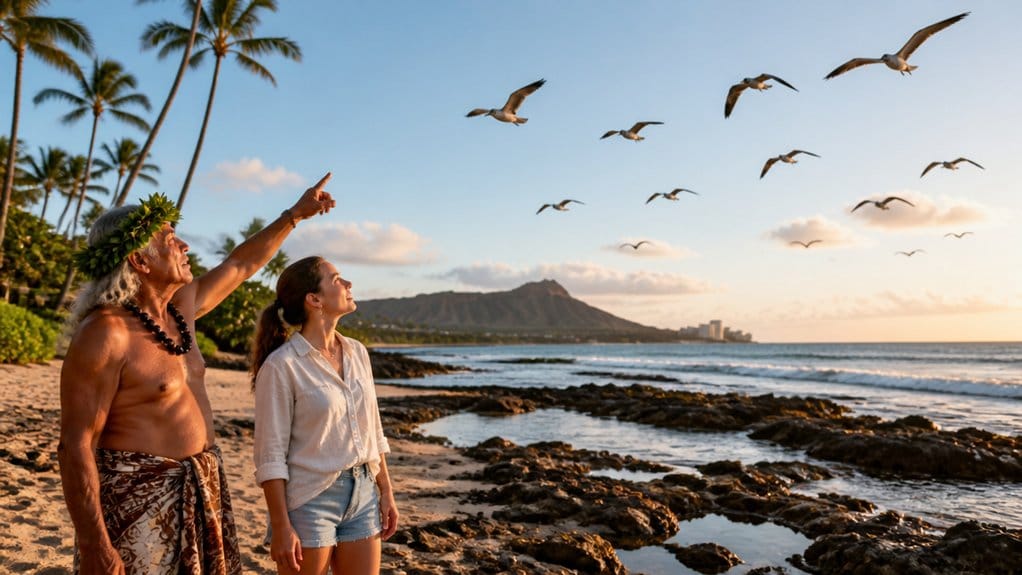
Feathers first: in Hawaiian, manu means “bird,” pronounced MAH-noo, and it covers the winged life you’ll see across the islands, from native forest birds to species introduced later.
As you explore Oʻahu, you’ll hear this Hawaiian word in conversations, signs, and guides. It’s a simple word, but it opens a wide view of island life. Manu can mean a bright myna on a hotel lawn or a native Hawaiian forest bird calling from wet upland trees. You’ll also spot manu in place names, which hint at how closely birds shape the landscape. Think of names tied to flight, cliffs, and nesting ground. Once you know the word, trails, valleys, and shorelines start to sound more alive. It’s like getting a small key to the map, with wings. Along the way, you may also notice other Hawaiian nature words, like Hau Hawaii, that help describe plants and places around Oʻahu.
Why Manu Matters in Oʻahu Culture
Once you know manu means bird, you start to hear more than a handy vocabulary word on Oʻahu. You notice how manu connects stories, places, and care for the island. The ʻio and ʻelepaio aren’t just birds. They appear in traditions as ʻaumākua, so seeing them can feel meaningful.
On Oʻahu, manu means more than bird. It carries story, place, and a sense of living connection.
- You hear manu in chants and sayings.
- You spot it in place names.
- You find it near wahi kūpuna.
- You see mālama ʻāina in action.
- You notice conservation protects culture too.
Learning island words this way can also help you recognize other Hawaiian plant and place references, like Hau Hawaii, as you explore Oʻahu.
When you watch forest birds flick through wet leaves, you’re also seeing habitat health. On Oʻahu, thriving manu can show that mālama ʻāina efforts are working. Protecting endangered birds helps keep language, ceremonies, and old knowledge alive. That gives every birdsong a little more weight for visitors, too.

Oahu: Kualoa Ranch UTV Raptor Tour
Traveling with family and friends? You can enjoy the fantastic Multi-passenger UTV Raptor experience with your entir...
What Hawaiian Words Relate to Manu?
As you learn manu, you’ll quickly spot related bird names like ʻiʻiwi, nēnē, ʻalalā, ʻaukūpū, and pueo, each carrying its own color, call, and story across the islands. You’ll also hear manu in chants, where birds aren’t just background sounds but living signs of place, season, and memory. Along the way, you can connect these names to other nature words in Hawaiian, so the landscape starts to sound less like a postcard and more like a conversation. While exploring Oʻahu’s shoreline wildlife, you may also look for sea turtles in Oahu as another meaningful part of the island’s living landscape.
Bird Names In Hawaiian
Bird names in Hawaiian open a window into how people noticed the skies, the shore, and every call overhead. As you explore Oʻahu, you’ll spot how manu simply means bird, then branches into vivid names. You might hear manu ʻiwa for frigatebird or manu kōlea for the golden plover. Those pairings help you picture movement, habitat, or a standout trait. Knowing the meaning of Oʻahu can also deepen the way visitors read Hawaiian place names around the island.
- manu ʻiwa circles high above windy coasts
- manu kōlea returns with the seasons
- ʻokina marks pronunciation and meaning clearly
- seabird names often describe shape, flight, or color
- kahua place names can preserve bird connections
If you read signs or guidebooks, watch the spelling. The ʻokina matters. It keeps names accurate and respectful. Once you notice manu in bird names, Oʻahu feels a little more alive, and a lot more legible.
Manu In Chants
In chants, manu does more than name a bird. When you hear manu in mele, you’re hearing more than feathers and wings. You’re hearing a bridge between people, akua, and ancestors. That gives each bird image extra weight and purpose.
Listen for famous birds like the ʻiwa and the ʻio. In oli, the ʻiwa can hint at ocean travel and wayfinding. The ʻio can signal chiefly power or a watchful guardian overhead. You’ll also notice how chants place manu in real landscapes. Seabird images can suggest a voyage, while forest calls can point you toward upland wahi kapu. Some mele even echo bird sounds with playful syllables. Others compare chiefs or loved ones to birds for freedom, sharp sight, or steady vigilance. Pretty elegant, right? Along Oʻahu’s coasts, seabird imagery may also share the shoreline with protected marine life like the honu, or green sea turtle, commonly seen on Hawaiian reefs and beaches.
Related Nature Terms
Nature words around manu open up a whole little map of place, color, and care. When you hear manu, you’re hearing bird, especially in native names and everyday descriptions. You might spot an ʻIʻiwi in forest talk, a nēnē on refuge signs, or manu kai near the shore. On Oʻahu’s Windward Coast, places like Kaneohe can help visitors connect bird words with real shoreline and mountain habitats.
- manu kahakai: shorebird by sand and tide
- manu uli: dark-feathered bird, useful for quick ID
- manu kai: seabird riding wind above the kai
- moku: island or district, handy for bird ranges
- mālama and kapu: words that signal protection
These terms help you read Oʻahu more clearly. A nesting area marked kapu isn’t just a rule. It’s a reminder to mālama the habitat. And no, a honu still isn’t a manu, even if it looks wonderfully aerodynamic sometimes.
Still comparing Manu Hawaiian Meaning On Oahu?
Ask for tour ideas, hotel suggestions, or a simple trip plan that combines both.
Trip Helper
Where to See Manu on Oʻahu
Across Oʻahu, you can spot manu in places that feel wildly different from one another, from salt-bright shorelines to quiet marsh edges and misty windward slopes. For coastal birdwatching, start at Kaʻena Point or the fishponds of Heʻeia, where sea wind, lava rock, and open water create excellent views of native birds and seabirds.
If you like wetlands, head out early to Kawainui Marsh or James Campbell National Wildlife Refuge. Morning light makes the water glow, and you may catch waterbirds and migratory species feeding in the shallows. On the windward side, forested areas near Kūʻau and guided trips along Oʻahu’s coastal cliffs can reveal ʻApapane and ʻAmakihi. Bring binoculars. With over 200 species of manu across Oʻahu, every outing feels a little like opening a field guide that suddenly starts moving. While scanning beaches and shorelines, give resting Hawaiian monk seals at least 50 feet of space, since these endangered seals often haul out on sand or rocky intertidal areas.
How to Respect Manu on Oʻahu
On Oʻahu, you can show respect for manu by keeping your distance, watching with binoculars, and leaving nests and feeding birds alone. You’ll also want to follow kapu signs, seasonal closures, stay on marked trails, and keep dogs leashed so vulnerable birds like pueo stay safe. Practice aloha outdoors by packing out trash, securing your snacks, and keeping the volume down, because the island sounds better with wind and wings than crinkly wrappers. If you’re sightseeing between birding stops, choosing Oahu trolley routes can help you enjoy scenic views while reducing the need for extra driving.
Keep Wildlife Distance
For the best kind of birdwatching, give manu plenty of room and let them carry on as if you weren’t there. On Oʻahu, manu includes native seabirds, forest birds, and the endangered nēnē, so treat every sighting like protected wildlife. You should stay at least 10 to 15 feet away, especially near nests or feeding spots in spring and summer.
- Watch quietly and let natural behavior unfold.
- Do not feed birds, even tiny snack crumbs.
- Keep dogs leashed near dunes, beaches, and wetlands.
- If a bird looks hurt, note the exact location.
- Call Hawaii Wildlife Center or DLNR for help.
Distance helps manu forage, rest, and raise chicks without panic. You’ll hear more calls, see calmer movement, and avoid being that beachgoer who gets scolded by a goose. If your Oʻahu plans include a round at Ko Olina Golf Club, keep the same respectful distance from any manu you spot around the course.
Follow Kapu Signs
Keeping your distance matters even more when you see a kapu sign near manu habitat. On Oʻahu, kapu means the area is off-limits, often for protecting nesting manu during spring and summer. At beaches and coastal cliffs, these signs mark legally restricted spaces where nesting seabirds need calm, quiet ground.
Give ʻōiwi and other birds at least 50 to 100 feet. That buffer lowers stress and helps chicks survive. Don’t cross ropes, step into marked dunes, or sneak closer for a better shot. Skip flash, feeding, and touching too. Use binoculars instead, and stick to posted trails or viewing platforms. If your visit includes the island’s northwest tip, secure a Kaena Point permit reservation before you go. Check seasonal advisories before you go, since kapu zones can change. Ignore the signs, and you could face fines. Better plan: let the birds keep their front yard.

Oahu: Atlantis Submarine Adventure in Waikiki
Explore Waikiki’s marine mysteries while diving more than 100 feet underwater in an air-conditioned, eco-friendly...

Parasailing Experience in Waikiki, HI
Experience the thrill of Oahu parasailing on this unforgettable 1-hour adventure from Waikiki. Soar up to 1,000 feet...

Oahu Shark Dive on the North Shore
Book the Oahu Shark Dive for a thrilling shark encounter off the North Shore. You’ll travel by boat from Haleiwa H...
Practice Aloha Outdoors
Practicing aloha outdoors starts with a simple move: give manu room to be wild. On Oʻahu, you’ll see why native speakers use manu with such care. Watch seabirds and forest birds from several meters away. Don’t feed gulls, shearwaters, or ʻio. Human snacks turn a smart hunter into a beach beggar fast.
- Stay on marked trails near dunes and wetlands.
- At Kaʻena Point, keep dogs leashed.
- Skip nesting areas in coastal and marsh habitats.
- Lower lights and noise at dusk and dawn.
- Look quietly for shearwaters and ʻalae keʻokeʻo.
If you also encounter sea turtles or monk seals while birdwatching, give them space and call the NOAA Marine Wildlife Hotline at (888) 256-9840 if they appear sick, injured, stranded, or dead.
That’s aloha in action. You protect nests, sheltering plants, and the calm birds need to forage. At places like Kawainui Marsh, even your footsteps matter. Walk softly, look longer, and let the island’s wild soundtrack lead.
How Manu Connects ʻĀina, Kai, and Aloha
When you watch manu move between cliff, forest, and open water on Oʻahu, you can see how they tie ʻāina and kai into one living system. Birds like the ʻiwa and āeʻo rely on upland shelter and coastal feeding grounds, so their paths map the island’s health.
The meaning of Oahu can add another layer to this connection, since the island’s name is often tied to place, ancestry, and the stories carried across its landscapes. You’ll also hear that some manu, especially the ʻio, carry deeper meaning. They act as guardians that reflect aloha and remind you to mālama both land and sea. Traditional chants and place names honor seabird gathering spots near heiau and shorelines. If you spot birds circling above tide pools or nesting near dunes, take it as a quiet health check. Give nesting areas space, pack out trash, and skip the accidental souvenir of plastic in the surf. That’s mālama with muddy shoes and salty hands.
Frequently Asked Questions
How Do You Pronounce Manu Correctly in ʻŌLelo HawaiʻI?
You pronounce manu as MAH-noo in ʻŌlelo pronunciation, stressing MAH. Don’t add a Glottal stop or change Vowel length. Follow Hawaiian Stress patterns consistently, and note slight Local accent variations while keeping vowels short and clear.
Are Any Manu Considered Sacred or Associated With Specific Deities?
Yes, you’ll find some manu have sacred associations; that theory holds. You should note deity linked species like ʻio and ʻiwa, respect kapu practices around ceremonial birds, and ask locals about kūkā‘i legends.
Can Children Join Birdwatching Activities on OʻAhu Safely?
Yes, you can bring children on Oʻahu birdwatching outings safely through family friendly tours offering guided junior naturalists, kid safe binoculars, and childrens conservation activities, as long as you follow age appropriate protocols, supervision, trail, distance, and seasonal-access rules.
What Should I Bring for Respectful Manu Viewing on OʻAhu?
Bring binoculars, reef safe sunscreen, quiet footwear, water, a field guide, and waste free snacks. You’ll follow binoculars etiquette, respect distance markers, skip flash, and stay on trails so you don’t disturb Oʻahu’s manu.
Are There Seasonal Protections or Closures Related to Manu Habitats?
Yes, you’ll encounter seasonal trail closures, breeding season restrictions, and nesting area buffering around manu habitats. You should also check wet season access and habitat restoration timelines, because managers may limit entry, post advisories, or fine trespassers.
Conclusion
Now you know manu means bird, but on Oʻahu it also points you toward healthy land and sea. More than 5 million seabirds nest across Hawaiʻi each year, a vivid sign of how much life depends on protected cliffs, wetlands, and forests. When you spot a soaring manu ʻiwa or hear nēnē calls near a refuge trail, keep your distance and your binoculars ready. You’ll see more, tread lighter, and look much smarter than the snack-throwing crowd.

Oahu Majestic Circle Island Tour with Waimea Falls and Byodo Inn
Since 1974, E Noa Tours has specialized in showing visitors the real Oʻahu through immersive experiences led by passionate local guides. Our mission...
Experiences to explore
 Explore experience ↗
Discover Popoia Island and Kailua Bay by Kayak Guided Tour
◷ 3 hr
Kayak in the crystal clear waters of Kailua Bay with one of our guides and visit one of Oahu's smallest offshore islands. It's only a h
From $169.00 USD
View dates Explore experience ↗
Hawaiian Food Tour by Bike in Oahu
◷ 4 hr–5 hr
Bike Tour Hawaii's flagship bicycle foodie tour. We visit iconic local eats in the Diamond Head, and Kapahulu-Kaimuki neighborhoods eat
From $189.00 USD
View dates Explore experience ↗
Exclusive Private Island Adventure Oahu Your Way
◷ 4 hr–9 hr
Discover Oahu with your exclusive, fully customizable private island tour. This adventure allows you to craft your perfect day(s), guid
From $1,500.00 USD
View dates