Most first-time visitors don’t realize Shark’s Cove is usually a calm lava-rock pool in summer, not the wild surf spot its name suggests. You step into clear water over black rock and pale sand, then drift past coral heads where yellow tangs flash like small coins. Parking fills early at Pupukea Beach Park, and the entry matters more than you’d think. Pick the right morning, the right gear, and the right path in, and the whole place changes.
Key Takeaways
- Visit in summer, especially early morning before 8–9 a.m., for calmer water, better visibility, lighter crowds, and easier parking.
- Avoid October through April, when North Shore swells and currents can make Shark’s Cove and nearby tide pools unsafe.
- Enter via the small sandy beach for the easiest access, or use rocky entries only on calm, low-surf mornings.
- Expect clear, shallow water with coral heads, lava rock, and fish like parrotfish, butterflyfish, wrasses, eels, octopus, and turtles.
- Bring fins, mask, water shoes, reef-safe sunscreen, and a buddy, since there is no lifeguard and lava rock is sharp.

Waikiki Turtle Snorkeling & 6-in-1 Adventure with Free Pickup
Experience a special turtle snorkeling adventure in Waikiki aboard a smooth and comfortable catamaran. This all-in-one 6-in-1 ocean tour includes snor...

Hanauma Bay Snorkeling from Waikiki
Experience Hanauma Bay the easiest way with Waikiki’s most reliable Hanauma Bay shuttle. Our early 5:40 AM pickup...

Oahu 5-in-1 Deluxe Cruise: Turtle Snorkeling & Ocean Activities
In addition to the amazing turtle snorkeling in the beautiful waters of Waikiki, our 135-passenger boat offers a uni...

Oahu: Grand Tour Around Island with Snorkeling
Come join on a circle island adventure led by some of Hawaii’s most knowledgeable local guides and experience brea...
Is Shark’s Cove Good for Snorkeling?

If you’re wondering whether Shark’s Cove is good for snorkeling, the short answer is yes. Sharks Cove earns its reputation as some of Oahu’s best snorkeling because you can wade into crystal-clear waters and quickly spot coral heads, lava rock, and schools of bright fish.
You’ll find a protected bay with depths around 7 to 16 feet, so Snorkeling here feels accessible without being boring. Parrotfish, butterflyfish, wrasses, eels, octopus, and even sea turtles can appear if you watch patiently. The entry is rocky and slick, so water shoes help a lot. For the smoothest experience, visit in summer when the North Shore surf is usually calmer and the cove is more suitable for snorkeling. Bring fins and a mask too. There’s no lifeguard, so you should snorkel with a buddy and check conditions before you get in. Use reef-safe sunscreen, and you’ll help keep this underwater neighborhood thriving for future visits too.
When to Snorkel Shark’s Cove
You’ll usually get the best snorkeling at Shark’s Cove in summer, from May through September, when the North Shore turns calmer and the water often looks glassy and clear. If you arrive early, ideally before 8 or 9 a.m., you’ll catch better visibility, gentler water, and a parking spot before the crowds roll in. Stick to daylight hours and always check surf and rip current reports first, because this rocky little cove gets serious fast when conditions turn rough. Because Shark’s Cove has no lifeguards, reviewing a few beach safety tips before you go can help you decide whether conditions are right for snorkeling.
Best Season
For the best shot at calm, clear water, plan your Shark’s Cove snorkel in summer, from May through September. During these summer months, the north shore of Oahu usually settles down, so the cove stays calm and clear enough to spot lava shelves, bright fish, and the occasional sea turtle gliding by. You’ll enjoy the easiest entry and the safest exploring.
You should avoid snorkelling during Hawaii’s surf season, especially from October through April, when winter swells and strong currents can turn this rocky pool into a no-go zone. Even in summer, conditions can flip fast, so check local surf and weather reports and read posted warnings before you go. If swells build, pick sheltered Kuilima Cove instead. Smart timing beats bravado every time. If ocean conditions are not right for snorkeling, you can still plan an adventure by booking one of the North Shore shark dive operators nearby.
Ideal Time Of Day
Early morning gives Shark’s Cove its best mood. Arrive before 8:00 or 9:00 a.m. and you’ll usually find clearer water, lighter crowds, and a better shot at spotting reef fish and turtles. It’s also the Best Time to claim an easy entry before boat traffic picks up. The limited parking lot fills fast, so your alarm clock becomes part of the adventure. If you’re continuing along the North Shore afterward, plan ahead for Haleiwa Harbor parking so you don’t lose time circling for a spot.
For the smoothest snorkel, go in summer, when North Shore surf usually stays low. Snorkel only in daylight, and aim for slack tide or a gentle incoming push near the reef and tide pools. Always check daily ocean conditions and local surf forecasts before you go. If surf is high or currents look pushy, skip it. Shark’s Cove rewards patience, not bravado, and careful timing pays off.

Oahu: Atlantis Submarine Adventure in Waikiki
Explore Waikiki’s marine mysteries while diving more than 100 feet underwater in an air-conditioned, eco-friendly...

3 Zipline Adventure (Optional Waikiki Shuttle for 10am Tour)
Experience the thrill of soaring through the jungle on Coral Crater’s 3 Zipline Adventure. Glide across three exci...

Honolulu: Pacific Star Sunset Dinner Cruise and Show
Indulge in the original Pacific Rim cuisine, where each dish serves as a gateway to the rich flavors of the region...
How to Get to Shark’s Cove
Since Shark’s Cove sits inside Pupukea Beach Park on Oahu’s North Shore, getting there is fairly simple if you plan around traffic and parking. From Daniel K. Inouye International Airport, you’ll usually drive 45 to 60 minutes north, depending on traffic. If you’re coming from Haleiwa, head east on Kamehameha Highway and watch for the signed pullout and small parking lot at Sharks Cove.
Your smartest move is to arrive before 9–10 AM, especially on weekends and holidays. If the lot’s full, try nearby Haleiwa and bike or rideshare back. At the parking area, you’ll find restrooms and outdoor showers. You’ll also want to bring water shoes for the short rocky walk to shore. Before you go, check local surf and weather forecasts and read posted warning signs carefully. The surrounding North Shore Oahu area also makes it easy to pair your snorkel stop with nearby beaches, food trucks, and quick scenic stops.
Where to Enter Shark’s Cove
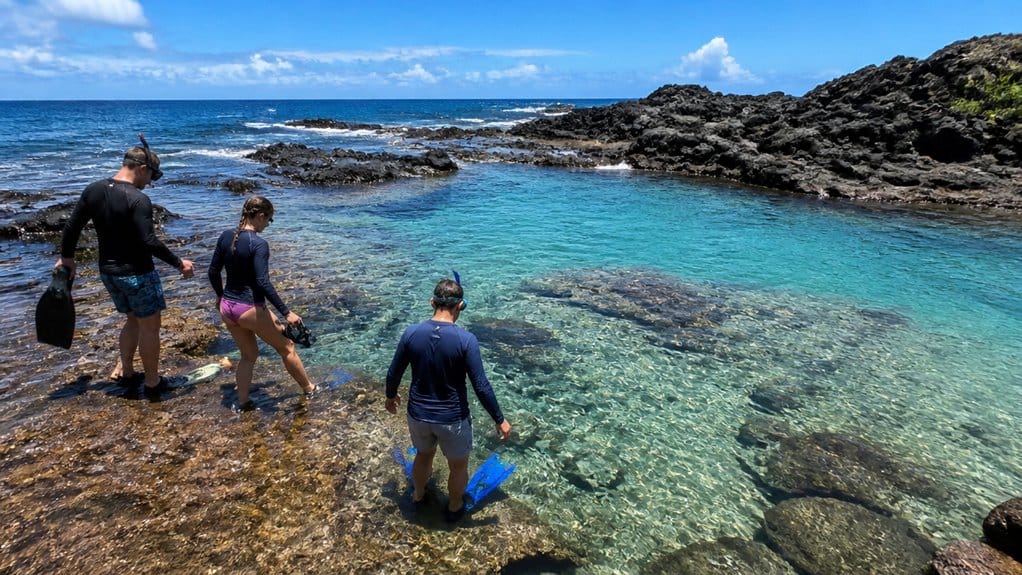
You’ve got a few good ways to enter Shark’s Cove, and the right one depends on how easy or adventurous you want your start to feel. The sandy stretch near the west side parking lot gives you the simplest entry, while the rocky central bay can put you closer to deeper reefs and caves when the water’s calm. If you want a gentler option, the shallow tide-pool side feels friendlier underfoot, though water shoes are still a very smart move. Like at Electric Beach, always assess conditions and currents before entering, since calm-looking water can still create challenging snorkeling conditions.
Sandy Beach Access
For the easiest start, head to the small sandy beach by the parking lot on the east side of Shark’s Cove. This sandy beach area gives you a simple wade-in entry, so you won’t need to scramble before you float out. Arrive early to get parking close and beat the mid-morning crowd.
Even here, Wear water shoes. The bottom can shift from soft sand to rough patches, and you don’t want your vacation souvenir to be a cut foot. On the southern edge, you’ll find shallow water, tide pools, and a sandy shelf that feels especially family-friendly for kids or cautious swimmers. During calm summer mornings, the water often stays clear and easy for quick entries. Before getting in, review basic snorkel safely steps so you know how to handle changing conditions at Shark Cove North Shore. In winter, though, even this mellow-looking spot can turn surprisingly rough and noisy.
Rocky Cove Entry
Start at the sandy shore by the parking lot near the public restrooms and showers, then follow the marked path down to the rocky edge where many snorkelers slip in. Wear water shoes and test each step on the rocky shoreline. Smooth boulders look easy, but sharp coral and slick rock can bite back.
Choose calm entry points on a low-surf morning, especially in summer. Skip days with high surf or strong rip currents. If you’d rather avoid scrambling, use the shallow sandy pocket or tide pools on the south side. Buddy up, share your plan, and wear bright gear so friends and boaters can spot you. If turtle spotting is part of your North Shore plans, compare Shark’s Cove with other turtle beaches on Oahu before you go.
- Sun glinting on wet black rock
- Foam hissing through tide pools
- Bright fins flashing in blue water
- Careful footsteps over slick boulders
Still comparing Shark's Cove Snorkeling?
Ask for tour ideas, hotel suggestions, or a simple trip plan that combines both.
Trip Helper
How Safe Is Shark’s Cove Snorkeling?
While Shark’s Cove can feel calm and inviting on a clear day, it’s only safe when the ocean cooperates and you treat the rocky shoreline with respect. At Sharks Cove, no lifeguard watches the water, so check ocean conditions before you enter. The safest snorkeling usually comes in summer (May–Sept). Winter surf can turn this lava-framed pocket rough fast.
| Risk | Why it matters | Smart move |
|---|---|---|
| No lifeguard | Help isn’t immediate | Use buddy system |
| High surf | Currents and shorebreak build | Go only when calm |
| Sharp rocks | Cuts happen fast | wear water shoes |
| Sun and fatigue | You lose focus | reef-safe sunscreen |
Snorkel in daylight. Wear bright gear or carry flotation if you tire. Don’t dive from rocks or stand on coral. Keep it simple and smart. The nearby tidepool area can also be risky in winter, when dangerous currents and waves affect the whole MLCD.
What You’ll See at Shark’s Cove
Often, the first thing you notice at Shark’s Cove is how much life fits between the black lava rock and clear blue water. During snorkeling at Shark’s Cove, you’ll drift over coral heads and ledges where vibrant marine life seems to appear from every crack. In Sharks Cove, the central bay opens onto caves and walls, with schools flashing above.
- Parrotfish scraping coral like tiny underwater gardeners
- Butterfly fish flickering yellow beside angelfish and wrasses
- Bigeye fish swirling in silver clusters near cleaning stations
- Sea turtles gliding past tide pools with starfish and anemones nearby
You might also spot eels, octopus, crabs, and shells tucked into crevices. White-tipped reef sharks usually stay deeper, so seeing one is uncommon. Keep your hands off coral. It’s beautiful, alive, and surprisingly easy to damage. Like Sans Souci, Shark’s Cove is best enjoyed when calm conditions make entries easier and the water clearer.
What to Pack for Shark’s Cove Snorkeling

Usually, a great Shark’s Cove snorkel starts with packing for the rocks as much as the water. Bring water, a snug mask, fins, and a wetsuit or rash guard since temperatures shift and lava rock can scrape skin. Slip on water shoes or booties so the sharp entry feels manageable, not like a barefoot dare.
Pack reef-safe sunscreen and apply it before you get in. It helps protect the coral and marine life you came to see. If you want extra confidence, bring flotation and always go with a buddy because there aren’t lifeguards and currents can build. If you wear contacts, decide on mask use before you get in so your snorkel fit feels secure and comfortable. An underwater camera is worth the space for clear fish shots and blue water scenes. Toss keys, phone, and dry clothes into a dry bag, then head out early for easier parking too.
Where to Eat Near Shark’s Cove
After your snorkel, you can eat almost as fast as you can peel off your fins. Food trucks across from Shark’s Cove make lunch easy, with garlic shrimp plates, poke bowls, shaved ice, and cold tropical smoothies ready in minutes. If you want breakfast before an early snorkel, nearby stops along Kamehameha Highway help you beat the crowds.
Across from Shark’s Cove, quick food-truck lunches and easy highway breakfasts keep your snorkel day deliciously effortless.
- Buttery garlic shrimp sizzling in paper trays
- Bright ahi poke bowls chilled over ice
- Shaved ice dripping in neon fruit syrup
- Smoothies sweating in the North Shore sun
You can also drive to Haleiwa Town Center for sit-down meals, cafés, and souvenir browsing. Craving a classic? Giovanni’s Shrimp and North Shore Shrimp Truck both deliver. For the best experience, know what to order at Giovanni’s Shrimp Truck and time your visit to avoid peak lines. For snacks, drinks, or picnic supplies, Foodland and local delis keep your beach day stocked nicely.
Frequently Asked Questions
Are There Restrooms or Showers Available at Shark’s Cove?
Yes, you’ll find restroom locations nearby, but shower availability can vary. You should check maintenance schedules. You can also use changing stalls; ADA access is limited. Since water temperature feels cool, you’ll appreciate rinsing off.
Do I Need Fins, Booties, or Other Special Gear?
You don’t need fins or booties, but you’ll want a snug mask fit. Check water visibility and tide timing, follow reef etiquette and safety signals, and handle gear maintenance so your snorkeling stays comfortable and safe.
Can I Rent Snorkeling Equipment Near Shark’s Cove?
Yes, you’ll find snorkel rental nearby, like keys waiting by the tide. You can compare gear shops for rental prices, equipment quality, rental locations, and rental policies, so you’re equipped quickly and confidently before entering.
Is Shark’s Cove Suitable for Beginner or Non-Swimmer Visitors?
Yes, you can visit Shark’s Cove as a beginner or non-swimmer if you use personal flotation, choose shallow entrypoints and calm watercourses, join a supervised snorkel, watch visibility concerns, and enjoy marine education opportunities.
Are There Lifeguards or Emergency Services at Shark’s Cove?
Yes, better safe than sorry, you won’t find guaranteed lifeguard presence there, so you should plan for emergency response, know medical access, carry radio communication, understand search procedures, and identify evacuation routes before entering.
Conclusion
Plan it right and Shark’s Cove rewards you fast. You’ll slip into clear water, hear the soft clack of rocks, and drift past coral heads alive with yellow tang and butterflyfish. Summer mornings often bring the calmest visibility, and Hawaii protects about 30 percent of its nearshore waters, a reminder that this reef matters. Get there early, pack smart, use the safer entry, and snorkel with a buddy. The fish won’t care if your hair looks ridiculous.
Waikiki Turtle Snorkeling & 6-in-1 Adventure with Free Pickup
Experience a special turtle snorkeling adventure in Waikiki aboard a smooth and comfortable catamaran. This all-in-one 6-in-1 ocean tour includes snor...
Hanauma Bay Snorkeling from Waikiki
Experience Hanauma Bay the easiest way with Waikiki’s most reliable Hanauma Bay shuttle. Our early 5:40 AM pickup...
Oahu 5-in-1 Deluxe Cruise: Turtle Snorkeling & Ocean Activities
In addition to the amazing turtle snorkeling in the beautiful waters of Waikiki, our 135-passenger boat offers a uni...

Waikiki Turtle Canyon Snorkel Turtles Guaranteed
Book our Turtle Canyon snorkel tour and experience one of Waikiki’s most popular turtle snorkeling destinations! D...