Picture yourself choosing between a North Shore drop with mountain views and a higher jump that gives you a longer freefall over bright blue water. You want an operator that feels calm on the ground and sharp in the air. On Oahu, that usually means clear briefings, solid safety standards, and a plane ride that doesn’t feel like a mystery tour. The tricky part is figuring out which one matches your nerves, budget, and dream view.
Key Takeaways
- Prioritize USPA-certified Oahu operators with experienced tandem instructors, strong recent reviews, and a clear safety record for first-time jumpers.
- Compare aircraft, preferring turbine C208 Caravans, plus altitude guarantees and realistic freefall times before booking.
- Book morning slots early; most tandem visits take 2–4 hours, with possible weather or air-traffic delays.
- Check total cost carefully, including weight fees, fuel or card surcharges, and often expensive photo-video add-ons.
- Choose operators with flexible cancellation policies, Waikiki shuttle options, clear briefings, and accommodations for nervous, mobility-limited, or knee-sensitive jumpers.
How to Choose the Best Oahu Skydive

Then compare the practical stuff. Check recent reviews, aircraft details like a C208 Super Grand Caravan, and guarantees such as altitude protection. If it’s your first time, confirm cancellation windows, weight fees, and age or medical rules before you book. Look at package prices too, since video add-ons can climb fast. Ask about shuttle service, mobility accommodations, and whether earplugs help with the wind. Small details shape the day. If you’re also planning time on the water, Honolulu has yacht rental options worth comparing before your trip.
What First-Time Tandem Jumpers Should Prioritize
Before you book, put safety first by choosing an operator with USPA-certified tandem instructors and a track record that makes you feel steady before your feet leave the plane. You’ll also want an instructor who explains the plan clearly, matches the jump altitude to your comfort level, and helps you feel calm when the cabin gets loud and the door slides open. Finally, check the booking rules so you know exactly what happens with weather, altitude guarantees, and cancellation windows before island plans shift on you.
Safety Record
While the ocean views and adrenaline get all the attention, first-time tandem jumpers should start with the safety record. Before you book, ask direct questions and listen for clear answers, not sales talk.
- Confirm USPA certification and ask for the drop zone’s membership number.
- Ask about accident/incident history and how long the operator has run tandem jumps.
- Verify instructor qualifications, annual jump volume, and employee staffing.
- Check aircraft, maintenance logbooks, exit altitude, and weather refund rules.
You want turbine C208 Caravans, documented inspections, and straightforward cancellation policies. Established Oahu names like Skydive Hawaii and Pacific/GoJump often highlight long histories, which can signal practiced systems. If you have age or medical concerns, ask early. A careful operator won’t dodge details, and that’s a very good sign.
Instructor Comfort
Often, the person strapped to you matters just as much as the plane and the view. For your first Skydiving jump, look for USPA-certified instructors with deep tandem experience. Veterans usually coach more smoothly in the door, during free fall, and under canopy. Ask if they can adjust harness fit or landing style for knees, hips, or nerves.
| What you check | How you’ll feel |
|---|---|
| Years of tandem jumps | Calmer at the door |
| Physical accommodations | More confident landing |
If you want photos, choose a dedicated camera flyer or wrist-cam setup so your instructor keeps full attention on safety. Also confirm the jump altitude and expected free fall time. A 14,000-foot exit feels very different from 8,000 feet, and the coaching cues should match your plan exactly. Just as Atlantis Submarine Honolulu reviews can help first-time riders know what to expect before booking, skydiving reviews can reveal how instructors communicate with nervous tandem jumpers.
Clear Booking Policies
Read the fine print, because clear booking policies can make your first Oahu tandem feel simple instead of scrambled. Before you book, make sure the operator spells out the basics, so your jump day feels breezy, not like a scavenger hunt.
- Confirm USPA certification and altitude guarantees. Some Oahu operators promise 14,000-foot exits and even free jumps if the altimeter reads low.
- Review cancellation and refund policies. Many let you cancel free with 48 hours’ notice, which helps if island weather turns moody.
- Check exact prices, extras, and weight caps. Flash sales can look great until fuel, card, or per-pound fees land.
- Ask about the check-in process, total on-site time, and photo packages. You might spend two to six hours there, with cameras clicking over the runway.
- If you are flying into HNL before your jump, compare Honolulu Airport shuttle options in advance so your transfer to Oahu’s North Shore does not become a last-minute scramble.
Still comparing Oahu First Time Tandem Skydiving?
Ask for tour ideas, hotel suggestions, or a simple trip plan that combines both.
Trip Helper
Which Oahu Operator Is Best for Older Beginners?

If you’re an older first-timer, you’ll want an operator that keeps the pace calm, explains everything clearly, and treats comfort like part of the safety plan. Skydive Hawaii stands out because you can ask about gentler landing options for knee concerns, while GoJump appeals if you want a longer 14,000 to 18,000 foot ride with more quiet canopy time and huge ocean views. As you compare them, check how each team handles briefings, mobility needs, and rescheduling, because a helpful instructor and a smooth landing can matter as much as the thrill. After your jump, you can turn the day into a relaxed celebration by choosing from the top restaurants in Honolulu.
Instructor Calm And Care
Breathe out, because this is where Oahu’s best first-jump operators really separate themselves. If you’re older and nervous, you’ll notice the tone fast. Skydive Hawaii stands out for experienced, calm tandem instructors, patient briefings, and a long local history dating to 1984.
- You hear slow, clear instructions instead of rushed jargon.
- You meet staff who’ll accommodate knee issues and move at your pace.
- You feel reassured by friendly GoJump instructors, including reviewer favorite Riley.
- You get flexible cancellation policies and altitude guarantees that lower pre-jump stress.
Both are USPA-certified, and both use dedicated photographers, so your instructor keeps eyes on safety. Expect helpful shuttles, warm hospitality, and earplugs if freefall noise worries you. That steady care matters when your heart’s already drumming like a ukulele solo overhead.
Landing Comfort Options
Often, the best operator for older beginners comes down to one simple moment: how you touch the ground. If your knees or hips need extra kindness, ask about landing options before you book. Skydive Hawaii stands out because instructors have adjusted technique for jumpers with knee issues and regularly tailor landings for older guests.
You should also look at GoJump Hawaii, also known as Pacific Skydiving Center. They highlight USPA-certified tandem instructors and soft supervised landings, and their Altitude Guarantee can help avoid rushed calls. At check-in, ask for a roll or slide landing instead of a feet-first finish if your joints prefer it. Confirm ground assistance, harness adjustments, and instructor experience with mobility limits. A smoother landing feels less heroic, sure, but your knees may call it genius. After the jump, you can keep the day easy with Waikiki favorites like lobster rolls and poke nearby.
Pace Safety And Views
Because pace matters almost as much as courage, many older first-time jumpers lean toward Skydive Hawaii for its patient briefings, safety-first flow, and instructors who don’t rush the big moment.
If you’re trying skydiving for the first time, that calm setup can matter as much as altitude. You’ll get USPA-certified tandem guidance, possible 14,000-foot exits, and room to discuss knee-friendly landing options.
- Slow briefings that let you ask every question
- Strong procedures built for reassurance, not speed
- Loud 120 mph freefall, so earplugs help
- Calm canopy time with views of the island
As with other Oahu adventure activities that run rain or shine, booking early in your trip gives you more flexibility if weather affects timing.
Pacific Skydiving Center also deserves a look first if flexibility matters. Its altitude guarantees, Caravan aircraft, and 48-hour cancellation policy help if weather shifts or nerves do. Either way, book early and allow a relaxed half day.
What Is Pacific Skydiving Center Like?
Set on Oahu’s North Shore, Pacific Skydiving Center feels like a polished, safety-first dropzone that still keeps the mood relaxed and welcoming. At Pacific Skydiving, you get a family-run vibe backed by USPA certification, experienced instructors, and big Cessna Caravans humming on the runway.
You can choose a Tandem Lite from 8,000 feet or go as high as 14,000 for a longer freefall. The altitude guarantee stands out. If the altimeter reads low at the door, you jump free. That’s a confident promise. Expect your visit to last anywhere from two hours to much longer if weather or air traffic slows things down. Shuttle pickups from Waikiki help. So do photo and video add-ons. Reviews often mention friendly staff, smooth organization, and wide blue views over the North Shore of Oahu. After your jump, you can keep the ocean theme going with boat rentals in Honolulu for another island adventure.
What Is Skydive Hawaii Like?
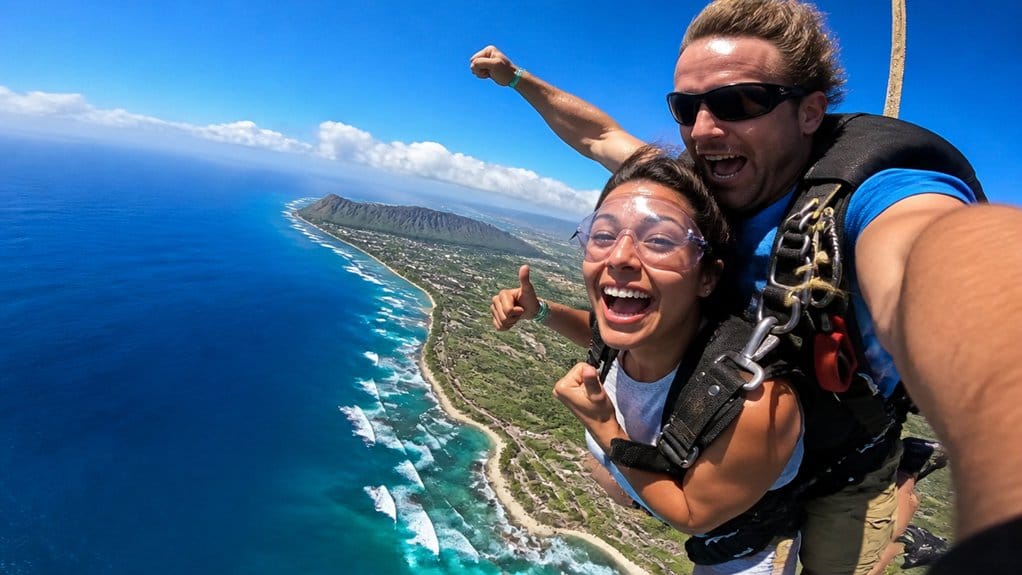
Skydive Hawaii leans into a classic North Shore skydiving feel, with tandem jumps launching from historic Kawaihapai Airfield and a locally owned operation that’s been running since 1984.
You book ahead, check in at your reservation time, and spend 2 to 4 hours at this Skydiving Center. It’s conveniently located one hour from Waikiki. Then you gear up with a USPA-licensed instructor and chase an unforgettable experience.
- Guaranteed 14,000-foot tandem exits, with higher options for bigger thrills
- About 120 mph in freefall, with wind roar and your heart doing cartwheels
- A calm canopy ride over coastline, ocean, green mountains, and sunlit fields
- Promo pricing can look appealing, but budget for fuel, card, and possible weight fees
Photo and video packages are available if you want proof you actually did it.
If you want a no-jump way to see Oahu from above, Magnum Helicopters Oahu is often highlighted as a top aerial tour choice.
What Is GoJump Hawaii Like?
If Skydive Hawaii gives you that old-school North Shore feel, GoJump Hawaii comes off a bit more polished and convenience-minded without losing the thrill. Your skydiving experience here starts with practical perks like Waikiki pickup options, then shifts quickly into big-view adventure on Oahu’s North Shore.
You’ll usually jump from 14,000 feet, with an 18,000-foot upgrade if you want extra freefall and a louder story afterward. GoJump Hawaii uses a Cessna Caravan, so the climb feels smooth and roomy by jump-plane standards. Reviews often praise the friendly staff and seasoned instructors, which helps the whole day feel organized instead of chaotic. Expect to spend two to four hours on site. Photo and video packages are popular, and earplugs are a smart move because freefall wind doesn’t exactly whisper. If you still have energy after landing, a Waikiki sunset cruise can be an easy way to keep the ocean views going tonight.
Which Oahu Skydiving Company Feels Safest?
Usually, the safest-feeling Oahu skydive company is the one that makes its process easiest to trust before your feet ever leave the plane. For many first-timers, Skydive Hawaii stands out. It’s been running since 1984, uses USPA-certified instructors, and guarantees 14,000-foot tandem exits.
- You hear clear briefings, not rushed sales talk.
- You see experienced instructors checking gear with calm focus.
- You get altitude guarantees and free-cancellation policies.
- You can ask about knee-friendly landings or aircraft type.
Pacific Skydiving Center and GoJump America_Hawaii also inspire confidence with turbine planes, solid ratings, and similar safeguards. If some travelers in your group prefer a lower-altitude thrill before committing to a jump, Oahu also has top zipline tours worth comparing. If you want a great experience on the extreme West side, compare recent reviews and accommodation policies. That extra homework often leads you to the best skydiving match for your comfort level and nerves.
Which Oahu Skydive Has the Best Views?
From the airplane door, Oahu looks like a live map of turquoise water, green ridges, and bright reef lines. If views are your priority, Skydive Hawaii stands out. You launch from Kawaihapai on the North Shore and get sweeping looks at coastline, mountains, and quilt-like fields. Reviewers love the long scenic ride under canopy, when your instructor can point out landmarks and help with canopy photography.
Pacific Skydiving Center and GoJump Hawaii also deliver strong scenery from the far west North Shore. Their caravans open onto broad shorelines and wide ocean panoramas. For the clearest light, book early morning or sunrise launches and watch the forecast. Better weather improves reef visibility, and that calm parachute glide lets you actually absorb Oahu instead of just yelling wow into the wind. If you want to pair skydiving with a cultural day, compare Polynesian Cultural Center tickets so you know the packages, timing, and what’s included.
What Altitude Should First-Time Jumpers Choose?
When you choose between 8,000 and 14,000 feet, you’re really choosing between a quick hit of freefall and a longer, fuller ride above Oahu’s bright coast and green ridges. An 8,000-foot jump keeps the price lower and the rush shorter at about 20 seconds, while 14,000 feet gives you 50-plus seconds to hear the wind roar and take in more of the view. For most first-timers, 14,000 feet hits the sweet spot because you get more time in the air without the colder, more complicated setup that comes with very high-altitude jumps.
8,000 Vs 14,000 Feet
Two jump heights shape most first-time choices in Oahu, and they feel more different than the numbers suggest. You’ll usually pick 8,000 or 14,000 feet. The lower option costs less and gets you airborne faster, which can trim your on-site time. The higher altitudes feel more classic across Oahu operators, yet 14,000 feet still avoids oxygen considerations.
- 8,000 feet often means cheaper early-bird pricing
- 14,000 feet is the standard at many operators
- Older jumpers may prefer the gentler lower option
- You’ll notice scenic island views more under canopy
Your choice isn’t just numbers. It’s budget, pace, and how you want the day to unfold. Wind effects can shape conditions, but your instructor manages the ride. If you want more wow, 14,000 feet usually wins nicely. For a slower sightseeing day before or after your jump, Oahu trolley routes can keep the island views going from the ground.
Freefall Time And Comfort
Here’s where altitude really starts to show off. If you leave at 14,000 feet, you get 50-plus seconds of freefall. At 8,000 feet, you get about 20. You’ll still fall around 120 mph either way, so the thrill feels similar. The real difference is how long you get to enjoy it.
Your best choice depends on altitude comfort and budget. Higher exits cost more, but they also give you more canopy time, which means a longer, quieter glide with bigger ocean views. Shorter jumps are cheaper and still feel legit, just faster from hello to parachute. Think about practical comfort too. Higher climbs take longer and the air gets colder, so follow good layering advice. If you’re flying in before your jump, a simple Terminal 1 map can make navigating Honolulu Airport easier. Earplugs can also help with wind noise if you’re sensitive. Your ears may thank you later.
How Oahu Skydiving Prices Compare
Prices on Oahu can swing more than you might expect, so it pays to look past the headline rate before you book. You’ll spot flash deals near $198 to $199 for 14,000 feet, but standard rates usually land around $245 to $259.
- Pacific Skydiving Center often teases limited-sale spots, sometimes only for the next 50 bookings.
- Skydive Hawaii matches that range online, while 20,000-foot halo jumps soar to about $1,600 to $2,000.
- seasonal pricing and group discounts can help, though flash sales usually can’t stack with other deals.
- hidden fees matter, including fuel surcharges, card fees, weight charges, and pricey photo or video add-ons.
Travelers comparing adrenaline activities may also notice that Jet Ski tours and rentals are popular Oahu options with their own pricing models.
You should also check cancellation terms. Several operators allow free cancellation with 48-hour notice, which adds real value if your plans shift with Hawaii’s breezy moods.
How Tandem Landings Feel for Beginners
As you come in to land, the rush gives way to a surprisingly calm glide, then a quick flare and a gentle slide across the grass or dirt. For beginners, that final approach feels quieter than expected. You hear the canopy, notice the ground rising, and trust your instructor to handle the timing.
Your job is usually simple. Follow leg positioning cues by lifting your feet or, sometimes, taking a tiny run. Wind and pilot skill shape the gentle touchdown, so experienced Oahu instructors adjust the approach for smoother contact. Oahu’s trade winds can also affect other outdoor tours, including Kaneohe Sandbar boat trips where surface chop changes the experience. Expect firm harness sensations as you settle onto the ground. Some people, especially men, notice extra pressure during the flare. Athletic shoes help you absorb the landing and avoid awkward twists. If your knees are sensitive, some operators can arrange a softer slide-in landing.
How Long an Oahu Skydive Takes
Usually, an Oahu tandem skydive takes about 2 to 4 hours from check-in to debrief, even though the jump itself feels over in a flash. Your reservation usually marks check-in, so nail your arrival timing and show up 30 minutes early.
- You sign forms, get fitted into snug gear, and hear the safety briefing.
- Then comes flight variability: about 10 to 15 minutes up for 8,000 to 9,000 feet, or around 15 minutes to 14,000.
- Freefall lasts roughly 20 seconds from lower exits or 50-plus seconds from 14,000, followed by a quiet 3 to 5 minute canopy ride.
- weather delays, air traffic, or aircraft swaps can stretch your visit to 4 to 6 hours, so keep a half-day open.
Morning slots often move faster, and you’ll thank yourself later. If you’re building a full beginner-friendly adventure day in Honolulu, pair your jump planning with beginner-friendly scuba tours so you can compare timing and energy levels before booking.
Are Photo and Video Packages Worth It?
If you’re already jumping out of a plane over Oahu’s bright blue coast, adding a photo or video package often feels like money well spent. Most first-time jumpers think so, especially when wrist cam tips and dedicated photographers capture both freefall and canopy views.
| Package | Best for | What to know |
|---|---|---|
| Wrist cam | Budget-minded jumpers | Typical low-cost add-on |
| Photographer | Cinematic coverage | Better angles in freefall |
| Bundle | Premium jumps | Sometimes included |
| Delivery | Easy sharing | Sent digitally by email |
| Planning | Smart buyers | Book at check-in |
Like booking private charters around Oahu, it’s smart to compare what’s included before paying for an add-on. You’ll usually pay beyond base tandem rates, though some 14,000 to 18,000-foot jumps include packages. Ask about editing options and memory storage too. If this is your once-in-a-lifetime leap, you probably won’t regret having proof.
What to Wear for an Oahu Skydive
For an Oahu skydive, dress like you’re heading to the gym on a cool morning, then remember you’ll climb into air that feels shockingly colder at altitude.
Dress for an Oahu skydive like a cool-morning gym session, because Hawaii feels a lot less tropical at altitude.
- Wear layered clothing, like a light long-sleeve top plus a removable jacket.
- Pick fitted athletic pants and closed-toe shoes with strong footwear grip.
- Prioritize hair security, secure glasses, and skip hats, scarves, and bulky jewelry.
- Pack earplugs for plane noise and save sunglasses for before or after.
Your harness sits over everything, so flexible clothes work best. At altitude, temperatures can plunge, even in Hawaii, which makes thin beachwear a terrible joke. Choose shoes with a heel strap, not sandals. You may land with a short run or slide. If you’re doing a very high jump, clean-shaven faces can help oxygen masks seal properly. After your jump, Lanikai Beach can be a calmer stop if you want a classic Oahu shoreline to unwind.
Which Oahu Skydiving Operator Fits You?
You’ll want to match your operator to what matters most to you: a calm safety-first vibe, a smoother ride up, or the best price for more airtime. Skydive Hawaii stands out for experienced instructors and fast climbs from the North Shore, while GoJump/Pacific gives you flexible height options, sale prices, and a scenic west-side launch about an hour from Waikiki. As you compare, think about comfort in the harness, possible wait times, extra weight fees, and whether you’ll want the wrist-cam video when your cheeks are flapping in the wind.
Safety And Comfort
Peace of mind matters as much as the view when you’re choosing an Oahu skydiving operator. You want clear systems, calm coaching, and comfort gear that helps you focus on the ocean below, not your harness.
- Skydive Hawaii is USPA-certified, with experienced tandem instructors and a strong safety record from Kawaihapai Airfield.
- GoJump Hawaii backs altitude promises with proof, so you know exactly what exit height you’re getting.
- Both use Cessna Caravan aircraft, which climb fast and can cut waiting around in changing weather.
- Ask ahead about noise mitigation, medical accommodations, landing style, and harness fit if your knees or mobility need extra care.
If you are planning other Oahu activities after your jump, learning how to buy Bishop Museum tickets online can help keep the rest of your itinerary simple.
Freefall gets loud and windy at 120 mph. Bring earplugs, secure loose items, and consider video for technique review. It’s smart, not vain.
Pricing And Experience
Start with the kind of jump you actually want, because the price on Oahu usually tracks the amount of sky you get. Your altitude comparisons matter. An 8,000-foot Tandem Lite gives you about 20 seconds of freefall and usually the lowest price. A 14,000-foot jump delivers 50-plus seconds and stronger package value for many first-timers.
| Option | What it means |
|---|---|
| 8,000 ft | Cheapest, shorter rush |
| 14,000 ft | Better value, longer freefall |
Skydive Hawaii keeps it simple with tandem-only jumps, a guaranteed 14,000 feet, online specials near $198, then fuel and possible weight fees. GoJump often flashes $199 deals and sometimes offers 18,000-foot boosts. If you want a calmer day on the water after your jump, Oahu also has snorkel boats and sunset cruises to round out the trip. Check equipment differences, video package discounts, cancellation rules, and total add-ons before you book. Otherwise, your bargain may vanish faster than your courage.
Frequently Asked Questions
Can I Skydive in Oahu if I Get Motion Sickness?
Yes, you can skydive in Oahu with motion sickness if you choose faster planes, use motion sickness remedies, practice pre jump breathing, discuss medication considerations, avoid heavy meals, and tell staff early so they can help.
What Weather Conditions Cause Oahu Skydives to Be Canceled?
Like a red light, weather stops your Oahu skydive when you face high winds, low visibility, heavy rain, thunderstorms, lightning, low cloud ceilings, wind shear, or airspace restrictions. Operators won’t launch if safety margins shrink.
Are Weight Limits Different Between Oahu Skydiving Operators?
Yes, you’ll find different weight restrictions between Oahu operators. Most tandem limits cap around 250 pounds, with fees starting near 200. You should verify equipment accommodations, altitude-specific rules, and instructor discretion before booking your jump.
Can I Bring Friends or Family to Watch My Jump?
Yes, you can usually bring friends or family to watch. You’ll find spectator viewing areas, but ground safety rules keep them from ramps and landing zones. Check parking logistics, shuttle options, accessibility, and consider buying a photo package.
How Far in Advance Should I Book an Oahu Skydive?
You should book your Oahu skydive 2–4 weeks ahead for ideal advance timing. During peak season, book 4–8 weeks out. If you’re hoping for last minute spots, you’ll find fewer morning jumps and add-on options.
Conclusion
Choose the Oahu skydive that matches your comfort level, budget, and dream view. Soon you’re shuffling to the plane in sneakers and a harness, hearing the propeller rise over warm trade winds. Then the door opens and the North Shore snaps into focus. Blue water. Green fields. Tiny roads below. With a good tandem instructor, clear briefing, and a little courage, your first jump can feel surprisingly smooth. Even the butterflies might decide to enjoy it.
Experiences to explore
 Explore experience ↗
First-Time Snorkeling + Scuba Adventure in Waikiki with Videos
◷ 2 hr 30 min
Discover the best of Honolulu’s underwater world in one unforgettable experience—perfect for first-timers! This 2-in-1 ocean adventure
From $129.00 USD
View dates Explore experience ↗
Oahu's Stunning Views: Half-Day Scenic Tour with 7 Lookouts
◷ 3 hr–4 hr
Bless your eyes with Oahu's most beautiful wonders. We take you to the MOST IMPRESSIVE SCENEARIES of this island on a HALF-DAY TOUR. Ex
From $77.00 USD
View dates Explore experience ↗
Easy Private Hike in Honolulu (Choose 1 of 2 trails) 2-4hrs
◷ 4 hr
Choose 1 of 2 hikes, either through the valley to the waterfall, or from the top of mountain with scenic views. This is a private, guid
From $373.14 USD
View dates