Oʻahu packs more history, movement, and meaning into one island than seems fair. If you ask what Oʻahu means, you’ll hear “The Gathering Place,” and once you see the broad valleys, busy harbor, and city streets that funnel people together, it fits. You can almost hear the layers of it in the trade winds and feel it in Honolulu’s daily rush. But the name reaches deeper than a catchy nickname, and that’s where it gets interesting.
Key Takeaways
- Oʻahu is commonly translated as “The Gathering Place,” a widely used meaning for the island’s name.
- The name is often analyzed from Hawaiian elements ʻo and ʻahu, with ʻahu linked to gathering, heaping, or an altar.
- The ʻokina in Oʻahu marks a glottal stop and reflects correct Hawaiian spelling and pronunciation.
- Scholars do not agree on one definitive origin, and historical sources show inconsistent spelling and interpretation.
- The gathering meaning fits Oʻahu’s history as a political, ceremonial, and population center in Hawaiʻi.
What Does Oʻahu Mean?
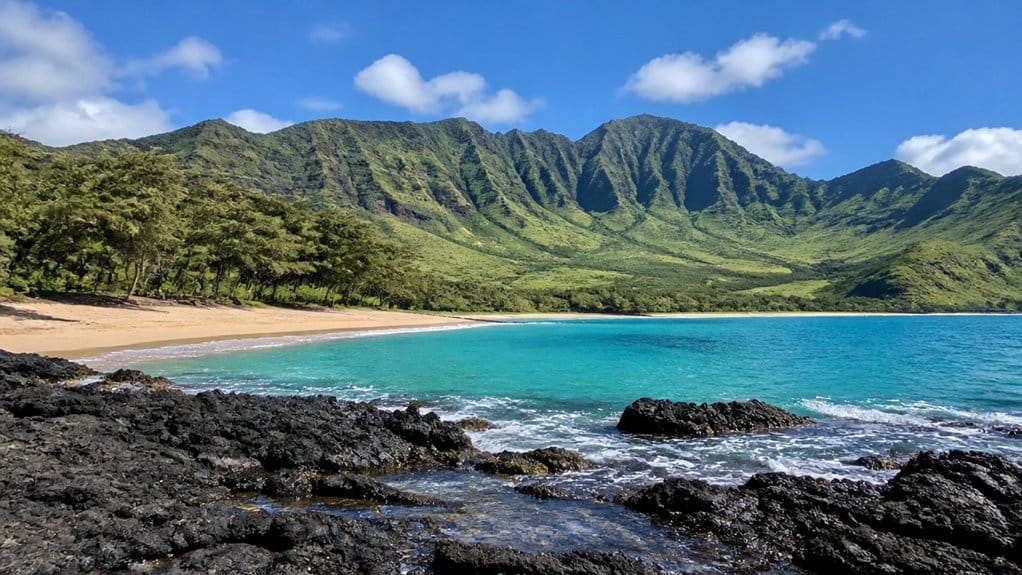
Names carry stories, and Oʻahu’s may be the most inviting of all. When you ask what Oʻahu means, the usual answer is “The Gathering Place.” That Hawaiian sense fits the island beautifully. You see it in busy harbors, crowded beaches, and valleys where people have long met for ceremony, trade, and counsel.
You’ll also notice that the proper spelling matters. In Hawaiian, Oʻahu includes the ʻokina, the small mark that signals a glottal stop in pronunciation. Without it, the name loses some of its texture, like hearing music with one note missing. Like Honolulu meaning, Oʻahu’s name invites a closer look at Hawaiian language, translation, and place-based history. While scholars don’t agree on one final explanation, the symbolic meaning stays strong. Oʻahu feels like a place that draws people in, then gives them room to connect, linger, and return again.
Where Does the Name Oʻahu Come From?
When you trace the name Oʻahu, you usually land on Hawaiian root words that point to gathering, which helps explain why people call it “The Gathering Place.” You’ll also notice the ʻokina in Oʻahu, a small mark that changes the sound and reminds you that older spellings didn’t always get it right. There’s no single locked-in origin story, but the name still fits the island’s long role as a busy meeting ground for people, ceremony, and shared life. Looking at Oahu’s Hawaiian roots helps uncover why its name is tied so closely to place, people, and meaning.
Hawaiian Root Words
A good place to start is the Hawaiian language itself. When you look at Oʻahu, you’ll usually see it explained through Hawaiian parts: ʻo plus ahu. In this reading, ahu can mean to gather or heap, which gives you an early clue to the island’s name and why Gathering ideas surround it.
You’ll also notice the ʻokina in modern spelling, Oʻahu. That small mark matters. It reflects current Hawaiian-language practice, even though older writers and some early 1900s sources handled the name differently. Scholars have questioned the exact grammar, so you shouldn’t treat one neat translation as the whole story. Hawaiian notes also connect ʻahu with an altar or stone cairn, a physical spot where people come together. That image fits Oʻahu’s long cultural importance beautifully today.
Gathering Place Meaning
Clue by clue, Oʻahu earns its famous nickname, “The Gathering Place.” You’ll hear that meaning everywhere, and it became especially popular after writer Thomas Thrum used it in 1922.
If you trace the language, you can read ʻo ahu as a subject marker plus ahu, meaning to gather, heap, or even altar. That gives you a practical image. People, offerings, and ideas come together in one place. Scholars still say the full origin isn’t settled, so you shouldn’t treat this as a final verdict.
Still, the Gathering Place fits what you experience on the island. In earlier times, Oʻahu worked as a central hub for political meetings, religious ceremony, and daily exchange. You can almost picture canoes landing, voices rising, and communities converging before sunset there. Nearby, the name Honolulu also carries its own Hawaiian meaning, giving another example of how place names preserve island history.
Still comparing Bishop Museum And Hawaiian Culture?
Ask for tour ideas, hotel suggestions, or a simple trip plan that combines both.
Trip Helper
ʻOkina And Spelling
Looking closely at the name, you’ll see the island is properly written Oʻahu, with the ʻokina marking a quick catch in the throat between the O and ahu. That small mark matters. When you say it, your voice pauses for a beat, like a tiny step on lava rock. In Hawaiian culture, that pause helps protect the original sound and sense.
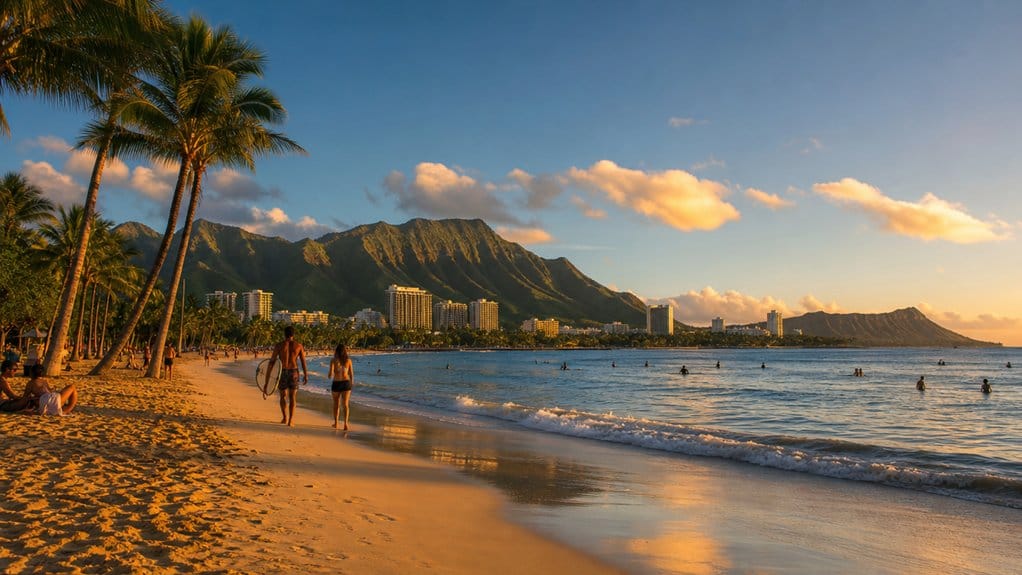
You’ll often spot Oahu on maps, menus, and airport signs, but the anglicized spelling drops something important. Early writers were inconsistent, and Thomas Thrum’s 1922 version helped popularize “The Gathering Place.” Linguists link the name to ʻo and ahu, meaning gathering or altar. No other meaning has clearly replaced that reading. So when you write Oʻahu, you honor pronunciation, history, and place today. Waikiki is on the island of Oʻahu, which is why the island’s name appears so often in travel questions about Honolulu and its famous shoreline.
Why Is Oʻahu Called “The Gathering Place”?
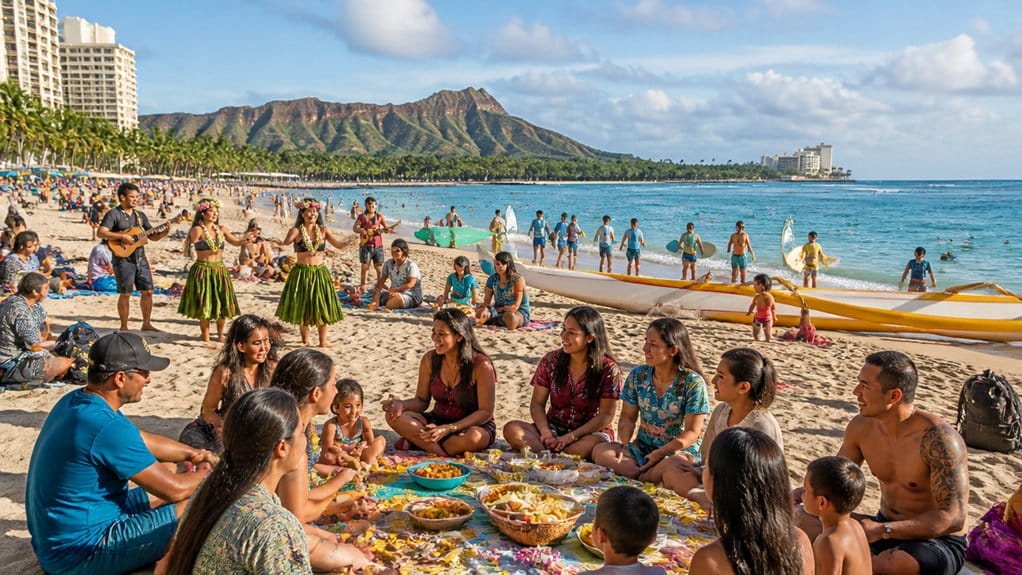
When you hear Oʻahu called “The Gathering Place,” you’re hearing a name tied to old ideas about assembly, shared space, and the island’s long pull on people. You can see why it fits when you picture chiefs, priests, and families meeting in wide valleys and along easy coastal plains between the Waiʻanae and Koʻolau ranges. Even today, as Honolulu hums with ceremonies, government, and daily crowds, you can still feel how culture and geography keep bringing everyone to the same shore. On the windward side, Kaneohe Bay adds to that sense of gathering with its sheltered waters, scenic views, and many places where people come together outdoors.
Name Origin Theories
Names carry stories, and Oʻahu’s most famous one is “the Gathering Place.” A common explanation traces the name to Hawaiian elements often read as ʻo and ʻahu, with ʻahu linked to gathering, piles, or even an altar. If you dig into Hawaiis Gathering nickname, you’ll find this reading became widely known after Thomas Thrum popularized it in 1922.
Still, you shouldn’t treat that gloss as settled fact. Some Hawaiian scholars question Thrum’s exact spelling and meaning, and primary sources don’t give you one final answer. Even so, ʻahu can point to a heap, a shrine, or things brought together, so the symbolism fits. Oahu pronunciation is often explained alongside its meaning because saying the name correctly helps preserve the island’s cultural context. When you say Oʻahu means the Gathering Place, you’re usually using a cultural reading. It highlights connection and shared purpose, not a single dictionary-perfect translation for the island’s name.
Historic Gathering Role
Across the island, Oʻahu earned “The Gathering Place” because people truly came together here. When you look at its history, the nickname fits. Chiefs, priests, and visiting groups met on Oʻahu for politics, ceremony, and daily exchange. You can picture busy shorelines, canoes arriving, and voices carrying across open spaces. Later, ruling power centered here too, which strengthened the island’s identity as The Gathering Place. Today, many Honolulu facts still point to Oʻahu’s lasting role as Hawaiʻi’s central place of connection.
- You see leaders convene and make major decisions.
- You find religious rites and public ceremonies drawing crowds.
- You notice trade, news, and alliances moving through shared hubs.
- You sense why the name stuck in memory.
Even if scholars debate the exact wording, the bigger idea stays clear. Oʻahu became the island where people assembled, listened, negotiated, and connected again and again over time.
Culture And Geography
Because Oʻahu’s landscape naturally pulls people together, the island’s nickname makes sense in a very physical way. You can see why people call it The Gathering Place.
| Feature | Why people gather |
|---|---|
| Central valley | Settlements grew on fertile plains |
| Honolulu | Most residents, jobs, and culture meet here |
Between the Waiʻanae and Koʻolau ranges, a broad saddle opens space for farms, ceremonies, and politics. The name likely ties to gathering, and the geography backs it up. Chiefs met here. The monarchy ruled here. Today, Honolulu still draws most of the island’s people and energy. Oʻahu covers about 597 square miles, giving its compact landscape enough room for mountains, valleys, cities, and shorelines to sit close together.
When you visit Waikīkī, Pearl Harbor, ʻIolani Palace, or the North Shore, you feel that pull. Surfboards, memorials, city streets, and palace grounds all say the same thing: Oʻahu brings people together, almost like the island planned it.
Where Is Oʻahu in Hawaiʻi?
In the middle of the Hawaiian chain, Oʻahu sits in the central Pacific between Kauaʻi to the northwest and Molokaʻi to the southeast. You’ll find it near 21°30′N, 158°00′W, right among the main Hawaiian Islands. It covers about 596.7 square miles and wraps itself with roughly 227 miles of shoreline, so water is never far away.
- Honolulu anchors the southeast coast.
- Oʻahu helps form the City and County of Honolulu.
- You can picture busy harbors and long beaches.
- The island feels central without feeling tiny.
When you look at a map of Hawaiʻi, Oʻahu stands out as a practical hub. Honolulu, the state capital, gives you an easy reference point. The island also includes the remnants of Waiʻanae and Koʻolau, with a broad central saddle between them. For first-time visitors, the island’s central location makes it easy to reach many must-see Oahu attractions.
How Geography Shaped Oʻahu
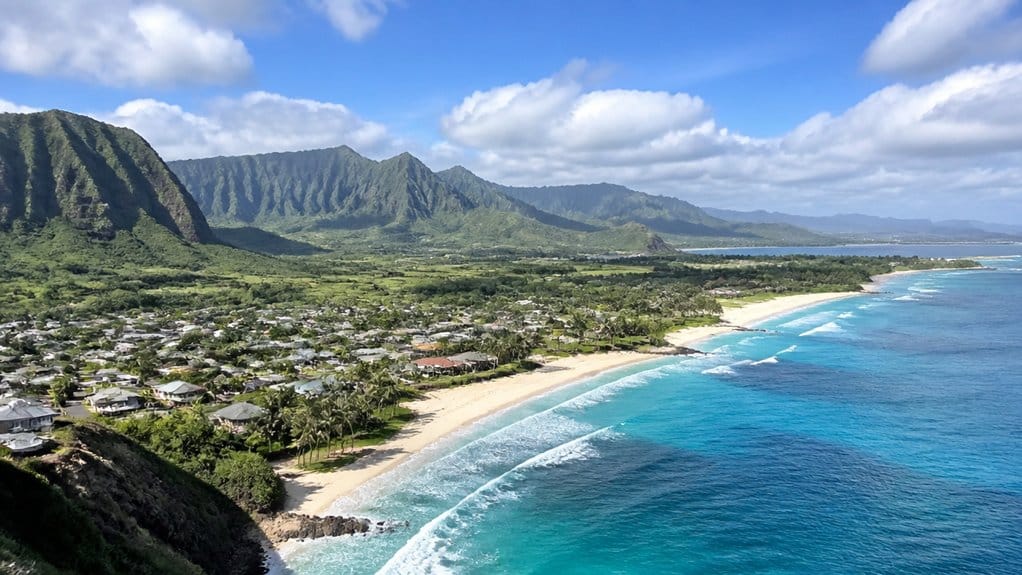
At the heart of Oʻahu, two ancient shield volcanoes shaped nearly everything you see today. You stand on the eroded bones of Waiʻanae and Koʻolau, with a broad central saddle between them. That layout gives the island of the Hawaiian chain its varied moods, from sheltered coasts to breezy cliffs. Mount Kaʻala rises above the west and helps steer rainfall and streams.
| Feature | What you notice |
|---|---|
| Koʻolau and Waiʻanae | Steep ridges, deep valleys |
| Central saddle | Easier travel, open plains |
You can trace that geology along 227 miles of shoreline. Kāneʻohe Bay and Kailua Bay curve into calmer water, while the North Shore greets pounding surf. Warm temperatures, usually 70 to 85 degrees, and windward and leeward microclimates also nudged Honolulu toward the southeast coast early on. On that same southeastern coast, Diamond Head stands as one of Hawaiʻi’s most iconic volcanic landmarks.
How Native Hawaiians Gathered on Oʻahu
When you look at Oʻahu as a gathering place, you can see why sacred heiau, wide plains, and sheltered bays pulled people together. You can trace that movement through the island’s moku, where communities met for makahiki festivals, trade, and canoe arrivals that must’ve filled the shore with voices and salt air. From the slopes above Honolulu, Tantalus on Oahu offers another way to understand the island’s geography, with lookout views that reveal how ridges, valleys, and coastal plains connect. You also start to see how ceremony and exchange gave Oʻahu its meaning, turning the island into a living meeting ground rather than just a spot on the map.
Sacred Meeting Places
Because Oʻahu has long been seen as a gathering place, Native Hawaiians came together here for far more than simple meetings. When you picture these sacred sites, you can almost hear chants carry between the Waiʻanae and Koʻolau ranges. Chiefs and priests met in broad valleys, coastal ahu, and heiau where canoe routes made arrival practical and ceremonial.
- You’d find ahu near shorelines, built for offerings and ritual.
- You can imagine Waikīkī filled with voices, salt air, and ceremony.
- You’d see sheltered bays near Pearl Harbor and Kāneʻohe Bay draw crowds.
- You can trace how fertile plains and central valleys supported large assemblies.
The name Waikīkī is often translated as “spouting water,” reflecting the freshwater springs and streams that once flowed through the area.
These places gave Oʻahu its deeper meaning. You weren’t just on an island. You stood within a living crossroads where land, sea, and spirit met.
Moku And Community
Oʻahu’s gathering power also took shape in the way Native Hawaiians organized the island into six moku: Kona, Koʻolaupoko, Koʻolauloa, ʻEwa, Waiʻanae, and Waialua. As you look at a map, you can see how each district helped people govern land, share resources, and stay connected across the island.
You can imagine people moving through the broad central valley and along long shorelines that worked like natural roads. These routes linked communities for trade, seasonal exchange, and everyday visits. On the windward side, Kaneohe reflects how Koʻolaupoko communities connected mountain, bay, and coast. Traditional chants named the moku and coastal landmarks, so Native Hawaiian identity traveled by voice as much as by canoe. Chiefs and aliʻi gathered in central places, including near present-day Honolulu, to settle disputes, build alliances, and direct resources. Oʻahu didn’t just hold people. It helped them find one another.
Ceremonies And Exchange
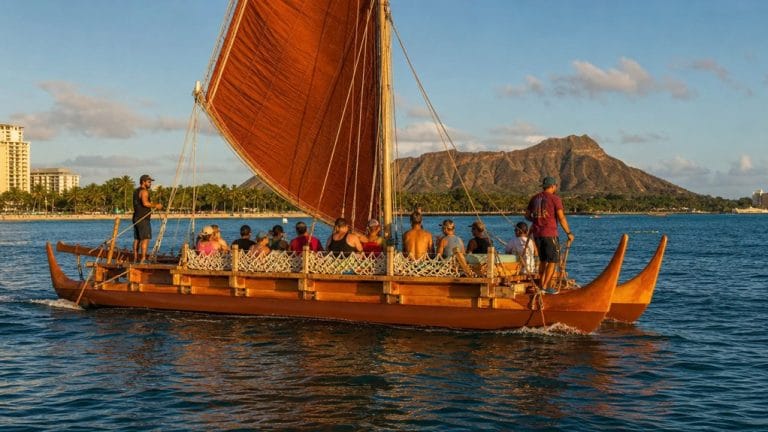
Ceremony gave Oʻahu a pulse you could feel across its plains and sheltered bays. You can picture Hawaiian people moving through the saddle between Waiʻanae and Koʻolau for makahiki rites, chiefly councils, and brisk exchange. Across the six moku, chiefs welcomed guests with feasts, chants, and trade. Near Waikīkī and Pearl Harbor, heiau anchored offerings, negotiations, and the sharing out of goods.
- In Koʻolaupoko and Koʻolauloa, gatherings tied communities together.
- In Waialua and Waiʻanae, councils shaped island decisions.
- In ʻEwa and Kona, bays received canoes loaded with goods.
- Chants and hula, including “Awaho Makou o Awawamalu,” honored ancestors.
You’d hear surf, drums, and voices. You’d see kapa, fish, and carved bowls change hands. Oʻahu didn’t just host meetings. It connected islands like a very busy canoe dock. On Oʻahu, the native hau Hawaii plant also marked coastal and lowland places where people gathered, traveled, and exchanged goods.
Why Oʻahu Became a Center of Power
Power on Oʻahu grew from a mix of geography, food, and movement. You can see why chiefs valued it. A broad valley sat between Waiʻanae and Koʻolau, where streams fed taro and sweet potato fields. Fishponds added steady food, and sheltered bays eased canoe travel. Place names across the island hint at gathering, ritual, and alliance. Oʻahu’s role in Hawaiian history grew as its resources and location shaped political power over time.
| Advantage | Why it mattered |
|---|---|
| Central location | Easier interisland travel |
| Fertile valley | Larger populations |
| Harbors and bays | Trade and meetings |
You’d also notice how ridges sheltered communities and created useful microclimates. That let people farm in more than one zone without going far. Rulers like Maʻilikūkahi built authority here, and later Kamehameha fought to control it. Oʻahu wasn’t just pretty. It was practical, connected, and hard to ignore.
How Oʻahu Influenced Hawaiian History
That practical strength shaped far more than one island. On Oʻahu, you can trace Hawaiian history through ridges, valleys, and harbors that pulled chiefs, traders, and armies together. The island’s broad center and twin ranges made movement possible and conflict unavoidable.
- In 1795, Kamehameha I seized Oʻahu after Nuʻuanu, pushing unification forward.
- Honolulu in One glance shows why power settled here, from harbor traffic to royal ceremony.
- At ʻIolani Palace, you stand where the monarchy lived and where the 1893 overthrow changed governance.
- At Pearl Harbor, the still water recalls December 7, 1941, when war remade Hawaiʻi’s role.
Today, even Honolulu Airport Terminal 2 reflects Oʻahu’s role as a gathering point for travelers, with restaurants serving visitors as they pass through the island.
You don’t just read history here. You hear it in wind on the Pali and see it in stone walls, royal rooms, and guarded shorelines today.
What Oʻahu Means in Modern Hawaiʻi
Look around modern Hawaiʻi and Oʻahu still lives up to its reputation as The Gathering Place. You see that meaning in daily life, where government, business, and culture meet, yet older Hawaiian roots still matter. Many people connect Oʻahu to ʻo and ahu, hinting at gathering and an altar, so the name feels communal more than fixed. Like Waikiki, understanding a place name through its Hawaiian roots can reveal how language, landscape, and culture stay connected.
| You notice | You feel | Why it matters |
|---|---|---|
| ʻOkina on signs | Respect | Language lives |
| Lei Day music | Warmth | Traditions stay |
| Kamehameha parades | Pride | History breathes |
| Busy streets | Energy | Center of Hawaiʻi |
| Many local voices | Belonging | Fusion feels real |
When you write Oʻahu with the ʻokina, you help honor pronunciation and living identity today, even your map app notices.
Places That Show Oʻahu’s Meaning
You can see Oʻahu’s meaning most clearly in the places where people have long come together. Around Honolulu, near Diamond Head, you feel that pull in civic spaces and shoreline lookouts where daily life still converges. In the valleys between the Waiʻanae and Koʻolau ranges, old heiau sites remind you that people once assembled here for ceremony, decisions, and shared purpose.
- At ʻIolani Palace, public grounds still invite gathering and reflection.
- Kualoa Ranch shows how broad landscapes can hold community memory.
- Lei Day and King Kamehameha Day fill parks and streets with voices, flowers, and music.
- Signs that use proper Hawaiian spelling help you notice Oʻahu as more than a label.
Together, these places make “The Gathering Place” feel less like a slogan and more like directions. You just follow people. Built in 1882 by King Kalākaua, ʻIolani Palace remains the only official royal residence in the United States.
How to See Oʻahu Through Its History and Culture
To see Oʻahu through its history and culture, start where the island’s layers sit close to the surface. In Honolulu, you can walk from ʻIolani Palace to busy streets and feel how this was a royal seat and a true gathering place.
Honolulu’s story stretches from island roots to modern city life, showing how Oʻahu’s capital grew with both Hawaiian tradition and urban change.
Then look outward. The broad valley between the Waiʻanae and Koʻolau ranges, the fertile plains, and the sheltered bays explain why people met, traded, and settled here. Polynesian voyagers arrived centuries ago, likely between 900 and 1200 A.D., and their ways shaped Oʻahu’s six moku.
You’ll still see that living mix today. Watch hula, hear chant, smell fresh lei, and time your visit for King Kamehameha Day if you can. At Bishop Museum and neighborhood festivals, history doesn’t sit quietly behind glass. It chats back.
Frequently Asked Questions
How Do You Pronounce OʻAhu Correctly?
You pronounce Oʻahu as oh-ʻAH-hoo, adding a brief glottal stop between “oh” and “AH-hoo.” For Correct pronunciation, stress the second syllable, don’t lengthen any vowels, and keep the stop crisp but natural when you speak.
What Is the Best Time to Visit OʻAhu?
You’ll find the best time to visit Oʻahu from June to October for warm, drier weather and ocean fun. If you want fewer Seasonal crowds and better prices, choose April–May or September–October instead.
How Large Is OʻAhu Compared to Other Hawaiian Islands?
Like a packed theater, you’ll find Oʻahu balances modest Island size with outsized influence: at 596.7 square miles, it’s Hawaii’s third-largest main island, smaller than Hawaiʻi and Maui, yet larger than Kauaʻi, Molokaʻi, Lānaʻi, and Niʻihau.
What Foods Is OʻAhu Especially Known For?
You’ll find Oʻahu especially known for plate lunches, loco moco, fresh poke, malasadas, and shave ice. These local specialties showcase Hawaiian, Japanese, Filipino, Portuguese, and American influences, so you can taste the island’s diverse food culture.
Can You Visit OʻAhu Without Renting a Car?
Yes, you can visit Oʻahu without renting a car. You’ll use Public transportation, walk, bike, rideshares, and tours to reach most sights. You’ll want a car only for remote beaches, trailheads, and flexible island exploring.
Conclusion
When you stand on Oʻahu, you can almost feel the whole Pacific leaning in. The name points to gathering, and the island still proves it with crowded harbors, green valleys, temple sites, and Honolulu streets humming from dawn to midnight. You see cliffs, hear surf, and trace history in stone walls and royal places. If you visit with open eyes, Oʻahu stops being just a map dot and becomes a giant meeting place with sandals on.