When you say Waikīkī, you’re naming more than a beach strip. You’re saying “spouting fresh water,” a clue to springs, wet taro patches, and channels that once threaded this shore before the surfboards and hotel towers arrived. The name still carries that older landscape in its sound, if you know how to hear it. Once you spot the water story beneath the sidewalks, Waikīkī starts to look very different.
Key Takeaways
- Waikīkī comes from Hawaiian wai, “water,” and kīkī, “spouting” or “spraying,” meaning “spouting fresh water.”
- The name describes the area’s former springs, streams, wetlands, and irrigated loʻi kalo rather than a person or legend.
- Hawaiian place names preserve practical knowledge, so Waikīkī remembers the water-rich landscape that once defined the plain.
- The macronized spelling Waikīkī marks long vowels, guides pronunciation, and preserves the original Hawaiian meaning and form.
- Using Waikīkī connects the modern beach district to ancestral water systems, cultural practices, and Hawaiian language renewal.

Oahu Ka Moana Lūʻau at Aloha Tower Oceanfront Luau Show
Ka Moana Lūʻau – Oceanfront Hawaiian Luau in HonoluluExperience the spirit of Hawaiʻi at Ka Moana Lūʻau, a top-rated Honolulu luau set at his...

Paina Waikiki Luau at Waikiki Beach Marriott
Everything that makes renowned Waikiki, Oahu, a unique and exciting place is celebrated at Pāʻina Waikīkī!A u...
Oahu: Chief's Luau Admission
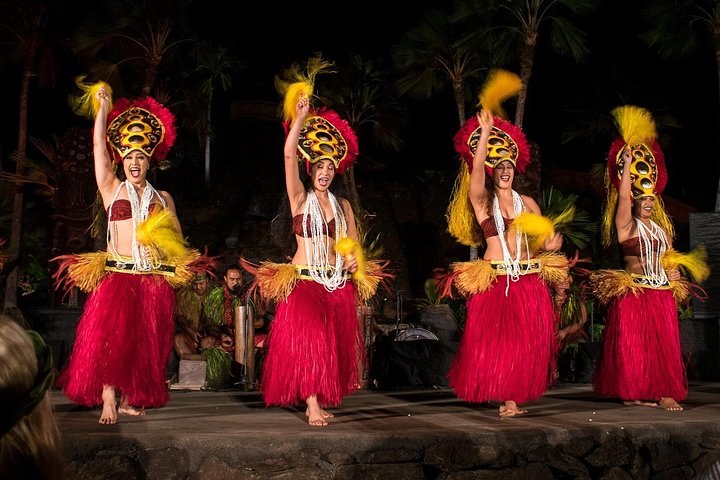
Attend a luau on Oahu produced by the Original World Fire Knife Dance Champion, Chief Sielu. During this 3 to 3.5-...
What Does Waikīkī Mean?
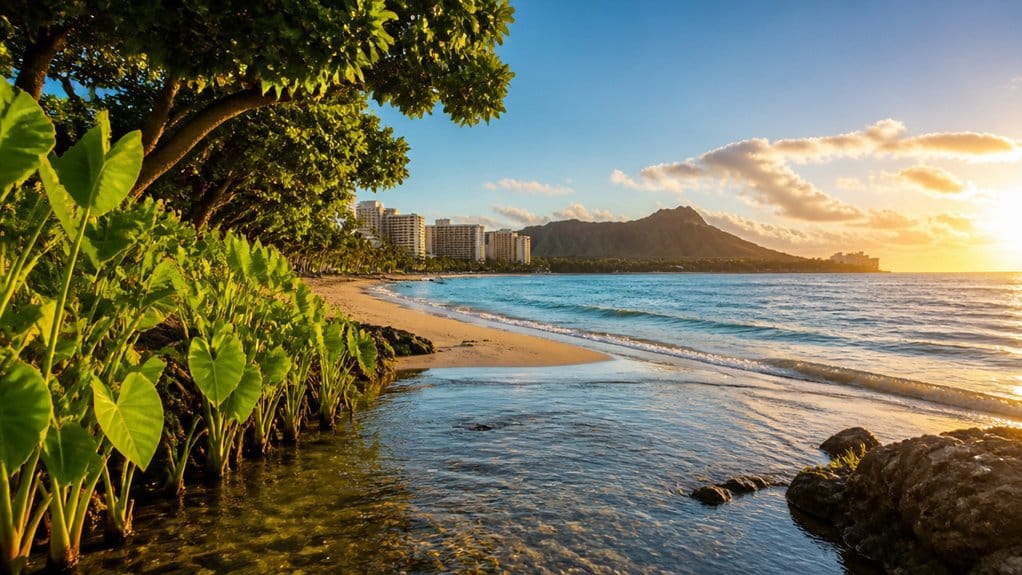
Names can work like little maps, and Waikīkī is a perfect example. In Hawaiian, wai means water and kīkī means spouting or spraying, so the name translates to spouting fresh water. You can almost hear it in the word itself.
That meaning points to the land you would’ve found here long before high-rises and surf lessons. Freshwater springs and streams once crossed this area and fed wetlands between Waikīkī and Oʻahu’s interior. Those waters supported loʻi kalo, fishponds, and daily life for Native Hawaiian communities. Local stories keep that connection alive, tying the name to real geography, not just poetry. Even the macrons in Waikīkī matter, because they preserve the original Hawaiian form and its meaning. This is why the meaning behind the name is rooted in the area’s once-abundant freshwater landscape. Think of the name as a snapshot of an older, wetter shoreline.
How Do You Pronounce Waikīkī?
You’ll say Waikīkī as why-EE-kee-kee, and the macrons help you hear those long ī sounds clearly. Keep it smooth as wai-kī-kī with no ʻokina break, and don’t punch one syllable too hard. Once you hear the rhythm, the name lands clean and musical, like a beach town you can finally greet the right way. Waikīkī is a neighborhood, not its own city.
Proper Hawaiian Pronunciation
If you want to say Waikīkī the Hawaiian way, pronounce it why-KEE-kee, with the stress landing on the second syllable. You’ll hear three clean syllables: wai-kī-kī. Start with wai like the English word why, then move into kī twice, each sounding like ee.
Written as Waikīkī, the name includes kahakō, or macrons, over both ī vowels. Those marks tell you to hold each ee sound a touch longer. You don’t need to force it or turn it into a performance. Just keep your pace smooth and your consonants soft. Hawaiian syllables stay open, so let each part breathe instead of bunching sounds together. When you say Waikīkī, pronounced why-KEE-kee, aim for a gentle flow. It sounds graceful, musical, and a little like waves meeting shore. For comparison, learning the Oahu meaning and pronunciation can also help you notice how Hawaiian place names carry both sound and cultural significance.
Stress And Long Vowels
Getting the sounds right is only half the story. When you say Waikīkī, you also need to hear its Vowel length and stress. You pronounce it why-EE-kee-EE, but the kahakō over both ī tells you to hold those sounds longer. Each long ī lasts about twice as long as a short i, so kīkī stretches beyond plain kiki.
You’ll usually place stress on the second syllable, giving you wai-KĪ-kī. Try saying it in four beats: Wa-i-kī-kī. Pause lightly between syllables and let the two long vowels ride out like small waves. That rhythm matches Hawaiian speech and keeps the name clear. Waikīkī is on the island home of Oʻahu, a fact that helps place the name within its Hawaiian landscape. If you skip the long vowels, Waikīkī can lose part of its original sense, the image of fresh water rising and spouting from the ground below.

Oahu: Kualoa Ranch UTV Raptor Tour
Traveling with family and friends? You can enjoy the fantastic Multi-passenger UTV Raptor experience with your entir...
How Is the Name Waikīkī Formed?
At its root, Waikīkī comes from two Hawaiian words: wai, meaning “water,” and kīkī, meaning “spouting” or “spraying.” Put together, the name points to “spouting fresh water,” which fits the place far better than any postcard slogan could.
When you look at how the name is formed, you can see Hawaiian place naming at work. It describes land, not a legend or famous person. Waikīkī names a landscape shaped by abundant springs and streams, with water surfacing and moving across low ground. The kahakō in Waikīkī matters too. Those marks stretch both i sounds and guide you toward the proper rhythm. You’ll often spot the simplified Waikiki on signs and souvenirs, but the full form keeps the Native Hawaiian structure clear, grounded, and alive in the island’s vocabulary today. Waikīkī is located in Honolulu on Oʻahu, so understanding Honolulu on the map helps place the name within its real island setting.
Why Does Waikīkī Mean Spouting Waters?
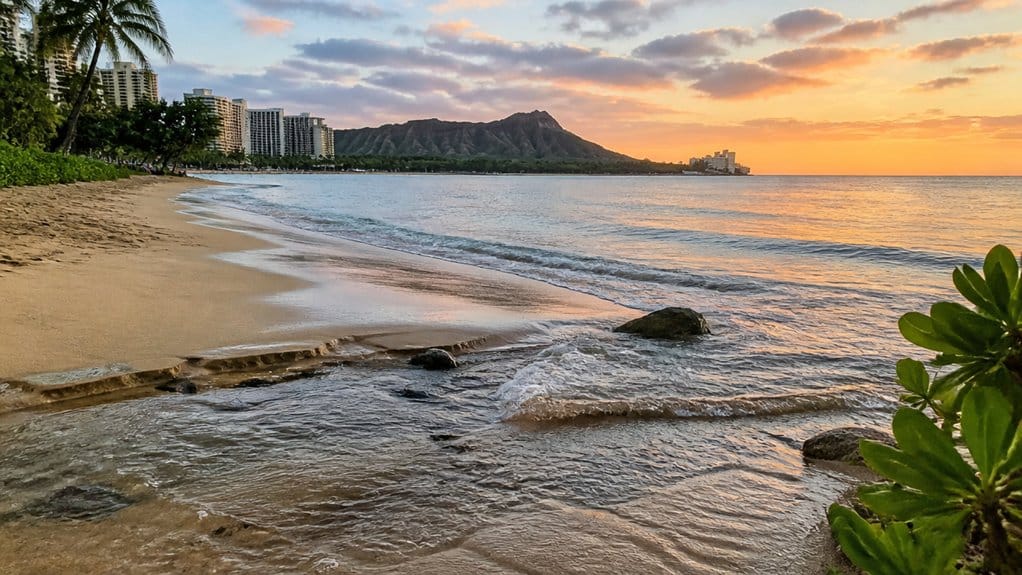
That literal meaning makes more sense once you picture old Waikīkī as a watery plain instead of a strip of hotels and surfboards. In the Hawaiian language, Waikīkī joins wai, or water, with kīkī, meaning to spout or spray. Like Honolulu Meaning, Waikīkī shows how Hawaiian place names often preserve direct clues about a location’s natural features and history. So you’re not looking at poetic fluff. You’re seeing a place named for real freshwater springs and spring-fed streams, constantly spouting across the lowlands.
Those waters mattered. They fed loʻi kalo and loko iʻa, supplied drinkable water, and marked useful landscape boundaries within traditional ahupuaʻa management. Early Hawaiian residents named places by what they actually did or held, and Waikīkī delivered water in abundance. Even the modern spelling, with macrons in Waikīkī, helps you hear the long vowel in kīkī and keeps that original meaning alive today still.
What Was Waikīkī Like Before Hotels?
Before hotel towers changed the shoreline, Waikīkī looked more like a broad green wetland than the beach district you know today. You’d walk past taro patches, fishponds, and low watery ground fed by springs and streams. Instead of traffic, you’d hear paddles, birds, and people working the land and shore.
You’d find a place that fed communities well. Loʻi kalo and loko iʻa supplied dependable food, while the ahupuaʻa system linked mountain and sea. Clear rules guided farming, fishing, and even prized surf breaks. Waikīkī also welcomed play. Aliʻi and commoners came for heʻe nalu, canoe races, hula, and big lūʻau. It was both practical and celebratory, a landscape with purpose and pleasure. Later, this tradition of public recreation continued at Kapiʻolani Regional Park, dedicated by King Kalākaua in 1877 as a free public park in Waikīkī. In short, you’d recognize Waikīkī, but only after squinting a little and removing flip-flops.
How Did Freshwater Shape Waikīkī?
Tracing Waikīkī back to its roots, you end up following water. The name itself points you there: wai means water, and kīkī suggests spouting. Long before pavement and towers, freshwater springs and streams bubbled through wetlands and flowed toward the shore.
If you stood here then, you’d see shining patches of water, muddy banks, and thick green growth. Those flows fed loʻi kalo and loko iʻa, turning Waikīkī into a productive ahupuaʻa with food close at hand. The mix of fresh and salt water also created brackish habitat for native plants and fish. Then the Ala Wai Canal, dug from 1921 to 1928, drained much of that watery world for development. You can still feel the consequences today in shoreline shifts, water quality problems, and ongoing restoration work. Nearby in Honolulu, ʻIolani Palace preserves the royal history of the Hawaiian Kingdom and the era when Kalākaua and Liliʻuokalani walked its halls.
Still comparing Waikiki Meaning And Hawaiian Place Name History?
Ask for tour ideas, hotel suggestions, or a simple trip plan that combines both.
Trip Helper
Why Was Waikīkī a Royal Retreat?
Water didn’t just feed Waikīkī. It helped make the area a true retreat for Hawaiian royalty. When you picture chiefs choosing a place to stay, Waikīkī checks every box. Freshwater springs flowed nearby. Loʻi kalo and carefully built fishponds supplied steady food, so large households and guests could gather without strain.
You’d also find a gentle coast, warm breezes, and broad sandy views that made royal residences feel comfortable rather than remote. The ahupuaʻa stretched from mountain to sea, giving aliʻi access to timber, crops, fish, and space for ceremony. That made hosting political meetings and grand lūʻau practical, not just impressive. During the Kingdom era, Kamehameha I and later Kalākaua returned here for recreation, social events, and visible displays of chiefly prestige with ease. Nearby, Diamond Head rose above the shoreline, adding one of Hawaiʻi’s most recognizable landmarks to Waikīkī’s royal setting.
Why Is Surfing Central to Waikīkī?
Step onto Waikīkī Beach at dawn and you can see why surfing sits at the heart of this place. You’re looking at one of the oldest homes of heʻe nalu, where aliʻi and commoners rode longboards centuries ago. That history still hums across the water.
You feel it in the soft push of the reef breaks, the warm air, and Diamond Head watching over the lineup. Waikīkī welcomes beginners, but it also carries deep Native Hawaiian meaning. Surfing here shaped status, rules, and identity, with kapu once guiding who rode where. Then Duke Kahanamoku carried Waikīkī’s waves around the world and turned his home beach into an icon. Today, surf schools, canoe clubs, hotels, contests, and daily board rentals keep surfing woven into what you see, hear, and do here. The Waikiki Beach Walk also gives visitors an easy way to experience the area’s shoreline energy at sunrise or sunset.
How Do Hula and Music Keep Waikīkī Alive?

When you watch hula in Waikīkī, you’re seeing ancestral stories move through mele and chant, from Lēʻahi to the old fishponds that once shaped the shore. You hear that history too in ukulele, slack-key guitar, and ipu rhythms that keep classic songs alive while making room for new ones. As part of Hawaii’s iconic beach neighborhood, these performances connect today’s visitors with Waikīkī’s layered cultural identity. If you catch a hotel show, a park performance, or a festival night, you can feel how music and hula keep Waikīkī living in plain sight.
Hula Tells Ancestral Stories
Even if you don’t know the words yet, hula in Waikīkī lets you see history move. You watch hula dancers shape moʻolelo with hands, hips, and focused eyes. Each chant and gesture can point to a place, a chief, a fishpond, or a royal retreat once woven into Waikīkī’s daily life.
You’ll spot these living stories at Kuhio Beach, Kapiʻolani Park, hotel luaus, and festivals like Lei Day or the Waikīkī Hoolaulea. At House Without a Key, live music and sunset views create another Waikīkī setting where Hawaiian performance feels closely tied to place. Kahiko brings older forms and protocol into view. ʻAuana shows how tradition keeps breathing. In nearby hālau hula, students learn genealogies, mele, and etiquette before stepping into public performances. So when you pause by the Duke Kahanamoku statue and catch a demonstration, you’re not just watching a show. You’re standing in an open-air classroom with sand on your shoes.

Parasailing Experience in Waikiki, HI
Experience the thrill of Oahu parasailing on this unforgettable 1-hour adventure from Waikiki. Soar up to 1,000 feet...

Oahu Shark Dive on the North Shore
Book the Oahu Shark Dive for a thrilling shark encounter off the North Shore. You’ll travel by boat from Haleiwa H...

Pearl Harbor USS Arizona Memorial & Battleship Missouri
Visit USS Arizona and Battleship Missouri, as they represent both the beginning and the end of World War II. The acc...
Music Sustains Cultural Continuity
The stories you see in hula keep ringing after the dancers leave the stage, because music carries Waikīkī’s memory in a form you can hear anywhere.
When you listen closely, you hear how Waikīkī stays alive:
- Halau and kumu hula use oli and mele to name places like Kūhiō Beach and Diamond Head and to keep genealogy moving through sound.
- Year-round ukulele and slack-key sets at Kapiʻolani Park and beach stages let residents and visitors absorb culture between swims and sunset photos.
- Events like Waikīkī Hoolaulea and Lei Day mix ancient hula with new songs, while talks and demos explain language, protocol, and meaning.
A half-day wandering Chinatown Honolulu can add another layer to that listening, connecting Waikīkī’s music and dance to the wider cultural life of the island.
Even surf tributes near Duke Kahanamoku’s statue turn chants into living links. You don’t just watch Waikīkī perform. You hear it teach itself forward.
How Did Waikīkī Change in the 1900s?
Step back into Waikīkī in the 1900s and you’d barely recognize it by the end of the century. You’d start with wetlands, fishponds, and a quiet royal retreat. Then developers drained the lowlands, and the Ala Wai Canal, dug from 1921 to 1928, pushed mosquitoes back while opening land for building.
You’d also see tourism take root fast. The Moana Hotel opened in 1901, guesthouses followed, and Waikīkī began trading seclusion for visitors with trunks and sun hats. Waikīkī’s transformation also mattered because its location in Hawaii placed it on Oʻahu’s south shore, close to Honolulu and ideal for visitors arriving by sea or air. After World War II, the shoreline changed again. High-rise hotels climbed up from 1955 on, and imported sand helped rebuild beaches worn by erosion. Add Duke Kahanamoku’s surf fame and easier air travel, and you’d watch Waikīkī become a global vacation magnet, lively, crowded, and hard to ignore for travelers worldwide.
What Does Waikīkī Look Like Today?
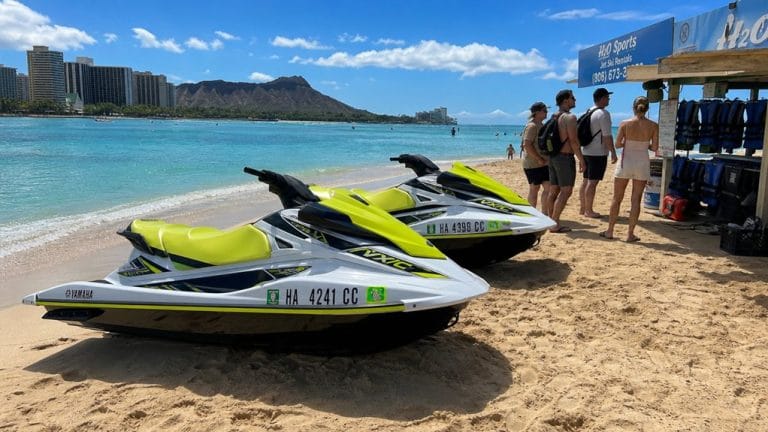
Today, Waikīkī looks like a bright, tightly packed strip of city and shore where high-rise hotels rise behind a mostly man-made ribbon of sand. You see how Waikīkī transformed into 3.4 square miles of beach, towers, shops, and parks between the Ala Wai Canal and Diamond Head.
- You can walk named beaches like Kūhiō, Royal Hawaiian, Halekulani, and Kaimana.
- You pass high‑rise resort hotels, Kalākaua Avenue shopping, restaurants, and nightlife.
- You spot Duke Kahanamoku’s statue, Nā Pōhaku Ola, and spaces for hula and surf contests.
A Waikiki map helps make sense of the beach areas, food streets, and walkable stops packed into this compact district. Palm trees soften the skyline. Kapiʻolani Park and Ala Wai Harbor open the edges. You also notice the upkeep: erosion, sand replenishment, and water-quality work shape the coast, so the scene stays postcard-ready, even if the ocean keeps editing it.
Why Does Waikīkī’s Meaning Still Matter?
When you keep the name Waikīkī with its proper marks, you honor a living language and the people who carried it forward. You also start to see how fresh water shaped this place, from springs and wetlands to taro patches and fishponds, even if today you mostly hear surf, traffic, and the rustle of hotel palms. And once you know that story, today’s canal lines, rebuilt beaches, and busy shoreline feel less like a postcard and more like a place where the past still shows up. That deeper sense of place can also make a relaxed Oahu itinerary feel more meaningful, especially when you build in time to simply sit with the shoreline instead of rushing past it.
Language And Heritage
Although Waikīkī now brings to mind high-rise hotels and busy beaches, its name still tells you what the land once did best: it sent fresh water bubbling and spraying across the plain. When you say Waikīkī, you recall streams that fed wetlands and nourished loʻi kalo. The name isn’t decorative. It’s practical memory carried in sound.
Using the macroned spelling also helps you honor Hawaiian language and hear the place more clearly. It reminds you that names can hold maps, work, and care. Like Waikīkī, Honolulu’s Hawaiian name shows how place names can preserve local geography and meaning.
- You see groundwater and springs.
- You connect them to loʻi kalo, fishponds, and ceremony.
- You support efforts to restore wetlands and native life.
Waters Shape Identity
Memory gives Waikīkī its depth. When you hear that Waikīkī means spouting fresh water, you don’t just get a translation. You see springs threading toward shore, wet earth underfoot, and channels feeding loʻi kalo and fishponds.
| What you notice | What it tells you | Why it matters |
|---|---|---|
| Waikīkī spelling | Respect stays visible | Culture remains centered |
| Freshwater springs | The name means spouting | Place and language align |
| loʻi kalo fields | Water shaped abundance | Stewardship built identity |
Like Waikīkī, Oʻahu pronunciation reminds visitors that Hawaiian place names carry meaning best when their sounds and spelling are treated with care.
Keep the macrons, and you keep the place honest. You also connect today’s beach district to older water wisdom that still guides restoration, cleaner streams, and better storytelling for visitors. Even tourism works better when the name carries living meaning, not just postcard shine. It keeps roots close.
Past In The Present
That older water story still matters because Waikīkī’s name does more than label a famous beach. When you hear “spouting fresh water,” you glimpse springs, streams, and loʻi kalo beneath the hotels. You also understand why aliʻi prized this shore and why caretaking still matters.
Today, that meaning guides how you see Waikīkī:
- You notice signs and school lessons that keep the macronized spelling alive and support Hawaiian language renewal.
- You connect shoreline work, groundwater care, and restored wetlands to the wetlands that once separated sea, homes, and taro fields.
- You read plaques, tour stops, and museum labels differently, as if the sand is quietly introducing itself.
- You may also look beyond the busiest beach blocks toward quiet Honolulu neighborhoods, where a low-key stay can make the island’s older rhythms easier to notice.
Frequently Asked Questions
Can Visitors Still Find Natural Springs in WaikīKī Today?
No, you can’t really find an accessible natural spring in Waikīkī today. You may spot a freshwater seep with limited urban visibility, while historical mapping reveals former spring sites, but preserved, visitor-friendly springs generally lie beyond Waikīkī.
Are There Traditional Hawaiian Place Names Within WaikīKī?
Yes, you’ll uncover a quiet treasure of traditional Hawaiian names in Waikīkī, including Kūnana Heiau and Ulupaʻa Ulaʻa. You’ll also notice Kapiʻolani, Kūhiō, and Lēʻahi woven through signs, beaches, and cultural landmarks today.
How Should WaikīKī Be Spelled Without Macrons Online?
You should spell it Waikiki online when macrons aren’t practical. You’ll still help readers find it easily. If needed, mention wai kīkī or wai kiki once elsewhere to connect spelling, pronunciation, accuracy, and searchability.
What Cultural Etiquette Should Visitors Follow in WaikīKī?
In Waikīkī, you honor culture by practicing respectful dress and photography etiquette: ask before photographing people or ceremonies, leave offerings untouched, follow kapu and safety signs, and support local artists, visit lightly, connect deeply.
Which Hawaiian Words Are Commonly Misused When Describing WaikīKī?
You’ll often see wai, kīkī, and kahakai vs. beach misused when people describe Waikīkī. Don’t repeat ahupuaʻa confusion either: Waikīkī names spouting freshwater springs and wetlands, not chiefs, abundance, or just the shoreline.
Conclusion
So when you say Waikīkī, you’re naming water, not just a beach strip. If that feels hard to picture beneath the towers, look for clues: the Ala Wai, old fishpond sites, rain-fed valleys, and the soft trade winds moving inland. Say it slowly, wai-kī-kī, and you can almost hear the spray. Carry that meaning with you on your walk. It turns a familiar shoreline into a layered place with roots, memory, and surprisingly wet beginnings.
Paina Waikiki Luau at Waikiki Beach Marriott
Everything that makes renowned Waikiki, Oahu, a unique and exciting place is celebrated at Pāʻina Waikīkī!A unique dinner party lūʽau setting...

Oahu Majestic Circle Island Tour with Waimea Falls and Byodo Inn
Since 1974, E Noa Tours has specialized in showing visitors the real Oʻahu through immersive experiences led by pas...
Oahu Ka Moana Lūʻau at Aloha Tower Oceanfront Luau Show
Ka Moana Lūʻau – Oceanfront Hawaiian Luau in HonoluluExperience the spirit of Hawaiʻi at Ka Moana Lūʻau, a...