Like a giant stone bowl set by the sea, Diamond Head clues you in before you even reach the trail. Yes, you’re looking at a volcano, but not the tall lava-spewing kind you might picture. You climb dusty switchbacks through rough gray tuff, hear wind scrape the crater walls, and spot Waikīkī flashing below. So why does this volcano look more like a crater than a mountain?
Key Takeaways
- Yes, Diamond Head is a volcano, specifically a tuff cone on Oʻahu’s southeastern coast.
- It formed when rising magma met groundwater or seawater, causing steam-driven explosions.
- The cone is made of volcanic ash, coral fragments, and basalt debris cemented into hard tuff.
- Diamond Head formed in one brief eruption about 300,000 to 500,000 years ago.
- It is considered dormant and extremely unlikely to erupt again.

Diamond Head Hiking Tour with Tickets and Shuttle Included
The Diamond Head Hike is a 3-hour round-trip adventure, including pick-up and drop-off from your Waikiki hotel. This 1.6-mile trail along Oahu’s sou...

Half-Day Hiking Tour to Diamond Head and Makapuu Lighthouse
Experience two of Oahu’s most iconic hikes with Kaimana Tours.This self-guided adventure combines the Diamond H...

Hawaiian Beauty Package
Experience the best of Oahu’s landscapes in one unforgettable adventure with Kaimana Tours. This combo hike takes...

Waikiki Electric Bike Tour Self Guided: Diamond Head Bike & Hike
Our E-bikes are the most efficient and enjoyable mode of transportation to and around Diamond Head. A more intimate...
Is Diamond Head a Volcano?
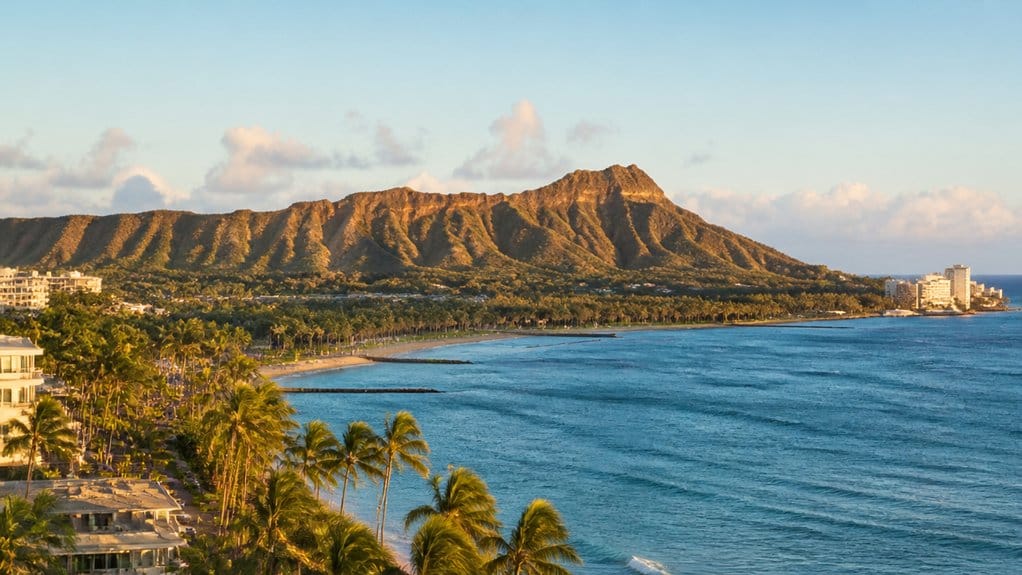
Yes, Diamond Head is a volcano, though it doesn’t look like the classic steep cone you might picture from science class. When you stand on its rim above Waikiki, you’re looking at a landform born in one brief blast, not a long chain of eruptions.
Diamond Head formed about 300,000 to 500,000 years ago during the Honolulu Volcanic Series. Its geological story helps explain why the crater’s shape and layered tuff walls are so different from many larger shield volcanoes in Hawaiʻi. Magma hit seawater, triggered an explosive burst, and threw out ash and cinders that later hardened into rock. That process built the crater you hike today, with dusty slopes, rough walls, and wide ocean views. Geologists call Diamond Head a tuff cone, and you can spot others across Oʻahu too. It’s dormant now and very unlikely to erupt again, which makes your visit more scenic than suspenseful. Bring water.
What Type of Volcano Is Diamond Head?
When you look at Diamond Head, you’re seeing a tuff cone, a volcano built from fine ash that hardened into rock after one short explosive event. You can picture magma hitting groundwater or shallow seawater and blasting out wet ash, coral bits, and basalt fragments that later fused into the crater walls you see today. That also makes Diamond Head monogenic, which means it formed in a single brief eruption rather than a long, repeat-performance volcano. Before visiting, it’s helpful to understand volcanoes on Oahu so you can explore Diamond Head with the right safety expectations.
Tuff Cone Classification
Although Diamond Head looks like a classic mountain from a distance, it’s actually a tuff cone, a volcano built by short, violent blasts of steam and ash. When you stand on its rim, you’re looking at a Tuff cone shaped by phreatomagmatic explosions, where rising magma met seawater and burst into fine debris.
You can trace that history in the rock. Diamond Head formed from rejuvenated activity linked to the Koʻolau Volcano, and its slopes hold compacted ash, broken coral, and basalt fragments. Those materials later hardened into tuff, giving the cone its rugged walls and broad crater. A single eruption is thought to have shaped Diamond Head into the cratered landmark seen today. Its form fits the type well: about 1.17 kilometers across with a crater roughly 171 meters deep. In geologic terms, it’s dormant, so your hike comes with views, not lava today.
Monogenic Eruption Origin
Picture one fierce burst of geologic drama, and you’ve got Diamond Head’s origin. You’re not looking at a volcano that kept erupting for ages. This tuff cone formed in one brief monogenic eruption about 300,000 to 500,000 years ago. Diamond Head’s last eruption was also its only eruption, which is why its volcanic story is so short. During that short spell, likely days to months, magma hit groundwater and exploded into ash, broken coral, and basalt shards.
Those wet blasts piled debris into a fairly even cone, then heat and pressure welded it into the hard tuff you see under your shoes today. That symmetry is a clue. Diamond Head belongs to the younger Honolulu Volcanic Series, not the older shield-building phase that created Koʻolau. Because a monogenic eruption happens once and ends, you can treat Diamond Head as dormant, not a repeat performer with future encore plans.
Diamond Head Hiking Tour with Tickets and Shuttle Included
The Diamond Head Hike is a 3-hour round-trip adventure, including pick-up and drop-off from your Waikiki hotel. This...
Half-Day Hiking Tour to Diamond Head and Makapuu Lighthouse
Experience two of Oahu’s most iconic hikes with Kaimana Tours.This self-guided adventure combines the Diamond H...
Hawaiian Beauty Package
Experience the best of Oahu’s landscapes in one unforgettable adventure with Kaimana Tours. This combo hike takes...
Why Is Diamond Head Called a Crater?
The name fits at first glance: Diamond Head looks like a giant crater because it is one. When you stand near Lēʻahi, you see a broad volcanic crater with a hollowed center and a raised rim above Waikīkī and Honolulu. That bowl shape is the giveaway.
Diamond Head measures about 1.17 kilometers across and 171 meters deep, so your eyes instantly read it as a crater. Inside, the floor and slopes are made of compacted volcanic ash called tuff, which gives the walls their dry, gritty look. The 1908 trail, tunnels, and old military bunkers sit inside the natural basin, but they don’t explain the shape. They just make your visit more interesting. As one of Hawaii’s iconic landmarks, Diamond Head is often recognized by its dramatic crater profile above Honolulu. In both English and Hawaiian, the names point you toward that standout headland and crater rim today.
How Did Diamond Head Form?
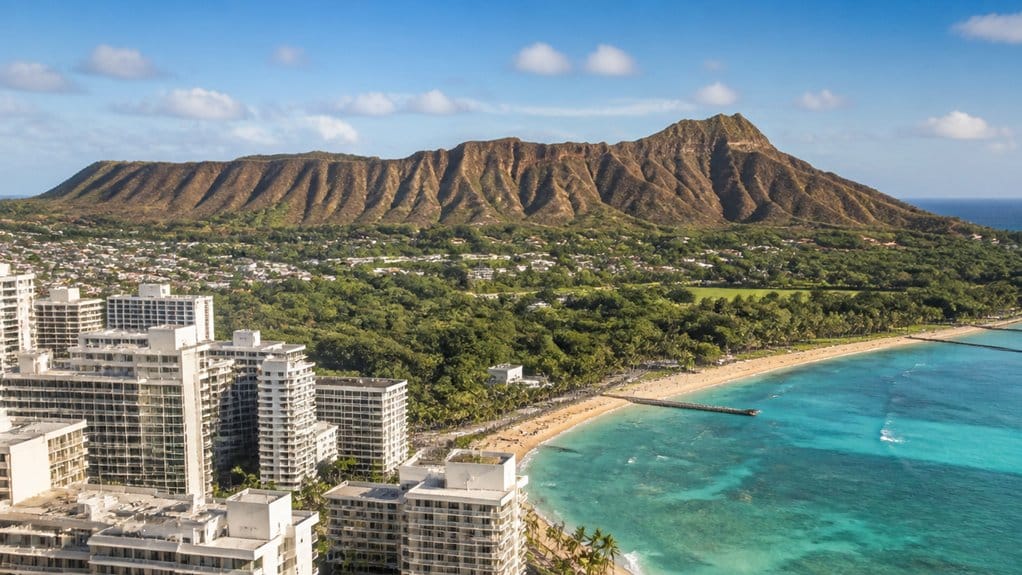
That crater shape came from a fast, violent start. You’re looking at Diamond Head, a cone built when rising magma met groundwater near the Koʻolau Volcano and exploded. That blast tore through older basalt and coral. It hurled ash, rock fragments, and broken reef into the air, then packed them into Volcanic tuff.
| Feature | What happened | What you notice |
|---|---|---|
| Eruption style | Short, explosive blast | Steep, neat rim |
| Materials | Ash, coral, basalt | Rough tan-gray rock |
| Final form | Tuff cone built up | Broad crater bowl |
You can see the result in the crater’s clean shape, about 1.17 kilometers across and 171 meters deep. Diamond Head also belongs to the Honolulu Volcanic Series, alongside places like Koko Head and Hanauma Bay today. The crater formed about 300,000 years ago during a single explosive eruption that left cemented ash and tuff behind.
When Did Diamond Head Erupt?
Although Diamond Head feels timeless when you stand on its rim, it actually erupted much later than the Koʻolau mountains around it, about 300,000 to 500,000 years ago.
That makes Diamond Head a youngster beside the ancient Koʻolau Volcano, whose main mountain-building phase began roughly 2.5 million years ago. If you picture Oʻahu’s timeline, this cone arrived surprisingly late.
- It formed during one brief eruptive episode.
- That burst may have lasted days or a few weeks.
- Water met rising magma and blasted out ash.
- The debris hardened into the tuff cone you hike today.
Today, many visitors experience that geologic history firsthand on the Diamond Head hike, which leads up to the rim of the crater.
Is Diamond Head Still Active?
If you’re wondering whether Diamond Head might rumble back to life, the short answer is no. When you stand on its broad crater rim and look over the dry, dusty slopes, you’re seeing a dormant volcanic tuff cone, not a restless peak waiting for an encore.
Diamond Head formed in one brief explosive eruption about 300,000 to 500,000 years ago. That blast likely lasted only days or weeks, which makes it geologically monogenic and very unlikely to erupt again. It belongs to the Honolulu Volcanic Series, younger vents tied to the Koʻolau Volcano, rather than a separate active volcano. In other words, the answer to whether there is a volcano in Oahu depends on which ancient volcanic features you mean. You also won’t find historic records or geologic clues showing later eruptions here. Today, officials treat Diamond Head as a preserved natural landmark, not an active volcanic hazard for visitors today.
Still comparing Diamond Head Hike And Crater Visit?
Ask for tour ideas, hotel suggestions, or a simple trip plan that combines both.
Trip Helper
Where Is Diamond Head on Oʻahu?
You’ll find Diamond Head on Oʻahu’s south shore, just east of Waikīkī, where it rises above the Honolulu coastline like a giant stone lookout. If you head toward the southeastern coast, you can spot the crater and the 1917 lighthouse near the shore, with easy access through Diamond Head State Monument. Once you’re up high, you’ll see Waikīkī, Honolulu, and a long sweep of coast that makes it clear why this landmark is so easy to find. From Waikīkī, you can reach Diamond Head by walking, taking the bus, using Uber, or joining a guided tour.
South Shore Setting
Often, the easiest way to place Diamond Head is to look southeast from Waikīkī and spot the broad, ridged crater rising right above the shoreline. From there, you can picture Diamond Head on Oʻahu’s south shore, set on the leeward flank of the Koʻolau Volcano.
- You’ll find it near 21°15.7′N, 157°48.3′W.
- Its crater and slopes anchor over 475 acres of state monument land.
- The 1917 Diamond Head Lighthouse stands on the seaward side.
- Nearby volcanic neighbors include Koko Head and Hanauma Bay.
When you trace the coast, you see why this landmark sticks in your mind. Dry slopes meet blue water. Hotels, surf, and sea breeze frame the cone. It feels close enough to touch, though your legs will remind you otherwise on the trail up. If you plan to hike into the crater, non-residents need Diamond Head reservations for entry and parking before arriving.
Near Waikīkī And Honolulu
Just southeast of Waikīkī, Diamond Head rises above the beachfront like Honolulu’s most familiar backdrop. You’ll find this volcanic tuff cone on Oʻahu’s southeastern coast, perched right above the hotels, surf breaks, and busy sands of Waikīkī. It sits about three miles from downtown Honolulu, close enough that you can spot it while sipping coffee or waiting at a crosswalk.
Diamond Head, also called Leʻahi, came from eruptions tied to the Koʻolau Volcano. Today, its crater and slopes fill about 475 acres within Diamond Head State Monument. Before you plan the hike, check the current Diamond Head fees and hours so you know what to expect at the entrance. It’s one of several Honolulu Volcanic Series landmarks, alongside Punchbowl, Hanauma Bay, and Koko Head. From the summit area, you can take in Waikīkī, Honolulu, and the bright south shore, where traffic hums and the ocean keeps flashing like polished glass.
Landmark Access Points
A few easy landmarks make Diamond Head simple to place on Oʻahu’s map. You’ll find Lēʻahi on the southeastern coast, just east of Waikīkī, with Honolulu spread behind it and the ocean shining off its seaward slopes nearby.
- Start at the State Monument Visitors Center on the crater floor.
- Follow the 0.8-mile trail as it climbs 560 feet to the summit.
- Enter through the Kahala and Crater access area, where parking and pedestrian gates sit.
- Look for the Diamond Head Lighthouse and the old military tunnel entrances nearby.
The monument covers about 475 acres, including the summit and outer slopes. If you’re driving, parking costs $5 per car. Walking in costs $1. Nonresidents need online reservations, so don’t just wing it. Booking ahead also helps you choose the best hike time and avoid arriving when entry slots are already full.

Parasailing Experience in Waikiki, HI
Experience the thrill of Oahu parasailing on this unforgettable 1-hour adventure from Waikiki. Soar up to 1,000 feet...

Oahu Grand Circle Island Experience from Waikiki
Enjoy Grand Circle Island experience tour with breathtaking views of Amelia Earhart Lookout on Diamond Head, admire...

Waikiki 2-Hour Sunset Sailing Catamaran – Swim & Sail Adventure
There’s no better place to take a dip than the crystal-clear waters of Waikiki—and no better way to experience a...
How Is Diamond Head Different From Other Oʻahu Cones?
While Diamond Head looks like just another crater on Oʻahu at first glance, it formed in a very different way from many of the island’s other volcanic features. When you compare Diamond Head with the Koʻolau Volcano, the age gap jumps out. Koʻolau built broad mountain slopes millions of years earlier. Diamond Head arrived later in the Honolulu Volcanic Series. It is one of several craters highlighted in an Honolulu Volcano Guide to visiting Oʻahu’s volcanic craters.
You’re also looking at a different kind of eruption. Diamond Head formed in one short, explosive blast when magma met seawater. That left a steep, tidy cone of cemented ash called tuff, mixed with coral and basalt bits. Nearby cones and lava features can look rougher, redder, or broader. Diamond Head feels compact by comparison, with a crater about 1.17 kilometers wide and walls that rise fast under your feet on the trail.
How Did Diamond Head Shape Honolulu History?
When you look at Diamond Head, you can see how it helped guard Honolulu, from early military trails and bunkers to lookout posts that watched the coast in tense wartime hours. You also feel how this crater became a landmark for visitors, with its lighthouse above Waikīkī and the old summit route turning into the hike you can tackle today, probably with a water bottle and sweaty shirt. Although you cannot simply drive to the summit, the current Diamond Head rules help manage access and encourage visitors to use the official trail or other transportation options instead. And as you trace its paths and tunnels, you start to see Diamond Head not just as a volcano but as a place where defense, tourism, and public life have shaped Honolulu together.
Military Lookout And Defense
Climb to Diamond Head’s rim and you can see exactly why the military took it seriously. From up here, you watch Honolulu’s eastern approaches unfold in every direction, with the Diamond Head Lighthouse below and open sea beyond.
- In 1908, the Army cut trails, tunnels, and a fire control station into the crater.
- Those works became part of Oʻahu’s Coastal Defense System, built to guard the shoreline.
- During World War II, crews used the 360-degree lookout to scan for ships and aircraft after December 7, 1941.
- Forts including Harlow, Dodge, Hulings, Birkhimer, and Battery 407 created overlapping fire zones.
Battery 407 even got gas-proof tunnels and planned guns from USS Arizona, though they never arrived. You can still sense the serious planning in the rock today. If you visit now, knowing the tunnel tips and parking options can make the climb through these historic defenses much smoother.
Landmark In Tourism
A skyline needs an anchor, and Diamond Head became Honolulu’s almost by instinct. When you look toward Waikīkī, this Volcanic tuff cone frames the coast and gives the city a signature outline. It’s scenery, but it also steered growth.
After the U.S. bought the crater in 1904, roads, tunnels, and lookout points shaped how Honolulu used its shoreline. Later, protected status in 1968 kept those features intact while opening the area to tourism. You can hike the 0.8-mile summit trail, feel the warm rock underfoot, pass old bunkers, and catch trade winds at the top. Those sweeping views helped turn Diamond Head into a must-see stop. For another fast scenic stop above Honolulu, the Tantalus Lookout route offers a quick way to take in the city from the hills. In turn, hotels, guides, and visitor services around Waikīkī grew around that steady flow of curious feet, cameras, and sun hats.
Cultural Events Legacy
Diamond Head didn’t just shape what Honolulu looks like. When you stand on its rim, you can trace how defense roads, tunnels, and viewpoints steered the city’s story. The Army Coastal network turned the crater into a lookout, then into routes you still use today.
- In 1908, soldiers cut the summit trail you hike now.
- Fire control stations and batteries aimed to shield Honolulu’s shorelines.
- Birkhimer Tunnel and later Battery 407 evolved into civil defense spaces still used.
- In the 1960s and 70s, Crater Festivals filled Diamond Head with guitars, dust, and huge crowds.
That mix of bunkers and concerts feels wonderfully odd. You get Waikiki views, wartime concrete, and echoes of Santana and the Grateful Dead, all in one crater today. Nearby, Ala Moana Regional Park was used as a military battery and staging area during World War II, showing how Honolulu’s public spaces also carried wartime roles.
Can You Hike Diamond Head Today?
Yes, you can still head up Diamond Head today, and the summit trail at Diamond Head State Monument is open through the Visitor Center on the crater floor. This hiking trail is 0.8 miles one way. The trail rises 560 feet, with stairs, tunnels, and steep stretches. Diamond Head also fits well into an Oahu hiking guide because it combines big coastal views with a short but challenging climb.
| Detail | What you should know |
|---|---|
| Distance | 0.8 miles one way |
| Elevation | Rises about 560 feet |
| Time | About 45 minutes up |
| Entry | Reserve online if you’re visiting |
| Hours | Last entry is 4:30 pm |
Give yourself 1.5 to 2 hours if you want to pause for views and photos. Wear solid shoes. Bring water and sunscreen. Nonresidents pay $1 walking or $5 per vehicle. Crowds can slow you down, so start early unless you enjoy trail traffic.
Frequently Asked Questions
What Does Hawaiians Call Diamond Head?
You’d call Diamond Head Lēʻahi, its Hawaiian name. You can appreciate its cultural significance through meanings like “tuna’s brow” or “fire headland,” reflecting traditional uses, including navigational fires.
Is Diamond Head Part of a National Park?
Over 475 acres define its park boundary, and you should know Diamond Head isn’t part of a national park. You’ll find visitor amenities in this Hawaii state monument, which balances public access with preservation challenges daily.
How Long Does the Diamond Head Hike Take?
You’ll usually hike Diamond Head in about 45 minutes up, but plan 1.5–2 hours roundtrip. You’ll handle moderate trail difficulty, enjoy sunrise photography, and notice volcanic geology along steep stairs, tunnels, and scenic overlooks.
Is There an Entrance Fee for Diamond Head?
Yes, you’ll pay an entrance fee at Diamond Head: $5 per car or $1 if you walk in. Check parking fees, guided tours cost extra, and sunset access is limited since last trail entry’s 4:30 pm.
Can You See Whales From Diamond Head?
Yes, you can see whales from Diamond Head during winter whale watching season. You’ll have the best chances at lookout viewpoints during seasonal migrations, especially January through March, when clear, calm conditions help you spot spouts offshore.
Conclusion
Yes, you’re standing on a volcano, but it feels more like a lookout than a threat. Diamond Head pairs a violent birth with a calm present: rough tuff walls, dry grass, bright ocean, and the low shuffle of hikers on the trail. You can climb its old military stairs, duck through a tunnel, and reach views over Waikiki in under a couple of hours. It’s ancient geology turned easy adventure, with a breeze and a camera-friendly rim today.
Waikiki Electric Bike Tour Self Guided: Diamond Head Bike & Hike
Our E-bikes are the most efficient and enjoyable mode of transportation to and around Diamond Head. A more intimate way of exploring the beautiful and...
Diamond Head Hiking Tour with Tickets and Shuttle Included
The Diamond Head Hike is a 3-hour round-trip adventure, including pick-up and drop-off from your Waikiki hotel. This...
Half-Day Hiking Tour to Diamond Head and Makapuu Lighthouse
Experience two of Oahu’s most iconic hikes with Kaimana Tours.This self-guided adventure combines the Diamond H...
Hawaiian Beauty Package
Experience the best of Oahu’s landscapes in one unforgettable adventure with Kaimana Tours. This combo hike takes...
Experiences to explore
 Explore experience ↗
Private Diamond Head Crater and Manoa Falls Rainforest Experience
◷ 5 hr–6 hr
This is a private tour to two of the most breathtaking landscapes on Oʻahu. Enjoy stunning panoramic views over Waikīkī and the Pacific
From $898.00 USD
View dates Explore experience ↗
Diamond Head Hiking Tour with Tickets and Shuttle Included
◷ 3 hr
The Diamond Head Hike is a 3-hour round-trip adventure, including pick-up and drop-off from your Waikiki hotel. This 1.6-mile trail alo
From $35.00 USD
View dates Explore experience ↗
Waikiki Trolley Diamond Head Green Line
◷ 1 hr
Our newest and most unique line takes you to Diamond Head and KCC Farmers’ Market from convenient stops around the Waikiki area. It’s t
From $22.00 USD
View dates