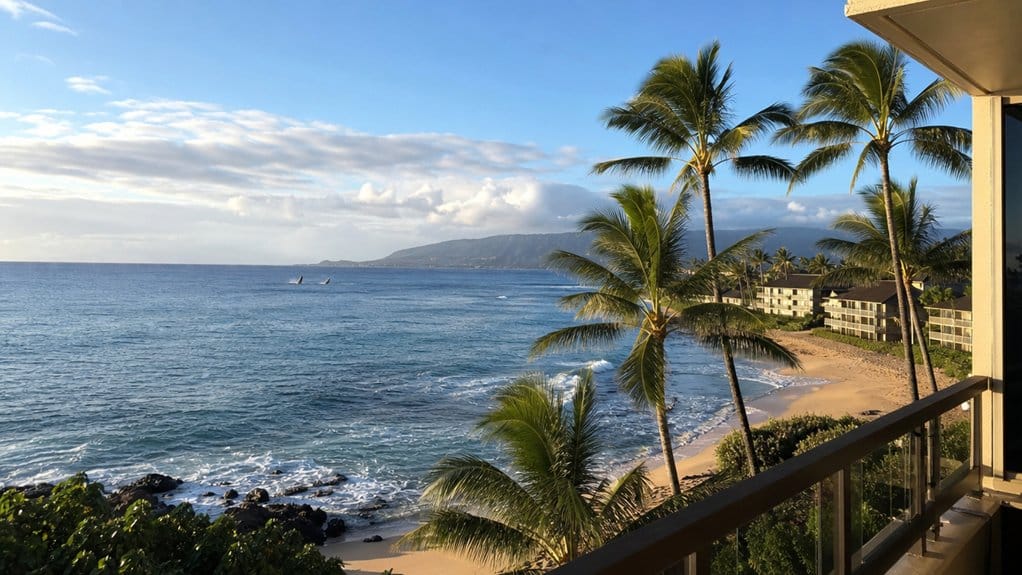
If you visit Oahu in winter, you might hear the ocean gets a little more talkative. That’s your cue to choose a base with care. Stay in Waikiki and you’re close to early boat tours and hotel desks that can book them fast. Pick Ko Olina or the North Shore and you trade city buzz for quieter mornings, lookout points, and the chance to spot a spout before breakfast. The best fit depends on how you want your whale season to feel.
Key Takeaways
- Waikiki and Greater Honolulu are the easiest winter bases, with most tour departures, abundant hotels, and quick access to harbor logistics.
- North Shore stays like Haleiwa offer quieter lodging, local character, and easy access to northwest lookouts and smaller whale-watching charters.
- Ko Olina and Kapolei suit families, offering calmer seas, nearby marinas, and shorter drives to leeward whale-watching departures.
- Windward and leeward areas like Kailua, Laie, and Kaʻena Point are best for shore scanning from elevated lookouts and coastal trails.
- For peak whale season, stay between mid-December and March, and prioritize morning tours for calmer water and stronger sighting odds.
Best Areas to Stay on Oahu
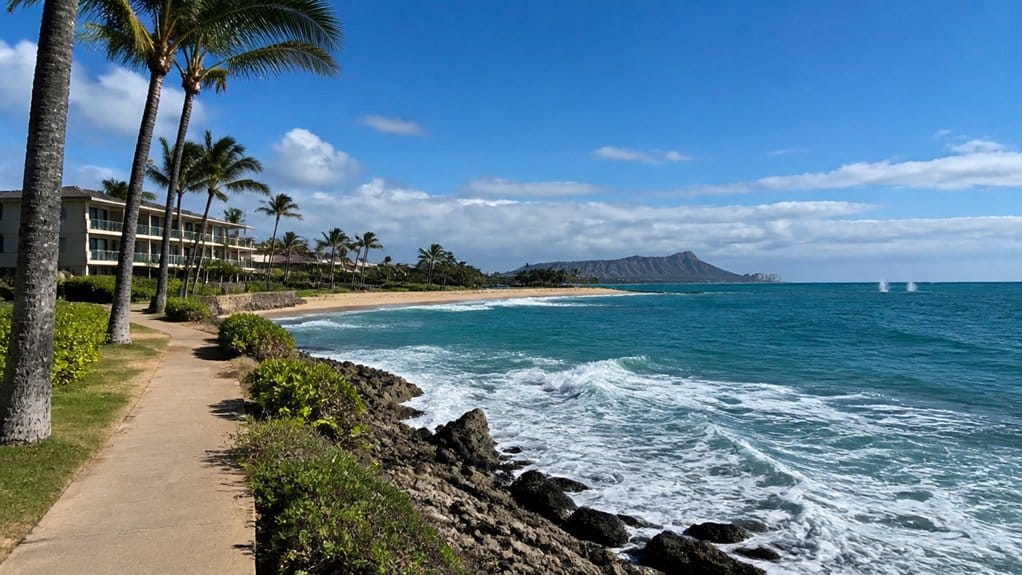
For the easiest whale season base, start with Waikiki or greater Honolulu. You’ll find the most whale watching tour departures here, plus easy hotel choices, breakfast spots, and straightforward access to scheduled morning cruises. If you like smooth planning, Waikiki/Honolulu keeps things simple.
For a quieter stay, head to the North Shore around Haleiwa or Waialua. You’re closer to northwest sighting areas and smaller local charters. West Oahu and Kapolei work well if you want family-friendly resorts and quick drives toward Kaena Point. Ko Olina adds a polished resort feel with calm lagoons and handy shoreline viewpoints. If you’d rather scan the sea from land, choose Kailua or Laie on the Windward Coast. Elevated lookouts and coastal paths can reward you with spouts, breaches, and salt air too. For the most reliable winter sightings, plan around January through March, with February often delivering the strongest mix of whale numbers and surface activity.
Hotels to compare for this guide
Compare a few stay options before you choose your base.

Park Shore Waikiki
A beach-adjacent hotel near Kapiolani Park and Diamond Head that fits travelers wanting east Waikiki convenience.
Check rates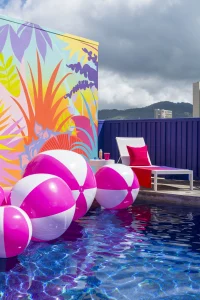
Shoreline Hotel Waikiki
A colorful boutique-style hotel in central Waikiki for travelers who want shopping, dining, and beach access nearby.
Check rates
& Resorts
A luxury suite-style Waikiki property for travelers wanting upscale service, spacious rooms, and a refined location near Fort DeRussy.
Check rates
Waikiki Marina Resort at the Ilikai
A condo-style marina property with suite-style convenience close to Hilton Hawaiian Village and Ala Moana.
Check ratesBest Months for Oahu Whale Watching
If you want the strongest odds of seeing humpbacks on Oahu, aim for mid-December through March, when sightings turn from lucky surprise to regular part of a morning at sea. That stretch is the heart of Whale Watching Season, with daily whale watching odds strongest from January through March. Mid-February is often the sweet spot.
If you crave action, book between mid-February and mid-March. That’s when you’re most likely to catch breaching, spy-hopping, and tender mother-calf moments that stop every camera click cold. Early season sightings in November and December can happen, though they’re less consistent and often involve adult males. By February into April, mothers with calves become more common. Plan a dawn or late-afternoon outing too. The light softens, the water glows, and the whales often seem busier then. For the calmest ride and cleanest photos, morning departures are usually the safest bet, especially if you’re leaving from Waikiki.
West Oahu vs South Shore for Whales
If you stay on West Oahu, you’re more likely to catch younger humpbacks throwing big surface moves, and you can even scan from Kaena Point or Yokohama Bay on a calm morning with binoculars and salty wind in your face. If you base yourself on the South Shore, you’ll get easier access to frequent whale-watch boats from Waikiki or Aloha Tower, and charters that reach Penguin Banks often stack the odds for more whales, mothers, and calves. Your choice really comes down to what you want most: dramatic action from shore or a smoother shot at bigger pods offshore. Outside peak whale outings, nearby Kaneohe Bay Sandbar tours can add a calm-water snorkel or boat day to a winter Oahu itinerary.
Whale Sightings Compared
Choice shapes your whale season on Oahu. For whale watching in Oahu, your Best time runs mid-December through March, with mid-February often busiest. West-facing waters can feel wilder, with younger humpbacks and solo males surfacing fast, then vanishing like they forgot the script.
- Kaʻena Point often draws high-energy juveniles.
- South Shore sightings feel steadier in peak season.
- Honolulu and Diamond Head favor calm mother-calf scenes.
- Mothers and calves often linger into April and May.
- Morning and early evening improve shore views.
For boat-based days, comparing the island’s top whale watching tours can help you match departure point, pace, and comfort to your base. If you stay near the South Shore, you’ll usually have better odds of seeing family groups, especially later in season. If you lean west or northwest, expect less predictable action and more searching. That tradeoff can be fun, if patience is packed with your sunscreen and binoculars too.
Best Boat Access
Where you launch matters almost as much as when you go. If you want faster whale watching access, West Oahu usually wins. Boats from Waianae reach Kaena Point and the productive northwest waters sooner, so you spend less time motoring and more time scanning for tail slaps and surprise breaches.
South Shore departures trade speed for convenience and comfort. Honolulu and Waikiki operators run larger, steadier boats, often on set morning schedules, and some are licensed to go well beyond Diamond Head. That matters if they regularly run toward Penguin Banks, where the seafloor funnels humpbacks and mother-calf pairs often gather. For calm seas and strong odds, pick an early trip from West Oahu or a south-shore boat that routinely heads farther offshore. Your coffee may still be warm. If you are pairing whale watching with a Windward day, remember that a Kaneohe Sandbar tour is tide-dependent and usually best planned around calmer morning conditions.
Shore Viewing Tradeoffs
While both coasts can reward a patient scan of the horizon, they feel very different from shore. For whale watching, the South Shore gives you easier shoreline viewing, steadier winter sightings, and quick access from Honolulu to Diamond Head.
- South Shore works best from December through March
- Mid-February to mid-March brings peak action
- Penguin Banks boosts chances for mother-calf pairs
- West Oahu can show breaches and rowdy competition
- Binoculars and patience matter more on the west
If you stay south, you can spot calmer nursery behavior and jump on nearby charters. If you drive to Kaena Point or the northwest coast, you trade convenience for quieter lookouts and more surprise. Younger humpbacks often put on the bigger show there, but not on schedule. Think of West Oahu as the wildcard with salt spray.
Still comparing Where To Stay On Oahu?
Ask for tour ideas, hotel suggestions, or a simple trip plan that combines both.
Trip Helper
Waikiki for Easy Whale Tour Access
Set yourself up in Waikiki, and whale season on Oahu gets much easier to plan. You’re close to the main departure points at Aloha Tower and Pier 8, usually just a 10 to 20 minute ride away. That makes early morning whale watching tours simple, especially from January through March when seas often stay calmer and sightings can be lively.
In waikiki, you also get practical perks that matter. Hotel tour desks and same day booking help when mid-February to mid-March trips fill fast. Between cruises, you can scan the water from the beach or nearby lookouts and sometimes catch spouts or distant breaches with binoculars. If you add snorkeling to the trip, mornings around Waikiki often bring cleaner visibility before wind chop builds. You’ll also have easy bus, taxi, and rental car options, so pairing a cruise with other island plans feels revitalizingly low stress overall.
Ko Olina for Calm Resort Stays
Ko Olina suits you if you want whale season to feel a little quieter and a lot smoother. On Oahu’s leeward coast, you’ll often get calmer seas and clearer horizons, which helps with shoreline spotting and gentler departures.
Ko Olina makes whale season feel calmer and easier, with smoother seas, clearer views, and a quieter stretch of Oahu’s coast.
- West-facing rooms can reveal spouts at sunset.
- Peak Jan to Mar brings more breaches offshore.
- The marina keeps morning charters close and easy.
- Resorts add parking, shuttles, and family-friendly perks.
- You stay near quieter west-side sighting waters.
Ko Olina works well when you want comfort built into your plans. Many hotels and rentals give you balconies for midday scans, coffee in hand, eyes on the water. Most whale-watch operators leave within a short 10 to 20 minute drive. You’re farther from Honolulu, but that trade can feel wonderfully low-stress indeed.
Kapolei for Quieter Whale Season Trips
Just beyond Honolulu’s busier orbit, Kapolei gives you a quieter launch point for whale season on Oahu’s west side. You’re about 35 to 45 minutes from the city, yet much closer to southwest viewing waters where humpbacks show best from mid-December to mid-March. If you want whale watching without Waikiki’s bustle, Kapolei feels practical and pleasantly unhurried.
You can reach morning departures from Ko Olina harbors in about 10 to 15 minutes, which helps when calm seas and active whales favor early starts. Winter stays here often cost less than Waikiki, and parking is usually easier too. That makes multiple outings more realistic. If rough water cancels your boat trip, you can pivot fast to beaches, snorkeling, or a lagoon walk, with fewer crowds and more room to breathe nearby. For a different day on the water, consider a windward-side outing with Kaneohe Bay boat rentals to explore calmer bay scenery outside whale-watching plans.
Haleiwa for North Shore Views
Head up to Haleiwa and Oahu’s North Shore gives you a whale season base with a more local feel and wide-open ocean views. In winter, you can spot humpback blows offshore, then drive 10 to 30 minutes to shoreline lookouts and surf breaks for more Whale watching. Haleiwa also keeps logistics easy.
- Book morning trips with nearby charter operators
- Choose rentals, B&Bs, or small inns
- Save money versus many Waikiki stays
- Pack for cooler, windier December to March mornings
- Use cafes and gear shops for snacks and binoculars
You’ll like how Haleiwa blends practical access with North Shore character. Pick a stay with a covered lanai or easy indoor ocean views, and early scans feel far more comfortable. Haleiwa Historic Town also makes it easy to turn a whale-watching morning into a relaxed one-day stroll through local shops and cafes. Bonus: shave ice tastes even better after a breezy dawn watch.
Best Oahu Hotels for Whale Watching
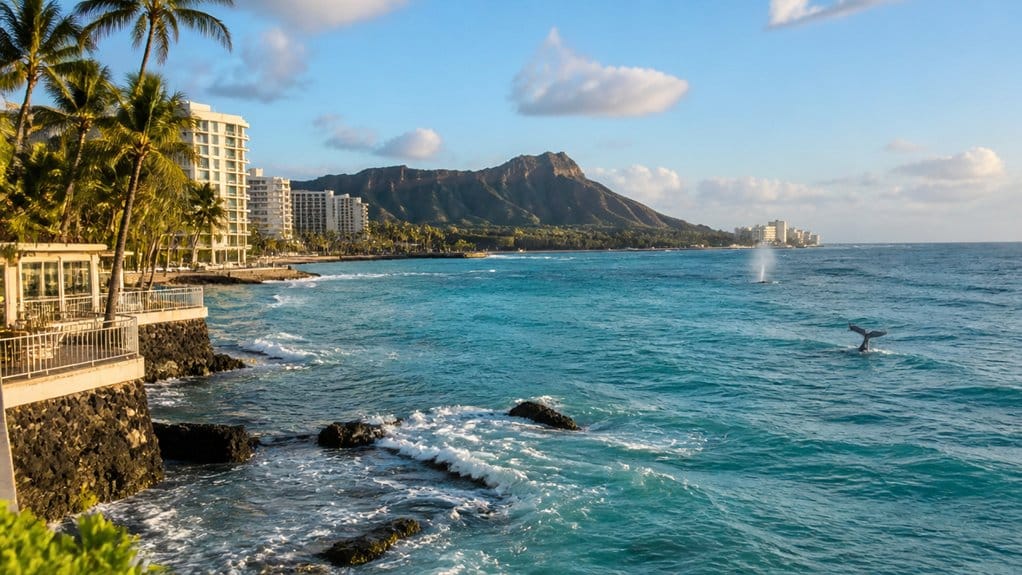
Often, the best Oahu hotels for whale watching depend on how you want your mornings to work. If you want the broadest choice, stay in Waikiki. You’ll be close to Honolulu departures, including the Star of Honolulu at Aloha Tower Pier, with easy access to Jan through Mar whale-watching trips.
If you like a quieter base, pick Haleiwa or the North Shore. You’ll stay near operators like Bob Marlin Charters and the northwest coast, where younger humpbacks often show extra energy. For smoother winter mornings, a West Oahu or Kapolei hotel cuts drive time to leeward harbors and often brings calmer seas. On the western side of the Hawaiian Islands, an ocean-view room can reward you with blows, breaches, or mother-calf pairs. Book flexible rates early too. In winter, plan North Shore days around wave watching and shore-based viewpoints rather than casual swimming.
Shore vs Boat Whale Watching on Oahu
Whale watching on Oahu can play out in two very different ways, and each has its own charm. You can keep it simple with shore watching, or head out on boat tours for a fuller encounter. Both reward patience, binoculars, and early light.
- Cape Kapiolani Park and Diamond Head Lookout give easy land views.
- Kaena Point’s Leeward coast often reveals younger whales in peak season.
- Dawn and dusk improve your odds from shore and at sea.
- Boat tours from Honolulu and the North Shore add hydrophones and naturalist insight.
- Longer charters may reach Penguin Banks, where breeding activity can cluster.
Oahu’s best whale season typically falls in winter, when humpbacks arrive in Hawaiian waters to breed and nurse calves.
Shore watching is free, quick, and family-friendly. Boat charters offer better odds for breaches and closer views while staying 100 yards away. Mix both across a few days. Your chances rise nicely.
When to Book Oahu Whale Tours
Once you’ve decided between shore time and a boat outing, timing your booking can shape the whole experience. During peak whale-watching season from mid-December through March, you should book whale-watching tours 2 to 6 weeks ahead. Mid-February fills fastest, so don’t dawdle.
If morning departures are available, grab the earliest one. Calmer seas and more surface activity can mean better sightings and fewer stomach complaints.
You’ll also gain flexibility by placing one tour within your first two full days on Oahu and another later in the week. That spacing boosts your odds of seeing active behavior.
For bigger operators, including Star of Honolulu, book early because promotions and whale-guarantee return tickets can disappear. Comparing top Oahu tours can help you choose the right boat size, departure point, and onboard amenities before popular winter dates sell out. Always check cancellation and weather policies before you pay during winter swells.
How to Choose Your Oahu Base
If you pick your Oahu base with whale season in mind, your mornings get a lot easier and a lot more rewarding. For easy whale watching, stay in Waikiki. You’ll get the biggest tour menu, harbor departures, and winter cruises like Star of Honolulu. Waikiki is also a smart base if you want to compare the best whale-watching tours before you book.
- Pick Waikiki for simple logistics and many Jan to Mar tours.
- Choose Haleiwa or Laie for quieter lookouts and local charters.
- Stay near Kaena Point for rugged trails and active humpback sightings.
- Try Ko Olina or Ewa Beach for calmer water and Penguin Banks access.
- Book ocean facing rooms and save several mornings for mid February.
That way, you can wake to salt air, scan blue water, and chase spouts before breakfast. It beats guessing from inland traffic later.
Frequently Asked Questions
Are Whale Watching Tours Suitable for Pregnant Travelers on Oahu?
Yes, you can usually take Oahu whale watching tours while pregnant if you follow pregnancy precautions and check prenatal timing. Choose larger, steadier boats, morning trips, and shorter cruises, and confirm restroom access, shade, and cancellation policies.
Can I See Whales From a Hotel Balcony on Oahu?
Yes, you can often see whales from a hotel balcony on Oahu in winter. Choose higher floors with Ocean views, watch mornings or late afternoons, bring binoculars, and follow Balcony etiquette while scanning Waikiki or west-facing shores.
Do Oahu Whale Tours Provide Seasickness Remedies or Advice?
Yes, like a steady lighthouse in rolling seas, you’ll usually get Onboard remedies and Motion advice on Oahu whale tours. Crews often offer ginger, wristbands, tablets, seating tips, horizon focus, and suggest calmer morning departures, too.
Are There Accessible Whale Watching Options for Wheelchair Users?
Yes, you’ll find accessible whale-watching options on Oahu through Accessible viewing spots and Adaptive boats. Choose larger ADA-equipped operators, confirm ramps, restrooms, seating, and boarding help, or watch from Magic Island and Kapiʻolani Park instead.
What Should Kids Bring on an Oahu Whale Watching Tour?
You should pack binoculars; the theory that kids spot whales better with magnification holds up. Bring Sunscreen wipes, Waterproof snacks, hats, polarized sunglasses, light jackets, water bottles, camera batteries, and seasickness meds your doctor approves.
Conclusion
Choose your Oahu base by how you want whale season to feel. If you want easy dawn departures, stay in Waikiki. If you want quieter mornings and salty lookout walks, try Haleiwa or Ko Olina. Peak season usually runs January through March, and February often brings the best odds, so your balcony coffee might come with a spout on the horizon. Book tours early, pack a light layer, and keep your eyes on the water.