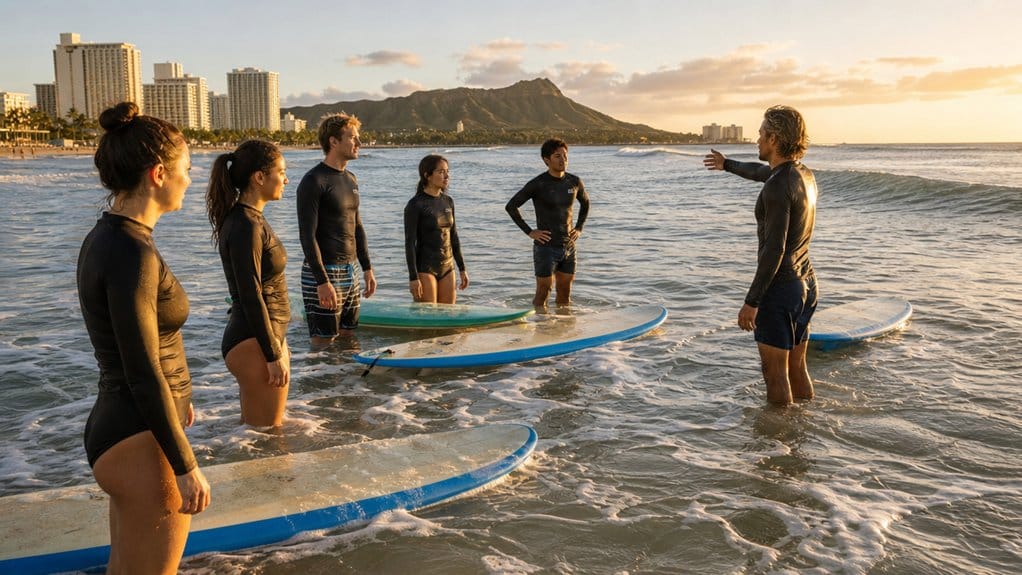
A Waikiki group surf lesson feels like stepping onto a moving sidewalk made of salt and sunlight. You’ll start on warm sand with a quick safety talk, then paddle out with a small group where the waves are gentle and the coaching stays personal. Soft-top boards and leashes usually come with the lesson, so you can focus on the pop-up instead of the gear. Before you claim your first ride, a few smart details can make the morning go much smoother.
Key Takeaways
- Waikiki open group lessons are beginner-friendly, usually with three to five students per instructor and other first-timers learning alongside you.
- Expect a sand introduction first, covering safety, paddling, and wave etiquette, followed by 60 to 90 minutes of warm-water practice.
- Most group lessons cost about $112 to $129 per person, with boards, leashes, and coaching usually included.
- Book early and choose a morning session if possible, since spots are capped and calmer conditions are common earlier in the day.
- First-timers are welcome, but many schools require ages around 9 to 11, while younger kids usually need private lessons.
Is a Waikiki Group Surf Lesson Right for You?
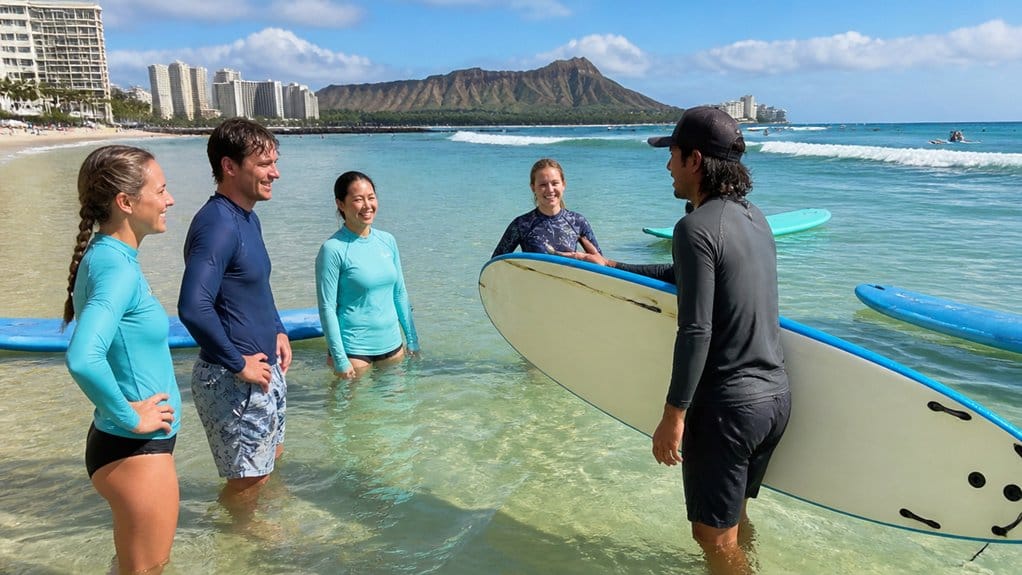
If you’re new to surfing, a Waikiki group lesson is often the easiest way to start. You’ll join a small Waikiki group, usually about three to five students per instructor, and most people beside you will be first-timers too. That makes beginner surfing lessons feel less intimidating and more social. Group sessions are a popular choice in Waikiki surf lessons because they balance affordability with a supportive learning environment.
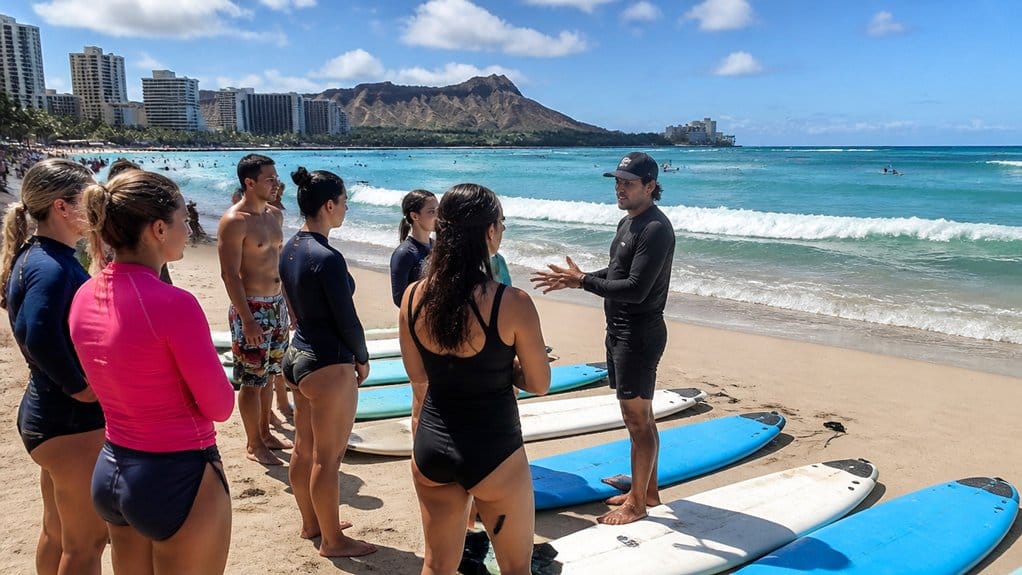
A typical group lesson starts on the sand with safety tips, wave etiquette, and basic pop-up practice. Then you’ll head into warm water for about an hour to 90 minutes, working on standing and riding gentle waves. Waikiki is especially known for beginner lessons, making it one of the most approachable places to learn. Expect soft-top boards and leashes, though rash guard availability can vary. Many beginners prefer morning lessons in Waikiki because conditions are often calmer earlier in the day. Prices often land around $129 per person. Since spots can sell out and groups stay capped, reserve early. If you want more one-on-one attention, private surf lessons may suit you better.
Who Can Join a Waikiki Group Surf Lesson?
You can usually join a Waikiki group surf lesson even if it’s your first time, since most classes welcome beginners and sort you by skill level once you hit the sand. Many Waikiki operators also offer beginner lessons alongside surfboard rentals, which can make it easier to get started if you’re new to surfing. If you’re coming with relatives or travel companions, a private group surf lesson can be a better fit than an open class because it keeps families and friends together in one session. This is similar to the group vs private options many Oahu surf schools offer when matching lessons to different comfort levels and goals. You’ll want to check the age rules before booking, because many group lessons start around age 11, while younger kids often need a private instructor for safety in the rolling shore break. If you’re pregnant, have a serious medical condition, or need wheelchair access, ask the operator directly so you know exactly what’s possible before you paddle out.
Age And Skill Levels
Whether you’re climbing onto a board for the first time or already know how to paddle and pop up, Waikiki group surf lessons usually welcome a wide range of skill levels. At Waikiki Beach, instructors often sort each group by ability, usually just three to five students per coach. That means your surf lesson can feel beginner friendly without turning into chaos on the sand. Many families also choose kids surf lessons in Waikiki because the smaller group format helps beginners feel more comfortable.
If you’re brand new to surfing, you’ll usually start with a short beach briefing, then head into the water to try your first stand-up wave. Many operators set minimum ages around 9 to 11, and some require kids to be 11 or older for a group class. Younger children, often ages 4 to 8, usually need private instruction instead. If you have medical concerns, check requirements before booking. If you’re planning the rest of your trip without renting a car, it’s also worth looking for Waikiki hotel pickup options when comparing Oahu activities. For travelers who prefer low-effort sightseeing between beach days, easy walking tours on Oahu can also be a good fit.
Still comparing Oahu Transportation, The Bus, Car Rentals, And No Car Travel?
Ask for tour ideas, hotel suggestions, or a simple trip plan that combines both.
Trip Helper
Family And Safety Rules
Because group surf lessons move fast once boards hit the water, Waikiki operators keep the rules pretty clear about who can join. Before you book Group Surf Lessons, check the minimum age. Many accept kids around 9 to 11, while younger children usually need private instruction for safety. First-timers should also review a booking guide so they understand age limits, safety expectations, and how Waikiki group lessons are typically organized.
- Expect a posted age rule, sometimes 11 and up.
- Skip class if you’re pregnant or have heart problems.
- A Small Group setup, often 3 to 5 students, means closer watch.
- If you need accessibility help, call us or confirm options first.
That screening keeps Waikiki lessons smooth once the ocean starts tugging at your board. You don’t need experience, but you do need to paddle, listen, and follow directions while waves slap, foam swirls, and everyone laughs between rides together. Similar to first-time tours in Waikiki parasailing, beginner surf classes work best when operators set clear safety rules before anyone heads out. If you’re comparing beginner options around Oahu, a North Shore guide can also help explain how lesson formats differ for new surfers.
What Happens During a Waikiki Surf Lesson?
Before the board ever touches the water, a Waikiki beginner surf lesson usually starts on the sand with about 20 minutes of safety tips, paddling basics, and easy water etiquette that helps the whole group move smoothly once the waves come in. In an open group, you’ll usually learn with a few other beginners near your level, not a random crowd from your hotel lobby or a busy surf shop. Just like skill level matters in places like Waimea Bay, instructors in Waikiki also group beginners carefully so first-timers can build confidence at a comfortable pace.
Then you head into the water for about 60 to 90 minutes. You practice getting over small waves, turning the board, and finding the right spot to pop up. Most schools use soft-top boards with leashes, which feel forgiving when you wobble. Your instructor watches closely and adjusts tips in real time. By the end, standing on your first wave feels like a small miracle. Like the rocky entry reality at Shark’s Cove, your instructor may also point out how to enter and exit the water smoothly so beginners stay balanced and safe. If you can choose your time slot, mornings usually offer cleaner waves and lighter winds that make first lessons feel easier.
Where Do Waikiki Surf Lessons Meet?
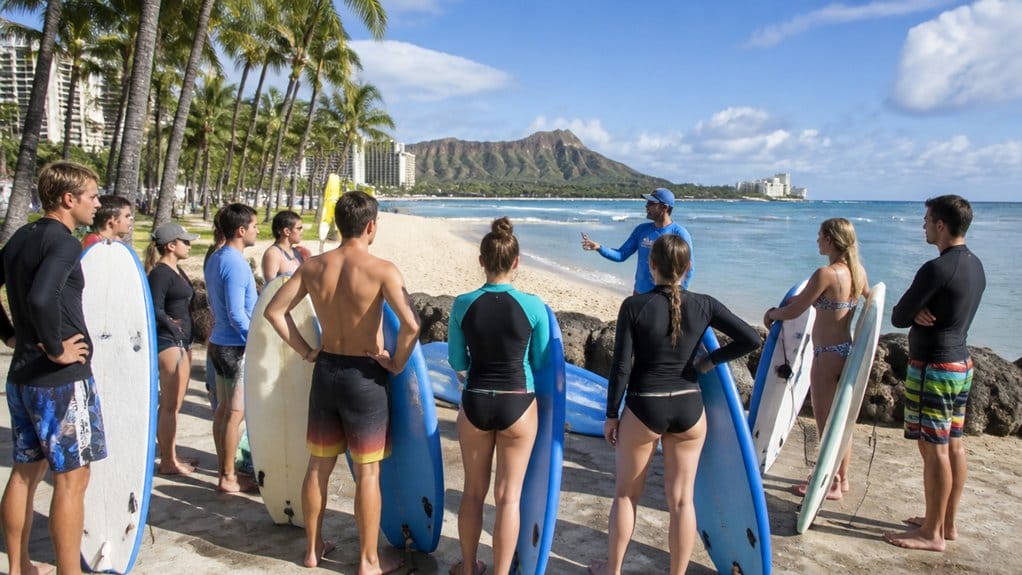
Most Waikiki beginner surf lessons don’t start with you sprinting into the waves. You’ll usually meet at a hotel-area Surf School shop, then walk to the beach with your group. Common Waikiki spots include Kaimana Beach Hotel at 2836 Kalakaua Ave #102 and the Queen Kapiolani Hotel lobby surf shop near 150 Kapahulu Ave. A quick look at a Waikiki Beach map can also help beginners understand which nearby areas are better for swimming, surfing, or finding shade before lesson time.
- Check in 20 to 30 minutes early for waivers and timing.
- Some lessons meet right on the beach near Hilton Hawaiian Village.
- Many sessions end back at the original meeting point afterward.
- If details seem fuzzy, call ahead or walk into the shop to confirm.
When you book a lesson, read the listing closely. A beach-adjacent meet point can mean sand underfoot, boards nearby, and instructors already watching the shore break before your session starts. On calm days, nearby beaches can also offer clear water conditions that make the shoreline easier to read before you paddle out. If you want to compare shoreline setups around Oahu, the Ko Olina Lagoons are known for their scenic, sheltered waterfront areas.
What Gear Is Included in Waikiki Surf Lessons?
In most Waikiki surf lessons, you’ll get the key gear right away, including a soft-top board, a leash, and often a rash guard or water shoes, so you can focus on the waves instead of the setup. You usually only need to bring your swimsuit, sunblock, and a good attitude, while extras like photos or video often cost more. You’ll also notice that beginner boards are bigger and softer than standard rentals, which gives you a steadier start when the water starts splashing and the beach buzz fades behind you.
Included Surf Equipment
A Waikiki surf lesson usually hands you the core gear right away: a soft-top board and a leash, with instructors setting you up on beginner-friendly equipment made for first rides. That means you can hit the Beach focused on balance, not shopping, when you learn to surf for the first time in Waikiki.
- Soft-top board for stability and safer wipeouts
- Leash to keep your board close in the waves
- Foam construction that’s more forgiving than fiberglass rentals
- Sometimes rash guards or reef shoes, depending on the operator
Most schools treat the setup as everything you need for the session. Instructors choose boards that feel steady under your feet and easier to paddle through choppy water. Extras like GoPro photos or video usually aren’t included, so don’t expect cinematic proof of your first splashy triumph. If you’re also planning other Oahu activities, it can help to compare admission tickets and transportation options separately so you know exactly what is and isn’t included.
What To Bring
For a beginner surf lesson in Waikiki, you won’t need to haul much to the sand. Your school usually supplies a soft-top board and leash, so you can focus on paddling out instead of shopping for gear. You should bring a swimsuit, reef-safe sunscreen, and a good attitude. That’s the easy part.
Some schools in Waikiki also hand out water shoes or a rash guard, but not every operator does. It’s smart to confirm before your surf lesson in Waikiki so you’re not guessing on the beach. Just like reviewing booking details before reserving an Oahu luau, checking exactly what your surf school includes can help you avoid last-minute surprises. This makes Waikiki an easy place to learn, especially when the setup feels simple. Keep in mind that photos, videos, and GoPro extras usually cost more. If you want those wave-grinning souvenirs, expect them as add-ons, not standard perks after your session.
Board Type Options
Once you’ve got your swimsuit and sunscreen sorted, the next question is what board you’ll actually paddle out on. In Waikiki: Open Group Surfing, you’ll usually start on soft-top boards. They’re foam, stable, and forgiving, which makes them ideal for your introduction to surfing.
- Your lesson normally includes a surfboard and leash, so you won’t need extra gear.
- Instructors handle setup, which means less fiddling on the sand and more time paddling.
- Some schools offer reef shoes or rash guards, but ask ahead since availability varies.
- In group and private lessons, experienced surfers can sometimes request fiberglass or epoxy boards in advance.
If photo or video packages tempt you, know they’re separate add-ons. The core gear stays simple, practical, and beginner-friendly. Pretty nice when the ocean’s already giving you enough to think about. Clear water and calmer mornings, often noted in best conditions for Oahu ocean activities, can also make your time in the lineup feel more comfortable as you get used to your board. If you’re comparing ocean activities around Oahu, tours like the Circle Island Snorkeling Tour focus more on provided stop-based sightseeing than on specialized personal gear choices. Similar to how a Dive Shop Oahu helps simplify planning for underwater tours, Waikiki surf lessons are usually designed to keep equipment choices easy for beginners.
How Much Do Waikiki Group Surf Lessons Cost?
In Waikiki, open group surf lessons usually land around $112 to $129 per person for about 1.5 to 2 hours in the water. That’s the usual range for Lessons On Waikiki, and it often includes your board, leash, and beginner instruction. You’ll pay about $129 for many standard 1.5-hour sessions, though some beginner deals dip near $106.31. For some travelers, private surf lessons in Waikiki can be a better fit if you want more one-on-one help as a first-timer.
When you surf in Hawaii, remember the base price usually covers gear and coaching, not extras like souvenir photos or videos. If you’re comparing group classes with private surfing, group lessons give you the lower entry cost. Visitors planning other no-car water activities often also look at hotel pickup options for Oahu snorkel tours. Similar to parasailing tips, it helps to know what’s included before you book any Waikiki water activity. Policies vary, so check whether you must cancel at least 24 hours ahead. A salty breeze, warm water, and a busy shoreline come standard. Your budget mainly decides how fancy you want the experience.
Should You Book Waikiki Surf Lessons in Advance?
Waikiki’s beginner surf lessons don’t just cost money. They also cost timing, so yes, you should book ahead. Group classes can sell out fast, especially in busy travel seasons. If you wait, you might miss the mellow morning slots with gentler waves, calmer water, and fewer boards bumping around you.
Waikiki beginner surf lessons fill quickly, and the calmest morning slots are often the first to disappear.
- Reserve early to lock your preferred date and time
- Check age rules first if you’re traveling with kids
- Choose morning sessions for easier conditions Right on the beach
- Use pay-later options for flexibility and possible Full refund
Booking early also lets you compare a group lesson with a Private One-On-One option. Some families have found classes filling only days ahead. A little planning saves hassle, and it puts you where you want to be, feet in sand, eyes on the gentle waves. If you want to pair surf days with pickup-friendly tours, planning ahead can also make car-free Oahu outings easier. If you’re also planning water activities beyond surfing, an Oahu snorkeling guide can help you choose spots that match your skill level.
Frequently Asked Questions
Can Non-Swimmers Participate in Waikiki Group Surf Lessons?
Yes, you can sometimes join if you’ve got confidence in water, but instructors often require basic ability. You’ll get a safety briefing, discuss swimming alternatives, and benefit from supportive lesson pacing for beginners.
What Should I Wear to a Waikiki Surf Lesson?
Wear a snug rash guard, secure surf shorts, and reef safe sunscreen; if water feels cool, check wetsuit temperatures. For example, you’ll stay comfortable during a breezy morning lesson when your rash guard choices prevent chafing.
Are There Age Restrictions for Beginner Surf Lessons?
Yes, age restrictions vary, so you’ll need to check Waikiki policies. Your beginner eligibility often starts around age five or six, while youth participation requires supervision. Many schools also offer senior options if you’re healthy.
What Happens if the Weather Is ცუდ or Waves Are Unsafe?
About 70% of surf schools prioritize safety first: if conditions turn risky, you’ll face lesson cancellations under Weather safety protocols. Instructors use lifeguard assessments and strict wave condition limits, then reschedule or refund your session.
Can I Bring My Own Surfboard Instead of Using Provided Equipment?
Yes, you can bring your own board if it meets board requirements. You should confirm leash essentials beforehand, since instructors check safety first. You’ll also want to review insurance liability rules before entering the lesson.
Conclusion
If you’re new to surfing, Waikiki makes the learning curve feel friendly. Many open group lessons keep the ratio around three to five students per instructor, so you get real coaching without losing the fun of the group. You’ll hear waves slap the soft-top board, feel warm water on your legs, and practice that first pop-up with Diamond Head in view. Book early, show up 20 to 30 minutes ahead, and let your balance surprise you.