By 10 a.m., many Waikīkī canoe rides are already full, and that says a lot: this is the easiest way to sample the ocean’s pulse without spending hours learning to stand up. You’ll paddle with five other people, hear the steersman call the rhythm, and feel the canoe lift on warm blue swells beyond the reef. It sounds simple, but timing, booking, and the right operator can change the whole ride.
Key Takeaways
- Waikīkī outrigger canoe surfing is a six-person, guided ride on real outside swell, making it exciting yet beginner-friendly.
- Expect about 20 to 30 minutes on the water and usually around three waves, depending on surf and set timing.
- No paddling experience is needed; ages 5+ can join, and non-swimmers may participate with flotation, depending on operator policies.
- For calmer first rides, book morning sessions around 9 to 11 a.m., when winds are lighter and wave faces are cleaner.
- Bring swimwear, a towel, reef-safe sunscreen, and water shoes, and confirm group minimums, flotation, and weather policies before booking.

Surfing Lessons in Waikiki with Hawaii Firefighters
Learn how to surf with a local firefighter of Hawaii. Many off duty firemen enjoy their days off surfing and teaching others their passion out there i...
What Is Waikiki Outrigger Canoe Surfing?
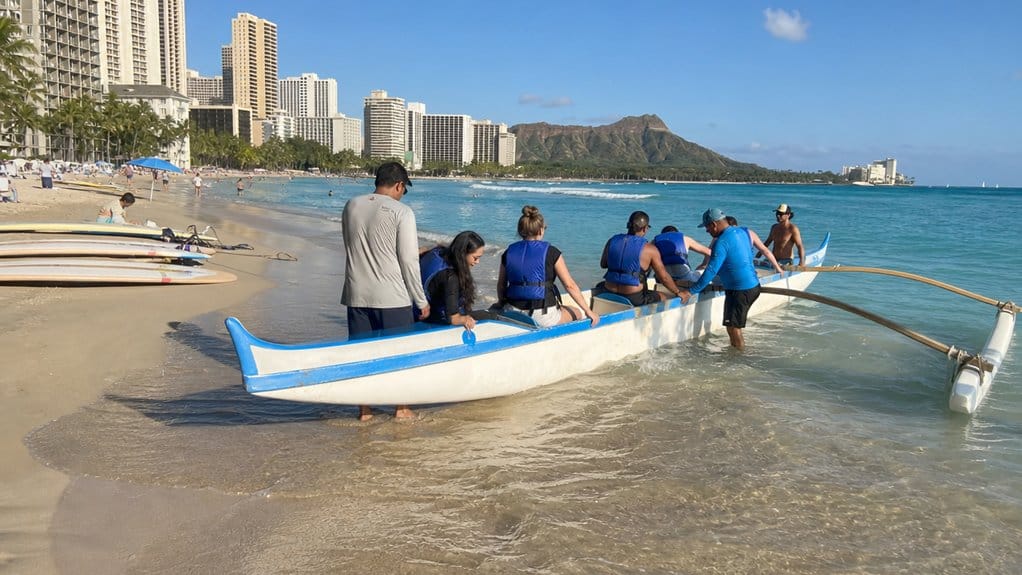
If you’ve only seen Waikīkī surfing from the shore, outrigger canoe surfing feels like a whole different kind of ride. You climb into a six person canoe with a beach boy at the stern, then follow his call to paddle as outside sets line up. It’s real Waikīkī surfing, not a staged splash in shore break.
These Outrigger Canoe Rides launch from Waikīkī Beach near the local concessions between the Royal Hawaiian and Outrigger Waikiki. They’re widely considered one of the best Waikiki cultural ocean experiences on Oʻahu for first-timers who want both adventure and island tradition. In about 20 to 30 minutes on the water, you’ll usually catch around three waves and run shoreward with Diamond Head in a striking side view. The canoe lifts, chatters, and slides as the swell rolls under you. This traditional Hawaiian ocean activity came before modern surfboard surfing, so you’re stepping into living history, getting salt spray too. On Oʻahu, related Polynesian canoe sailing experiences also highlight how traditional canoe voyages connect ocean adventure with living island culture. Some tours also pair canoe and sail outings with storytelling experiences that share cultural context on the water.
Why Choose Canoe Surfing Over Surf Lessons?
If you want more than wobbling in the whitewash, canoe surfing takes you straight to the outside Waikīkī swell, where the sets feel bigger and the view back to shore is hard to beat. You don’t have to figure it all out alone either, because the steersman calls the rhythm and your crew moves together, which makes that first real ride feel easier and a lot more fun. Like the best snorkeling spots on Oʻahu, it helps to choose an ocean activity that matches your comfort level and experience. Unlike many beginner surf lessons, canoe surfing skips the long learning curve and gets first-timers onto real waves faster. It also appeals to travelers comparing other ocean activities like private charters, since both offer a more guided, memorable way to experience Oʻahu from the water. In about 20 to 30 minutes, you can catch a few clean waves, share the run with your group, and usually end up with better photos and fewer bumps than a beginner surf lesson.
Outside Swell Advantage
While a beginner surf lesson often starts in the whitewash on a 10-foot foam board, outrigger canoe surfing takes you straight to Waikiki’s outside swell, where each set rolls in with more pull, more glide, and a bigger sense of being out in the real lineup. With Outrigger canoe surfing through Waikiki Beach Services, you feel the trade wind, hear the steersman call, and watch Diamond Head rise beyond the break.
| Feature | Outside Swell Edge |
|---|---|
| Location | Farther out, in real rolling sets |
| Feel | More speed, more glide, more adventure |
You’re not stuck practicing in shore break. You paddle into moving water with a six-person crew and a beach-boy steersman guiding the run. Usually, you’ll catch about three waves in 20 to 30 minutes. That’s quick.
Easier First-Time Ride
A first outrigger canoe surf ride feels easier because you’re joining a team, not fighting a surfboard by yourself. You climb into an Outrigger Canoe, listen for the steersman’s “paddle, paddle, paddle,” and let the crew help catch the wave. That means you spend less time worrying about pop-ups and more time feeling the run toward shore.
You’ll usually get about three waves in 20 to 30 minutes, which can feel simpler than committing to a two-hour beginner surf lesson. The six-person canoe also feels steadier than balancing alone on a board, so first-timers often report fewer bruises and less frustration. Like choosing between doors-off flights and doors-on helicopter tours on Oahu, first-timers often prefer the option that feels more comfortable and approachable. Book a morning ride if you want glassier water, softer conditions, and that bright Diamond Head angle that makes Waikiki look extra cinematic from offshore.

Pearl Harbor Complete Experience Passport
Visit All 4 Museums in One day on this tour, tickets and admissions are included. See how the US entered into and en...

Waikiki 2 Hour Sunset Sailing Catamaran Swim and Sail Adventure
There’s no better place to take a dip than the crystal-clear waters of Waikiki—and no better way to experience a...

Waikiki Parasailing in Hawaii from Oahu
Experience the thrill of parasailing over Hawaii’s stunning coastline as you glide above crystal-clear waters and...
Better Group Experience
Canoe surfing also wins on group energy. You paddle as a crew, then share the glide while a beach-boy steersman calls the set and points you back toward Waikīkī. Instead of struggling through solo pop-ups in surf lessons, you get a guided outside-swell ride with your people beside you.
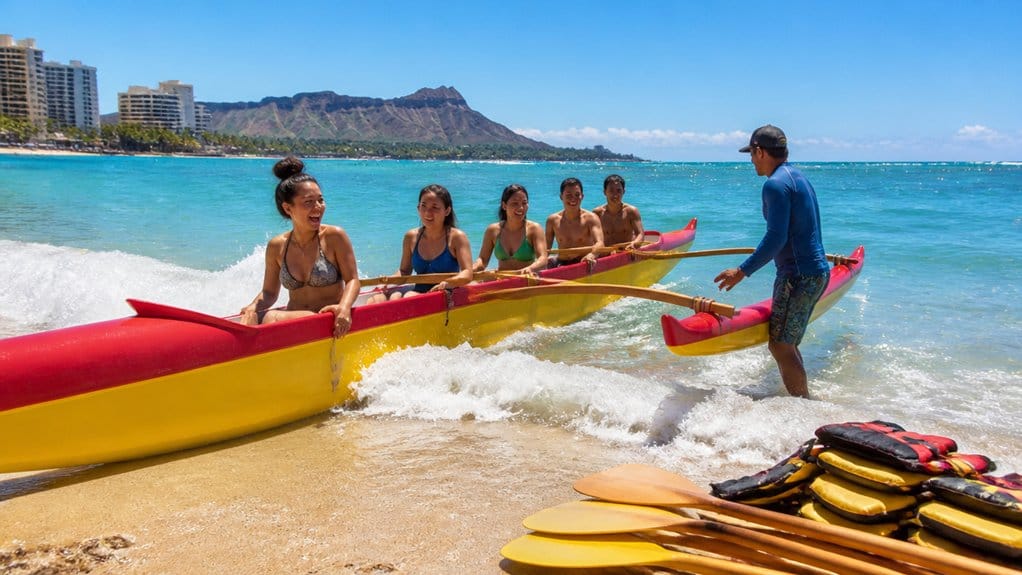
That setup changes the whole mood. A private canoe usually holds up to six people, with four paddlers and two riders, so your group catches waves together instead of competing for turns. It can pair especially well with later plans like oceanfront luaus if your group wants to keep the shared, scenic vibe going after the surf. You hear the steersman, feel the canoe lift, and watch Diamond Head angle into view. The ride is short, usually three waves in about 20 to 30 minutes, but it packs in plenty of stoke. For Family Surf, it’s easier, often gentler, and just more fun for everyone together.
What Does a Canoe Ride Feel Like?
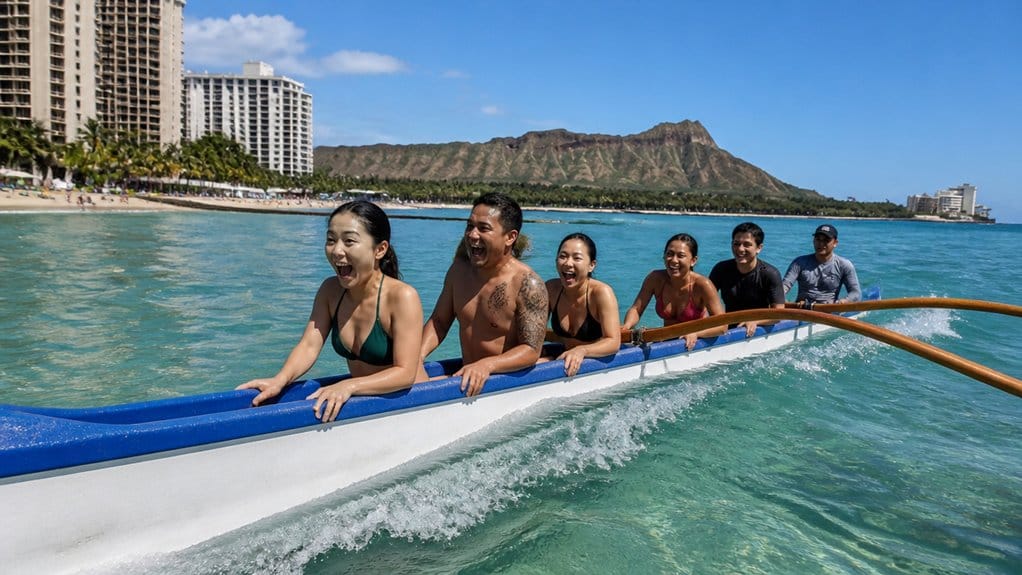
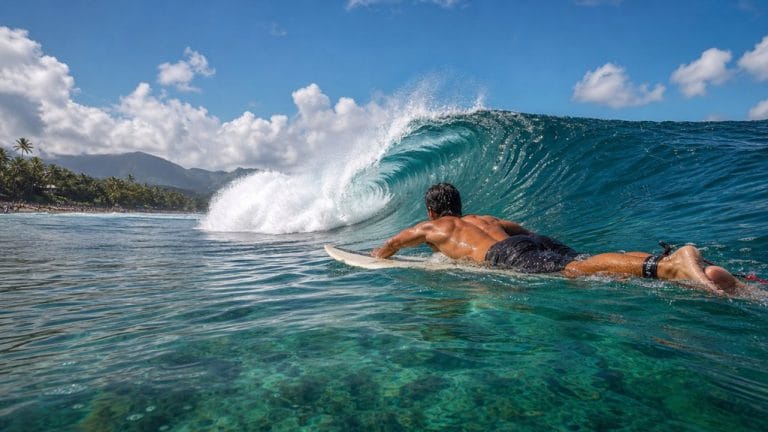
You’ll paddle out in a real six-person outrigger as the steersman reads the sets and calls “paddle, paddle, paddle,” then feel the canoe lift into a smooth takeoff without having to catch the wave on your own. Once you’re on it, the ride feels fast, splashy, and surprisingly easy, more like flying over Waikiki’s rolling swell than surviving a beginner wipeout. As you skim along, you’ll get the bonus of Diamond Head in view, salt on your arms, and that brief thought that maybe this whole ocean thing is your scene after all.
Paddling Into Sets
When the next set starts to rise, the whole ride clicks into focus fast. You’re in a real six person outrigger canoe, and the beach boy steersman watches the surf, calls the timing, and snaps out, “paddle, paddle, paddle.” You match the crew and feel the canoe gather speed toward Waikiki.
This part is busy but not chaotic. Paddling and wave riding start to blend as the captain lines up the run and you settle into the rhythm. In calmer morning water, often around 9am to 11am, the ocean can feel friendlier and easier to read. February can still bring winter swells to Honolulu, which can make the sets feel more exciting even on a first-timer ride. Most trips last about 20 to 30 minutes and usually catch around three waves. With certified crew helping you get positioned, you may feel like you’re being flown over the water, which is a pretty great surprise.
The Wave Takeoff
As the swell stands up behind you, the takeoff feels less like a hard launch and more like the whole canoe clicking into gear at once. You paddle out with the crew while the steersman studies the set, then calls, “paddle, paddle, paddle,” just as the wave lines up.
On an outrigger canoe, you don’t have to time everything alone. The crew moves as one, and that shared rhythm makes it easier to ride your first wave with confidence. As each set rolls through, the beach-boy steersman aims the run back toward shore while you focus on your stroke and the feel of the hull lifting under you. Waikīkī is known for relatively calm water compared with many exposed North Shore breaks, which helps first-timers settle into the experience. Unlike places famous for big-wave surfing, Waikīkī’s canoe rides are generally geared toward approachable fun for beginners. Like any ocean activity, conditions can change with currents and conditions, so listen closely to your captain’s safety briefing before heading out. In about 20 to 30 minutes, you’ll usually catch three waves, guided by certified captains on real Waikīkī outside swell.
Still comparing Waikiki Outrigger Canoe Surfing?
Ask for tour ideas, hotel suggestions, or a simple trip plan that combines both.
Trip Helper
Speed, Splash, Views
Then the fun part hits all at once. Your steersman calls, “paddle, paddle, paddle,” and the Outrigger Waikiki canoe lunges forward past Moana Pier toward the outside sets. When it drops in, you don’t just ride. You glide, skim, and briefly feel like you’re flying over real Waikīkī swell. It’s faster and splashier than a first surf lesson, but the certified crew keeps the run smooth and controlled.
| Sensation | What you notice | Why it stands out |
|---|---|---|
| Speed | Sudden lift and quick glide | Real swell adds energy |
| Splash | Cool spray on your arms | Canoe sits low |
| Views | Waikīkī coast and Diamond Head view | Ocean-level angle feels fresh |
You’ll usually catch three waves in 20 to 30 minutes. That’s enough to leave grinning and salty.
How Long Is a Waikiki Canoe Ride?
How long does a Waikiki outrigger canoe ride actually last? You can expect about 20 to 30 minutes on the water, usually framed as three waves. That makes it longer than a quick splash and more satisfying than a one-pass thrill. It feels a bit like a Hawaiian beginner surf lesson, except you’re sharing the glide with a paddling crew. For travelers comparing Oahu tours under $100, this ride stands out as a high-value activity that still feels memorable.
In practice, the timing depends on the ocean. Your steersman watches the sets, calls the paddle, and aims to keep you riding instead of waiting around. Like choosing between Waikiki or Maunalua Bay for parasailing, the best experience often depends on conditions that day. On a good day, you’ll catch multiple waves, often three, with salt spray in your face and Diamond Head in view. If the surf turns choppy or the sets space out, operators may shorten or stretch the run. The ocean, politely, makes the final call. Travelers planning more shore time afterward sometimes pair the ride with custom routes from Waikiki to explore more of Oahu at their own pace.
Who Can Ride an Outrigger Canoe?
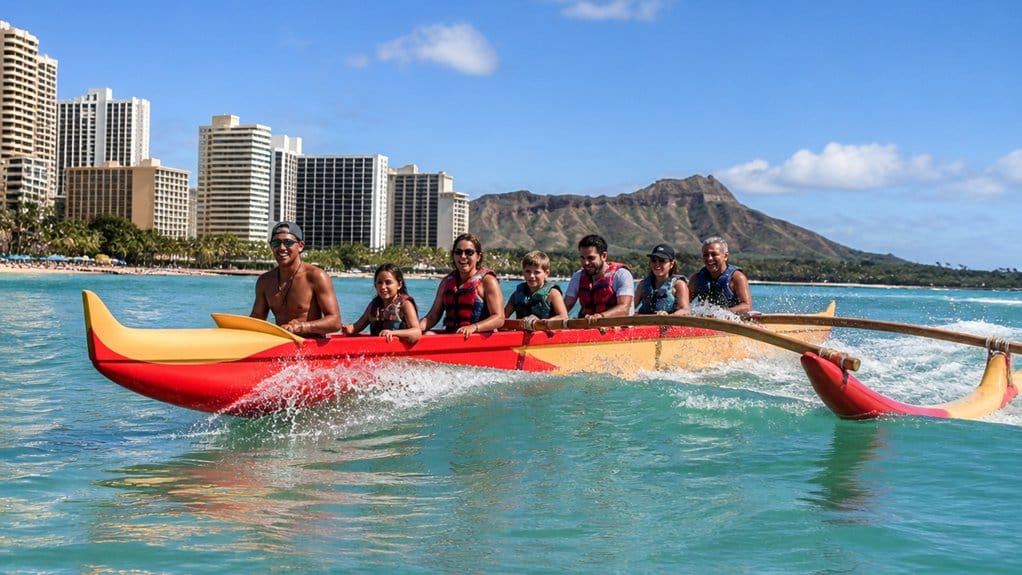
The nice surprise with Waikiki outrigger canoe surfing is that it welcomes a wide range of riders. You can join from ages 5 and up, whether you’re sporty, cautious, or simply curious about skimming over blue water with your family. If a child needs extra support, a parent or guardian can be present to hold them during the ride.
You don’t need paddling experience, and kids 12 and under usually ride as passengers while the crew handles the work. You must sign a waiver and listen closely to instructions. Non-swimmers can still participate, since flotation is provided or available. Most bookings need at least three people, though staff may offer a 3-pax option. Groups can include up to six riders, depending on the surf, wind, and daily ocean conditions there.
What Should You Bring?
Before you step onto the sand, pack for salt, sun, and a quick splash zone. You’ll want gear that handles sun glare, wet seats, and a beach launch right off Waikiki.
Pack for sun, salt, and splash-ready comfort before launching straight from Waikiki’s sandy shore.
- Wear swimwear or a rash guard. You’ll be on open water, and staying comfortable matters.
- Bring a towel and reef-safe sunscreen. Salt dries fast, but the sun works faster.
- Slip on water shoes or sandals you don’t mind soaking. The launch area can feel slick and grainy underfoot.
- Confirm flotation details when booking. Adult life jackets are often available on request, but some operators may ask you to bring your own device.
- For extra sun safety, consider a hat or light cover-up before and after your ride to stay comfortable in the heat.
If you’re bringing kids or anyone with special needs, carry waiver info and expect a parent or guardian to hold younger riders.

Oahu: Kualoa Ranch UTV Raptor Tour
Traveling with family and friends? You can enjoy the fantastic Multi-passenger UTV Raptor experience with your entir...
When Is the Best Time to Go?
If you want the smoothest first ride, book an early morning slot, ideally between 9 and 11 a.m., when Waikiki often looks glassy and the outside swell feels cleaner. Morning conditions are often best before wind chop builds and the water gets busier. If you’re traveling with nervous riders or anyone who prefers to stay dry before launch, pairing your surf session with other non-swimmer tours on Oahu can make the day feel more relaxed. You’ll usually get a better shot at calm water before trade winds build, especially since Wednesday through Friday can turn choppier and bumpier. Keep an eye on the forecast too, because rain ramps up Tuesday through Thursday, while late week into the weekend often brings clearer views and steadier leeward conditions. For the best overall trip, late spring and fall shoulder seasons offer lighter crowds along with warm weather in Honolulu.
Best Time Of Day
For most first-timers, the sweet spot is 9am to 11am, when Waikiki usually looks glassier and the trade winds stay lighter. You’ll get a smoother ride, cleaner takeoffs, and a bright view of Diamond Head while you Learn to Surf the canoe rhythm. Because morning sessions are generally favored for lighter winds and cleaner waves, this window also gives beginners the best odds of an easier first experience.
- Go early if you want calmer water and less chop.
- Choose afternoon only if you’re hoping for more wave energy and possibly bigger sets.
- Book that morning slot early on busy days, because canoes can sell out by mid-morning.
- Favor morning outings when weather looks mixed, since rain often builds later and the ocean feels fussier.
If you’re new, this timing gives you the friendliest introduction. The water often feels silkier, the crew can coach more clearly, and your first run feels thrilling, not wrestling. If you’re planning a full island day afterward, easy transit access can also make it simpler to pair a morning canoe session with another low-stress Oahu outing. Staying in Waikiki also makes Honolulu transfers easier if you’re getting around without renting a car.
Best Days To Book
Timing your ride by day matters almost as much as picking that smooth 9am to 11am window. If you can, book today while skies stay mostly dry and conditions lean calmer for beginners. That’s your best shot at a glossier Waikiki run, before weather gets moodier and the water starts showing more texture.
For late week, especially Tue–Thu, expect heavy showers and keep plans flexible. Those are better museum or Surf School days than your first canoe try. From Wed–Fri, trade winds often build and chop up the surface, so earlier rides matter even more. Book ahead if you want a confirmed spot, since canoes can sell out by mid-morning on busy weeks. If your goal is Three waves and a grin, calmer days usually win over brave ones.
Is Morning or Afternoon Better?
- Book morning if you want the calmest intro and smoother timing. Morning sessions are often the best time for beginners who want cleaner, more manageable conditions. Early starts also tend to mean easier parking and a less hectic beach setup.
- Pick afternoon if you want more punch and don’t mind a bumpier ride.
- If your trip falls Wed–Fri, mornings usually feel safer for beginners.
- In summer, roughly May through September, afternoons can bring bigger sets if you’re chasing more energy.
Either way, your beach crew handles the launch, and most rides last 20 to 30 minutes with about three waves total. Nearby, calm reefs and clear water often make morning ocean conditions feel especially welcoming for first-timers.
How Does Weather Affect Your Ride?
Weather shapes your ride more than you might expect, from the wind that roughens the water to the timing that can give you a smoother morning push. If you book on a mostly dry day with light to moderate trade winds, you’ll usually find cleaner outside Waikiki swell, while rain and breezier trades can bring chop, lower visibility, and a soggier seat. Because Waikiki often has drier summers and wetter winter months, seasonal rainfall can also influence how comfortable your outing feels. If you’re visiting in winter, morning conditions are often calmer around Honolulu, which can make first-time rides feel smoother. You’ll also want to know that operators may trim the passenger count, adjust the plan, or cancel for safety, so your best first-timer strategy is to stay flexible and keep an eye on the forecast. On Oahu, trade winds often make mornings around Honolulu and Waikiki calmer than later in the day, which can help first-timers get a smoother ride.
Wind, Chop, And Timing
A sweet spot for first-timers usually falls between 9am and 11am, when Waikiki often feels calmer and the wave rhythm is easier to read. You’ll usually get smoother faces and less wind chop than later sessions, when trades can roughen the surface. Summer trade winds often keep Honolulu comfortable overall, but they commonly strengthen later in the day and can make the water feel bumpier. If you’re booking a trip around this activity, Honolulu’s shoulder seasons in April, May, September, and October can also help you avoid the biggest visitor crowds.
- Book mornings if you want an easier intro and steadier sets.
- Expect breezier Wednesday through Friday conditions to add texture and bump.
- Know that stronger wind can make takeoffs feel busier and rides less silky.
- Stay flexible. If weather makes seas unsafe, operators may cancel and offer a new date or a refund.
Think of timing as part of the fun. On calmer days, the canoe glides cleaner and the paddle strokes feel crisp. When trades pick up, everything gets splashier, louder, and a little more wild. In winter, expect more passing showers than all-day rain, so a brief squall does not always ruin a morning ride.
Rain, Visibility, And Comfort
Even if the shoreline still looks clear, rain and spray can change what you see and feel once the canoe reaches the outside Waikiki swell. Light trade winds usually keep things rideable, but late-night systems can leave heavy showers Tuesday through Thursday. You may still spot hotels ashore, yet your view from the canoe can turn misty fast. Honolulu generally feels drier from late spring through early fall, with June driest often making visibility and comfort easier to manage.
If you want clearer water and an easier read on the waves, book a morning ride. It’s usually glassier, calmer, and more comfortable. Afternoons often feel wavier, with bumpier water and trickier visibility. When trade winds strengthen midweek, especially Wednesday through Friday, expect extra chop and more spray in your face. Like the reservation system used for popular Oahu outings, booking early gives you more flexibility if weather shifts your preferred time. Your beach boy and operator will watch for high winds or lightning, then reschedule if safety slips. That’s smart, not dramatic. If rain has already made your land plans messy, Makapuu Lighthouse Trail is a better backup than a muddy valley hike.

Waikiki 2 Hours Friday Night Fireworks Catamaran Cruise
Enjoy the spectacular FRIDAY NIGHT FIREWORKS show along the beautiful coastline of Waikiki while we get up close and...
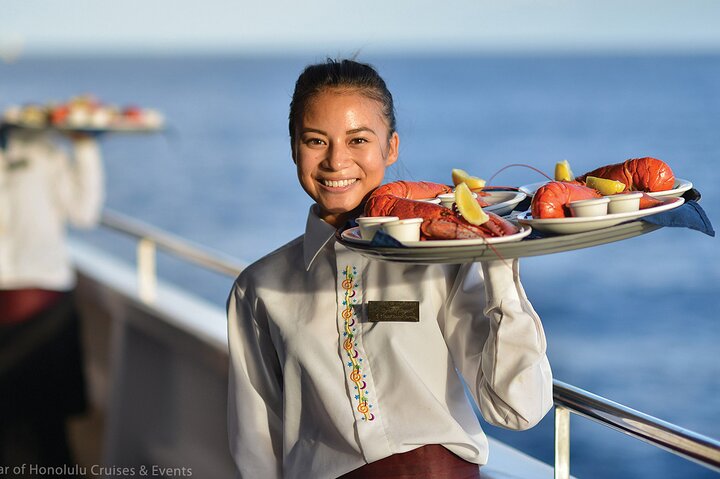
Honolulu: Three Star Deluxe Sunset Dinner Cruise and Show
As the sun sets over the Pacific, enjoy a luxurious Honolulu dinner cruise along the scenic coastline near Diamond H...

Oahu Shark Dive on the North Shore
Book the Oahu Shark Dive for a thrilling shark encounter off the North Shore. You’ll travel by boat from Haleiwa H...
Where Can You Book in Waikiki?
Where should you book in Waikiki if it’s your first canoe surfing ride? You’ve got a few solid choices, and each fits a different style of beach day. Waikiki Beach Services operates in front of the Outrigger Waikiki, so it’s easy to spot and simple for beginners. Star Beachboys launches near the Moana Surfrider and Royal Hawaiian, close to the Duke statue and plenty of surf action nearby. If you’re comparing activities for the same trip, some visitors also look for options with a complimentary trolley ride to make getting around Waikiki easier.
For a first Waikiki canoe surf ride, book where the beach setup feels easiest and the launch spot is simple to find.
- Choose Waikiki Beach Services for the easiest, most established beach setup.
- Pick Star Beachboys if you’re already hanging around the central Waikiki surf scene.
- Book Faith Surf School if you want a private canoe ride with a more personal touch.
- Use Viator when you want a confirmed private canoe time slot, not a fingers-crossed beach plan that morning.
Should You Book Ahead or Walk Up?
Booking ahead usually makes the whole Waikiki canoe surfing plan easier. Busy weeks can sell out by mid-morning, especially the calmer 9am to 11am rides that first-timers usually like. If you want that window, book ahead and protect your spot.
| Option | Best for | Watch for |
|---|---|---|
| Book ahead | Busy weeks | Fewer surprises |
| Walk up model | Quiet days | Same-day luck |
| Small parties | 1 to 2 guests | Minimum 3 rule |
A walk up model can still work on mellow days when sand stands in front of Waikiki hotels have space. But operators like Waikiki Beach Services and Star Beach Boys often run limited daily slots. If you’re traveling as one or two people, booking ahead also helps you confirm how they’ll handle the three-person minimum. No one wants a beachside shrug.
How Do You Book With Faith Surf School?
- Choose the Outrigger Canoe Surfing product, not the surfing or SUP tabs.
- Enter your party details carefully, since Faith requires participants for the canoe experience.
- Book early during busy Waikiki weeks, when ocean plans vanish fast.
- Double-check your confirmation so your time slot, crew outing, and add-on lessons line up cleanly.
That little bit of planning saves stress and keeps the fun front and center.
How Much Does Canoe Surfing Cost?
A canoe surfing ride in Waikiki usually costs less like a full lesson and more like a short guided ocean burst, with pricing shaped by your group size and the way the operator sets up the canoe. Most trips last about 20 to 30 minutes on the water and aim for three waves, so you’re paying for a compact thrill, not a long clinic.
Rates often depend on booking type and party size. Many operators require at least three people per canoe ride. If you book for one or two, you may still pay the three person minimum while staff paddle for safety and balance. You’ll also usually see a $1 Ocean Stewardship Fund fee per rider. Want photos? Those are often extra, and salt spray glamour isn’t always included.

Pearl Harbor, Dole, and Polynesian Cultural Center from Waikiki
Join us on an unforgettable day at three of Oahu’s most popular attractions: Pearl Harbor, Dole Plantation, and Po...

Oahu Beachfront ATV Adventure and Farm Tour
Aloha, welina mai, ‘ano ‘ai. Greetings, and welcome, from Hawai’i! Located on the famous North Shore beachfron...

Pearl Harbor USS Arizona Memorial Tour from Waikiki
Turn back time as we explore WWII history at Pearl Harbor and relive the infamous Sunday morning of December 7, 1941...
What If Waikiki Canoe Rides Sell Out?
What happens if you stroll down to the beach and every outrigger canoe is already spoken for? Don’t panic. Waikiki Outrigger Canoe Surfing can sell out by mid-morning on busy weeks, especially for first-timers who gamble on walk-ups. You’ve still got moves.
- Book a confirmed slot ahead of time, especially if your date is tight or weather could scramble rebooking plans later.
- Arrive early on calmer mornings. The water often looks glassier then, and rides usually cover three waves in 20 to 30 minutes.
- Check other stands along Waikiki, like spots near the Outrigger Waikiki or Moana Surfrider and Royal Hawaiian.
- If you’re fewer than three people, expect to coordinate with others or pay the 3 pax rate. It’s annoying, but it gets you paddling faster.
Frequently Asked Questions
What Is the Cancellation and Refund Policy for Bookings?
You won’t get a refund if you cancel; all bookings are final. With Weather contingencies, operator cancellations usually give you Reschedule options or a full refund, though processing delays and limited peak-season availability can happen.
Are Photos or Videos Included During the Canoe Ride?
Usually, you won’t get photos or videos included; sunlight flashes, paddles rise, and spray sparkles. After your Wave safety briefing, ask about onboard camera options, photographer availability, restrictions on self-filming, and separate image purchase options.
Do I Need to Know How to Swim Beforehand?
No, you don’t need to know how to swim beforehand. You’ll get a Lifeguard safety briefing, follow weight and balance tips, ride with a guided crew, and use flotation support if needed during safe conditions.
Is Transportation or Parking Available Near the Launch Location?
Absolutely, you’ve got transportation and parking options nearby, though Waikīkī’s convenience feels almost mythic. You can usually walk straight to the beach launch, use public transit easily, and enjoy nearby amenities while weather and tides cooperate.
Can I Book a Private Canoe Ride for My Group?
Yes, you can book a private canoe ride for your group. Group size options range up to six guests; you’ll need three minimum or pay for three. A safety briefing included, and weather can reduce capacity.
Conclusion
Book early, show up ready, and let Waikīkī do the rest. You’ll paddle out past the beach buzz, feel the canoe lift under you, and hear the steersman call the beat. Then comes the quiet second before the swell grabs hold. Your crew leans in. The bow tips. Suddenly you’re flying toward shore with Diamond Head in view and salt on your lips. If you’re wondering whether it’s worth it, that moment usually answers everything for you.
Surfing Lessons in Waikiki with Hawaii Firefighters
Learn how to surf with a local firefighter of Hawaii. Many off duty firemen enjoy their days off surfing and teaching others their passion out there i...