
If you’re planning a trip around trails, the best time to visit Honolulu for hiking comes down to two things: heat and mud. Honolulu is hikeable year-round, but the weeks you choose can decide whether you’re cruising up switchbacks at sunrise or sliding around on wet roots while sweating through your shirt.
Best time for hiking Oahu from Honolulu
For the best blend of drier trails and manageable temperatures, aim for these windows:

Wild Dolphin Watching and Snorkel Safari Off West Coast of Oahu
Avoid crowds on our quiet, fast, 32 foot, Coast Guard inspected vessel. We only allow 16 guests on the boat, and every seat has a great view of the an...

Go City: Oahu All-Inclusive Pass with over 40 Things To Do
Make the most of your time on Oahu and enjoy admission to over 40 top attractions, tours, shows and activities, all...

Waikiki Glass Bottom Boat Sunset Cruise
Discover why Hawaii Glass Bottom Boats is one of the best Waikīkī boat tours and a must-do activity in Honolulu. D...

Oahu Catamaran Snorkel Tour: See Turtles 100% Guaranteed
Experience one Viator's 2025 Top 20 Best Excursions in the country. This Oahu Catamaran snorkel tour offers unbeatab...
- April to early June
- September to mid-November
You get plenty of clear mornings, fewer “everything is soaked” days, and slightly less humidity than peak summer. Hawaii’s overall pattern helps explain why: the islands have a drier season from May to October and a wetter season from November to April, with the wettest stretch often falling between November and March.
If you’re choosing purely based on comfort, winter brings cooler daytime temps at sea level, around the upper 70s, while summer days average in the mid-80s. That difference sounds small on paper, but it feels big when you’re climbing in direct sun.
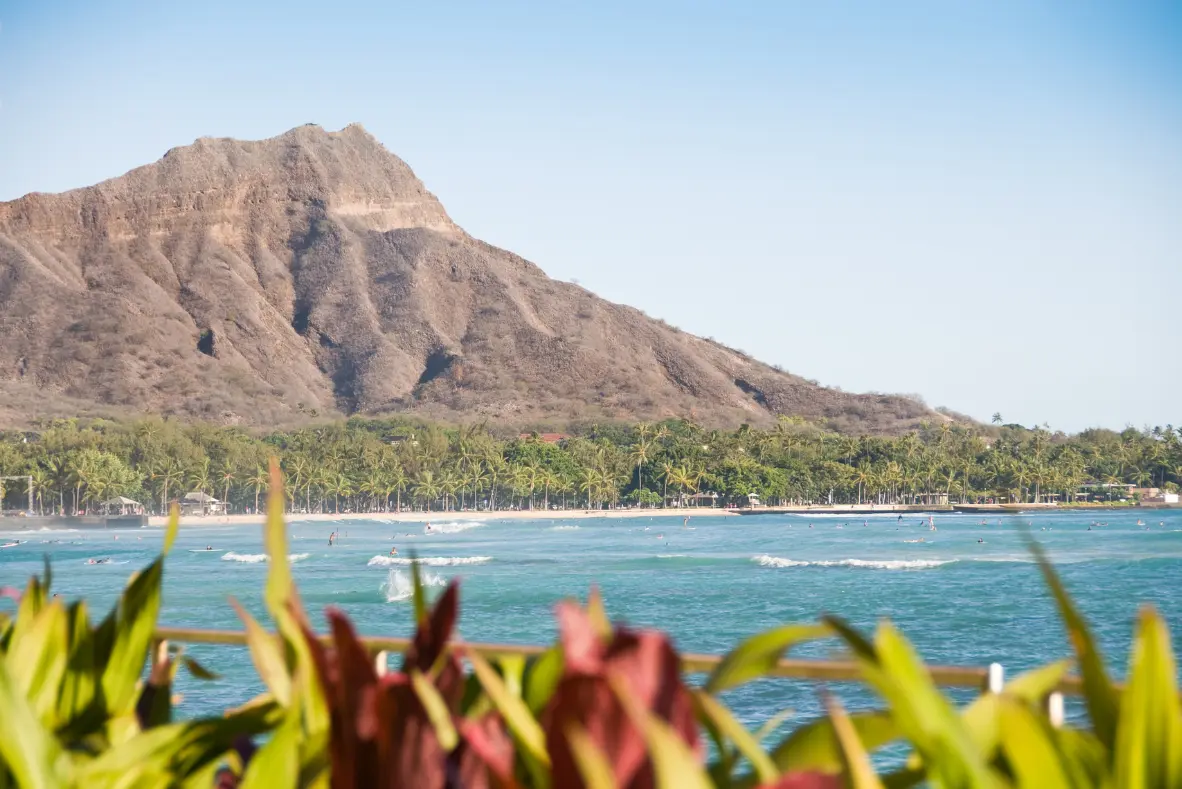
Cooler months vs drier months
Honolulu weather is steady, but hiking conditions are not. Think in trade-offs.
Cooler months for hiking (December to March)
This is when the air feels the most comfortable for longer hikes and ridge walks, especially if you start early. GoHawaii notes average daytime winter temps around 78°F at sea level.
What to expect:
- More frequent passing showers
- More mud on popular valley trails
- Lusher scenery on waterfall hikes
Drier months for hiking (May to October)
This is the easier season for traction and cleaner trails. Summer is described as from May to October, and the broader dry-season pattern lines up with that.
What to expect:
- Hotter sun on exposed trails
- Less mud, fewer slippery sections
- Better conditions for crater and ridge hikes
If you only want one “best overall” answer for most visitors, late spring and early fall usually deliver the most reliable hiking days.
Diamond Head best time for the hike
If Diamond Head is on your list, the best time to hike Diamond Head is early morning, ideally the first entry slot of the day. The park’s normal operating hours are 6:00 am to 6:00 pm, and the last entry is tied to the 4:00 pm reservation, with final entrance at 4:30 pm.
Early matters for three reasons:
- Cooler temperatures on the climb
- Fewer people bunching up on stairs and in the tunnel
- Cleaner views before midday haze builds
A quick reality check for sunrise hunters: the gates open at 6:00 am, so you might not catch the exact moment of sunrise depending on the time of year. You still get the best light of the day if you go early.
Diamond Head reservation notes (read this before you show up)
Non-residents need entry and parking reservations. The official Hawaii DLNR page spells it out: entry and parking reservations are required for non-residents, with fees of $5 per non-resident (children 3 and under free) and $10 per non-resident vehicle, and it’s credit card only.
On the official reservation site, you can book up to 30 days in advance, and they are strict about timing. You’re expected to arrive within the first 30 minutes of your reservation window, and people without reservations can be turned away.
If you want the smoothest Diamond Head morning:
- Book early: first time slots tend to go fastest.
- Arrive early anyway: traffic into the crater area can stack up.
- Do not count on winging it: no reservation can mean no entry.
Trail details help with planning too. DLNR describes the summit trail as a steep 0.8-mile climb to the top with about 560 feet of elevation gain, including stairs and a lighted tunnel.
Trail conditions to plan around
Honolulu hikes fall into a few categories, and each reacts differently to weather.
Still comparing Best Time, Weather, Crowds, And Monthly Planning?
Ask for tour ideas, hotel suggestions, or a simple trip plan that combines both.
Trip Helper
Mud and slick roots (valley and waterfall trails)
These are the trails that get sketchy after rain. The scenery is great, but your shoes matter, and so does timing. If it rained hard the day before, expect mud, puddles, and slippery sections.
Tips that save ankles:
- Choose trail runners with grip, not flat-soled sneakers
- Skip white shoes unless you enjoy permanent souvenirs
- Turn around if stream crossings look fast or high
Exposed sun and heat (crater and ridge hikes)
Diamond Head, Koko Head-style climbs, and many ridge trails have long exposed sections. In summer, these can feel brutal after 9:00 or 10:00 am.
Heat-management basics:
- Start at sunrise or as early as the trail allows
- Bring more water than you think you need
- Wear a hat and sunscreen, the UV is no joke
Note that trade winds often create a cooling breeze, but they can drop and turn conditions hot and sticky during kona weather.
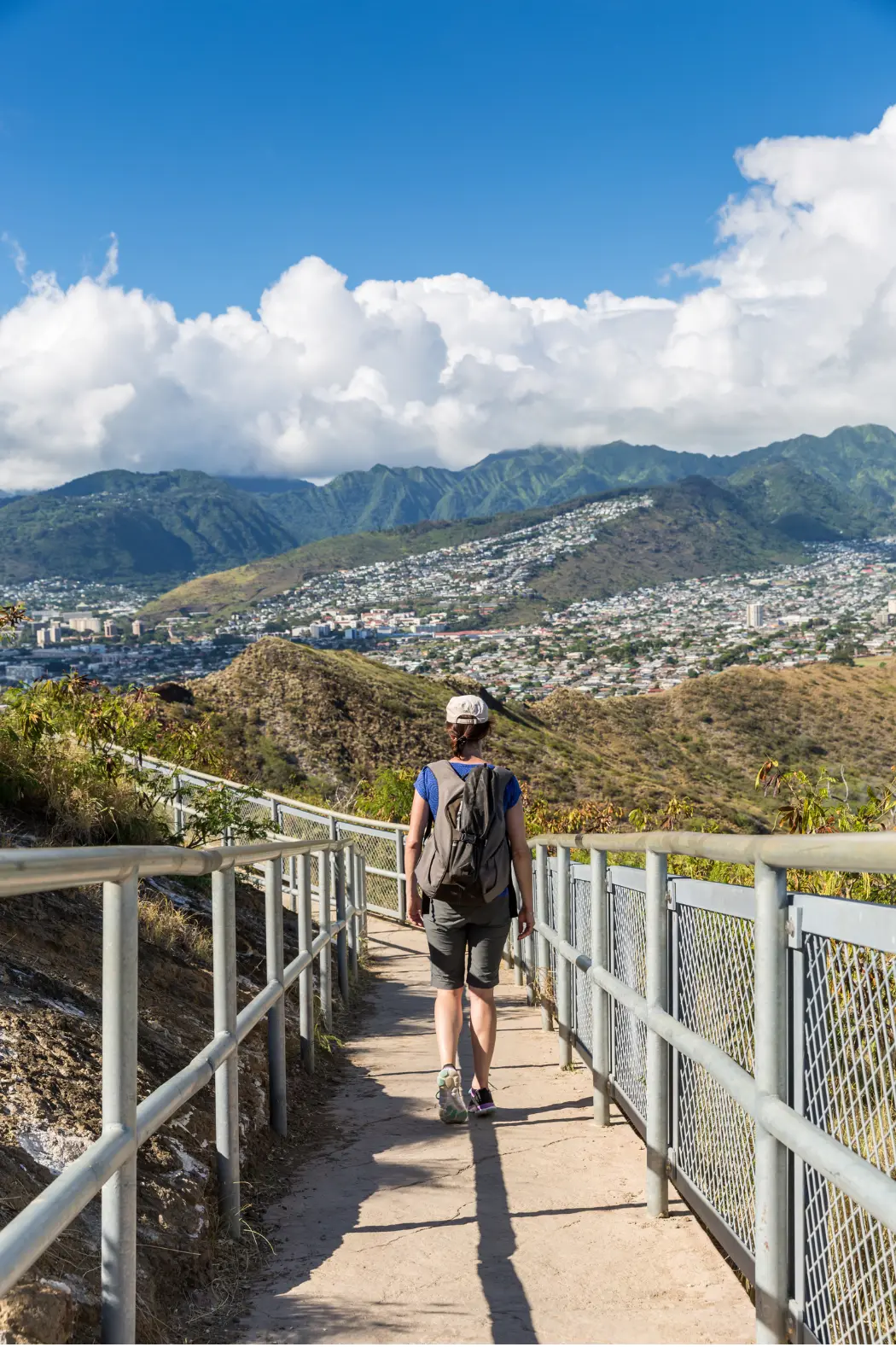
Sunrise hikes in Honolulu
If you want the best hiking experience in Honolulu, build your days around early starts. Sunrise hiking is not just a vibe, it’s a strategy.
You get:
- Cooler temps
- Better light for photos
- Easier parking at busy trailheads
- More margin if you hike slower than expected
Diamond Head is the classic sunrise-adjacent hike because it opens at 6:00 am.
For other trails, always check posted access rules and respect closures.
When to hike if you hate crowds
Crowds are often a bigger issue than weather on the most popular Honolulu hikes.
Best ways to dodge them:
- Go midweek
- Choose the first entry window for reservation hikes
- Hike earlier than you want to wake up
Shoulder-season months (April, May, September, October) often help too, since visitor volume is usually lighter than peak summer and holiday weeks.
Guided hiking options that make sense
If you’re short on time, a guided hike can be worth it for the logistics alone, especially for Diamond Head where reservations and timing matter. A small-group Diamond Head hike booked through Viator can be useful if it includes transportation from Waikiki and takes the reservation stress off your plate. Many listings offer free cancellation up to 24 hours before the start time, which helps if you need to shuffle plans around weather.
Keep it simple: guided makes sense when you want an early start without a rental car, or when your trip is packed and you do not want to troubleshoot.
Final thoughts
For most visitors, the best time to visit Honolulu for hiking is late spring or early fall, when trails are less muddy than winter and the heat feels more manageable than peak summer. If your top goal is Diamond Head, the best time to hike is the earliest slot you can book, since the park runs on timed reservations and mornings are cooler.
If you want the month-by-month big picture, loop back to the main guide: Best Time to Visit Honolulu (2026): Weather & Crowds.

Oahu: Full or Half Day Grand Circle Island Tour
Choose from two exciting ways to experience Oahu's top attractions, scenic beauty, and local culture.Option 1: Dole Plantation & Haleiwa Town (6.5 H...

Oahu Majestic Circle Island Tour with Waimea Falls and Byodo Inn
Since 1974, E Noa Tours has specialized in showing visitors the real Oʻahu through immersive experiences led by pas...

Oahu: Grand Tour Around Island with Snorkeling
Come join on a circle island adventure led by some of Hawaii’s most knowledgeable local guides and experience brea...

Parasailing Experience in Waikiki, HI
Experience the thrill of Oahu parasailing on this unforgettable 1-hour adventure from Waikiki. Soar up to 1,000 feet...
Experiences to explore
 Explore experience ↗
Diamond Head Hiking Tour with Tickets and Shuttle Included
◷ 3 hr
The Diamond Head Hike is a 3-hour round-trip adventure, including pick-up and drop-off from your Waikiki hotel. This 1.6-mile trail alo
From $35.00 USD
View dates Explore experience ↗
Half-Day Hiking Tour to Diamond Head and Makapuu Lighthouse
◷ 6 hr
Experience two of Oahu’s most iconic hikes with Kaimana Tours. This self-guided adventure combines the Diamond Head Crater and Makapu‘u
From $70.99 USD
View dates Explore experience ↗
Hanauma Bay Guided Snorkel Tour (with guaranteed entrance time)
◷ 1 hr
100% woman owned and operated with over a decade of guiding tours at Hanauma Bay! Enjoy an exciting semi private (5 people max) FULLY g
See dates for Current pricing
View dates
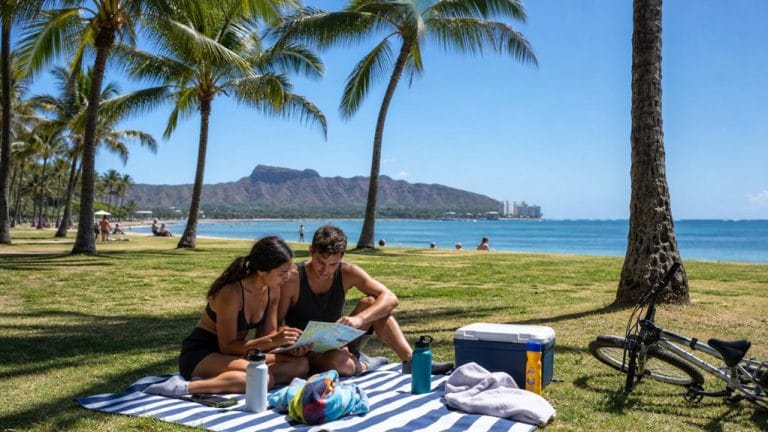
[…] bright. In these neighborhoods, April sits between the island’s wetter winter stretch and its drier hiking season, so you’ll see more brief showers than in summer but fewer all-day washouts than […]