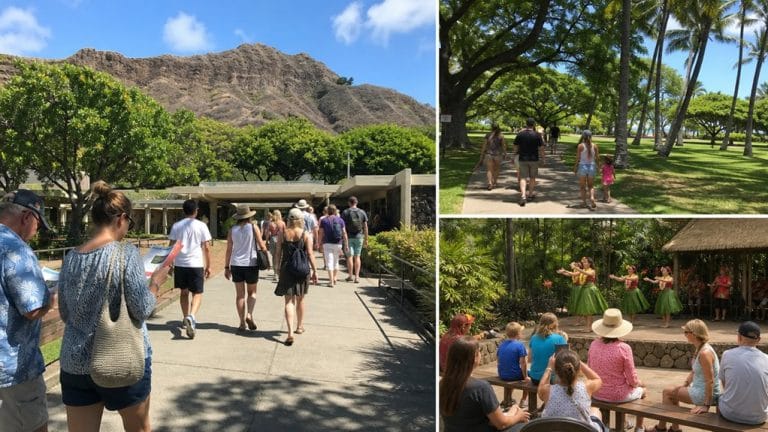
You climb, you sweat, you look down, and you realize Diamond Head isn’t just a viewpoint, it’s a blast site. About 150,000 to 200,000 years ago, magma hit shallow seawater and groundwater and blew wet ash and rock into gritty layers that hardened into tuff. Go early to beat the heat and crowds, bring water and a hat, skip flip-flops. Entry runs about $5, parking about $10, and a Viator tour can streamline timing with hotel pickup and free cancellation, but the cliff layers tell the real story. So what clues should you spot first?
Key Takeaways
- Diamond Head formed in one late-stage Honolulu Volcanics eruption, about 150,000–200,000 years ago, long after Oʻahu’s shield volcano phase.
- Rising magma met shallow seawater and groundwater, triggering phreatomagmatic explosions driven by rapid steam expansion.
- Repeated blast pulses blasted ash, lapilli, and rock outward, building a broad tuff cone with a sharp rim and wide crater.
- Ground-hugging surge clouds and ash fallout stacked distinct layers that later cemented into tuff, visible as gritty tan bands today.
- Radiometric dates, paleomagnetic signatures, and field clues like coral flecks and volcanic bombs support the eruption’s timing and wet, explosive origin.

Oahu Grand Circle Island Experience from Waikiki
Enjoy Grand Circle Island experience tour with breathtaking views of Amelia Earhart Lookout on Diamond Head, admire Chinaman’s Hat in front of Kualo...

Oahu: 60 Min Royal Crown Helicopter Tour - Doors Off or On
See every stunning sight on Oahu from the white sands of Waikiki to the epic big waves of Norh Shore on our incredib...

Waikiki Glass Bottom Boat Cruise
Experience the beauty of Oʻahu South Shore as we sail toward Lēʻahi (Diamond Head) aboard the spacious Haleiwa Qu...
Diamond Head Eruption: The 5-Step Timeline
While Diamond Head looks like it’s always been part of Waikīkī’s postcard view, its story starts with a fast, messy eruption that unfolded in five clear beats. As one of Hawaii’s most iconic volcanic landmarks, Diamond Head stands today as a classic tuff cone formed by explosive interactions between magma and seawater-saturated rock.
You can picture the eruption sequencing as a tight itinerary.
1) Rising magma meets groundwater, kicking off the first of several phreatomagmatic phases.
2) Steam blasts shred rock into gritty ash that falls like warm sand.
3) Repeated bursts stack layers, building a low ring that grows with each pulse.
4) Vent activity shifts, tossing larger cinders and blocks, thickening the rim.
5) The system winds down, and loose deposits settle and cool.
When you hike today, go early to dodge crowds, bring water, hat, and a light rain shell.
Skip heavy tripods.
Tickets run about $5.
Where the Diamond Head Eruption Occurred on Oʻahu
You’ll find the Diamond Head eruption site on southeastern Oʻahu, a quick hop from Waikīkī’s shore where sunrise crowds and salty trade winds set the scene. This iconic crater is part of the Honolulu Volcanics and tells a vivid story of Oʻahu’s late-stage volcanic activity, all captured in its Diamond Head volcano history.
Start early because the trail fills fast, bring water and sun protection, and expect a small state-park entry and parking fee if you drive, or skip the car and book a Viator shuttle tour with verified reviews, hotel pickup, free cancellation, and reserve now pay later.
As you climb the tuff cone, watch the gritty tan rock underfoot and the ocean-gloss views, but skip flip-flops and heavy bags unless you want an extra workout.
Southeastern Oʻahu Location
Sunlight hits the tuff cone at Diamond Head like a spotlight, and it’s easy to see why this eruption site ended up as southeastern Oʻahu’s most famous landmark.
You’re on the island’s dry, wind-brushed flank, where cliffs and headlands take the first bite of coastal erosion. The crater sits above low neighborhoods and ridgelines, so you get open skies, steady trade winds, and clear lines for photos. Formed by a single explosive eruption, Diamond Head volcano is actually a tuff cone built from ash and fragmented rock rather than a typical towering shield volcano.
Plan an early start, gates open around 6am, because midday heat and school groups stack up fast.
Expect about $5 entry and $10 parking if you drive. Bring water, a hat, and grippy shoes. Skip flip-flops and heavy backpacks.
Along the trail, interpretive signs nod to Hawaiian culture, place names, and the landscape’s long memory at work.
Waikīkī Coastal Proximity
Diamond Head sits so close to Waikīkī that it feels like the city’s backdrop, but it’s also the exact shoreline zone where this eruption played out, just east of the resort strip.
From the Waikīkī beachfront you can trace the sand toward Kahala and picture blasts where today you’re towel-down and sunscreened between morning swims.
Come early, around 7 a.m., to beat heat and crowds, and bring water, a hat, and sunscreen. Skip flip-flops, the lava grit eats them.
A self-guided visit runs about $10 parking plus $5 entry per person, cashless. Non-residents now need to secure online reservations in advance for entry and parking, with time slots helping keep this popular coastal crater from getting overwhelmed.
Along the coast, notice Coastal erosion nibbling at paths and sea walls after big swells.
If you hate planning, Viator shuttles offer hotel pickup, verified reviews, free cancellation, reserve now pay later.

Oahu Beachfront ATV Adventure and Farm Tour
Aloha, welina mai, ‘ano ‘ai. Greetings, and welcome, from Hawai’i! Located on the famous North Shore beachfron...

Waikiki: 2 hours - Friday Night Fireworks Catamaran Cruise
Enjoy the spectacular FRIDAY NIGHT FIREWORKS show along the beautiful coastline of Waikiki while we get up close and...

Pearl Harbor USS Arizona Memorial Tour from Waikiki
Turn back time as we explore WWII history at Pearl Harbor and relive the infamous Sunday morning of December 7, 1941...
Tuff Cone Setting
Although it looks like a tidy landmark from town, the eruption that built this place happened in a classic tuff cone setting, right where hot magma met shallow seawater along Oʻahu’s south shore. You can still read that watery fight in the ash: damp, cemented layers that stack like pages, a lesson in marine volcanology. The crater itself spans over 475 acres and is composed largely of cemented ash and tuff, preserving the explosive story of that single eruption.
Walk the crater trail early, before 9 a.m., to dodge heat and groups, and bring 1 liter of water, sunscreen, and shoes. Entry runs about $5 plus parking, and cash keeps it simple.
From the rim, scan the coastal stratigraphy below, shorelines and reef flats that guided the blast. Skip flip flops and midday selfies.
If you’re car free, a Viator shuttle with verified reviews simplifies pickup and timing.
Magma + Seawater: Why Diamond Head Exploded
When hot magma rose under Oʻahu’s coast and hit shallow seawater, it didn’t ooze politely, it flashed water into steam and blew the ground apart in quick, violent bursts. You can picture that seawater interaction like tossing water on hot oil, only on a coastal scale. With magma mixing into sand and debris, pressure spiked, fragments flew, and the air turned gritty and sulfur sharp. That explosive action at Diamond Head happened long after Oʻahu first formed, on an island whose ancient volcanic roots had already been built by much older shield volcanism.
If you hike Diamond Head now, today, go early, before 8 a.m., when the crater trail’s cooler and lines at the $5 entrance stay short. Bring a jacket for wind, water, and shoes for loose gravel. Skip flip flops and umbrellas. Plan 60 to 90 minutes, and keep an eye out for ash beds that mark those rapid blasts.
What Is a Tuff Cone: and Is Diamond Head One?
You’re looking at a tuff cone, a steep volcanic hill built from wet ash that set like gritty cement after explosive blasts. At Diamond Head, that ash piled up fast into a broad crater and sloping rim, and yes, geologists classify it as a tuff cone. If you want to see the layers up close, hit the trail early before the crowds and heat, bring water and a hat, skip flip-flops, and consider a Viator tour with verified reviews, hotel pickup, free cancellation, and reserve now pay later if you’d rather not juggle timing or tickets. Before you visit, check current fees and hours so you can time your hike and tour reservations just right.
Tuff Cone Definition
A tuff cone is a natural bowl of volcanic ash and rock fragments that piles up fast when hot magma meets shallow seawater or groundwater and explodes into gritty, cement-like “tuff.”
In plain terms, it’s the kind of crater you can walk around on a morning hike and still spot the layers like a sliced cake, especially in the slanted light before 9 a.m.
To read the eruption mechanics, look for coarse chunks near the rim and finer ash downslope.
Those stripes show blasts came in pulses, then cooled and hardened.
For volcanic preservation, don’t scramble on fragile ledges.
Go early, it’s cooler and quieter, and entry runs about $5.
Bring water, sunscreen, and grippy shoes, skip flip-flops.
A Viator hike helps with timing.
Expect the Diamond Head hike to be a short but steady climb that typically takes about 1.5 to 2 hours round trip, depending on your pace and stops.
Still comparing Diamond Head Oahu Hiking And Scenic Viewpoints?
Ask for tour ideas, hotel suggestions, or a simple trip plan that combines both.
Trip Helper
Diamond Head Classification
Although it looks like a simple crater from Waikīkī, Diamond Head is classified as a tuff cone, formed by explosive blasts that happened as magma hit shallow seawater and wet ground, then piled ash and rock into a steep, bowl-shaped ring. In fact, geologists trace this to Diamond Head’s last eruption, a brief but powerful event roughly 150,000–200,000 years ago that built the cone in a single eruptive episode.
In volcanic taxonomy, that makes it different from a shield volcano or cinder cone, because its fragments welded into tuff after steam-driven bursts.
Look at the cone morphology on the trail: low outer slopes, a sharp rim, and layered ash beds you can spot in the cut walls.
You’ll feel the classification underfoot on the 0.8-mile hike.
Go early, gates open 6am, or late afternoon for softer light and fewer tour buses.
Parking is $5 per car, entry is $1 per person today.
How the Crater and Rim Formed (Surges + Fallout)
When Diamond Head’s eruption kicked off, it didn’t build a neat lava cone, it blasted out a crater fast with ground-hugging surges and a steady rain of gritty fallout. You can picture those hot, sandy clouds racing outward, scouring the ground, then dropping into thick surge deposits that piled up around the vent. Just like other Honolulu volcanic craters on Oahu, Diamond Head’s explosive birth left a dramatic tuff cone that now anchors many visitors’ first glimpse of the island’s volcanic story. Between bursts, finer ash and lapilli drifted down, creating neat fallout layering that slowly raised the rim like a stacked sandcastle.
If you hike today, go early, slots sell out, and sunrise beats the bus crowds. Expect about $5 to park or $1 to walk in, plus online reservations. Bring water, a cap, and closed shoes, skip flip-flops and heavy backpacks. If logistics stress you, Viator tours offer pickup and timing.
Eruption Deposits You Can Still See Today
Most days, you can still read Diamond Head’s eruption like a trail-side scrapbook, if you know what to look for. Start at opening hour, 6am, before the tour buses stack up and the sun turns the path into a skillet. You’ll pay about $5 per vehicle or $1 on foot, plus a timed reservation. Bring water, a hat, and real shoes, skip flip-flops and big umbrellas in the wind and sea spray. As you hike, you’re walking through one of Oʻahu’s younger Honolulu Volcanic Series cones, a reminder that the island’s fiery past didn’t end with its older shield volcanoes.
| Stop | Quick cue |
|---|---|
| Rim lookout | Pale grit crunches |
| Tunnel area | Coral flecks glint |
| Lower slope | Dark pebbles meet beach sediments |
Plan 90 minutes round trip, and pause at benches for cool trade-wind views too. If you want logistics handled, a Viator hike with verified reviews can add hotel pickup and free cancellation.
Cliff Clues: Layers, Bombs, and Ash Textures
On the crater’s outer cliffs, you can spot Diamond Head’s story in stacked bands of ash and gravel, peppered with rounded “bomb” rocks that look like someone tossed wet cement into the air. Up close, those bomb textures show wrinkled skins and broken cores, proof they cooled fast midflight. Follow the bedding patterns: thin, gritty layers tilt seaward, then get capped by darker surge sheets where blasts raced low across the ground. Go early, before 9 a.m., and you’ll beat the heat and school groups. Entry’s about $5, bring water and closed shoes for loose scree. Skip flip-flops and selfie sticks. If you’d like a guided read of the cliffs, a Viator tour with hotel pickup, free cancellation, and verified reviews can streamline timing. If you’re driving, plan for limited Diamond Head parking and give yourself extra time to get through the tunnel and find a spot before the trail crowds build.

Oahu's North Shore: 8-Line Zipline Adventure
Experience the ultimate Oahu zipline adventure on this 3-hour guided tour across the island’s famous North Shore...

Parasailing Experience in Waikiki, HI
Experience the thrill of Oahu parasailing on this unforgettable 1-hour adventure from Waikiki. Soar up to 1,000 feet...

Waikiki 2-Hour Sunset Sailing Catamaran – Swim & Sail Adventure
There’s no better place to take a dip than the crystal-clear waters of Waikiki—and no better way to experience a...
How Old Is Diamond Head: and How Do We Know?
Two quick numbers frame Diamond Head’s age: the crater formed roughly 300,000 years ago, and geologists can pin it down because the ash layers act like a time-stamped scrapbook. You can see those beds on the trail, especially in morning light before the crowds swell. Just like paddling a kayak from Kailua Beach to Flat Island Kailua reveals offshore islets built by ancient eruptions, Diamond Head’s exposed ash beds let you read the volcanic story written in rock. Scientists confirm the story with radiometric dating of volcanic minerals and with paleomagnetic signatures locked into cooled fragments, matching Earth’s past field. If you want the site and the science without homework, book an early Viator hike with verified reviews, hotel pickup, free cancellation, and reserve now pay later. Otherwise, arrive by 7 a.m., bring water, a hat, and $5 for parking. Entry runs about $5 per person, and the summit takes 40 minutes. Skip flip-flops, the wind stings.
Diamond Head vs Kīlauea: Eruption Style Differences
While both are born from Hawaiian magma, Diamond Head and Kīlauea put on totally different shows, and knowing the difference helps you plan your day.
Diamond Head formed in a short, explosive burst when hot magma met seawater, throwing ash and cinders into a tight ring. Today you hike it in 60 to 90 minutes; book your $5 entry and $10 parking online or you’ll queue at the gate. Before you go, learn about the dormant volcanoes on Oahu so you can understand the island’s volcanic past even though you won’t see active lava here.
Kīlauea usually plays the long game.
You might see gentle lava fountains, glowing vents, or lava flowing from flank eruptions that shift with alerts. Visit Volcanoes National Park early, around sunrise, to beat crowds and catch the best light. Bring a headlamp, water, and a light jacket; skip flip-flops, and don’t chase “fresh” lava alone.
Frequently Asked Questions
Can You Hike Diamond Head, and Do You Need Reservations?
Yes, you can hike Diamond Head, and you’ll often need online reservations if you’re not a Hawaii resident. Plan your Hike logistics early; follow Parking tips by arriving before 8 a.m. or using rideshare today.
What Does the Name “Diamond Head” Mean, and Who Named It?
Like a false gem on the horizon, you trace Diamond Head’s name origins to 19th‑century British sailors, who mistook calcite crystals for diamonds. You’ll also hear Lēʻahi, honoring cultural meanings: “ahi” tuna brow shape today.
Are There Any Safety Risks From Rockfalls or Unstable Cliffs Today?
Yes, you still face some risk today from occasional loose rock and eroding slopes, especially after heavy rain. You’ll see rockfall mitigation barriers and ongoing cliff stabilization, but you should always stay on marked trails.
What Plants and Animals Live Inside and Around the Crater?
Like spotting a green oasis after a 0.8‑mile hike, you’ll find coastal plants, grasses, and kiawe in and around the crater, while native birds, geckos, and insects dart through scrub and rocky ledges all day.
How Did Diamond Head Become a Military Lookout and Historical Site?
You can thank its high rim and sweeping views: you’re able to spot ships and protect Honolulu. The U.S. military built coastal fortifications, then later preserved trails and bunkers, turning it into a panoramic observatory site.
Conclusion
Stand on the rim and you’ll read Diamond Head like a frozen thunderclap, ash layers stacked from one steam blast. Go early, gates open 6 am, or you’ll join the midmorning queue. Reserve ahead online, it’s $5 to walk in, $10 to park. Bring 1 liter of water, sun protection, and grippy shoes. Skip flip-flops and heavy packs. If you’re tight on time, a Viator tour with hotel pickup and free cancellation can smooth logistics.
Oahu Grand Circle Island Experience from Waikiki
Enjoy Grand Circle Island experience tour with breathtaking views of Amelia Earhart Lookout on Diamond Head, admire Chinaman’s Hat in front of Kualo...
Oahu: 60 Min Royal Crown Helicopter Tour - Doors Off or On
See every stunning sight on Oahu from the white sands of Waikiki to the epic big waves of Norh Shore on our incredib...
Waikiki Glass Bottom Boat Cruise
Experience the beauty of Oʻahu South Shore as we sail toward Lēʻahi (Diamond Head) aboard the spacious Haleiwa Qu...