
Sun rises over Waikiki as you start up Diamond Head, feet hitting smooth pavement that soon turns into steep concrete and tight stairs. You’ll climb about 0.8 miles one way and gain roughly 560 feet, which usually takes 30 to 45 minutes up and a bit less down. Factor in crowds, heat, photo stops, and maybe a timed entry or Viator shuttle, though, and your quick hike can quietly stretch into something very different…
Key Takeaways
- The Diamond Head trail is about 0.8 miles one-way (1.6 miles round-trip) with roughly 560 feet of elevation gain.
- Most reasonably fit hikers reach the summit in 30–45 minutes and descend in 25–35 minutes.
- A realistic total time, including brief photo and water stops, is about 90 minutes round-trip.
- Starting between 6:00–8:00 am avoids worst heat and crowds; midday visits often stretch closer to 2 hours total.
- Steep concrete sections, tight stairs, uneven rock, and crowded viewpoints can slow your pace compared with typical flat hiking times.

Diamond Head Hiking Tour with Tickets and Shuttle Included
The Diamond Head Hike is a 3-hour round-trip adventure, including pick-up and drop-off from your Waikiki hotel. This 1.6-mile trail along Oahu’s sou...

Diamond Head Hike Shuttle with Reservation Tickets Included
Our Diamond Head Shuttle Tour offers a perfect blend of convenience, adventure, and unforgettable vistas.Stress-Fr...

Oahu Circle Island Tour with Waimea Valley Waterfall
Join Go Tours Hawaii as we embark on an Unforgettable Oahu Circle Island tour adventure as we journey through Hawaii...

Electric Bike Ride & Diamond Head Hike Tour
*During the busy summer months, please check with us for last minute bookings (1 or 2 days before your desired ride...
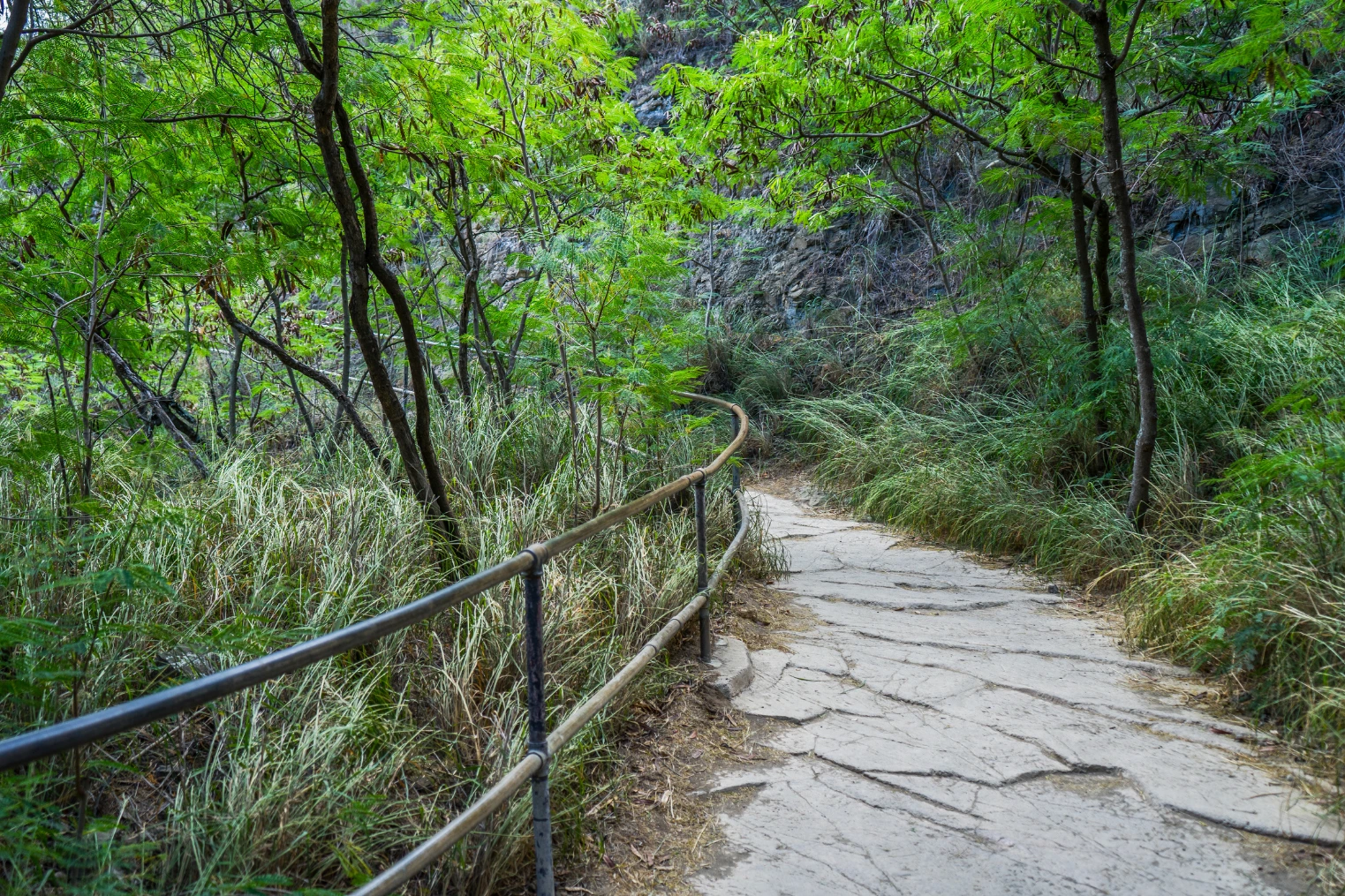
Diamond Head Hike Distance, Elevation, and Average Time
The Diamond Head Summit Trail looks short on paper, but it packs more into its 0.8-mile one-way distance than many longer hikes.
You’ll climb about 560 feet from crater floor to summit, trading flat pavement for steep concrete, rough rock, and tight stairways as the trail surface changes under your shoes.
Most reasonably fit hikers reach the top in 30 to 45 minutes, then take another 25 to 35 minutes to descend. Add pauses for photos and water, and you’re usually out around 90 minutes door to door.
Expect about 90 minutes round-trip, including photo stops and water breaks.
Grab a viewpoints map at the entrance so you know which overlooks frame Waikīkī, the Koʻolau Range, and the open Pacific. It helps you budget time and skip minor detours.
Start early to avoid heavier heat. For a smoother experience, aim for the cooler best start window of 6:00 am to 8:00 am so you’re not racing the sun, crowds, or your parking time slot.
What Really Slows (or Speeds Up) Your Hike Time
Numbers on a map only tell part of the story; what really sets your Diamond Head pace is everything happening around you and under your feet.
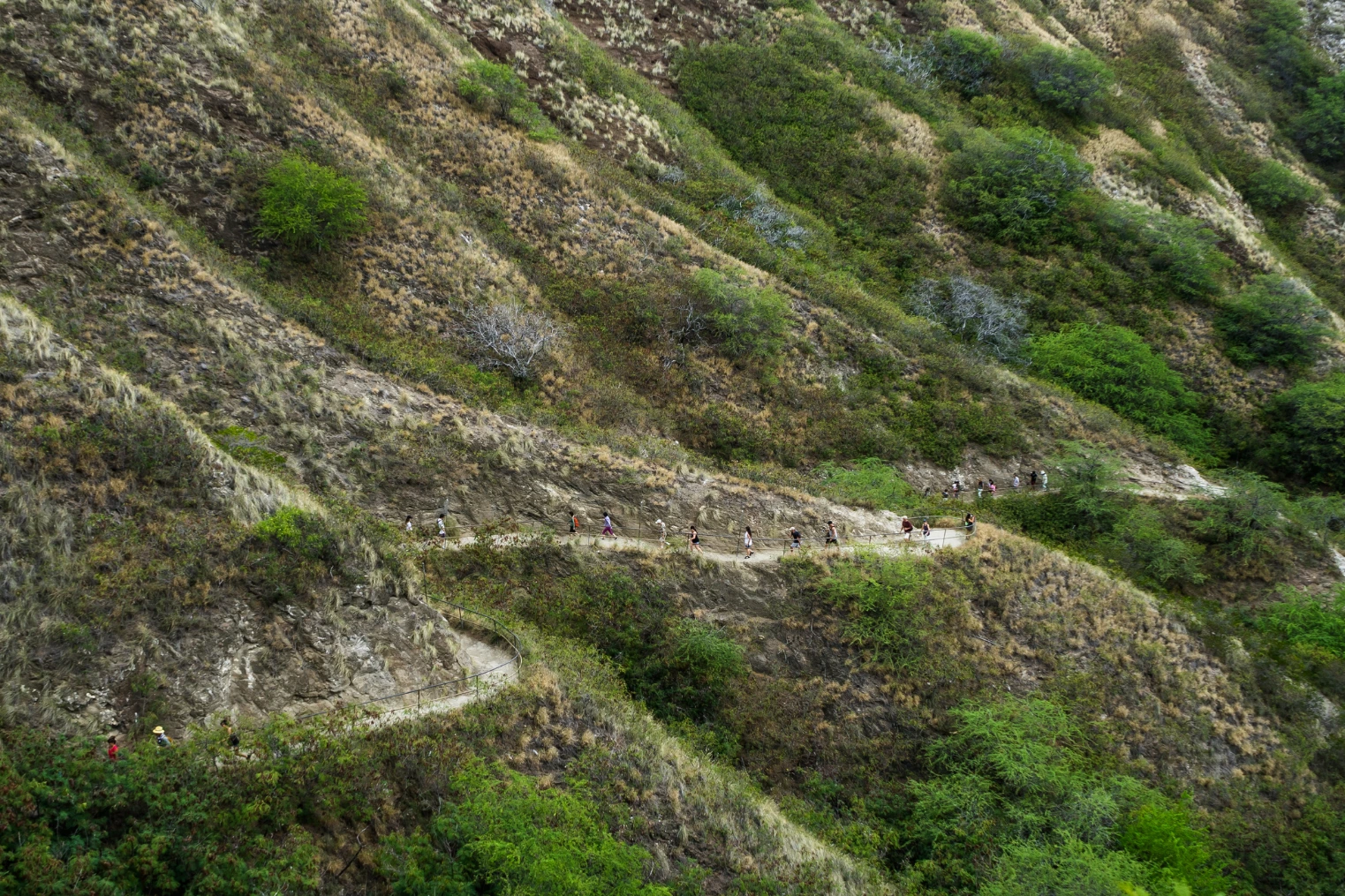
You might sprint the first flat section, then slow to a shuffle once the steep switchbacks and concrete stairs kick in. Uneven rock, heat reflecting off the crater walls, and limited shade all nudge you toward more breaks.
Viewpoint crowds also steal minutes as you wait for railings, photos, and space to catch your breath. If you stop for every vista, add plenty of time.
Moving in a small, steady group keeps you quicker than hiking with mixed abilities. Guided Viator tours can help, since they handle transport and tickets, and keep you moving without extra waiting around. For even smoother pacing, plan around the best time to hike so you avoid the hottest hours and heaviest crowds.
Best Times and Sample Timelines for Hiking Diamond Head
Often the best time to hike Diamond Head is when the crater is just waking up, not when everyone else has already lined up at the tunnel.
Catch Diamond Head as the crater wakes, before lines snake through the tunnel
Aim to reach the gate by 6 am for cooler air, softer light, and uncrowded steps.
If you love sunrise photography, book the earliest reservation and carry a small tripod, water, and a light jacket.
Check current Diamond Head fees and gate hours before you go so your reservation and timing line up with the park schedule.
Late morning to early afternoon feels punishing.
The sun bounces off the pale rock, and midday crowds slow every staircase.
If you must go then, budget 2 hours instead of 90 minutes.
Staying in Waikiki without a car?
A morning Viator tour can solve logistics with hotel pickup, prebooked tickets, verified reviews, free cancellation, and reserve now pay later for most visitors.
Frequently Asked Questions
Is the Diamond Head Trail Suitable for Young Children or Elderly Hikers?
Yes, you can take young children and some elderly hikers, but you must assess stamina and balance. Plan breaks, use rails, and skip the hottest hours. Child friendly tips and mobility considerations should guide you.
What Should I Wear and Pack Specifically for the Diamond Head Hike?
Dress like a rising sun shedding armor: wear breathable layers, sturdy shoes, hat, and sunglasses; pack water, light snacks, sunscreen, small first-aid kit, and camera so you’ll capture views, not blisters or harsh midday heat.
Are Restrooms and Drinking Water Available Along or Near the Diamond Head Trail?
Yes, you’ll find restrooms and drinking water only at the trailhead, near the parking lot. Know restroom locations beforehand; none exist on the trail or summit. Use water refillstations and fountains only at the base.
Do I Need Reservations or Permits to Hike Diamond Head, and How Much?
You’re pleasantly nudged into planning: you do need advance reservations if you’re a visitor, plus park fees, currently $5 per person and $10 parking per vehicle, while Hawaiʻi residents skip reservations and pay no fees at all.
How Crowded Is Diamond Head Compared to Other Popular Oahu Hikes?
You’ll find Diamond Head busier than most Oahu hikes overall. Expect long lines, tight parking, and heavy trail traffic during peak congestion. Seasonal variation’s real; holidays and summer weekends feel packed, while weekdays stay calmer.
Conclusion
So in the end, Diamond Head is hardly an epic expedition, yet it somehow eats half your morning. You measure just 0.8 miles, but your calves swear it’s longer. Start early, bring water, skip flip flops, and accept the crowd choreography at the stairs. If you hate logistics, a well reviewed Viator shuttle with tickets and hotel pickup quietly saves time. Then you can pretend it was all effortless planning on your part after all.

Oahu: Full or Half Day Grand Circle Island Tour
Choose from two exciting ways to experience Oahu's top attractions, scenic beauty, and local culture.Option 1: Dole Plantation & Haleiwa Town (6.5 H...

Oahu Majestic Circle Island Tour with Waimea Falls and Byodo Inn
Since 1974, E Noa Tours has specialized in showing visitors the real Oʻahu through immersive experiences led by pas...

Oahu: Grand Tour Around Island with Snorkeling
Come join on a circle island adventure led by some of Hawaii’s most knowledgeable local guides and experience brea...

Parasailing Experience in Waikiki, HI
Experience the thrill of Oahu parasailing on this unforgettable 1-hour adventure from Waikiki. Soar up to 1,000 feet...
Experiences to explore
 Explore experience ↗
Diamond Head Hike Shuttle with Reservation Tickets Included
◷ 2 hr 30 min
Our Diamond Head Shuttle Tour offers a perfect blend of convenience, adventure, and unforgettable vistas. Stress-Free Convenience: We p
From $39.99 USD
View dates Explore experience ↗
Diamond Head Bike to Hike and Local Lunch
◷ 4 hr
UPDATE February 2025- Diamond Head is only open half day Monday through Friday due to construction projects, This will continue until J
From $169.00 USD
View dates Explore experience ↗
Electric Bike Ride & Diamond Head Hike Tour
◷ 3 hr 30 min
*During the busy summer months, please check with us for last minute bookings (1 or 2 days before your desired ride date) to ensure Dia
From $199.00 USD
View dates

