Like a scene from a storybook jungle, Mānoa pulls you in with bamboo shade, slick roots, and the hush of water ahead. You can keep it easy on Lyon Arboretum paths, chase the popular 0.8 to 0.9 mile walk to Mānoa Falls, or link into ʻAihualama and Pauoa Flats for steeper miles and ridge views. Parking is tight, mud is real, and one wrong turn can change your whole outing.
Key Takeaways
- Manoa Falls Trail is the classic short hike: 0.8 to 0.9 miles each way to a 150-foot waterfall, with muddy, steeper footing near the end.
- At the ʻAihualama junction, go left for Manoa Falls or right to connect toward Pauoa Flats, Tantalus Loop, Nuʻuanu, or Mānoa Cliff.
- Pauoa Flats and Tantalus extensions add real elevation, quieter forest, and viewpoints, but trails are often muddy, slick, and better with grippy shoes.
- Lyon Arboretum offers an easier, family-friendly rainforest walk with labeled plant collections, maintained paths, and less mud than the valley trails.
- Start from Paradise Park parking near Mānoa Road, arrive early or use rideshare, and avoid swimming at the falls due to hazards and leptospirosis risk.

Easy Private Hike in Honolulu (Choose 1 of 2 trails) 2-4hrs
Choose 1 of 2 hikes, either through the valley to the waterfall, or from the top of mountain with scenic views. This is a private, guided tour on a t...

Oahu: Manoa Falls Rainforest Self-Guided Hike
Hassle-Free Transportation: Enjoy round-trip shuttle service from Waikiki, so you can relax and focus on the hike w...

Manoa Waterfall Hike with Waikiki Pickup & Healthy Lunch
Experience the lush beauty of Manoa Valley on this guided waterfall hike through Oahu's rainforest. Featured in film...

Diamond Head and Manoa Falls Hike and Adventure Tour
Hike up one of Hawaii's most popular craters; Diamond Head. Enjoy amazing views of Waikiki and the South-East-Side o...
Best Mānoa Trails by Difficulty and Distance
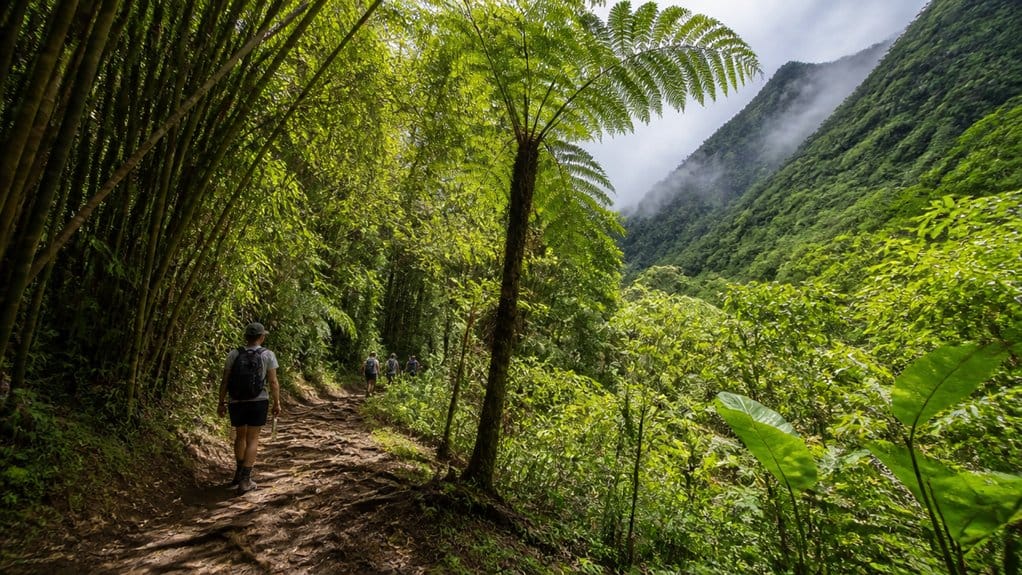
Start with the trail that fits your legs and your mood, because Mānoa can be as quick and easy or as long and sweaty as you want. The Manoa Falls Trail gives you the shortest payoff. You’ll cover about 0.8 to 0.9 miles each way, climb roughly 577 feet, and finish at a 150-foot waterfall. Expect slick mud and a steeper final push after rain. Treat the falls as a view-and-leave stop, since freshwater swimming can carry leptospirosis risk and the area beyond the marked viewpoint is closed.
If you want more distance, step onto the ʻAihualama Trail connector. It links you into Pauoa Flats and the broader Tantalus Loop network, where grades can feel gentler from Tantalus Drive but the miles keep stacking up. For a tougher nearby waterfall option, try Lulumahu Falls. It usually flows better when Mānoa runs low, though parts feel rougher, steeper, and less forgiving underfoot.
Lyon Arboretum Trails for an Easy Mānoa Walk
Often, Lyon Arboretum is the easiest way to enjoy Mānoa without committing to a full-on mud march. You get a true rainforest feel with less mess underfoot, plus family-friendly paths that stay well maintained. Good walking shoes usually do the job, so this is an easy walk you can fit into almost any Honolulu day.
Because Lyon Arboretum sits beside the Manoa Falls Trail area, you can use it as a simple base for exploring nearby routes. Along the way, you’ll spot labeled tropical collections, interpretive signs, and native plants like māmaki, ʻēkaha ferns, hau, and sometimes ʻohiʻa lehua. Birds chatter overhead, leaves shine after light rain, and everything feels lush without asking much from your knees. For a smoother day, review basic visit planning details like hours, parking, and reservation requirements before heading into the valley. Check reservations before you go.
Mānoa Falls Trail for First-Time Hikers
If you’re trying Mānoa Falls Trail for the first time, expect a short rainforest hike that still makes you earn the view, especially in the last stretch where the path turns steeper, rockier, and slick with mud. You’ll want to arrive early for the small paid parking lot or skip the scramble and take a rideshare, then lace up closed-toe shoes with good grip and toss in rain gear for the valley’s usual damp surprise. For the best experience, plan around trail conditions by starting early and expecting mud even when the weather looks clear. In about 1 to 2 hours round trip, you’ll hear birds in the trees, step over wet roots and gravel, and reach the viewing area for the 150-foot falls without needing to test your luck at the forbidden pool.
Trail Difficulty Tips
Although Mānoa Falls Trail looks short on paper, it asks a bit more from first-time hikers than the mileage suggests. This rainforest hike is relatively easy only if you respect the steady climb, slick mud, and uneven steps. In the rainy season, the trail can feel like a gentle obstacle course.
You’ll gain about 577 feet, and the downhill can test your knees just as much. Wear hiking shoes with grip, and expect rocky sections with few obvious rest spots. The last stretch gets steeper, with large steps in the final 0.2 miles. Start in the early morning for a calmer pace and cooler air. Stay on the main route by going left at both junctions. At the falls, enjoy the view from the wall and keep your adventure dry. Knowing where Manoa Falls is located can also help first-time hikers plan their route and expectations before arriving.
Parking And Gear
Plan your arrival and pack like the trail plans to splash back. The private parking lot at Paradise Park usually charges a small parking fee in cash, often about $7, and spaces disappear fast. If you don’t want to circle early, grab a rideshare. Restrooms sit by the lot, which is handy before the climb.
On the trail, wear closed-toe hiking shoes or water sneakers with solid grip. Mud, slick roots, and rocky patches can turn your walk into a careful shuffle. Bring rain gear, water, snacks, and trekking poles if wet weather rolls in. After heavy showers, pack wipes, a trash bag, and a spare pair for the ride home. Near the gift shop, a hose and shoe-cleaning station help rinse off the trail’s final souvenir. If you are pairing this hike with a city garden stop, plan ahead with a Foster Botanical Garden visit in mind.
ʻAihualama Trail for a Longer Mānoa Hike
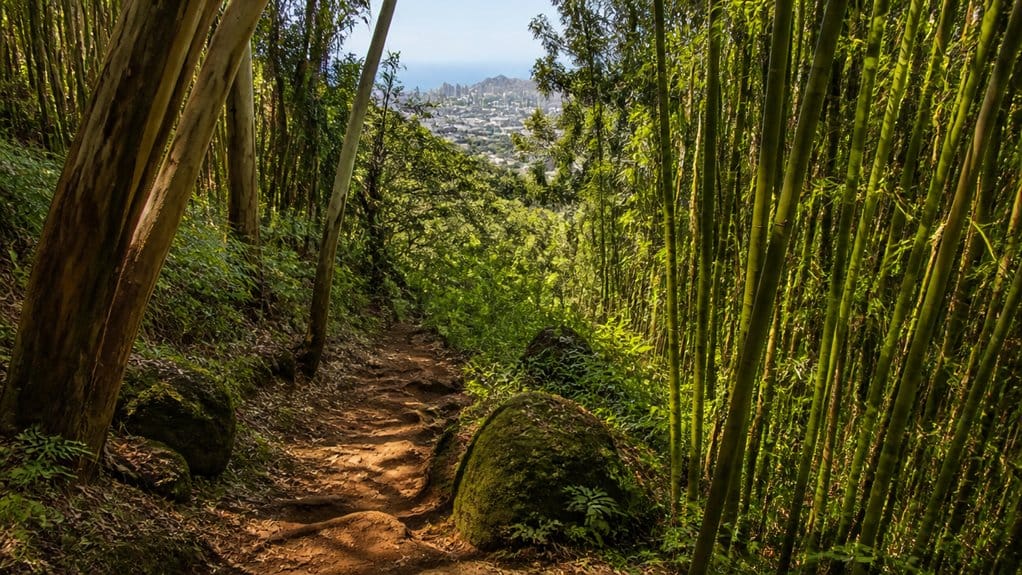
If you want to keep going past Mānoa Falls, the ʻAihualama Trail gives you a longer rainforest hike with less climbing than starting up from Tantalus. At the junction, you’ll spot a posted map that helps you sort out the many trail choices, which is handy when the path turns wet, rooty, and wrapped in dense green. This lush route is part of Manoa Valley, a scenic Honolulu neighborhood known for its rainforest setting and mountain-backed views. From there, you can connect into the Tantalus network for routes toward Pauoa Flats, Nuʻuanu, or Mānoa Cliff and turn a simple falls walk into a bigger loop with just one modest viewpoint and a lot more trail.
Places to stay in Honolulu

Shoreline Hotel Waikiki
4/5
Honolulu
View hotel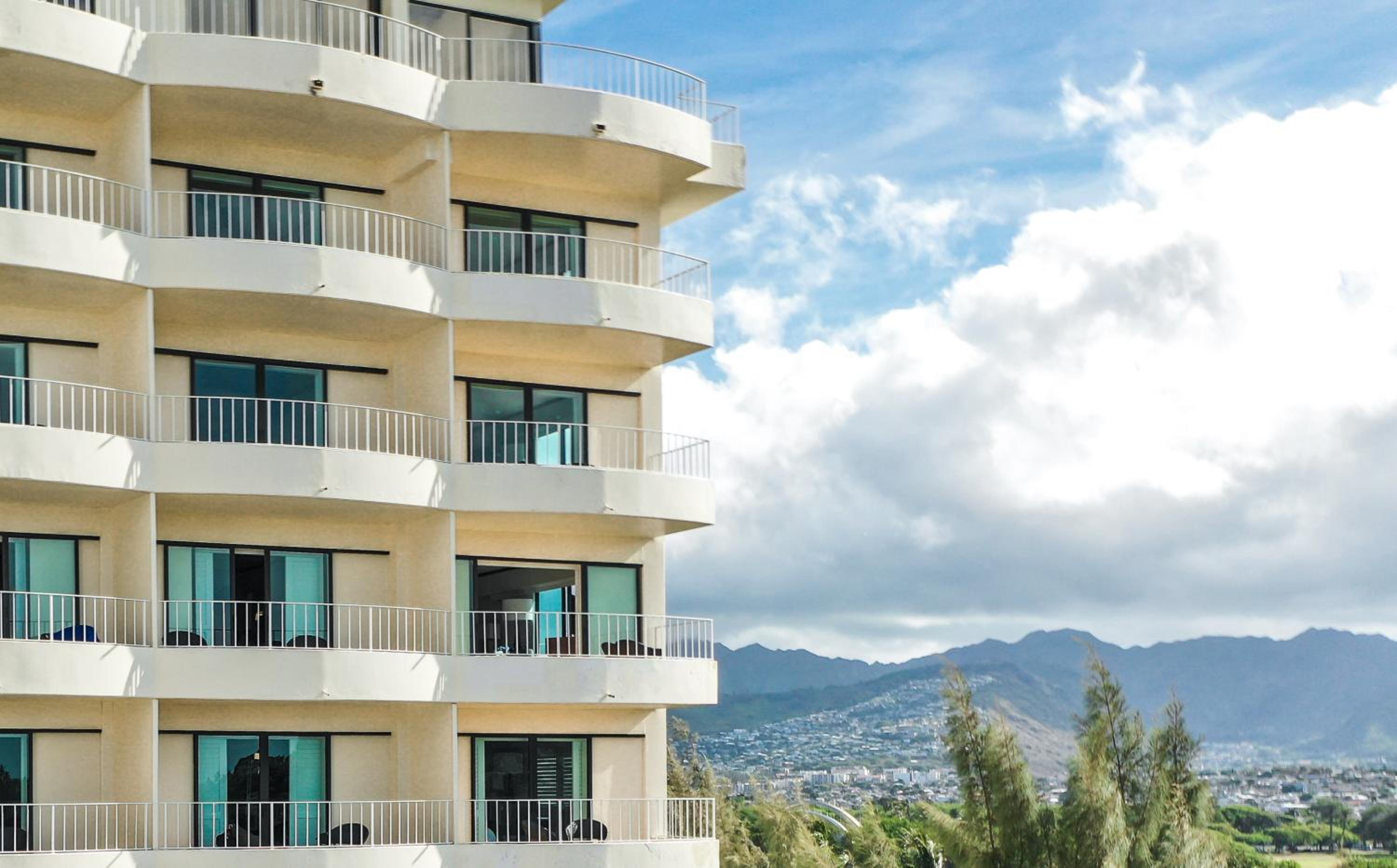
Lotus Honolulu at Diamond Head
4/5
Honolulu
View hotel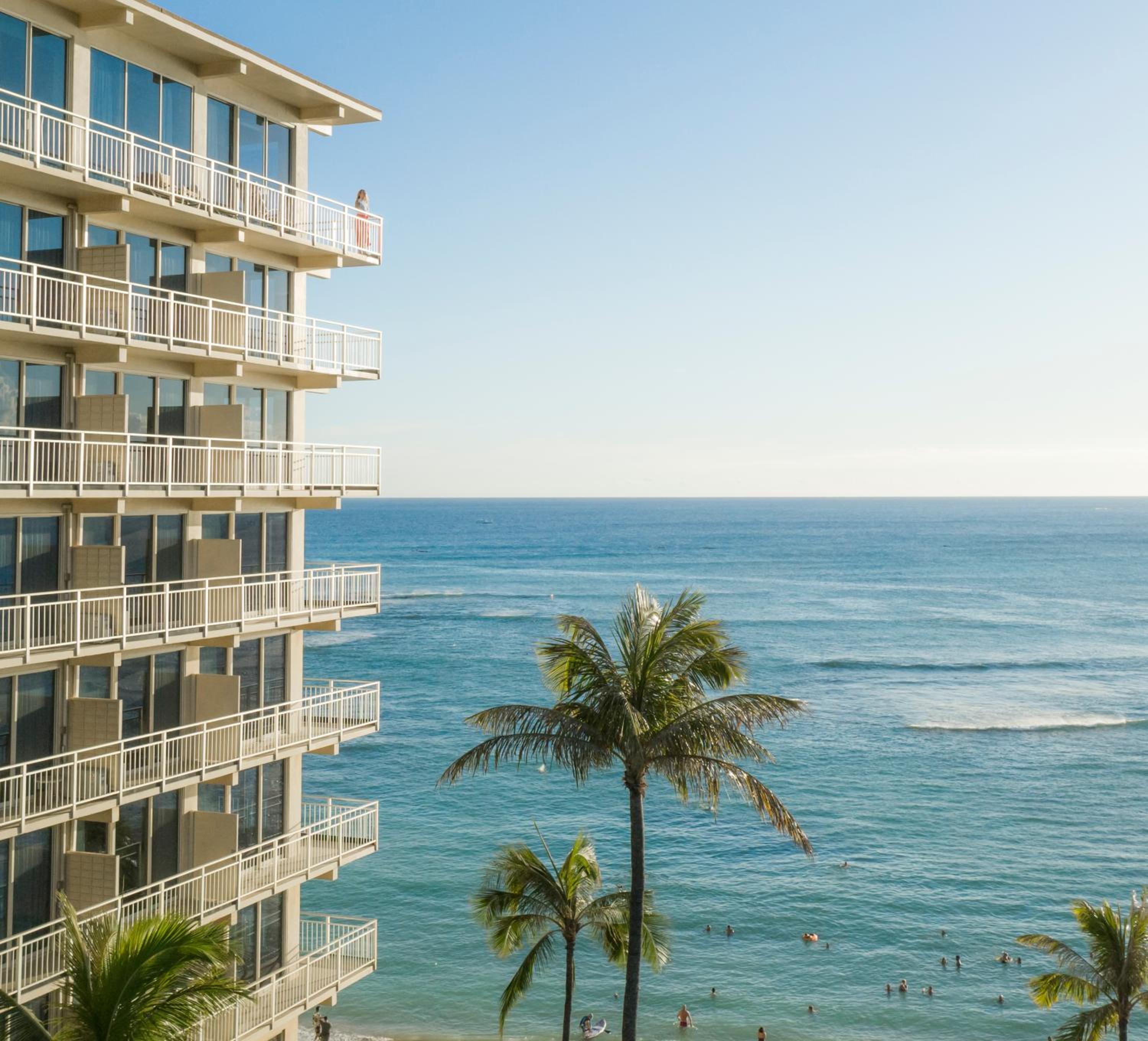
Kaimana Beach Hotel
3/5
Honolulu
View hotel
Waikiki Circle Hotel by Castle
3/5
Honolulu
View hotel
Prince Waikiki
4/5
Honolulu
View hotel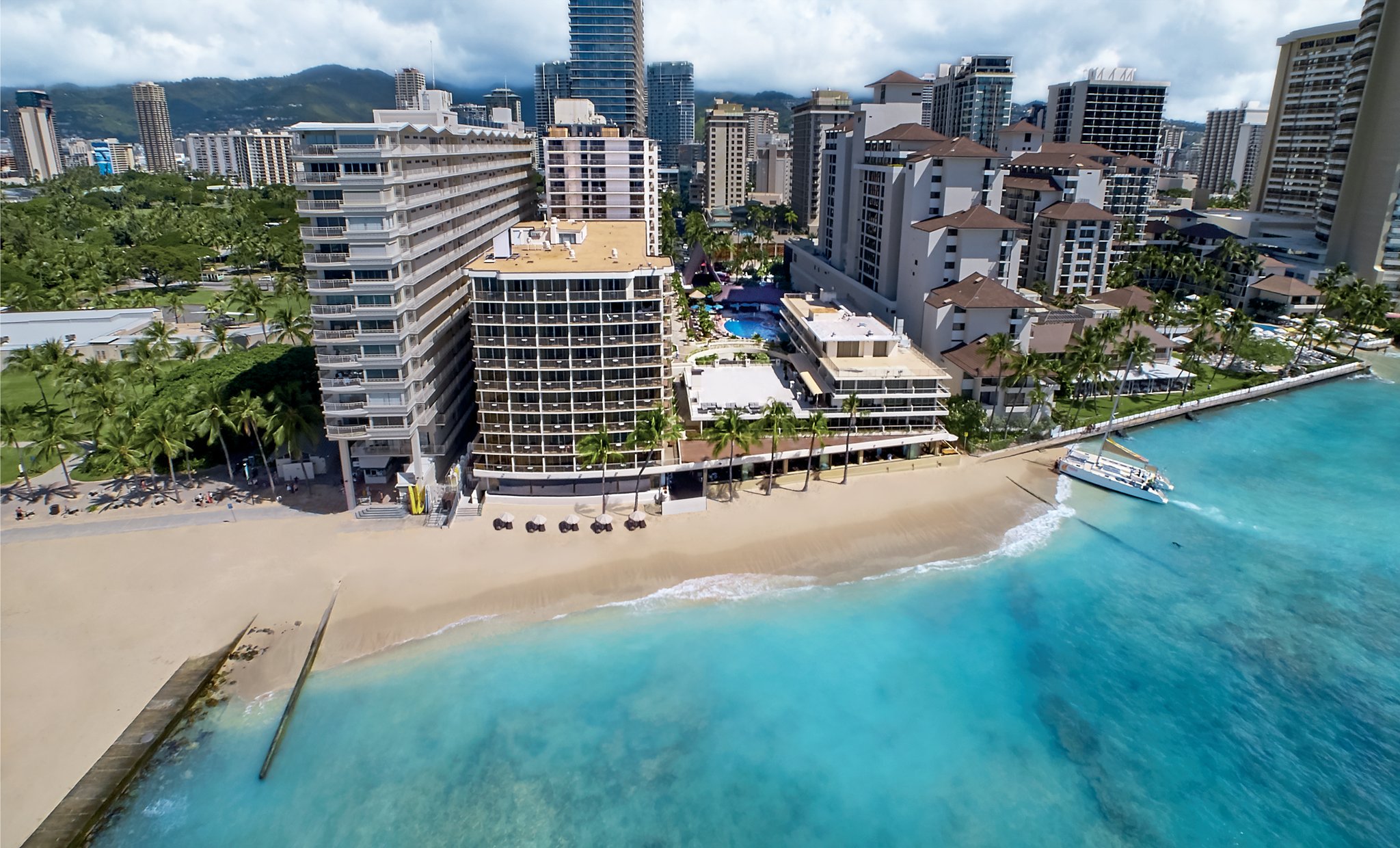
OUTRIGGER Reef Waikiki Beach Resort
4/5
Honolulu
View hotel
'Alohilani Resort Waikiki Beach
5/5
Honolulu
View hotel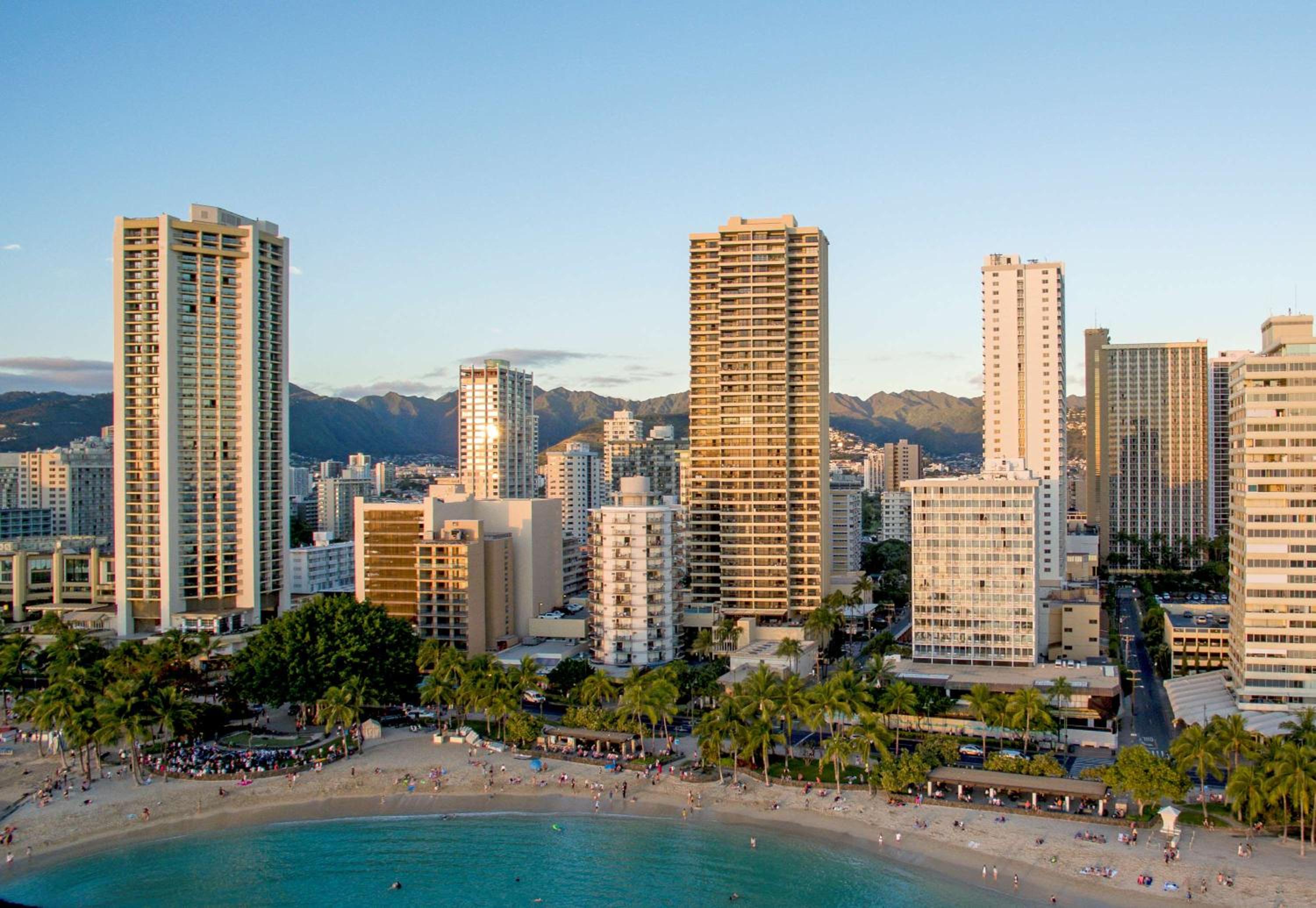
Aston Waikiki Beach Tower
5/5
Honolulu
View hotel


Manoa Falls-Electric Bike to Hike Experience Local meal included
Roll with us on your fitted electric bike. Pedal easily, and exercise moderately with your professional local guide...
Easy Private Hike in Honolulu (Choose 1 of 2 trails) 2-4hrs
Choose 1 of 2 hikes, either through the valley to the waterfall, or from the top of mountain with scenic views. Thi...
Oahu: Manoa Falls Rainforest Self-Guided Hike
Hassle-Free Transportation: Enjoy round-trip shuttle service from Waikiki, so you can relax and focus on the hike w...
Extending Beyond Manoa Falls
Want to stretch your Mānoa Falls outing into a real half-day hike? From the Manoa Falls Trail, you can pick up the ʻAihualama Trail near the viewing area and keep moving into the Tantalus Trail Network instead of turning around. Think of it as a forested bridge, not the main show. It has one modest viewpoint, then lots of damp greenery, roots, and birdsong.
- Use it to turn a short waterfall walk into a longer loop
- Plan mileage with Pauoa Flats or Tantalus Loop for better views
- Watch the connector junctions and posted trail maps
- Pack rain gear, trekking poles, and decent shoes
If you drive up Tantalus-Round Top Drive, you can link bigger trail segments without repeating as much elevation. That’s a smart trade for extra miles and fewer déjà vu steps.
Aihualama Junction Navigation
Here’s where the Mānoa Falls walk starts to branch out. About 0.6 miles from the trailhead, the ʻAihualama junction gives you a real choice. Go left and stay on the main Manoa Falls Trail. Turn right and you’re on the ʻAihualama Trail, a useful connector toward Tantalus and the Tantalus Loop.
| Direction | What it does |
|---|---|
| Left | Continues to Mānoa Falls |
| Right | Heads onto ʻAihualama Trail |
Before you commit, check the posted Tantalus map near the ʻAihualama junction. It helps because side paths can get rugged, muddy, and oddly sneaky. If you want a longer hike, ʻAihualama offers a gentler climb toward Pauoa Flats and other Tantalus destinations. Want to save your legs? You can also drive up Tantalus-Round Top Drive and start higher. The scenic Tantalus Round Top Drive is another way to explore the forested ridge above Honolulu without beginning from the valley floor.
Tantalus Network Connection
Take the right turn at ʻAihualama and your Mānoa Falls walk suddenly opens into a much bigger playground. At the trail junction, the ʻAihualama Trail works as a smart connector into the Tantalus Loop and Pauoa Flats, so you can keep climbing without backtracking. You’ll pass one modest viewpoint, then trade muddy valley walls for bigger rainforest options and ridge-bound routes.
- Follow signs at the junction and check the nearby Tantalus map
- Reach Tantalus-Round Top Drive intersections for alternate starts
- Use Tantalus Road to skip some elevation and tailor your day
- Continue toward Pauoa Flats, Nuʻuanu, or Mānoa Cliff for broader scenery
Because Tantalus on Oahu is known for cool forest roads, layered city views, and easy access above Honolulu, this connector is a natural way to stretch a Mānoa hike into a larger upland outing.
Stay on marked paths. Side gulches look tempting, but they quickly turn rough, tangled, and slow. Here, the forest gets quieter, cooler, and a little more adventurous.
Pauoa Flats Trail for a Bigger Climb
Climb past the quick waterfall crowd and Pauoa Flats Trail starts to feel like Mānoa’s next chapter. From the Mānoa Falls area, you follow the ʻAihualama Trail onto Pauoa Flats Trail and trade the short waterfall stroll for real elevation gain. The forest grows quieter here, with damp roots, bird calls, and eucalyptus groves adding a sharper scent to the air.
You’ll climb toward higher ground in the Tantalus Trail Network without extra road driving, which feels like a smart local shortcut. If you want a calmer plant-focused stop before or after the hike, Foster Botanical Garden is another Honolulu green space worth timing well and exploring for its highlights. The path can turn muddy and slick, especially on steeper rocky bits, so good-grip shoes and trekking poles earn their keep. Once you reach Pauoa Flats, you’ve got room to stretch the day with longer loops, more viewpoints, and mileage that finally makes your legs negotiate with you.
Back-Valley Mānoa Trails for Experts Only
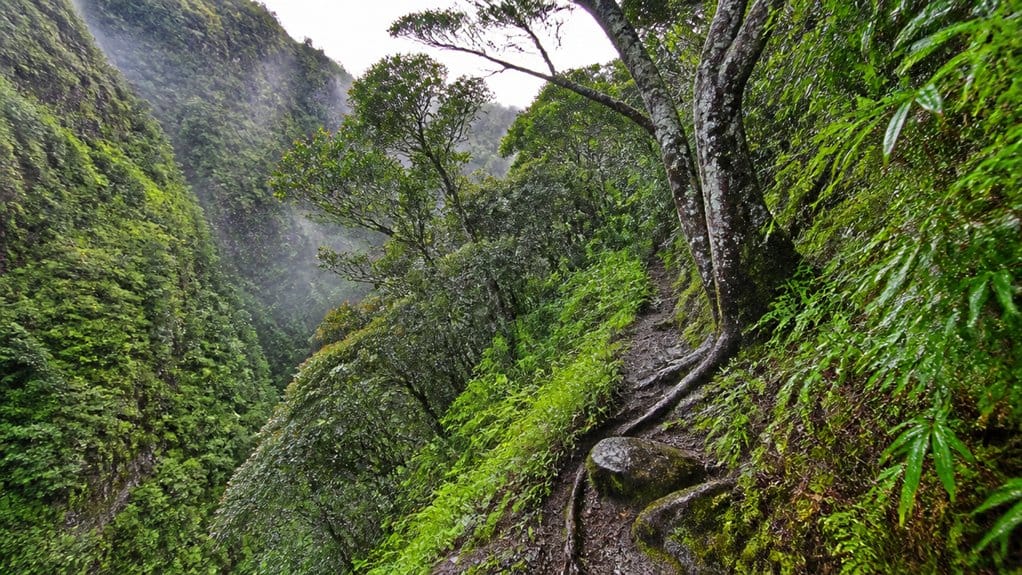
Although the main Mānoa Falls path feels friendly, the back-valley side trails to waterfalls like Luaʻalaea and Kahuwaiʻiki shift fast into expert-only terrain. You leave the maintained route and enter steep gulches, slick boulders, and overgrown cuts where route-finding matters. Around 0.6 miles in, the turn toward Kahuwaiʻiki Falls drops into eroded ground with loose footing and real fall danger. These paths suit experienced hikers only because getting lost happens fast.
Past Mānoa’s easy path, Luaʻalaea and Kahuwaiʻiki turn brutal fast, with slick gullies, eroded drops, and no room for navigation mistakes.
- Dense vegetation can swallow the trail in minutes
- Falling rocks and flash floods raise the stakes
- At least three waterfall routes demand advanced navigation
- No maintained trail, facilities, or dependable safety signs
You should stay out during heavy rain, and you can’t swim or climb below viewing areas. The same caution applies at Manoa Falls, where swimming is not allowed and conditions near the waterfall can be hazardous. The back-valley doesn’t do second chances for casual hikers.
Mānoa Trail Access, Parking, and Gear Tips
Getting there is surprisingly simple, and the logistics matter more than they look at first glance. You reach the Manoa Falls Trail by walking about 0.1 mile up Mānoa Road from the Paradise Park parking lot. That lot usually charges a small cash-only entrance fee, often around $7, and spaces disappear early. You can skip the hassle with a rideshare, bus from Waikīkī, or a guided tour.
Bring gear that respects the mud. Closed-toe shoes with grip work best, and a light rain jacket helps when the valley turns drizzly and slick. Trekking poles can steady you on rainy sections. Near the lot, you’ll find restrooms, a gift shop, and a hose for muddy shoes. Pack wipes and a trash bag. Also, don’t climb below the viewing wall. For another lush Oʻahu outing, Ho’omaluhia Botanical Garden offers scenic drives and trail picks.
Frequently Asked Questions
Are Dogs Allowed on MāNoa Hiking Trails?
Yes, you can bring dogs on some Mānoa hiking trails if you follow leash rules, respect trail etiquette, and obey clean up policies. Check posted breed restrictions first; service animals are typically allowed everywhere.
When Is the Best Season to Hike MāNoa Trails?
You’ll find the best season during the dry season, when daytime temperatures stay comfortable and trails stay safer. Avoid the rainy season and pollen peaks. For sunset hikes, you’ll enjoy clearer skies, better footing, and fewer disruptions.
Are Permits Required for Any MāNoa Trails?
Usually, you don’t need permits; think of trailheads as open gates, though some swing shut for permit requirements. You should check trail access rules, fee exemptions, group permits, and special authorizations before hiking certain routes.
What Native Plants and Birds Might Hikers See?
You might see Hawaiian lobelia, ʻōhiʻa lehua, and native ferns along the trail. Watch for nēnē geese overhead, though manu ʻōō is extinct. You’ll spot lush understory plants and hear native birdsong if you hike quietly.
Is Swimming Allowed in MāNoa Streams or Pools?
No, you generally shouldn’t swim in Mānoa streams or pools because water safety risks, legal restrictions, seasonal flow changes, and private property limits affect stream access. You’ll stay safer by respecting posted warnings and boundaries.
Conclusion
In Mānoa, you can keep it easy or chase a bigger climb, and that range is the fun. On the falls trail, the reward is a 150-foot ribbon of water dropping through a green amphitheater while birds chatter and mud clings to your shoes. You’ll want early parking and decent grip, especially after rain. Stay behind the viewing wall, skip the superhero scramble, and let the valley’s cool air and dripping leaves do the storytelling.
Easy Private Hike in Honolulu (Choose 1 of 2 trails) 2-4hrs
Choose 1 of 2 hikes, either through the valley to the waterfall, or from the top of mountain with scenic views. This is a private, guided tour on a t...
Oahu: Manoa Falls Rainforest Self-Guided Hike
Hassle-Free Transportation: Enjoy round-trip shuttle service from Waikiki, so you can relax and focus on the hike w...
Manoa Waterfall Hike with Waikiki Pickup & Healthy Lunch
Experience the lush beauty of Manoa Valley on this guided waterfall hike through Oahu's rainforest. Featured in film...
Diamond Head and Manoa Falls Hike and Adventure Tour
Hike up one of Hawaii's most popular craters; Diamond Head. Enjoy amazing views of Waikiki and the South-East-Side o...
Experiences to explore
 Explore experience ↗
Private Bucket List Adventure Day- Hikes, Beaches, Waterfalls
◷ 8 hr–9 hr
Afraid of missing out on the real Oahu? Don’t waste any time in Waikiki. Escape the tourist trap, ditch the crowds, and hop in with a p
From $225.00 USD
View dates Explore experience ↗
Easy Private Hike in Honolulu (Choose 1 of 2 trails) 2-4hrs
◷ 4 hr
Choose 1 of 2 hikes, either through the valley to the waterfall, or from the top of mountain with scenic views. This is a private, guid
From $373.14 USD
View dates Explore experience ↗
Hawaiian waterfall and Bamboo Forest Hike with pick up
◷ 3 hr
An enchanting hike through a secluded bamboo forest sets the stage for a memorable afternoon adventure. With the morning crowds gone, e
From $127.00 USD
View dates