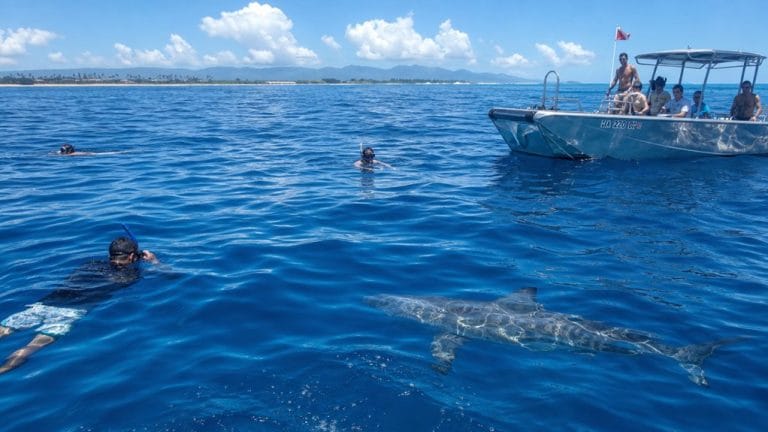
You come for the sharks, for the clear blue water, and for the jolt of stepping into a cage off Haleʻiwa. On Oahu’s North Shore, these tours feel surprisingly calm and tightly run, with early departures, safety briefings, and visibility that can stretch past 100 feet. You’ll hear the boat hum, taste salt on your lips, and watch Galapagos and sandbar sharks glide past the bars. The real question is which tour fits you best.
Key Takeaways
- North Shore Shark Adventures in Haleʻiwa is a top overall pick for Oʻahu shark cage diving, especially for first-timers seeking a structured, safety-focused tour.
- Most tours last about two hours total, with roughly 1.5 hours on the water and a 3–4 mile ride offshore.
- Expect one guaranteed cage session per person, usually during one of up to three 20-minute surface-level cage drops.
- No scuba or strong swimming is required; crew provides masks, snorkels, safety briefings, and close supervision throughout entry, viewing, and exit.
- Galapagos and sandbar sharks are commonly seen close to the cage, with morning tours offering calmer seas and the best visibility.
Which Oahu Shark Cage Tour Is Best?
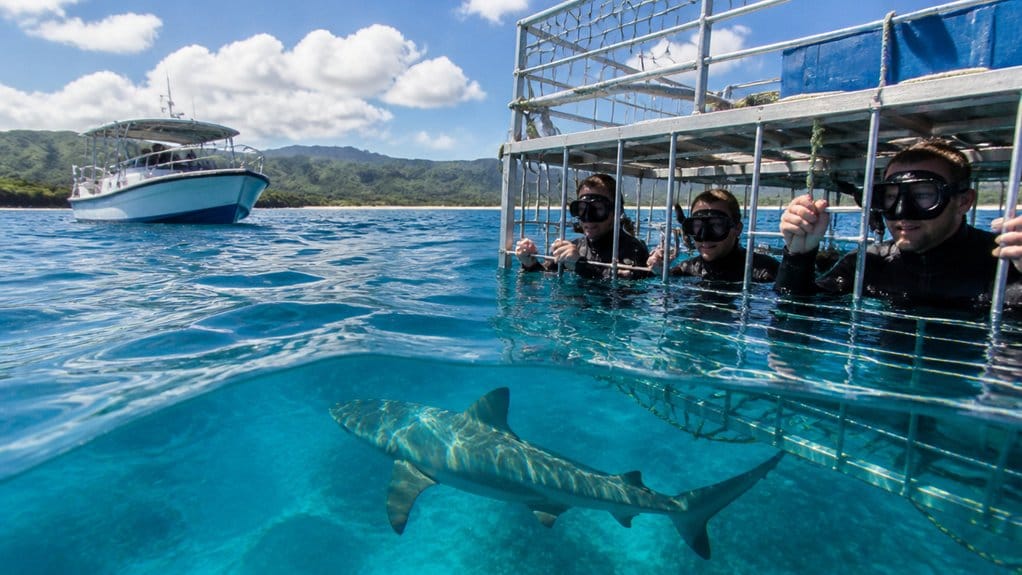
If you want the easiest answer up front, North Shore Shark Adventures in Haleʻiwa is the tour most people should book. This Oahu shark tour runs 1.5 hours and usually gives you up to three cage drops, about 20 minutes each. You head 3 to 4 miles offshore into cobalt-blue water with visibility that can top 150 feet. Most North Shore cage dives are designed so first-timers can participate safely with a full safety briefing before entering the water.
You’ll likely see Galapagos and sandbar sharks, and sometimes tiger sharks, without chumming. The crew keeps things organized with masks, snorkels, safety briefings, and a cage built for up to eight people. Morning departures, sometimes as early as 6 or 7 a.m., usually mean calmer seas. For many travelers, that makes first-timer’s guide advice especially helpful when choosing an early tour. Prices are solid too, with online adult specials around $112, plus child and kamaʻaina or military discounts. Book early, and bring your sea legs. It’s also consistently listed among the top operators for North Shore shark dive bookings.
What Is North Shore Shark Cage Diving?
Think of North Shore shark cage diving as a short boat ride into Oʻahu’s wild blue backyard. You leave Haleʻiwa Small Boat Harbor and head 3 to 4 miles offshore into clear cobalt water, usually 250 to 300 feet deep. Your Shark Cage Diving trip lasts about 1.5 hours on the water, or roughly two hours total with check-in. Compared with a cage-free shark swim, this option adds a physical barrier between you and the sharks while still giving you a close-up view. Many travelers rank it among the best shark diving experiences on Oʻahu.
- You check in about 30 minutes early, often for a calm morning departure.
- You slip into a floating cage with up to eight people and watch sharks glide past.
- You wear a mask and snorkel, not scuba gear, so swimming skills aren’t required.
Crew members give safety briefings and supervise the whole experience. You may spot Galapagos or sandbar sharks, and sometimes a tiger shark if luck decides to show off today.
Why Is Oahu Shark Cage Diving So Popular?
You head just 3 to 4 miles off Oahu’s North Shore, and suddenly you’re face to face with sharks in clear cobalt water that can reveal 150 feet or more below you. Many visitors rank it among the best tours to book on Oahu for pure adrenaline and unforgettable marine views. That close-up thrill comes with a scenic ocean ride too, where the breeze, the rolling blue horizon, and the occasional splash keep things lively. On other parts of Oahu, travelers looking for calm water adventures often compare this experience with Kaneohe Sandbar boat rentals for a completely different kind of ocean outing. Even better, you don’t need scuba skills to enjoy it, so you can focus on the view and let your heartbeat handle the drama. For travelers who want an even more immersive encounter, a cage-free shark swim on Oahu’s North Shore offers a different kind of adrenaline rush.
Still comparing North Shore Shark Cage And Shark Diving?
Ask for tour ideas, hotel suggestions, or a simple trip plan that combines both.
Trip Helper
Up-Close Shark Encounters
Because the best part starts almost as soon as the boat reaches open water, Oahu shark cage diving feels thrilling without being complicated. In clear cobalt-blue water, you can watch Galapagos and sandbar sharks glide within feet of the cage, often with visibility topping 150 feet. That’s why shark diving Oahu draws so many first-timers and repeat visitors. Visitors comparing cage tours often choose North Shore operators for convenient departures and consistent shark sightings.
- You step into a floating cage, not open ocean, so Shark Encounters feel bold but manageable.
- You hear the engines hum, then spot sleek 5 to 15 foot sharks circling closer, drawn by noise and shiny lures instead of chum.
- You wear a mask and snorkel, hold the rail, and simply look around. No swimming required.
Most tours even guarantee sightings, which makes your nerve-testing moment feel surprisingly doable and fun. Travelers who also enjoy dolphin tours from Waianae often look for similarly easy ocean experiences that combine wildlife viewing with snorkeling. Following basic swim safely guidance also helps visitors feel more confident before getting in the cage.
Scenic Ocean Adventure
Often, the ride out is half the magic. On Oahus North Shore, you cruise 3 to 4 miles offshore into cobalt water so clear you may see 150 feet down. Morning trips usually feel smoother, and that early light makes the whole run a scenic ocean adventure. Keep watch for dolphins, sea turtles, and winter humpbacks. Some nearby boat trips also highlight marine wildlife like rays alongside dolphins and turtles. If you want to explore more of the island after your dive, Windward Coast tours often bundle scenic stops around Kailua, Kaneohe, and Kualoa. For another wildlife-focused outing, Waianae also offers popular whale watching and dolphin snorkel boat tours.
| Moment | What you notice | Helpful tip |
|---|---|---|
| Harbor start | Cool air, pink sky | Pick earliest departure |
| Offshore run | Deep blue water, spray | Take motion-sickness meds |
| At the cage | Sharks glide close | Listen to the briefing |
| Between drops | Wildlife sightings | Keep your camera ready |
You won’t need to swim, and no chumming happens. Engine noise and lures do the job. Honestly, the boat ride alone almost earns the ticket.
What Does the Shark Cage Tour Include?
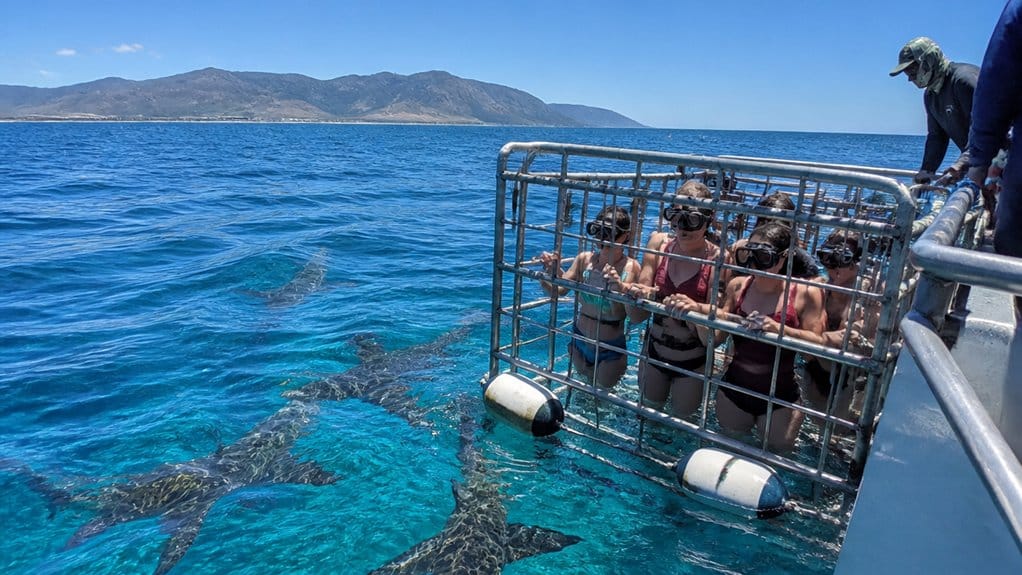
You’ll head a few miles offshore to clear cobalt-blue water, where the crew sets you up with a mask, snorkel, cold drinking water, and a floating cage built for surface-level shark viewing. Before your turn, you’ll get a safety briefing, simple entry instructions, and crew commentary that often points out wildlife and shares facts as the boat rocks gently around you. You’ll usually get one cage session per booking, with about 20 minutes in the water, and you can grab photos or video if you want proof that you kept your cool.
Included Gear And Water
Three simple basics come with most Oahu shark cage tours: your mask, your snorkel, and cold drinking water waiting on board. Before you head out, the crew fits your gear, defogs your lens, and walks you through safety in clear, calm steps. Like North Shore Oahu adventure planning, it helps to know what to expect before booking so you can choose the right tour. You won’t usually need a wetsuit in Hawaii’s warm water. Morning conditions can also be easier for many guests, since trade winds often pick up later in the day.
- You get a sturdy floating cage with handrails and clear plexiglass panels.
- You can expect crew supervision during entry and exit, so nothing feels chaotic.
- You may find towels, rinse showers, and photo or video options, depending on the operator.
Fins are often optional, not essential. Some boats sell disposable cameras, while others offer 1080p video packages or let you bring a waterproof camera. Check rules first, because every operator runs things slightly differently. Similar to Waikiki departures for popular snorkel sails, tour details can vary by operator and launch point.
Cage Time And Drops
Usually, your shark cage tour includes one in-cage session per person, while the crew may lower the cage up to three times during the trip for groups rotating through. Expect about 20 minutes of cage time per drop, with space for up to eight people inside.
You’ll head to drop locations about 3 to 4 miles offshore, where cobalt-blue water often offers visibility past 150 feet. The floating cage stays at the surface and feels solid underfoot, with interior handrails and plexiglass panels for easy viewing. Sharks can glide surprisingly close, and you’ll watch them in clear water without chum in the mix. To get in and out, you’ll use the boat ladder and climb five steps back aboard, so you should feel comfortable pulling your own weight upward safely. Unlike some ocean excursions such as a snorkel sail with lunch, this experience is focused on shark viewing from the cage rather than a meal-inclusive sightseeing cruise.
Briefing And Wildlife Extras
Before the boat even leaves the harbor, the crew walks you through a clear safety briefing and fits you with a mask and snorkel, then repeats the key points again before you step into the floating cage.
You won’t see chum tossed overboard here. Instead, the crew explains shark behavior and why engine noise often draws in Galapagos and sandbar sharks naturally. While safety divers watch the water, you also get lively context on shark biology, Hawaiian lore, and conservation. As part of that conservation message, they may also remind guests to respect Hawaiʻi’s responsible viewing guidelines around other marine wildlife, like keeping clear distances from turtles, monk seals, dolphins, and whales. If you’re hoping to spot turtles elsewhere on the island, the crew may mention the best places to see sea turtles around Oahu after your tour. Oahu also has several guided turtle-watching tours for visitors who want a more structured way to observe sea turtles beyond the North Shore.
- A close look at sleek gray bodies circling the cage
- Optional 1080p video or your own underwater camera in action
- Light refreshments waiting after your turn
You get one cage drop, even if the tour lowers the cage several times. It’s organized, informative, and just thrilling enough to make your pulse notice.
How Long Does the Tour Take?
How long should you set aside for shark cage diving on Oahu? Plan on about two hours total from check-in to finish. Your actual tour time on the water runs closer to 1.5 hours, including the boat ride out and the cage sessions. You’ll need to arrive 30 minutes early, and the first tour usually leaves at 7:00 a.m., or 6:00 a.m. in summer.
Once you’re offshore, the crew may run up to three cage drops, each lasting about 20 minutes. You’re guaranteed at least one turn in the cage. Many of the best Oahu tours follow a similar timing structure, especially on the North Shore. Morning trips get priority because the ocean is often calmer and the ride feels easier. If you’re staying elsewhere on the island, pickup-friendly tours can make a North Shore outing easier without renting a car. Like popular sandbar tours, these ocean excursions are usually best booked in advance to lock in your preferred time slot. If you add Waikiki transportation, your day stretches much longer, with pickup around 5:45 a.m. and return near 2:00 p.m. Pack patience and coffee.
What Sharks and Wildlife Will You See?
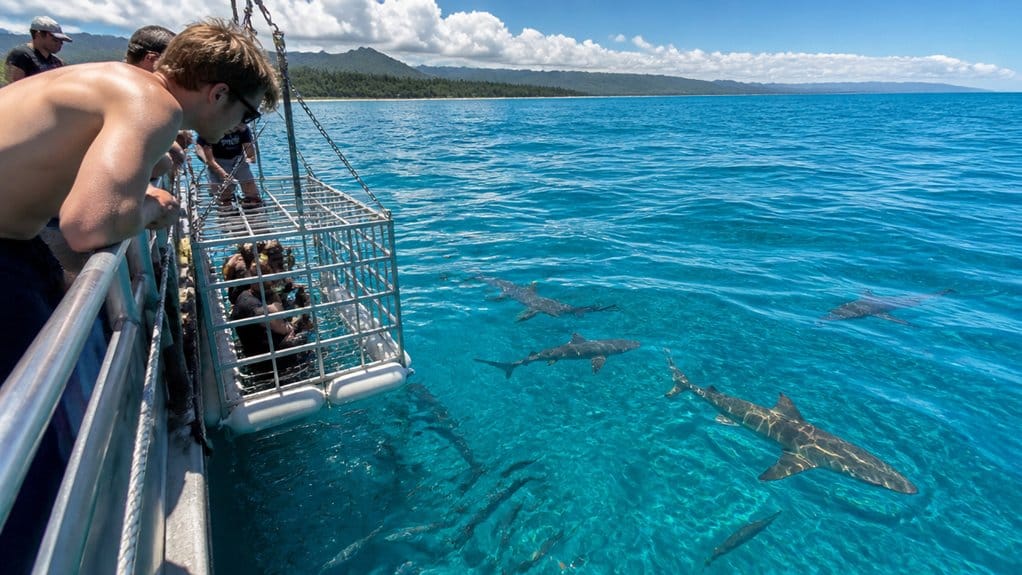
Even if sharks don’t rush the cage the second you stop offshore, you’ll almost always see them circling the boat in clear cobalt-blue water. On Oahu, operators usually spot Galapagos and sandbar Shark species from about 5 to 15 feet long, and many tours promise sightings or you don’t pay.
You’ll often watch guides draw them in without chumming. Engine noise and shiny lures imitate crabbing boats, so sharks cruise close to the cage windows. Morning departures often bring calmer seas and better visibility offshore. If green sea turtles appear near the boat, remember to admire them from a respectful distance while snorkeling or floating offshore.
- Sleek Galapagos and sandbar sharks gliding past your mask
- Hawaiian green sea turtles and playful dolphins nearby
- Humpback whales in winter, plus the occasional tiger shark
When the ocean stays calm, visibility can stretch beyond 100 to 150 feet. That makes photos sharper and every pass feel a little cinematic offshore. Winter months can also bring extremely dangerous currents along Oʻahu’s North Shore, so calm-season trips are usually the safest and clearest choice.
How Safe Does Shark Cage Diving Feel?
You’ll start with a clear safety briefing, then step into a sturdy floating cage with handrails and plexiglass panels that make the whole setup feel solid, not sketchy. For solo visitors, many small-group activities on Oahu can feel easier to book and less intimidating than larger tour setups. Out on the morning water, calmer seas usually help the cage stay steady, while trained crew and safety divers watch the sharks and keep a close eye on you too. If you can climb the five-step ladder and follow directions, the experience often feels more organized than nerve-racking, even if your stomach has its own opinion. Similar to a North Shore jump briefing in Oahu adventure tours, the step-by-step orientation helps first-timers know exactly what to expect before heading out.
Safety Briefing And Gear
Before the cage ever touches the water, the crew walks you through a clear safety briefing that makes the whole experience feel structured rather than reckless. You get a mandatory safety briefing with a safety-first tone, so you know exactly what to do before anyone climbs down. Like the what to expect guidance travelers look for before booking other Oahu adventure tours, this upfront walkthrough helps set clear expectations.
- You practice the five-step ladder, handrail grip, and calm no-thrashing rules.
- The crew fits your mask and snorkel, defogs the lens, and offers fins if you want them.
- Safety divers and trained crew keep watch during the 20 to 30 minute drop.
That preparation goes a long way. You’re not guessing. You’re following a system. Many travelers who also book West Side ocean packages appreciate that same organized approach when choosing other Oahu water tours. If you get seasick, take medicine at least an hour early, because a rolling boat can make simple movements awkward and a little queasy. Similar to an Oahu snorkel tour with Waikiki pickup and lunch, good operator planning helps the experience feel organized from start to finish.
Cage Stability At Sea
Although the cage sits in calm cobalt-blue water about 3 to 4 miles offshore, it doesn’t feel perfectly still once the swells start moving under the boat. You’ll notice a gentle rock at first, then the occasional jolt as metal taps the platform. Inside, handrails and plexiglass panels help you stay planted while you watch sharks pass at eye level. Like 7 safety steps for Shark Cove snorkeling, paying attention to ocean conditions and entry points helps reduce surprises offshore.
Most people say they feel secure, but rougher days can make the cage lurch enough to bang shins or pinch toes as you enter and exit. That’s why calmer morning departures from the small boat harbor usually feel better. You should also expect a little ladder work and enough upper-body strength to pull yourself smoothly. If conditions turn sketchy, operators usually cancel or reschedule instead of pushing their luck. For travelers who want a gentler ocean outing, a marine life cruise from Haleiwa offers a shorter wildlife-focused alternative. Some visitors prefer this kind of trip for its ocean views and chances to spot dolphins, whales, and turtles without getting into a shark cage.
Crew Support Onboard
Usually, the crew is what makes shark cage diving on Oahu feel controlled instead of chaotic. Before you even step onto the shark boat, you get a real safety briefing and help with masks and snorkels. That structure matters when your nerves start buzzing.
- You meet the captain and safety diver, and they stay alert through every cage entry and exit.
- You notice how the crew limits the cage count, usually keeping groups small so elbows, fins, and adrenaline don’t pile up.
- You feel the backup plan. If seas get rough, they may cancel, adjust the route, hand you water, or help if you get sick.
That calm oversight changes the mood. You still hear waves slap steel and see sharks glide past, but you don’t feel alone.
How Much Does an Oahu Shark Dive Cost?
If you’re pricing out a shark cage dive on Oahu, expect most North Shore tours to land around $140 per adult, though online specials often trim that to about $112. That makes an Oahu Shark Dive feel surprisingly reachable, especially if you book a web deal and keep your plans firm.
Kids ages 3 to 13 usually pay about $90. Some tours drop that to $85 for kamaʻaina or military families with valid ID. Adult local and military discounts can bring fares to about $105, or around $85 if you’re just riding the boat. Waikiki transportation usually costs about $75 extra plus tax, and it’s non-refundable on same-day cancellations. Watch the cancellation rules too. You’ll usually get a full refund with 24 hours’ notice, or 72 hours for groups.
When Is the Best Time to Book?
Price matters, but timing can shape the whole Oahu shark cage trip just as much. Book early-morning tours for the smoothest ride and the most comfortable start. First departures leave around 6 to 7 a.m., and that earlier window often means calmer water, softer light, and less bouncing on the way out.
For the smoothest Oahu shark cage trip, book the earliest tour possible, calmer water, softer light, and a gentler ride out.
- Reserve at least 24–48 hours in advance, because popular dates often sell out fast.
- If you need Waikiki transportation, add the shuttle when you book. Pickups start around 5:45 a.m., and not every hotel or infant can ride.
- Traveling with infants or a group of 10 or more? Book even earlier. Infants must join tours before 9 a.m., and bigger groups need extra planning, group-rate timing, and stricter 72-hour change rules too.
Should You Dive or Ride the Boat?
Choose the cage when you want the full heart-racing view. Diving puts you face to face with sharks often 5 to 15 feet long, circling in blue water that can top 150 feet of visibility. Most tours give each passenger one cage drop, though some may offer up to three, around 20 minutes each. You also get a 100 percent sighting guarantee, or you don’t pay.
Choose the Boat if you get seasick easily, have mobility concerns, or want steadier photography. You’ll still watch the action, hear the crew call out sightings, and avoid rough entry bruises when the ocean gets choppy. Morning trips usually bring calmer seas and clearer water. If you’re undecided, ask the operator about current conditions and whether the day will focus on cage time or surface viewing.
Can Kids Go Shark Cage Diving?
Families can usually join the adventure too, but kid rules vary by operator. Most tours welcome children, though minimum ages often start around 3 to 5, and some require kids to be at least 5 to enter the cage. One crew was Great with kids and allowed us to relax.
Families can usually come along, but child age rules vary, and some operators are especially great with kids.
- Infants 0 to 2 are often free, but usually only on morning tours before 9 a.m.
- Your child may need to climb a 5-step ladder and pull themselves back onto the boat.
- Staff provide life jackets, masks, snorkels, and a safety talk.
If you’re bringing younger kids, book early when seas are calmer. Rougher water after 9 a.m. can mean more nerves, more queasy faces, and fewer smiles. Parental supervision stays important throughout.
How Do You Get to Haleiwa Harbor?
Getting to Haleiwa Harbor is pretty straightforward once you head up to Oahu’s North Shore. Most shark cage tours leave from Haleiwa Small Boat Harbor at 66-105 Haleiwa Rd., Haleiwa, HI 96712. If you drive from Waikiki, expect about 45 to 60 minutes, and longer if traffic gets moody. Many visitors rent a car since tours usually depart from the north Shore, not Waikiki.
When you arrive, park next to the Hawaii Shark Encounters sign by the big two-story building. You can also take TheBus, but it takes longer and may include transfers plus a short walk. Some operators offer round-trip Waikiki shuttles for about $75 plus tax, with pickups starting around 5:45 a.m. Plan to check in 30 minutes early, especially for those early North Shore departures.
What Should You Bring on the Tour?
Pack for salt spray and a little morning chill, not just the few minutes you’ll spend in the cage. For Shark Tours, bring a bathing suit, towel, waterproof sandals, and a light sweatshirt. The ride out can feel cool and windy, and you’ll want something warm after you swim with sharks.
Pack for the cool, salty ride out too: swimsuit, towel, waterproof sandals, and a light layer for after your shark swim.
- Protect your gear: Pack a dry bag plus a waterproof phone case or GoPro. Underwater cameras are welcome, and photo or 1080p video packages are often sold onboard.
- Beat seasickness: If you’re prone to motion, take medication or use a scopolamine patch at least an hour before departure.
- Keep it simple: Leave jewelry home. Skip sunscreen right before snorkeling. Bring cash or a card for tips, souvenirs, and camera purchases. Infants ride free early only.
Frequently Asked Questions
Do I Need to Know How to Swim Well?
No, you don’t need to swim well for standard cage dives; you’ll stay in a stable surface cage. You should have basic water confidence, climb a ladder, and discuss concerns if you rely on flotation devices.
Can I Wear Contact Lenses During the Dive?
Yes, you can wear contact lenses, and that’s usually fine. You’ll want a snug, anti-fog mask to reduce eye irritation and lens loss. If your eyes dry easily, use drops beforehand or choose daily disposables.
Are Prescription Masks Available on Shark Cage Tours?
Usually, you won’t find prescription masks available on shark cage tours. You should bring contacts or your own prescription snorkels, then ask operators beforehand about optical accommodations, gear compatibility, and whether crew can safely fit-check everything.
Can I Bring My Own Underwater Camera or Gopro?
Yes, you can usually bring your own underwater camera or GoPro. Since 1080p footage remains a common add-on, you’ll want charged batteries, check camera restrictions, use secure mounting options, and avoid loose straps during cage entry.
What Happens if Ocean Conditions Are Too Rough?
If ocean conditions are too rough, you’ll face trip delays, rescheduling, or cancellation for safety. You might skip cage drops or stay onboard. Check refund policies: operator cancellations get full refunds, and no-shark trips do too.
Conclusion
By the time you climb back into the boat, salt drying on your skin and the harbor coming into view, Oahu’s North Shore often feels both wilder and easier than you expected. That’s the nice coincidence. You come for sharks and leave remembering the clear blue water, the clang of the ladder, and the calm crew voices. Book an early Haleʻiwa departure, bring a jacket, and let the island surprise you just a little.