It feels like half the Pacific shows up when you leave Haleʻiwa Harbor on this fast North Shore raft. You skim past the Kaʻena coast with salt on your arms and the engine buzzing underfoot while your guide scans for spinner dolphins, green sea turtles, rays, and winter humpbacks. With about 10 guests, shade overhead, and a bathroom onboard, it’s easy to stay focused on the water. The real surprise is how the route shifts when the ocean starts giving clues.
Key Takeaways
- This 1.5-hour North Shore marine life tour departs from Haleiwa Harbor and combines fast offshore runs with active nearshore wildlife searching.
- The route follows Kaʻena’s rugged coastline, passing famous surf breaks and scanning both nearshore and offshore waters for marine life.
- Dolphins and green sea turtles are common highlights, especially in calmer nearshore areas along the rocky North Shore coast.
- In clear conditions, guests may also spot rays below the surface and occasional sharks cruising through deeper blue water.
- From December through April, humpback whales are a major seasonal draw, with chances to see spouts, tail slaps, and breaches.

Luxury Snorkel Cruise with Dolphin Watch and Hawaiian Meal
Cruise along Oahu's scenic west coast aboard a comfortable, custom catamaran designed for premium ocean exploration and unbeatable coastal views.Yo...

Oahu Catamaran Snorkel Tour: See Turtles 100% Guaranteed
Experience one Viator's 2025 Top 20 Best Excursions in the country. This Oahu Catamaran snorkel tour offers unbeatable value and family-friendly fun f...
What Is This Haleiwa Marine Life Tour?
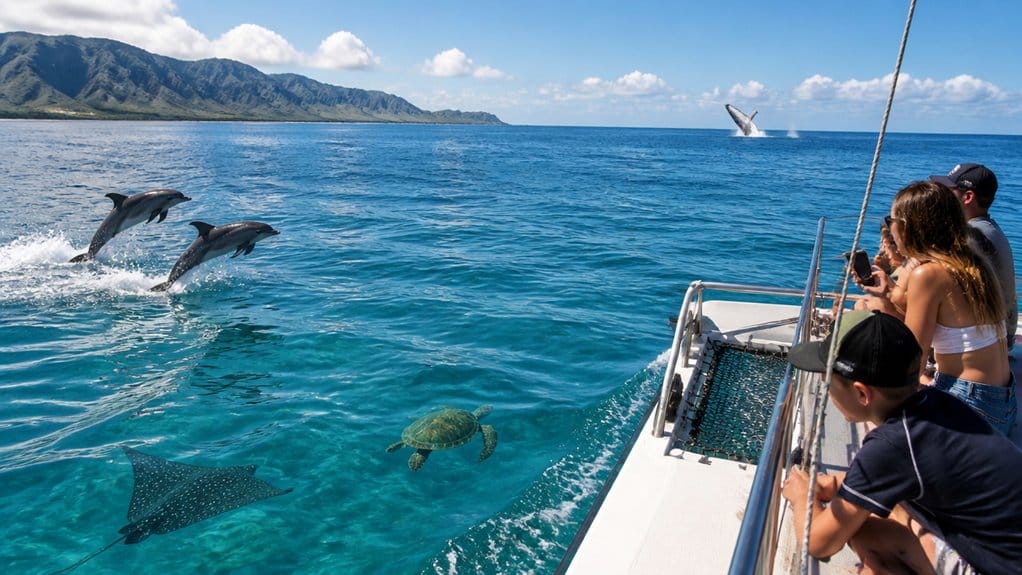
If you want a quick North Shore adventure that gets straight to the good part, this Haleiwa Marine Life Tour is a 1.5-hour ocean run from Haleiwa Harbor at 66-105 Haleiwa Rd. You board a fast, agile boat and head offshore to search for Dolphins, turtles, rays, and seasonal giants. The crew ranges a few miles out for better wildlife sightings, then cruises closer to shore where dolphin pods often travel. It is widely considered a best short wildlife cruise from Haleiwa for travelers who want marine life sightings without committing to a long excursion.
In winter and early spring, you also watch for Humpback whales on migration. You might catch tail slaps, fin slaps, misty blowhole spouts, or even a full breach if luck shows off. Near the rocky coastline, you may spot Hawaiian green sea turtles feeding in clear water. You also get panoramic North Shore views and an onboard bathroom, which everyone appreciates eventually, especially after bouncing over swells. Many travelers choose this outing for its ocean views as much as its chance to spot dolphins, whales, and turtles.
For travelers comparing island adventures, West Side ocean packages are another popular Oahu option for dolphin and snorkel experiences.
Why Is the North Shore Route Special?
You leave Haleiwa Harbor and trace Kaʻena’s rugged coastline, where black-rock points, wide ocean views, and famous surf breaks make the ride feel scenic from the start. Then you push into quieter, more remote water fast, which gives you a better shot at spotting dolphins, turtles, rays, and even winter whales. Many travelers also compare whale watching tours when choosing the best Oʻahu marine adventure. On Oʻahu, whale watching season typically runs through the winter months, making these colder-season departures especially exciting. It’s a route that feels a little wilder and a lot less crowded, and that’s exactly the point. If you’re comparing Oʻahu boat experiences, Kaneohe Sandbar tours offer a very different style of outing on the island.
Kaʻena Coastline Scenery
Because the Kaʻena coast faces open Pacific swells, the North Shore route packs a lot into one ride: famous surf-break country, rugged headlands, and wide blue-water search zones just offshore. From Haleʻiwa, you reach Oahu’s North Shore launch point fast, then trade roads for salt spray and a lower, ocean-level perspective. The boat can zip nearshore for lookout moments, then push farther out where the water turns that deep cobalt that makes you scan hard.
That mix defines Kaʻena coastline scenery. You’re not just passing beaches. You’re reading cliffs, wind, and changing light as the shoreline bends west. In winter, December through April, you might also watch for humpbacks moving past Oʻahu. It’s scenic, practical, and a little addictive, like sightseeing with a throttle and no walls around you. On Oʻahu, seasonal ocean outings like a Friday night fireworks cruise show how timing and boat choice can completely change the on-water experience.
Iconic Surf Break Views
What makes the North Shore route feel different? You travel with the coastline in full view, so the ocean and surf breaks stay part of the story from Haleiwa onward. Along the North Shore of Oahu, you pass the same waters surfers watch for clean, steady sets near Waimea and toward Kaena Point. This stretch is also known for top breaks that draw spectators during Oahu’s prime surf season. That gives your trip a recognizable backdrop and a practical edge for spotting movement on the water.
Because this side is Oahu’s drier coast, you’ll often get sharper views and clearer water when conditions line up. In winter, the scenery gets even better as humpback whales pass through. Visitors also recognize this coastline for Pipeline views, one of the North Shore’s most iconic surf settings. A fast boat can also pivot between break zones, giving you a nimble Whale and Dolphin viewing angle, plus good chances to spot turtles and rays too offshore. From Haleiwa, this same coastline is also known for North Shore stops that connect marine life viewing with Oahu’s surf-centered character.

Oahu: Atlantis Submarine Adventure in Waikiki
Explore Waikiki’s marine mysteries while diving more than 100 feet underwater in an air-conditioned, eco-friendly...

Honolulu: Pacific Star Sunset Dinner Cruise and Show
Indulge in the original Pacific Rim cuisine, where each dish serves as a gateway to the rich flavors of the region...
Honolulu: Three Star Deluxe Sunset Dinner Cruise and Show
As the sun sets over the Pacific, enjoy a luxurious Honolulu dinner cruise along the scenic coastline near Diamond H...
Remote Wildlife Access
Out here, the North Shore route opens access to a wilder stretch of ocean than you’d get by circling close to the harbor. From Haleiwa Harbor, you head along the Kaʻena to Haleʻiwa coast toward west-facing water where sightings often improve. Fast boats reach remote spots quickly, so you spend less time idling near port and more time scanning deep blue for movement.
That remote wildlife access matters because the crew can switch tactics as conditions change. You might cruise offshore for pelagic life, then slide nearer shore to check for daytime pods. On clearer dry-side days, the water can look almost glassy, making fins, shells, and winglike rays easier to catch. Travelers comparing routes often contrast this open-ocean experience with Kaneohe Bay sandbar tours on the windward side. In winter, you also watch for humpback whales, with spouts, tails, and huge fins stealing the scene more than once. Whale watching season on Oahu generally peaks in winter, which makes these colder-month departures especially appealing for marine life sightings. Even when the sea looks calm, crews still keep a careful eye on North Shore conditions to choose the safest viewing areas.
Where Does the Tour Go?
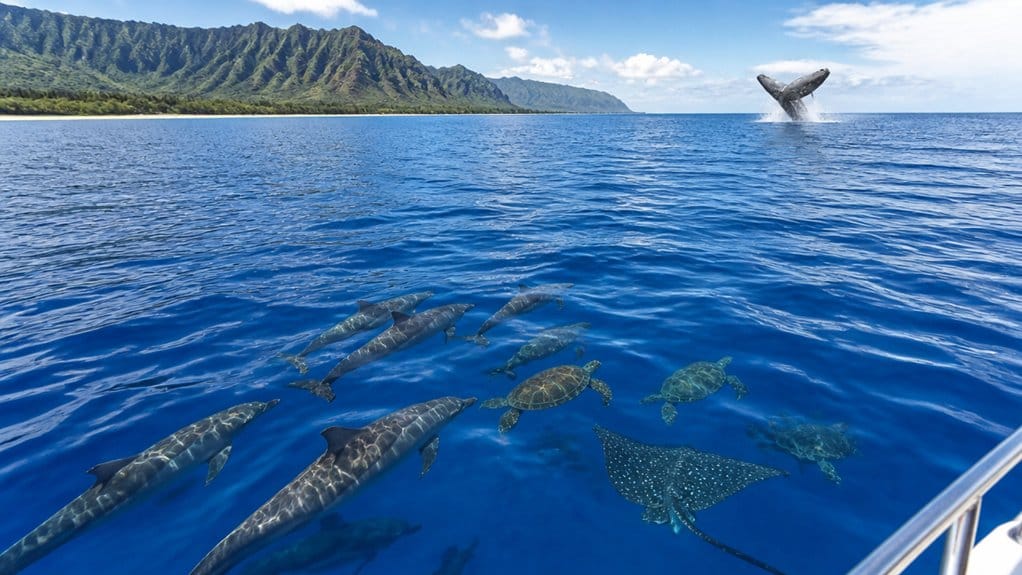
Starting from Haleiwa Harbor at 66-105 Haleiwa Rd, the tour heads fast along Oʻahu’s North Shore and then pushes into open blue water. With Ocean Outfitters Hawaii, you’ll trace the coastline, pass famous surf breaks, and run several miles offshore, often around three, where the sea feels bigger and quieter.
The route stays flexible, which is part of the fun. Your captain watches visibility, currents, and activity on the water, then adjusts course within North Shore waters. Some days you’ll stay farther out in deep cobalt swells. Later, the boat may swing closer to shore, especially if calmer near-land zones make sense. In winter, December through April, the outing often includes classic Whale Watching areas tied to the humpback migration. You’re not on rails here, thankfully.
What Animals Can You See?
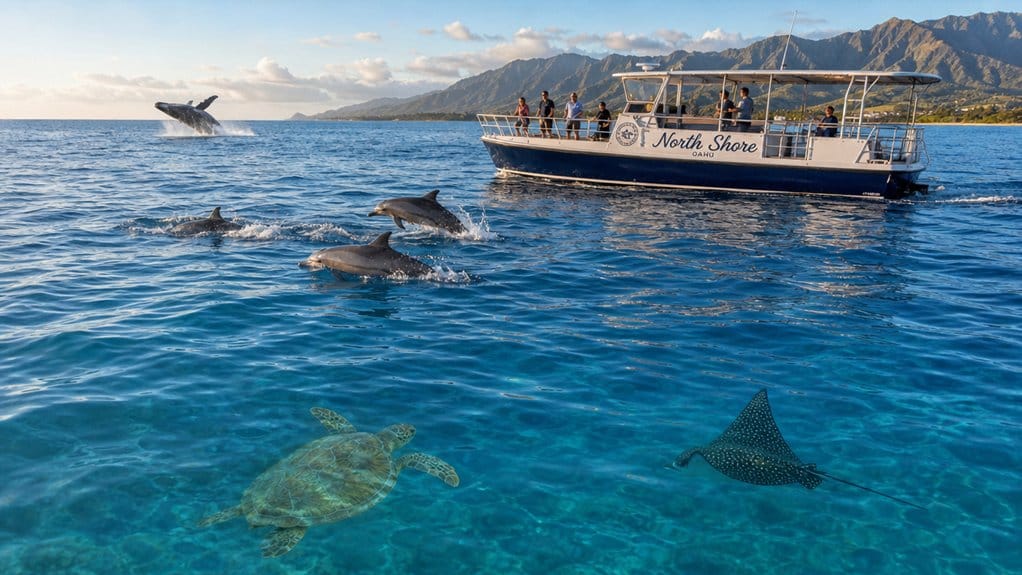
Once the boat clears the harbor and the captain starts scanning the water, the animal watch becomes half the thrill. You’re out here for Dolphin Watching, and Hawaiian dolphins often deliver, traveling in pods that sometimes hug the North Shore during the day.
You’ll also keep an eye near the rocky coastline, where Green sea turtles commonly forage close to land. Some of the best turtle spots on Oahu are along calm coastal areas where turtles come in to feed and rest. Many visitors choose guided turtle tours to improve their chances of spotting these sea turtles in the right coastal areas. In clearer offshore water, rays can appear like moving shadows under the surface, especially when the boat reaches quieter marine-life hotspots. Depending on conditions, you might also spot sharks cruising through the blue, which always wakes everyone up fast. In winter, humpback whales may pass by the island, and you could catch tail slaps, fin flashes, blowhole spouts, or if luck’s working overtime, a full breach nearby. If you want to pair ocean wildlife with a land-based stop later, Kualoa Ranch is another well-known Oahu experience featured in movie-site and ranch tours.
Have a question about this guide?
Ask for tour ideas, hotel suggestions, or a simple trip plan that combines both.
Trip Helper
When Can You See Whales on Oahu?
Most reliably, you can see humpback whales on Oʻahu from December through April, when the winter migration brings them through island waters. If you want your best shot at a whale sighting, book a winter or early spring trip from the North Shore, especially near Haleiwa, where crews run offshore and watch for surface action. Morning departures often offer calmer seas, which can make spotting spouts and breaches easier. Some operators also offer a free return guarantee during whale season if your trip doesn’t spot any whales.
For your best chance on Oʻahu, chase humpbacks from December through April, especially on North Shore trips out of Haleiwa.
- Aim for December through April.
- Choose North Shore departures.
- Watch for blowhole spray first.
- Look for tail slaps and fin slaps.
- Summer and fall are less consistent.
You won’t usually see whales constantly. Instead, you scan the water, then catch a spout, a dark back, or maybe a breach if luck’s feeling dramatic. That’s part of the fun. Even the waiting feels electric on deck. Waikiki also has whale-watching tours worth booking if you’re staying on the south shore and want another seasonal option.
How Often Are Dolphins and Turtles Seen?
On many North Shore trips, you’ll often spot dolphins as a main event, especially when calm water keeps them closer to shore in the daytime viewing zones. You’ve also got a strong chance of seeing green sea turtles near rocky coastlines and cleaning stations, where they feed and cruise like they own the place. Some of the best snorkel spots around Oahu are also known for turtle sightings, which helps explain why these encounters are so consistent across the island. Winter can boost your odds of seeing several kinds of wildlife on one outing, but dolphins and turtles stay the year-round regulars even though daily ocean conditions still call the shots.
Dolphin Sighting Frequency
Usually, your odds are strong for both dolphins and turtles on a North Shore marine-life tour, though no crew can promise a perfect wildlife script.
For dolphin sighting frequency, you’ll often benefit when crews cruise closer to shore and scan for resting day pods that frequent the area. Expect Hawaiian spinner dolphins to be a top target.
- Nearshore routes often improve dolphin searches.
- Winter trips can raise overall encounter odds.
- Visibility and currents can shift success fast.
- Short tours search quickly for reliable action.
- Longer trips give you more water time.
You’ll notice that captains adjust timing and direction with the conditions. That flexibility matters. On a calm morning, fins may slice the surface early. On another day, you might work harder for the moment, but the hunt stays part of the fun. Morning departures can also help thanks to calmer seas, better light, and cleaner viewing conditions. Some travelers prefer a dolphin watch tour because it focuses on spotting behavior without the added logistics of getting in the water. If you visit during peak season, whale watching tours can also add another memorable layer to Oahu wildlife outings.

Waikiki 2 Hours Friday Night Fireworks Catamaran Cruise
Enjoy the spectacular FRIDAY NIGHT FIREWORKS show along the beautiful coastline of Waikiki while we get up close and...

Waikiki Turtle Snorkeling & 6-in-1 Adventure with Free Pickup
Experience a special turtle snorkeling adventure in Waikiki aboard a smooth and comfortable catamaran. This all-in-o...

Waikiki Turtle Canyon Snorkel Turtles Guaranteed
Explore Turtle Canyon with Island Splash Tours and discover Hawaiian green sea turtles and tropical fish off Waikiki...
Turtle Encounter Likelihood
Along the North Shore, your chances of spotting turtles stay pleasantly high, especially when crews pair dolphin searches with slow passes near rocky reef edges close to shore. You’ll often look for both in the same nearshore feeding zones. That makes turtle encounter likelihood feel invigorating strong on many outings. Hawaiian green sea turtles are protected wildlife, so viewing them calmly from a respectful distance helps keep encounters safe for both you and the animals. If conditions feel rough, follow 7 steps for snorkeling safely before entering the water.
| What you’ll notice | Why it helps |
|---|---|
| Dolphins cruise closer to land by day | Crews scout both species efficiently |
| Calm, clear water | Turtles stand out over reef fish |
| Rocky cleaning and feeding spots | Green sea turtles gather there |
| Surge and currents vary | Some trips simply see less |
Visitors who also spend time at Three Tables Beach in Haleiwa often notice how clear nearshore water and reef structure make turtle viewing feel more predictable. When visibility sharpens, your captain can more reliably check known reef areas along the coast. You may hear the engine idle down, then scan green shells below like coins over stone. Nice bonus, right?
Seasonal Wildlife Patterns
Because wildlife here follows both season and sea state, the “best time” depends on what you hope to spot. You’ll usually see dolphins and turtles often, but not on an exact schedule. Marine Life moves with calm water, visibility, and currents.
- Dolphins show up most reliably in calm nearshore hotspots.
- Pods often choose safer daytime water closer to land.
- Turtles are regulars near rocky feeding zones and cleaning stations.
- Oahu is also known for several turtle beaches where sightings are especially popular.
- In winter months, humpback whales boost mixed-sighting days.
- Captains shift routes daily to chase the best conditions.
If you’re hoping for dependable sightings, turtles usually win. They feed here year-round, especially around places like Makaha’s turtle cleaning station. Dolphins are frequent too, especially on calmer days. Many visitors also prefer tours with free pickup to make early wildlife departures easier. Whales are the seasonal bonus act, spectacular but less predictable outside migration months each year. When whales are present, remember the required 100 yards away viewing distance for humpback whales.
What Does the Fast Raft Feel Like?
If you’re wondering whether this feels like a quiet harbor cruise, it doesn’t. The fast raft rides more like a Hawaiian rollercoaster on open blue water. You’ll skim offshore first, feeling the boat lift, turn, and surge as the crew heads quickly toward remote North Shore wildlife zones.
Then the pace shifts into active searching near shore, where dolphins, turtles, and rays might appear. You’re still moving fast, not drifting, so the ride stays lively. Travelers comparing activities may also look at an all-inclusive pass to weigh this kind of adventure against other Oahu tours and attractions. On Oahu’s west side, dolphin cruises from Ko Olina are another popular way travelers seek marine life encounters. In winter, things can get even more charged when whales show up. The crew may accelerate toward distant spouts, giving you front-row views of tail slaps and fins.
Expect wind in your face, salt on your skin, and a thrilling observation platform that also includes an onboard bathroom. Convenient when the ocean keeps bouncing. Like many Waikiki parasailing adventures, it helps to know beforehand that open-water experiences can feel far more fast-paced and exhilarating than first-time visitors expect.
Why Is This a Small-Group Tour?
You get a more intimate look at Oahu’s marine life when only about 10 guests share the raft, so whale blows, spinning dolphins, and sea turtle sightings don’t get lost in a crowd. Your crew can give you more personal guidance too, with marine biologists and naturalists adjusting the search and briefing as the water, wind, and wildlife shift. That smaller setup also keeps the ride out of Haleʻiwa Harbor safer and less hectic, which means you can focus on the splash, the scan, and the next fins on the surface. Travelers staying in town often compare the ease of Waikiki hotel pickup on other Oahu excursions when planning how to balance marine adventures with sightseeing days. Some ocean tours also include lunch service, which can make a longer day on the water more comfortable. On another day, pairing this adventure with a walk through Downtown Honolulu can add cultural landmarks like ʻIolani Palace, the Kamehameha Statue, and Chinatown to your Oahu itinerary.
Intimate Wildlife Viewing
While big tours often feel like a moving crowd, this North Shore marine life trip stays intentionally small so the guide can scan the water, react fast, and keep the focus on the animals. You get an intimate experience instead of a packed deck and rushed sightings.
- You ride with about 4 to 10 guests, not a floating audience.
- Your Marine naturalist can track fins, shadows, and surf line movement.
- Agile boats reach quieter water and remote viewing zones more easily.
- The route can shift with conditions and where animals are ranging.
- You spend more time watching dolphins, turtles, rays, and winter whales.
That smaller setup keeps the mood calm and observant. You hear the engine, the wind, and maybe someone whisper, “Turtle.” Then everyone looks, and the ocean suddenly feels full of clues.
Personalized Crew Attention
That small guest count matters because the crew can actually pay attention to your trip, not just steer a crowd from point A to point B. With about 10 guests, the Marine-life team from Ocean Outfitters can watch conditions, read animal activity, and adjust your route from Haleiwa Harbor.
| Focus | What you notice | Why it helps |
|---|---|---|
| Route | Quick shifts | Finds action |
| Safety | Clear calls | Smarter entries |
| Comfort | Shade, restroom | Easier ride |
| Guidance | Patient coaching | Better snorkeling |
You get responsive support, especially if you’re new to snorkeling or traveling with kids. The crew checks visibility, surge, and currents before inviting you into the water. If dolphins move or turtles pop up nearby, they pivot fast. In winter, that can mean whales too.
Who Is This Tour Best For?
If a fast boat ride out of Haleiwa Harbor sounds like your kind of morning, this North Shore marine life tour fits travelers who want a small-crew run into remote blue water with a real sense of discovery. It suits you if Hawaiian sunset dreams can wait and you’d rather chase the Best of the West by daylight.
- You want dolphins, turtles, rays, and maybe whales in one outing.
- You like ethical wildlife viewing guided by a crew reading conditions.
- You’re traveling with family or mixed abilities and still want adventure.
- You don’t need a fixed in-water plan to enjoy the open ocean.
- You’re okay skipping it for kids under 3 because the ride moves fast.
You’ll likely love the wind, spray, and lookout energy that comes with this route from Haleiwa.

Oahu: Grand Tour Around Island with Snorkeling
Come join on a circle island adventure led by some of Hawaii’s most knowledgeable local guides and experience brea...

Pearl Harbor, Dole, and Polynesian Cultural Center from Waikiki
Join us on an unforgettable day at three of Oahu’s most popular attractions: Pearl Harbor, Dole Plantation, and Po...

Pearl Harbor Tribute: Arizona Memorial and Honolulu City Tour
This is an executive class Pearl Harbor Tour, which has been double discounted. We have discounted this tour to the...
What’s Included in the Tour Price?
On this tour, your fare covers more than a boat seat. You get a narrated marine life cruise departing from Haleiwa Harbor, plus practical comforts like shade, an onboard bathroom, and sometimes an observation deck. You’ll ride out along the North Shore in search of dolphins and sea turtles, with chances to spot rays and, in winter, migrating humpback whales.
Your price also includes the crew’s guidance, so you’re not just scanning the Water and guessing. You’ll hear science based insights about the animals and the coastline while the captain heads toward prime viewing areas, including more remote stretches when conditions cooperate. Depending on the departure, food and drinks may be part of the package, and some trips allow BYOB. That means more comfort, more Shore scenery, and fewer hungry distractions.
What Should You Bring?
Because the North Shore sun can feel relentless even when the breeze stays cool, pack for glare, splash, and quick weather shifts. You’ll want gear that handles salt, sun, and the breezy ride across the OCEAN, especially if you hope to see wildlife clearly.
Pack for blazing sun, salty spray, and breezy ocean crossings so you stay comfortable and ready for wildlife sightings.
- Swimsuit, reef-safe sunscreen, polarized sunglasses, and a hat
- Rash guard for sun and small stingers
- Towel and a dry layer for the breezy deck
- Wetsuit if mid-to-high 70s water feels chilly to you
- Waterproof phone or camera case for sightings
Choose breathable fabrics instead of heavy plastics. They feel better when spray hits and conditions change fast. A waterproof case lets you capture dolphins, turtles, rays, and, in winter, humpback whales without risking your phone to one rogue splash nearby.
How Do You Get to Haleiwa Harbor?
How early should you leave? From Waikiki, you’ll drive about an hour to Haleiwa Harbor on Oʻahu’s North Shore, so don’t cut it close. Leave early and aim to reach the harbor ramp area well before your tour starts. That extra cushion helps if island traffic decides to get creative.
Once you enter Haleiwa Harbor, park in the nearest available free public stalls by the boat dock. Then head toward Slip 19, where Ocean Outfitters Hawaii keeps the Rambo II. You’ll spot the yellow boat and sign without much drama. Plan to arrive about 30 minutes before departure so you have time to move at a calm pace. If you haven’t yet, book your spot ahead of time so your morning stays simple and focused on the water, breeze, and adventure.
Where Do You Check In for the Tour?
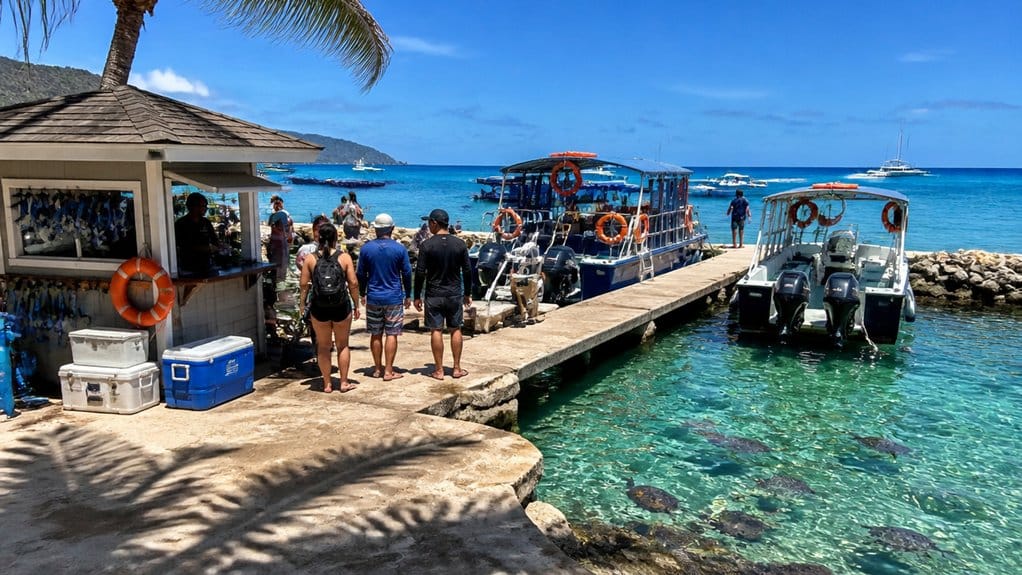
At Haleiwa Harbor, you’ll check in right by Ocean Outfitters Hawaii’s boat, the Rambo II, docked at Slip 19. You’ll find the harbor at 66-105 Haleiwa Rd., Haleiwa, HI 96712, about an hour from Waikiki.
- Enter Haleiwa Harbor and head for the nearest free public parking stalls.
- Plan to arrive 30 minutes before your tour so you’re not rushing.
- Walk toward Slip 19 and look for the yellow boat or sign.
- Check in beside the Rambo II, where Ocean Outfitters staff will meet you.
- Listen for harbor sounds and watch the boats bob while you get ready.
The setup is simple, and that’s part of the charm. Once you spot the yellow marker, you’ll know you’re in the right place. Easy, breezy, and very North Shore.

Oahu's Stunning Views: Half-Day Scenic Tour with 7 Lookouts
Bless your eyes with Oahu's most beautiful wonders. We take you to the MOST IMPRESSIVE SCENEARIES of this island on...

Pearl Harbor Complete Experience Passport
Visit All 4 Museums in One day on this tour, tickets and admissions are included. See how the US entered into and en...

Oahu: Kualoa Ranch UTV Raptor Tour
Traveling with family and friends? You can enjoy the fantastic Multi-passenger UTV Raptor experience with your entir...
What Should You Know Before Booking?
Before you book, check where you’ll meet at Haleiwa Harbor, plan to arrive 30 minutes early, and expect a fast boat ride that can change with ocean conditions. You might spot humpback whales in winter, while dolphins, green sea turtles, and offshore rays can appear any time, which makes timing part of the fun. You should also confirm age rules, tour length, and minimum guest counts, because safety comes first and the ocean doesn’t care about your schedule.
Meeting And Arrival
Aim to reach Haleiwa Harbor 30 minutes early so check-in feels easy and boarding stays smooth, especially since the drive from Waikiki takes about an hour. For a calm activity start, enter the harbor and grab the nearest free public stall. Then look for Ocean Outfitters Hawaii’s bright yellow boat at Slip 19, Rambo II.
- Arrive early to avoid rushed parking and lines.
- Use the closest available free public parking stalls.
- Find the yellow boat at Slip 19 with ease.
- Book early since tours need at least six guests.
- Pack sun protection and stay flexible on conditions.
The tour runs rain or shine, but crews can change plans or cancel for safety. Boats also move fast to remote spots, so you’ll want hats, sunscreen, and a secure grip on loose items nearby.
Wildlife And Seasonality
Season matters on this North Shore tour, and it can shape what ends up stealing the show. If you book from December through April, you’ve got the best chance to see humpback whales on migration. You might catch blowhole spouts, tail slaps, or even a breach if the ocean feels generous.
Outside whale season, your focus usually shifts to dolphins, turtles, and rays. Dolphins often cruise near land during the day, while turtles gather around rocky feeding spots to graze. Rays may glide through the same areas like quiet shadows. Daily visibility matters a lot. Drier months often bring clearer water, while storms can turn things murky and limit wildlife viewing. You’ll also support conservations efforts when operators follow conditions instead of forcing the day’s plan offshore.
Age And Safety
Even if you’re picturing an easy family outing, it’s worth checking the age rules and safety style of your tour first.
- Some boats welcome families, but children under 3 may not be allowed.
- You should arrive 30 minutes early at Haleiwa Harbor for check-in.
- Listen closely to the safety briefing before boarding or approaching wildlife.
- If visibility, surge, currents, water quality, or hazards look rough, crews may skip in-water entry.
- Winter brings humpback whales from December to April, so cancellations may occur, and you can often reschedule or receive a full refund.
Water feels warm, around 77°F in winter and spring and 80 to 82°F in summer and fall, but you’ll still want a rash guard and towel. Fast offshore runs can get splashy.
How Safe Is This North Shore Tour?
How safe is this North Shore tour? You’re joining a safety-first crew that reads the ocean in real time, not by wishful thinking. If visibility drops, surge builds, currents pull, or jellyfish advisories pop up, they won’t send you in.
| Check | Why it matters | What you feel |
|---|---|---|
| Visibility | Clear sightings | Less guessing |
| Currents | Safer entries | More control |
| Surge | Stable water | Smoother moments |
| Hazards | Guest protection | Better peace |
| Weather | Smart cancellations | Flexibility |
You’ll leave from Haleiwa Harbor, usually arriving 30 minutes early, then ride a fast, agile boat that can adjust quickly. In winter, you may search for humpbacks during December through April. If safety cancels the trip, you can reschedule or receive a full refund. No risky guarantees here.
Is This Haleiwa Tour Worth It?
Safety matters, but value is what most travelers remember when they’re back on shore. If you want a quick North Shore wildlife run instead of a long cruise, this Haleiwa trip often feels worth the fare.
- About 1.5 hours, so it fits busy beach days.
- Around $99 per adult, with 4.6/5 from roughly 44 reviews.
- Fast departure from Haleiwa Harbor to proven viewing zones.
- You may spot dolphins, turtles, rays, and winter humpback whales.
- Safety calls can cancel trips, which protects you and wildlife.
You’re paying for speed, access, and a sharp chance at sightings, not a deep expedition. In winter, tail slaps and blowhole spouts add drama. If that sounds like your style, I’d Highly recommend it over some slower West Coast style tours. Not for toddlers under three, though.
Frequently Asked Questions
Can Pregnant Guests Join the Haleiwa Marine Life Tour?
Yes, you can usually join while pregnant, but you should confirm with the operator first. You’ll mostly enjoy whale sightings from the boat, and the crew prioritizes snorkeling safety, sea conditions, and your comfort before departure.
Are There Age or Height Restrictions for Children?
Yes, while some think height rules are standard, you’ll usually find age limits instead: under 3 isn’t suitable, and some options require 5+. Ask operators about height, waiver requirements, and any medical screening before booking.
Can You Bring Cameras or Phones on the Raft?
Yes, you can bring cameras or phones on the raft. Follow camera safety rules: use a secure case and lanyard. For phone storage tips, keep devices accessible, lens covered, and stow them safely during splashes.
Is There a Restroom Available During the Tour?
Yes, you’ll have a private onboard restroom available throughout the tour. You can use it during the ride while following Water safety procedures, and if needed, the crew can assist with Emergency portapotty access options.
What Happens if Bad Weather Cancels the Tour?
Like a red light on rough seas, if bad weather cancels your tour, you’ll get Weather policy protection: you can choose Rescheduling options or a full refund. Safety-driven changes may also shorten your day or return.
Conclusion
From Haleʻiwa Harbor, you step onto a small raft and into Oʻahu’s wild margin, where the coast feels like a moving compass. You scan blue water for dolphins, turtles, rays, and winter whales, then shift with the sea as guides read currents and light. With shade, a bathroom, and room for only about 10 guests, the trip stays easy. If you like your sightseeing salty, fast, and alive, this North Shore run points true.

Oahu Shark Dive on the North Shore
Book the Oahu Shark Dive for a thrilling shark encounter off the North Shore. You’ll travel by boat from Haleiwa Harbor, then view sharks from a sec...
Luxury Snorkel Cruise with Dolphin Watch and Hawaiian Meal
Cruise along Oahu's scenic west coast aboard a comfortable, custom catamaran designed for premium ocean exploration...
Oahu Catamaran Snorkel Tour: See Turtles 100% Guaranteed
Experience one Viator's 2025 Top 20 Best Excursions in the country. This Oahu Catamaran snorkel tour offers unbeatab...
Experiences to explore
 Explore experience ↗
Next Level Oahu Circle Island and Swim w/Turtles Tour
◷ 8 hr–9 hr
We take our guest in a semi-private bus with A/C. Our professional local tour guides will share their invaluable cultural and historica
See dates for Current pricing
View dates Explore experience ↗
Off-Road Adventure Tour on Oahu's North Shore
◷ 4 hr
SPECIAL DISCOUNT for direct booking in our website: https://www.mshawaiitours.com/ This tour offers you an unforgettable Off-Road Trip
See dates for Current pricing
View dates Explore experience ↗
Private 5-hr Off-Road Trip on Oahu’s Wildlife-Rich North Shore
◷ 5 hr
On this private 5-hour off-road driving tour you will enjoy an exhilarating day trip to the North Shore in an off-road vehicle to get a
See dates for Current pricing
View dates