On Oʻahu, you don’t just see mountains in the distance. You drive under them, hike along their knife-edge ridges, and watch clouds snag on their dark green walls. The Koʻolau and Waiʻanae ranges shape the whole island, from broad summit bogs on Mount Kaʻala to the sharp crest near Puʻu Kōnāhuanui. Some trails feel like a brisk morning walk. Others ask for steady nerves and shoes with real grip. The difference matters more than you might think.
Key Takeaways
- Oʻahu’s mountains are defined by two extinct volcanic ranges: the Koʻolau Range east-central and the drier Waiʻanae Range in the west.
- Mount Kaʻala, in the Waiʻanae Range, is Oʻahu’s highest peak at about 4,025 feet and has a fenced summit bog.
- Puʻu Kōnāhuanui, or K1, is a prominent Koʻolau crest summit rising to about 3,150 feet with steep, muddy approach routes.
- Diamond Head is Oʻahu’s best-known crater summit, with a short trail gaining about 560 feet in 0.8 mile.
- Popular ridges range from easy Lanikai Pillbox to challenging Kuliʻouʻou, Wiliwilinui, Kahekili Ridge, and exposed Pali Notches routes.

Oahu: Full or Half Day Grand Circle Island Tour
Choose from two exciting ways to experience Oahu's top attractions, scenic beauty, and local culture.Option 1: Dole Plantation & Haleiwa Town (6.5 H...
Oahu Mountain Ranges and Major Peaks
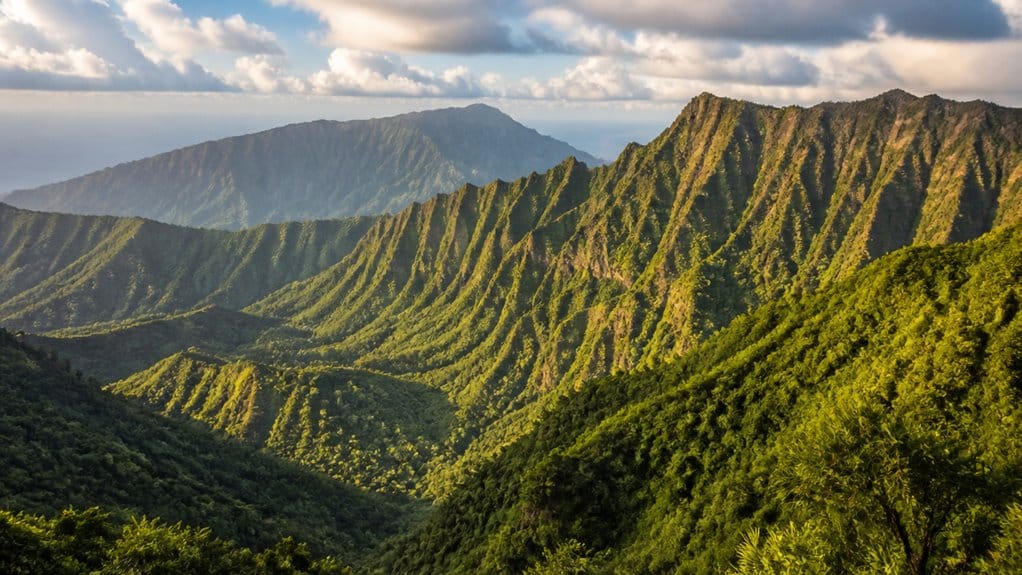
Oʻahu’s mountain backbone comes from two extinct volcanic ranges that still shape almost every big view on the island. You see the Koʻolau Range rising along the east and center, while the Waianae Range anchors the west with drier slopes and bigger relief. Together, they frame beaches, towns, and cloud lines. The island’s main mountain ranges are the Koʻolau Range and the Waiʻanae Range.
On the windward side, the Pali cliffs drop in huge green walls, and ridge trails trace narrow high lines above the coast. You’ll notice names like Puʻu Kōnāhuanui and Wiliwilinui Ridge again and again because they define the skyline. Farther west, Mount Kaʻala stands out within the Waianae Range, often wrapped in mist. Conditions change fast, so check access and weather before any summit trail. Expect steep grades, exposed sections, and views that make your calves negotiate.
Highest Oahu Mountains and Summit Trails
If the island’s ranges shape the big picture, its highest summits make you earn the close-up. On Oʻahu, Mount Kaʻala tops out at about 4,025 feet, and its summit trail packs roughly 3,400 feet of elevation gain into about 7.1 miles. You climb through wet forest, hit a steep climb, and reach a fenced summit bog that feels strangely otherworldly.
Puʻu Kōnāhuanui (K1) rules the Koʻolau crest at about 3,150 feet. Depending on your route, you’re looking at roughly 8.1 miles to the top. A ridge trail approach can feel long, exposed, and wonderfully dramatic, especially in clear weather. Honolulu’s landscape also includes volcanic craters that reveal another side of Oʻahu’s mountain-building story. Whatever high route you choose, stay on established paths, expect mud and slippery sections, and treat the native habitat like the rare treasure it is.
Best Oahu Mountain Hikes by Difficulty
Whether you want a quick ridge walk or a full-value sufferfest, the best Oʻahu mountain hikes sort themselves nicely by difficulty. Start easy with Lanikai Pillbox (Kaiwa Ridge), a short sunrise climb with old bunkers and blue Mokulua views. Step up to Kuliʻouʻou Ridge, where the grade keeps you honest and the Waimānalo panorama feels earned.
For a stronger ridge sampler, Wiliwilinui Ridge delivers steady climbing, cool forest, and wide east-side vistas. Wiliwilinui Ridge is a fine bridge between casual and committed. When you want a brute, Mount Kaʻala brings steep miles, mud, and a summit bog. Before heading into the Waianae Range, build a safe day hike plan around route research, weather checks, enough water, and a realistic turnaround time. For expert terrain, Kahekili Ridge routes and the Pali Notches near Pali Lookout add exposure, scrambling, and serious focus. You’ll hear wind, grab roots, and remember every step on the way back down.
How to Choose the Right Oahu Trail
Picking the right Oʻahu trail starts with an honest look at your legs, your nerve, and the day you actually want to have. If you want a strong half-day climb, Kuliʻouʻou Ridge fits well. If you can handle a full-day push, Puʻu Kōnāhuanui asks more from your lungs and your knees.
Next, judge exposure with zero ego. Pali Notches and Olomana may look short on a map, but steep drop-offs and ridge‑scrambling turn them serious fast. Chase sunrise on Kuliʻouʻou Ridge for cool air and glowing views. Save broad summits for clear weather.
Before you go, check access. Some routes need a permit, and some roads want a 4×4. Bring extra water and sun protection, start early, and skip wet ridges. Mud has a wicked sense of timing. For a shorter but steep landmark hike, Diamond Head’s summit trail gains 560 feet in just 0.8 mile from the crater floor.
Frequently Asked Questions
Are Permits Required for Any Oahu Mountain Hikes?
Yes, you’ll need permit requirements for some Oʻahu mountain hikes: trail permits, private access, sanctuary restrictions, guided permits, special permits, permit exemptions, and event permits vary. You should always confirm current rules with official managers before hiking.
What Weather Hazards Are Common on Oahu Ridgelines?
You’ll face trade winds that feel like a freight train, sudden squalls, wind shear, fog banks, flash flooding, lightning strikes, and sea spray; they slash visibility, soak you fast, and raise hypothermia risk unexpectedly.
Which Oahu Mountain Trails Have Restricted or Controversial Access?
You’ll find restricted or controversial access at Haʻikū Stairs, Kaʻena Point route choices, and risky ridges like Olomana Ridge, Puu Manamana, Kamāʻiole Ridge, Puʻu Maʻeliʻeli, plus crowded Koko Crater and Makapuʻu Lighthouse.
When Is the Best Season for Clear Summit Views?
You’ll get the clearest summit views during late spring clarity and early autumn calm, when trade wind patterns dominate. Start on winter mornings for dawn inversion, watch post frontal skies or after storm clarity, and beat midday haze.
What Safety Gear Is Essential for Exposed Ridge Hikes?
What keeps you safest? You’ll need helmet use, sturdy boots, trekking poles, water purification, layered clothing, spare headlamp batteries, first aid, and an emergency beacon. You protect yourself better when weather shifts and ridges get sketchy.
Conclusion
You don’t need to chase the hardest ridge to feel Oʻahu’s mountains. Pick a trail that fits your legs, your weather window, and your nerve. Then go watch the Koʻolau cliffs catch the clouds, hear ironwood needles hiss in the wind, and feel red dirt grip your shoes. A short climb like Diamond Head still delivers crater walls and blue water. Start early, bring water, and let the island’s peaks sketch your day like a map.
Oahu: Full or Half Day Grand Circle Island Tour
Choose from two exciting ways to experience Oahu's top attractions, scenic beauty, and local culture.Option 1: Dole Plantation & Haleiwa Town (6.5 H...
Experiences to explore
 Explore experience ↗
Oahu Circle Island Snorkeling Tour: Dole, Pali Lookout & More
◷ 10 hr–12 hr
Looking for the BEST VALUE & MOST COMPLETE Circle Island Snorkeling Tour? Join us for the ultimate full-day, action-packed adventure th
From $118.00 USD
View dates Explore experience ↗
Waikiki Parasailing in Hawaii from Oahu
◷ 1 hr
Experience the thrill of parasailing over Hawaii’s stunning coastline as you glide above crystal-clear waters and lush island landscape
From $45.00 USD
View dates Explore experience ↗
North Shore Surfing Lessons Oahu Hawaii
◷ 1 hr 30 min
Epic Surfing Experience on Oahu's North Shore, Haleiwa, Hawaii Join us for an unforgettable surfing adventure on Oahu's legendary North
From $120.00 USD
View dates