On Oahu, you can earn your scuba card in a long weekend or stretch it out between beach days, but the right course depends on your pace and budget. PADI Open Water usually takes 3 to 4 days and runs roughly $500 to $800 with gear, while SSI and NAUI tweak the classroom vibe and scheduling. Book morning dives early to beat trade winds, bring reef-safe sunscreen and a light jacket, skip heavy makeup. Want the fastest route, or the best value?
Key Takeaways
- PADI Open Water is the best all-around first certification; plan 3–4 days with eLearning, pool skills, then four ocean dives.
- SSI Open Water is the most flexible; app-based lessons plus adjustable pool and two ocean dives, often with rentals included and small reef fees.
- NAUI Scuba Certification is best for theory-minded divers; includes deeper academics, problem-solving drills, then ocean checkouts when conditions allow.
- Fast-track PADI eLearning + dives is the quickest option; finish modules online, then complete pool training and two open-water dives on Oahu.
- PADI Advanced Open Water is ideal after certification; five adventure dives (Deep and Navigation included) typically completed in two half-days.
PADI Open Water Scuba Certification on Oahu (Best Overall)
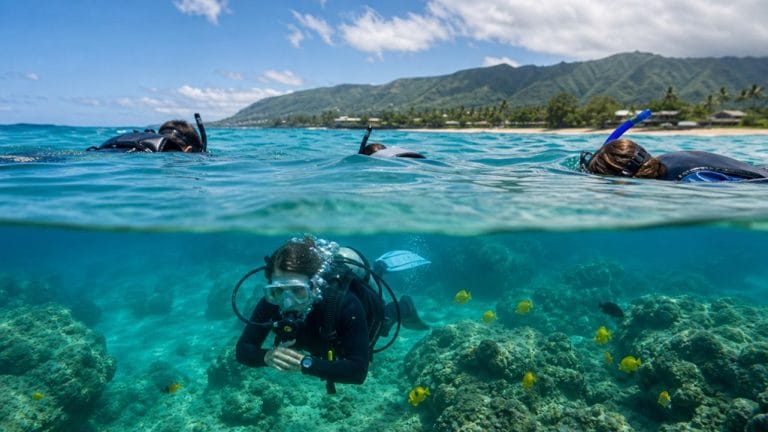
Wondering where to start if you’ve never breathed underwater before? PADI Open Water on Oahu is the clean, classic route, with clear instruction and warm, bathwater reefs. Plan on 3 to 4 days. You’ll do eLearning, pool skills, then four ocean dives, often from Waikiki or the west side. Expect $550 to $750, plus gear rental if it’s not bundled. Mornings book out first, so reserve early if you’re here over a weekend. If you’re not ready to commit to a full certification, you can first sample the underwater world on beginner-friendly scuba tours in Honolulu that focus on shallow reefs and basic skills.
Bring reef safe sunscreen, a rash guard, and a light jacket for the boat ride back. Skip heavy jewelry and big cameras until you’re steady. If conditions allow, you might glimpse Island wrecks or add Night diving after certification. Most classes cap at eight, so you won’t feel like a sardine.
SSI Open Water Scuba Certification on Oahu (Most Flexible)
Often, SSI Open Water is the easiest way to fit scuba into an Oahu trip that’s already packed with beaches, hikes, and plate lunches. You’ll knock out app based lessons at night, then use Flexible scheduling and Weekday options to book pool time and two ocean dives when boats are quieter. Most training runs through Local dive shops in Waikiki or Hawaii Kai, so you can walk in, get sized for gear, and hop on a morning charter. Many shops can also point you toward top Waikiki scuba tours if you want guided fun dives after you certify. Ask for a Customized course if you’re juggling kids or a luau. Expect $450 to $650, rentals included, plus a $10 to $20 reef fee. Bring a rash guard, water, and a warm layer for the ride back. Skip big cameras and hangovers if you can.
NAUI Scuba Certification on Oahu (Most Theory-Focused)
If you like to know the why behind every skill, NAUI’s Open Water track on Oahu feels like a mini field course, not just a box to tick. With NAUI on Oahu, you’ll spend time in the shop before you smell salt spray. Naui theory leans into physics, physiology, and local conditions, so your buoyancy and ascent choices feel intentional, not memorized. Expect Classroom demos with gear, compasses, and problem-solving drills. Plan on two to three half-days of academics plus pool sessions, then ocean checkouts when winds behave. Prices usually run $450 to $650, often with manuals and tanks included, but ask about park fees and rental wetsuits. Bring a light hoodie for the A/C, water, and a notebook. Skip fixed schedules, traffic wins. Many students pair their NAUI training with guided dives from top dive shops in Oahu to explore the island’s reefs once they’re certified.
Fastest Scuba Certification on Oahu: PADI eLearning + Dives
NAUI gives you the “why” in a cool classroom, but PADI’s fastest path on Oahu gets you from laptop to ocean with less clock-watching. Knock out the online modules in a couple evenings, then book your pool session and two open-water dives, often in small groups. Your shop handles e learning logistics, but you’ll want a tight calendar, morning slots fill first in Waikiki. Choose boat dives for speed, or save cash with shore dives planning at calm spots like Hanauma Bay when conditions behave. Many beginners start with Starter Scuba Experiences at Waikiki Dive Center before committing to a full certification course. Expect $450 to $650 plus park fees and gear. Bring reef-safe sunscreen, a rash guard, and snacks. Skip big camera rigs until you’re buoyant. If timing’s tight, a Viator option with verified reviews and free cancellation can simplify pickup.
Still comparing Scuba Diving And Sea Scooter?
Ask for tour ideas, hotel suggestions, or a simple trip plan that combines both.
Trip Helper
Advanced Scuba Course on Oahu: PADI Advanced Open Water
While Open Water teaches you to breathe and behave underwater, PADI Advanced Open Water on Oahu helps you dive with more confidence, more range, and less fuss.
You’ll usually finish in two half days, five adventure dives total, with one focused on Deep diving and another sharpening Navigation skills. Expect boat rides off Waikiki or Hawaii Kai, warm blue water, and a little surge near the reef. If you’re planning to continue island-hopping for more diving after Oahu, understanding the real Honolulu to Molokai travel options (and lack of ferry) can help you schedule flights and surface intervals more safely.
Most shops run $450 to $650 plus gear, and mornings book out fast in summer. Bring reef-safe sunscreen, a light jacket for the ride, and your certification card. Skip bulky valuables and heavy breakfast. If you want plug-and-play logistics, a Viator-listed course can help with verified reviews, hotel pickup, free cancellation, and reserve now pay later options.
Frequently Asked Questions
Do Oahu Scuba Certification Courses Include Rental Gear, or Is It Extra?
Most Oahu scuba certification courses include basic rental gear in the package, but you’ll often pay extra for wetsuit sizes, computers, and tanks. Check rental policies closely, and budget for optional equipment upgrades and deposits.
What’s the Minimum Age for Scuba Certification on Oahu?
You’ll typically need to be 10 years old, the minimum age, for Junior Open Water certification. If you’re younger, you can join youth programs like Bubblemaker (8+) or resort experiences. Shops may set higher age limits.
Are Referral Checkouts Available if I Complete Coursework Elsewhere First?
Like swapping boarding passes mid-trip, you can book Referral checkouts after finishing coursework elsewhere. You’ll bring your eLearning record, then complete required Pool sessions and open-water dives with an Oahu instructor who signs off locally.
Can I Get Medically Cleared Locally if I Have Asthma or Past Injuries?
Yes, you can get medically cleared locally; you’ll schedule a doctor clearance visit, and if asthma’s involved, request a pulmonary evaluation. Bring records of past injuries, list meds, and follow the physician’s stated restrictions before diving.
What’s the Typical Instructor-To-Student Ratio in Oahu Certification Classes?
You won’t be herded like sardines, most classes run about 1 instructor for 4–8 students in the pool, and fewer in open water. Ask shops their Instructor ratios; you’ll learn faster in Small classes every time.
Conclusion
On Oahu, you can go from landlubber to card-carrying diver in what feels like a blink. Pick PADI Open Water for the smoothest path, SSI if your schedule’s chaotic, NAUI if you want the brainy deep exploration, or the fast-track if you’re sprinting. Expect $450 to $700 plus gear rentals. Book morning slots to beat winds and crowds. Bring reef-safe sunscreen and a rash guard, skip jewelry. Viator can simplify pickups with free cancellation too.
Hotel bases to compare after this tour
Once you have the tour shortlist, compare a few stays that can make the trip logistics easier.

Park Shore Waikiki
A beach-adjacent hotel near Kapiolani Park and Diamond Head that fits travelers wanting east Waikiki convenience.
Check rates
Waikiki Shore by OUTRIGGER
A beachfront condo-style Waikiki property near Fort DeRussy that fits travelers wanting kitchen access by the sand.
Check rates
Waikiki Resort Hotel
A straightforward Waikiki stay close to the beach that fits travelers wanting location without ultra-luxury pricing.
Check rates