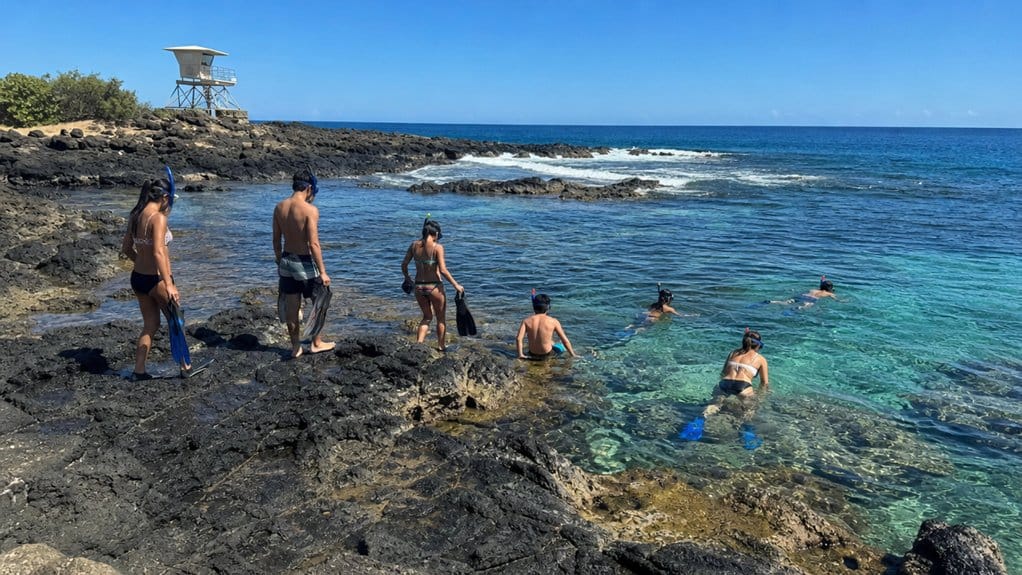
Most Shark’s Cove rescues happen when summer-calm water turns rough, often before visitors even reach the reef. You’ll want to treat this North Shore favorite with respect because one hour can mean glassy blue pools or surging whitewater over black lava. The reward is real: bright fish, clear pockets of water, and that sharp crunch of reef shoes on rock. A few smart moves make all the difference, and the first one starts before you touch the water.
Key Takeaways
- Check surf, wind, tide, and visibility before bed, at dawn, and on arrival; if waves crash onto rocks or water looks murky, stay out.
- Go early on a summer weekday, ideally before 8:00 AM, for calmer water, easier parking, and fewer crowds.
- Enter slowly from the left-side sandy or worn path, wearing closed-toe water shoes and carrying fins until deeper water.
- Stay inside the protected cove in shallow water, remain within sight of shore, and never swim past the rocky mouth.
- Never snorkel alone, follow posted local guidance, and keep respectful distance from turtles, seals, and coral.

Oahu: Cage-Free Shark Swim on the North Shore
Experience the ultimate Oahu shark dive with this North Shore shark tour family. Swim cage‑free with sharks in the crystal‑clear waters off Haleiw...

Oahu Shark Dive on the North Shore
Book the Oahu Shark Dive for a thrilling shark encounter off the North Shore. You’ll travel by boat from Haleiwa H...

Oahu's North Shore: 8-Line Zipline Adventure
Experience the ultimate Oahu zipline adventure on this 3-hour guided tour across the island’s famous North Shore...

Oahu: Dole Plantation & Haleiwa Town OR Grand Circle Island Tour
Choose from two exciting ways to experience Oahu's top attractions, scenic beauty, and local culture.Option 1: Dol...
Check Surf, Weather, and Visibility First
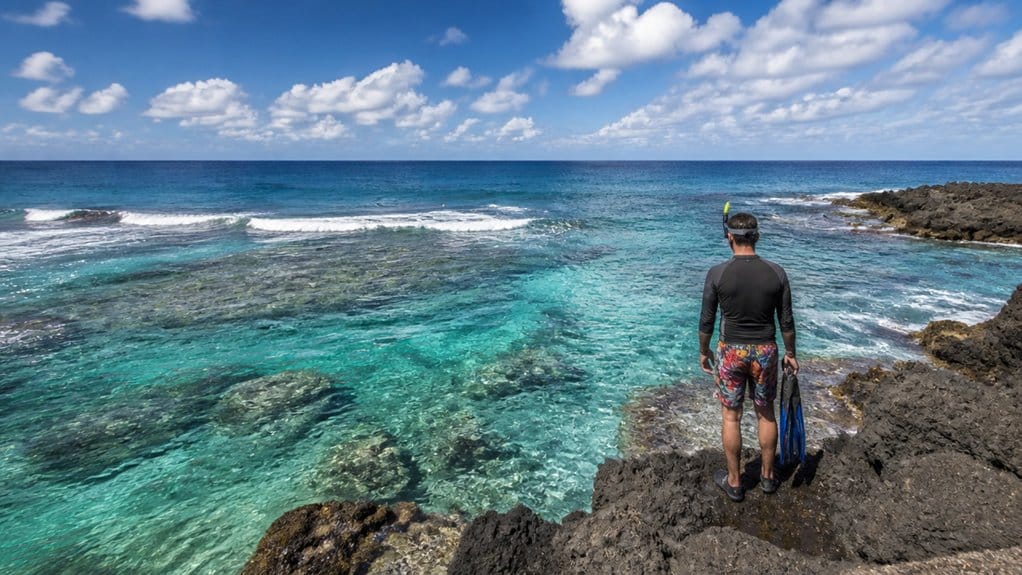
Before you even think about slipping on a mask, check the surf, wind, and water clarity at Shark’s Cove. At Sharks Cove, conditions can change fast, so check the surf forecast before you leave. During winter months, big swells and loud waves can turn the entry into a rock-smacking mess.
You should also scan local wind and visibility reports, then inspect the water yourself. Look for breaking waves, murky water, and strong currents near the cove’s mouth. If the surface looks churned up or surge slaps the rocks, stay dry. Go early in the morning, when the water is often calmer, parking is simpler, and visibility is usually better. Treat your conditions check as part of planning the perfect visit, not as an optional last-minute step. If you’re unsure, ask a local vendor what’s happening that day. And don’t snorkel solo, ever.
Visit Sharks Cove Only in Summer Conditions
You’ll have your best shot at Sharks Cove in summer, from May through September, when the North Shore usually settles into smaller swells and clear, calm water. In winter, especially from December to February, big surf and hard currents can turn this rocky little cove into a no-go zone fast. Aim for an early summer morning, check the surf and tide before you go, and if waves are pushing into the cove, don’t get in. Before you set out, review Shark Cove Beach basics so you know what conditions, gear, and safety concerns to expect.
Summer Swell Safety
Sharks Cove really shines in summer, when the North Shore usually settles down and the water inside the bay turns clear, calm, and inviting. During the summer months, you’ll usually find the calm conditions that make snorkeling enjoyable instead of stressful. Go early, before mid-morning, when the surface is often smoother, visibility is better, and the cove feels less crowded.
Before you head out, check surf reports and wind updates. You want small waves and light winds, not sets that close out Sharks Cove or murk up the water. Wear reef shoes for the rocky entry, snorkel with a buddy, and stay inside the protected cove. Because the entry is uneven lava rock, take slow, careful steps for smooth entries instead of rushing into the water. Don’t paddle outside the rocky mouth. If waves start building or the water looks unsettled, turn back. The fish will still be there tomorrow.
Avoid Winter Surf
Although the cove looks inviting from the shore, winter is the wrong season to treat it like an easy snorkel stop. On the North Shore, winter surf turns Sharks Cove from calm pool to rock-rattling wash. From October through April, especially December to February, big swells can break over the lava entry and shove you toward sharp stone.
The same seasonal rule applies nearby, where Waimea Rock Jump is only worth considering when ocean conditions are calm and safe. Before you even unzip your fins bag, check tide and weather and scan local reports for any surf advisory. If the water looks murky after storms or you hear waves thudding into the rocks, skip it. Reviewers often mention strong currents that ended plans fast. There are no lifeguards here, so don’t test your luck. You should wait for flat summer mornings instead. That’s when the cove shows its friendlier face.

Oahu's Circle Island Tour Operated By Fil-Am Travel & Tours
Take a tour to explore the island of Oahu as you follow along the majestic coasts with the steep mountains at your s...

Waikiki, Hawaii: Turtle Canyon Snorkel Excursion
Discover the magic of snorkeling with Hawaiian Green Sea Turtles at Waikiki’s famous Turtle Canyon. On this 2-hour...

Waikiki: Turtle Canyon Snorkel Adventure on Oahu
Enjoy an exclusive snorkeling adventure in Waikiki with small group sizes for a comfortable and VIP experience. You...
Arrive Early for Parking and Calm Water
If you get to Sharks Cove before 8:00 AM, you’ll usually snag parking and slip into the water before the crowds turn the shoreline into a scavenger hunt. Early summer mornings often bring clearer, calmer water, while weekdays give you a quieter entry and better visibility over the rocks and reef. Check the surf and tide before you leave, and if the forecast looks rough, don’t force it just because your alarm clock showed up on time. For another calm-water-focused outing, Kaneohe tide charts can help you time a sandbar tour for lower water and smoother morning conditions.
Best Arrival Time
Usually, the sweet spot at Shark Cove is before 8:00 AM, with 7:45 AM giving you the best shot at easy parking and glassier water. If you arrive before 8:00 AM, you’ll usually snag a parking spot, gear up fast, and slip into water that still looks polished and quiet.
Weekdays work best because the shoreline stays looser and the entry feels less hectic. In summer, especially from May through September, you’ll usually find the calmest conditions, with clearer water and gentler movement over the rocks. Like Sans Souci Beach, Shark Cove is much easier to enjoy when you time your entry for calmer conditions. Winter can turn the cove loud and rough, so don’t force it. Bring your mask, fins, and towel ready to go, and apply reef-safe sunscreen before you arrive. Then you can plan to be off the water by late morning, smiling before the rush kicks in.
Beat Parking Crowds
Often, the easiest way to beat the Shark Cove scramble is to pull in before 8:00 AM and claim a spot while the shoreline still feels half asleep. That early arrival matters because parking fills fast. On weekdays, many visitors still find spaces around 7:45 AM. By mid-morning, roadside pullouts and small lots are usually jammed, and you don’t want to play musical cars in flip-flops.
- Arrive before 8:00 AM so you’re parked and geared up by 9:00 AM.
- Choose weekdays over weekends for easier access and fewer people around the cove.
- In summer months, pair your timing with backup options near Pupukea Beach Park, or start at Three Tables and circle back later.
A little planning saves stress, fuel, and patience. It also lets your North Shore morning start smoothly.
Calm Morning Conditions
Early starts reward you twice at Sharks Cove. You’ll usually find easier parking before 8:00 AM, especially around 7:45 on weekdays, and you’ll meet the day’s clearest water. Calm mornings often hold the best visibility before wind, voices, and splashing feet stir everything up.
You should pack your snorkel gear the night before, then check surf and tide before bed and again at dawn. Summer, from May through September, brings the most reliable calm mornings at Sharks Cove. Winter can look friendly at first glance, then throw breaking waves at you. Try to be in the water early, before mid-morning crowds arrive. Use the recommended entry points where sand softens the shoreline. Wait to put on fins in deeper water, unless you enjoy clumsy reef ballet. If turtle spotting is on your wish list, Sharks Cove is one of the best places around Oahu to keep your eyes open while snorkeling.
Wear Reef Shoes and Sun Protection
Slip on sturdy reef shoes before you head into Sharks Cove, because the shoreline is all sharp lava rock, rough coral, and slick tide pools that don’t forgive bare feet. Closed-toe water shoes protect you from cuts and give you traction on wet stone where flip-flops turn clumsy fast.
- Wear reef shoes for grip and protection around the rocky entry and tide pools.
- Pull on a rash guard, then use reef-safe sunscreen before swimming in the Pupukea Marine Life Conservation District.
- Pack a dry bag and small towel so you can stash valuables, remove wet shoes, and reapply sunscreen on land.
The sun gets fierce from early morning through midday, even when the water looks cool and inviting. Protect your skin now, or you’ll souvenir a painful burn later. In the winter months, avoid entering Sharks Cove because currents and waves can become extremely dangerous throughout the marine life conservation district.
Use the Safest Rocky Entry Available
Before you step in, pause above Sharks Cove and pick your route like you mean it. Scan the rock formations from above. Look for the sandy or worn path on the left side, not the sharp lava rock ledges where slips happen fast. Check for tide pools, submerged bumps, and posted guidance so you can choose a safe entry.
Wear closed-toe reef shoes, not flip-flops, because the rocks bite back. Tuck your fins under your arm and wait to put them on until you’re in deeper water. That simple move helps you avoid tripping on uneven stone. Aim for early morning, when the light is clean, the access is quieter, and conditions are often calmer. Like Electric Beach, Sharks Cove requires a careful read on conditions and currents before entering, especially when swell or surge can change quickly. If waves are crashing onto the rocks or winter swell is up, don’t force it.
Stay in Sheltered Areas Near the Cove
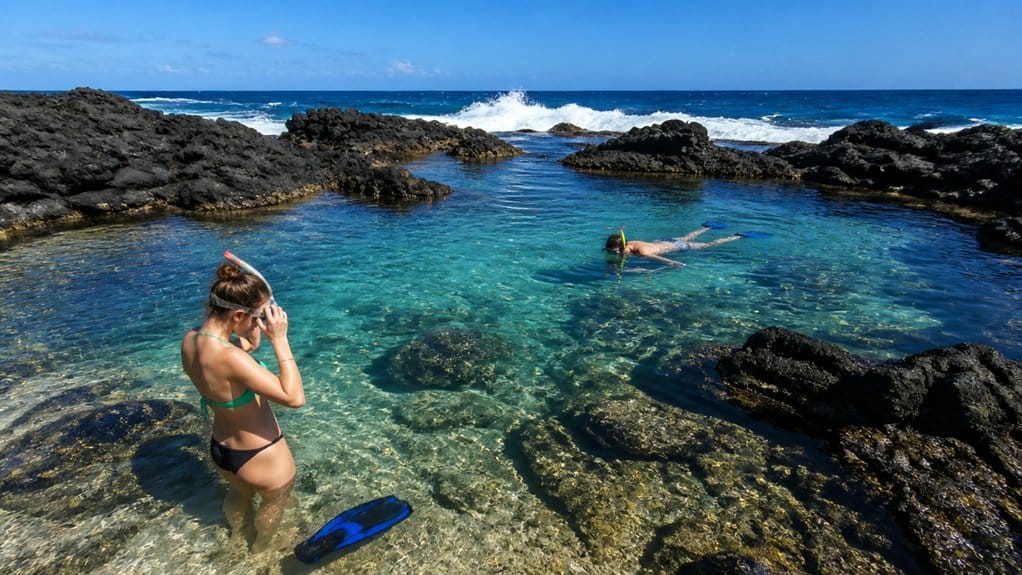
While Sharks Cove looks inviting from every angle, your safest snorkeling stays inside the cove’s natural break, where the water near shore is usually just 2 to 6 feet deep and the rocky edges help block stronger open-ocean push.
- Stay within sight of shore and other snorkelers. In early mornings, the water is calmer and the sheltered pockets are easier to read.
- Use lava rock formations and the tide pool area on the left as simple markers, so you can turn back fast if currents build.
- Don’t swim past the cove mouth. Depths jump to 7 to 16 feet or more, and winter surf can get serious fast.
If you’re unsure, ask local vendors or seasoned snorkelers which sheltered spots in Sharks Cove look best that day. Going solo isn’t clever.
After snorkeling, nearby Haleiwa is a good North Shore stop for food, shops, and other sights.

Waikiki: 2-hour Turtle Canyon Snorkeling Adventure
**Turtle Canyon Snorkel Adventure – Swim with Hawaiian Green Sea Turtles!****Gauranteed****Join us for a **2-hou...

Oahu: Grand Tour Around Island with Snorkeling
Come join on a circle island adventure led by some of Hawaii’s most knowledgeable local guides and experience brea...
Waikiki, Hawaii: Turtle Canyon Snorkel Excursion
Discover the magic of snorkeling with Hawaiian Green Sea Turtles at Waikiki’s famous Turtle Canyon. On this 2-hour...
Respect Fish, Coral, Turtles, and Seals
Once you’ve stayed inside the cove’s calmer water, the next move is simple: give the reef and its residents room to live their lives. At Sharks Cove, you snorkel for a front-row view, not a hands-on encounter. Stay several feet from Hawaiian green sea turtles and monk seals. Don’t touch, feed, or chase them. If you hope to swim with turtles on Oahu, keep the experience passive and let the animal choose where it goes.
Treat the coral reef like living glass. Don’t stand on it, brush it, or kick it with your fins. Watch octopus, eels, parrotfish, butterflyfish, and flashing bigeye schools from a respectful distance. If you corner wildlife, you create stress and invite defensive moves. Use reef-safe sunscreen, then rinse off with fresh water later. Stow food, trash, and plastic securely, and pack out any litter you spot. Your good habits keep this marine district wild.
Frequently Asked Questions
Can Beginners Snorkel at Shark Cove Without a Guide?
Yes, you can snorkel Shark Cove Self Guided if you’re a beginner during calm summer Water Conditions. Use Beginner Equipment, follow Safety Protocols, stay in Shallow Areas, check Visibility Tips, and avoid winter surf, currents, and outer mouth.
Are There Restrooms or Showers Near Shark Cove?
Yes, where there’s a will, there’s a way: you’ll find public restrooms and outdoor showers near Shark Cove. You won’t get changing rooms, portable toilets, or ADA facilities everywhere, but a freshwater rinse is available nearby.
What Items Should I Leave in My Car?
You should leave wallets, phones, cameras, hiking boots, coolers, extra bags, and nonwaterproof electronics in your car. Handle valuables storage securely, stash your emergency kit, avoid sunscreen application inside, and save space for wetsuit drying.
Is There a Best Time of Day for Marine Life Sightings?
Yes, early morning gives you the richest sightings; it’s the ocean’s open curtain. You’ll beat the midday lull, watch tidal influence, moon phase, and seasonal migration; late afternoon can work too, though visibility often softens.
Can Children Safely Snorkel at Shark Cove?
Yes, you can let children snorkel safely there in calm summer conditions if you use child sized gear, assess water confidence, keep strict supervision ratios, choose shallow routes, use life jackets, and practice smart break planning.
Conclusion
Follow these seven steps and you’ll meet Sharks Cove on its best terms. You’ll slip in over sun-warmed rock, hear the fizz of small waves, and find clear water opening like glass over coral heads and darting fish. Start early, watch the forecast, and keep your fins and judgment close. Stay inside the sheltered cove. Give turtles and seals their room. Do that, and your snorkel feels less like a gamble and more like a front-row seat.
Oahu: Cage-Free Shark Swim on the North Shore
Experience the ultimate Oahu shark dive with this North Shore shark tour family. Swim cage‑free with sharks in the crystal‑clear waters off Haleiw...
Oahu Shark Dive on the North Shore
Book the Oahu Shark Dive for a thrilling shark encounter off the North Shore. You’ll travel by boat from Haleiwa H...
Waikiki, Hawaii: Turtle Canyon Snorkel Excursion
Discover the magic of snorkeling with Hawaiian Green Sea Turtles at Waikiki’s famous Turtle Canyon. On this 2-hour...
Oahu's North Shore: 8-Line Zipline Adventure
Experience the ultimate Oahu zipline adventure on this 3-hour guided tour across the island’s famous North Shore...