
More than half a million people hike Manoa Falls each year, yet many arrive in flip-flops and regret it by the first muddy slope. You’ll walk a short 1.6‑mile trail, but it’s slick clay, exposed roots, and post-rain puddles that can swallow a sneaker. Go early before 9 am or late afternoon, bring grippy shoes, quick-dry layers, and insect repellent, and know when heavy rain means you should actually skip this “easy” walk altogether.
Key Takeaways
- Expect a short 1.6-mile round-trip rainforest hike with a canopy-shaded trail ending at Manoa Falls, usually done in under half a day.
- Trail conditions range from uneven rock steps to slick, stair-like mud with exposed roots; sturdy hiking shoes with real tread are strongly recommended.
- November–March is wettest, with the strongest waterfall flow but muddiest, slipperiest trail; summer is drier with thinner falls and slightly easier footing.
- Arrive before 8 am or after 3 pm to avoid peak crowds and a full paid parking lot, and start by 2 pm in winter.
- Check weather radar and official DLNR/Nā Ala Hele updates for closures, heavy rain, or flash flood risk before leaving Waikiki, and turn back if conditions deteriorate.
What the Manoa Falls Trail Is Really Like
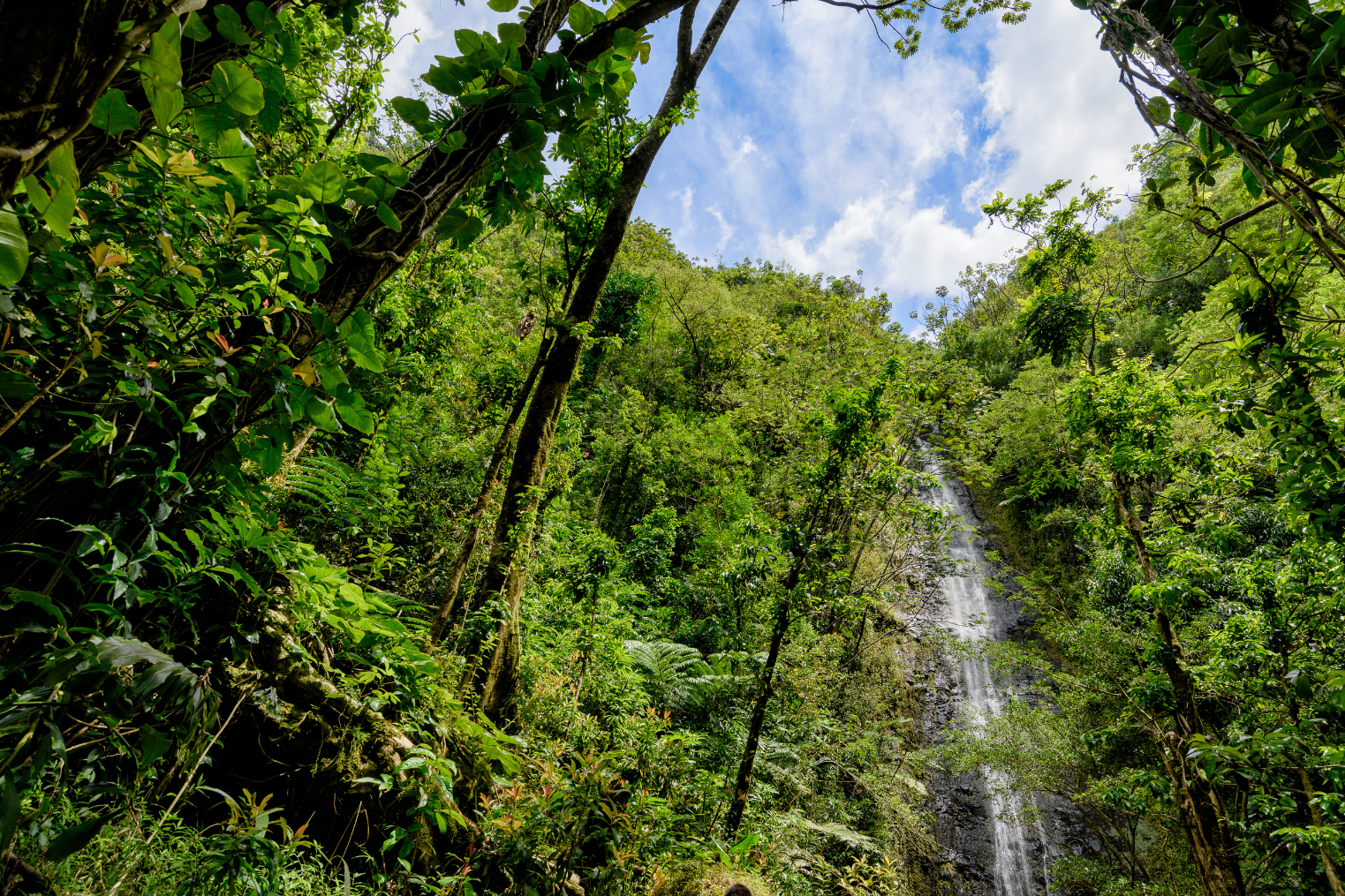
Step onto the Manoa Falls Trail and it feels like you’ve walked straight into a movie set, only this one comes with mud on your shoes and a steady stream of fellow hikers.
Step onto Manoa Falls Trail and you’re on a lush jungle movie set, mud and all
Jungle walls rise beside you, and a thick forest canopy filters the light to a soft green. You hear native birds first, then spot flashes of red and yellow in the branches.
The path itself is short, about 1.6 miles round trip, so you can fit it into a half day from Waikiki. Signs along the way touch on trail history and cultural significance, including old irrigation work that once fed taro patches.
You don’t need a guide, though a Viator shuttle tour can simplify transport. Check bus times before going.
Because this is a shaded, wet valley with standing water nearby, expect mosquitoes year-round and put on repellent before you start the hike.
Current Manoa Falls Conditions: Mud, Roots, and Slips
On most days Manoa Falls feels less like a trail and more like a long, muddy staircase through the forest. You’ll step into damp air, hear water in the distance, and almost immediately hit slippery clay that sticks to your shoes. Soil sits on stone, so rain turns the path into a slick ramp instead of a soft forest floor. Trail maintenance crews have added gravel, rock steps, and some erosion control, but constant storms carve fresh ruts. You’ll notice root exposure along the steeper sections, where thousands of feet have stripped away the top layer of dirt. Move slowly, test each step, and expect your legs and calves to work as hard on the descent as on the climb. Bring light hiking shoes. If you prefer a more controlled path, you might enjoy the scenic drives and gentler walks at Ho’omaluhia Botanical Garden as a contrast to Manoa’s mud and roots.
Manoa Falls Safety, Closures, and When to Skip It
Before you lace up, you’ll want to check current trail closures and any flash flood or rockfall warnings, since Manoa’s lush valley can shut down with little notice. You can confirm official status and conditions through the state’s Nā Ala Hele program and its Hike Pono guidance before heading out.
On the trail, you should turn back if you see closure signs, workers blocking sections, water roaring brown and fast, or mud so slick you’re skating instead of walking.
If conditions look sketchy and you’re short on time, it’s smarter to bail early and rebook a slot or join a well reviewed Viator tour with hotel pickup and flexible, free cancellation.
Current Trail Closures
Although the trail feels remote and lush, Manoa Falls sits in a managed valley where closures and restrictions change more often than most guidebooks admit. You need to check current trail restrictions before you leave Waikiki. Heavy rain, rockfall, or maintenance can trigger sudden full closures, half-day shutdowns, or blocked-off viewpoints. Just like Waimea Valley management, these kinds of protections help balance visitor access with safety and conservation.
Look for ranger updates on the Hawaiʻi DLNR website and social media, then confirm with your hotel desk or a local hiking shop. Volunteer patrols often post signs at the trailhead and may turn you around if you ignore barriers. If you book a Viator tour, your guide usually tracks permits, parking, and any new permit requirements, so you avoid wasted taxi fares and crowded gate drama. Watch for extra closures in winter.
When To Turn Back
Trail closures are one thing; knowing when to turn back is another. On Manoa Falls, you judge with your eyes and ears. If the stream roars louder than your conversation, or rain starts pounding your hood, you call it. Obey turn back signs, even when others cruise past in sandals. Look for nearby exit points near the trailhead and along the paved section, so you’re never guessing in a downpour. Solo hikers should be stricter, since help might be twenty wet minutes away. If you’re short on time or dealing with sketchy weather, compare Manoa Falls or Waimea Falls to see which one fits your day better. If weather feels marginal, book a guided Viator hike with hotel pickup and free cancellation instead. Use this simple grid to decide whether to keep going safely today.
| Condition | Action | Time |
|---|---|---|
| Heavy rain | Turn back | Anytime |
| Slippery mud | Slow down | Daylight |
Weather, Seasons, and Waterfall Flow at Manoa Falls
You’ll feel the weather shift quickly in Manoa Valley, and those changes control how powerful and photogenic the falls look.
In wetter months the trail turns muddier but the waterfall usually thunders, while drier periods bring easier walking yet a thinner ribbon of water.
These seasonal swings mirror Oahu’s pattern of wetter and drier months, with the November–March wet stretch often bringing the splashiest flow but also the messiest, slickest trail conditions.
Before you set out, you’ll want to know which seasons bring the best flow, how sudden rain can raise flash flood and rockfall risk, and when it’s smarter to reschedule or join a guided Viator tour with hotel pickup and flexible cancellation.
Seasonal Rainfall Patterns
On this lush side of Oahu, the weather often flips between bright sun and warm, slanting rain in a single hour, and that rhythm controls what you’ll see at Manoa Falls.
You hike inside a steep, spongey bowl of rainforest, so showers build fast and linger in the canopy.
From November to March, locals casually call it the rainy season, but quick downpours hit all year when trade winds push moist air against the Koʻolau Range.
The stream may look modest at the trailhead, then roar near the viewpoint.
A nearby stream gauge helps officials track sudden spikes, since flash floods do happen.
All this water keeps the valley’s ferns, ginger, and towering bamboo thriving, a real sign of watershed health after big storms.
If you’re timing Manoa Falls with a visit to Pearl Harbor, many travelers use half-day tours from Waikiki so they can fit both into a single, well-organized day.
Best Months For Flow
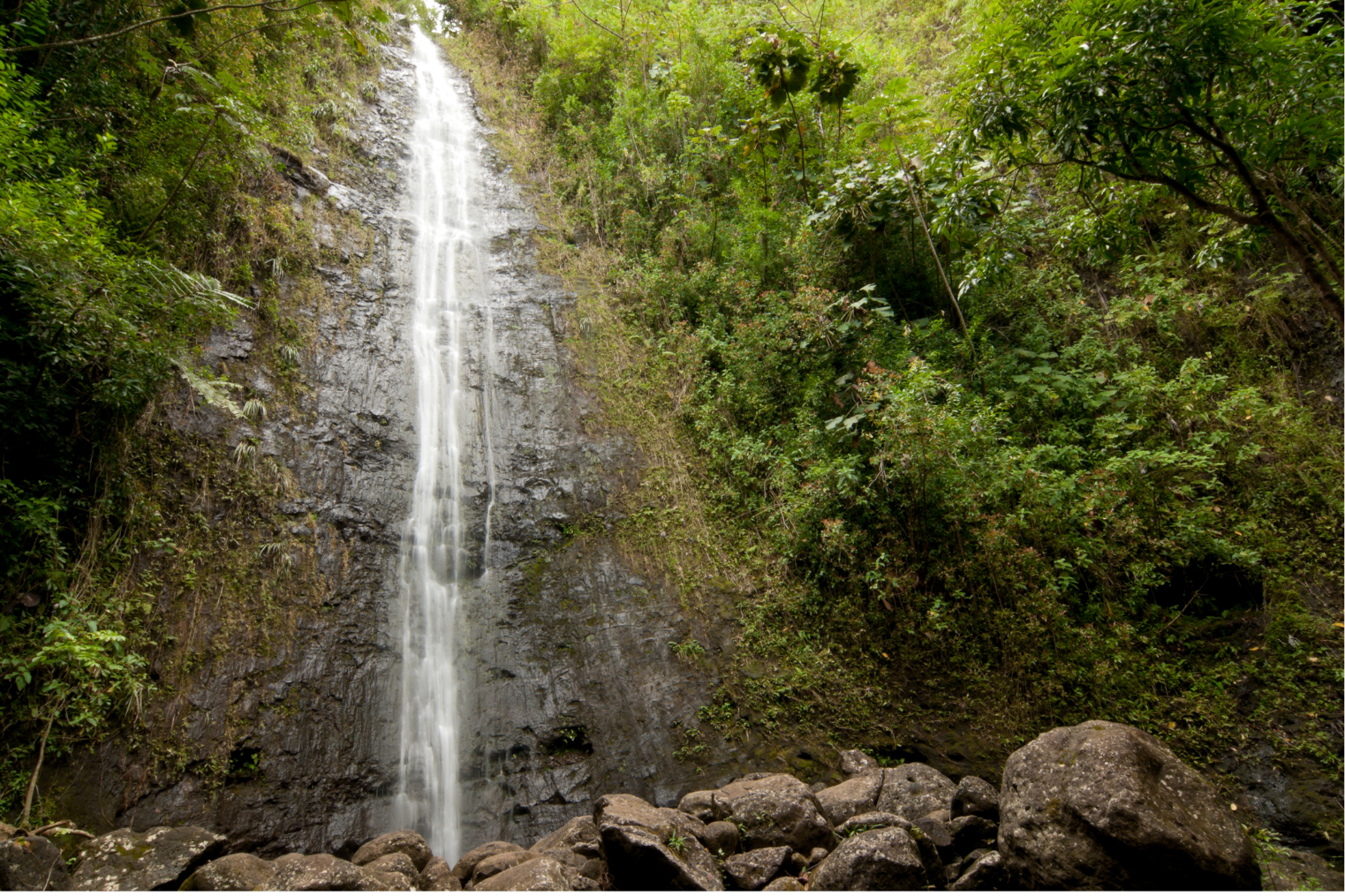
All that year-round rain sets up a big question for your visit: when does Manoa Falls actually look its best? For classic photos with strong flow, target November through March. Winter storms feed the valley, so you often see peak runoff, lush walls, and a wider white curtain. Shoulder months April and October still feel green and damp, yet trails calm a bit. Winter is also prime time for humpback whale sightings offshore around Oahu, especially from January through March.
| Month range | Flow level | Crowd level |
|---|---|---|
| Nov–Mar | Strong | High |
| Apr–Jun | Moderate | Medium |
Summer can surprise you with brief bursts after showers, but longer dry spells shrink the falls to a slender ribbon. If you’re car free, consider a Viator shuttle tour with hotel pickup and flexible, free cancellation. Book morning slots for softer light and slightly cooler, less humid air overall.
Weather Risk And Safety
Although Manoa Valley feels like a gentle rainforest walk, the weather can flip from calm to risky in minutes, so treat this hike with real respect. Show basic storm preparedness and you’ll enjoy the drama without the danger. Check radar before you leave Waikiki and skip the trail if heavy bands sit over the valley. Just as with the popular Diamond Head hike, planning around weather and timing your start can significantly improve both safety and overall experience.
- Watch for flash flooding: if brown water surges, turns noisy, or covers stones, retreat to higher ground and avoid the streambed.
- Expect wind hazards: strong gusts can drop branches; don’t linger under leaning trees.
- Protect trail visibility with a light rain jacket and hat brim that won’t block your eyes.
- In winter, start by 2 pm, carry water, and keep nonessential gadgets zipped away from rain, mud, and slips.
What to Wear and Pack for Manoa Falls
Because Manoa Falls sits in a lush rainforest valley, what you wear can make the difference between a dreamy jungle walk and a soggy slog.
Start with breathable layers that dry fast and resist cling when the humidity spikes.
A light rain jacket or poncho beats an umbrella under low hanging branches.
On your feet, choose trail specific footwear with real grip, not flip flops or smooth trainers, or you’ll skate on the mud.
If you plan to explore other nearby trails with big views, like some of the best hikes near Honolulu, sturdy footwear and quick-dry layers will pull double duty for those outings too.
Pack a small daypack with water, a snack bar, tissues, and a zip bag for your phone.
Toss in insect repellent, reef safe sunscreen, and a tiny first aid kit.
Skip heavy cameras unless you’re serious about photography; your phone usually captures plenty.
Quick drying socks help keep blisters away.
Parking, Crowds, and Best Time to Visit Manoa Falls
Typically, your Manoa Falls experience starts in the small paid parking lot at the trailhead, where spaces fill fast after about 9 am and cost around $7 for cars. You avoid stress by arriving before 8, or after 3, when tour buses thin out and afternoon showers cool the valley. Use simple parking strategies: travel with exact cash, share a car, or consider the bus plus a short walk. If you’re planning other activities around your hike, Honolulu’s Department of Parks and Recreation offers seasonal programs and alerts through its Parks and Recreation Online System.
- Aim for sunrise light and cooler air for fewer hikers.
- Expect heaviest crowd patterns from 9:30 to 1, especially on weekends.
- Skip circling the lot; park downhill in the neighborhood only where signs allow.
- If you hate logistics, book a reviewed Viator shuttle with hotel pickup, free cancellation, and later.
Frequently Asked Questions
Is the Manoa Falls Trail Suitable for Strollers or Wheelchair Users?
No, you shouldn’t treat Manoa Falls trail as wheelchair‑friendly or stroller‑ready; uneven rocks, roots, mud, and narrow sections quickly expose accessible limits and stroller impracticalities, so you’d choose a paved alternative for mobility devices instead.
Are There Cultural or Historical Significances Associated With Manoa Valley and the Falls?
Yes, you discover rich significance here: over 1,000 years of continuous settlement intertwine Hawaiian legends of rain-bringing spirits with Plantation history, so you walk through layered stories of Native agriculture, immigrant labor, and modern conservation.
What Wildlife or Unique Plants Might I See Along the Manoa Falls Trail?
You’ll spot lush endemic ferns, bamboo, and native ohia trees. You might hear Hawaiian honeycreepers, see bright forest birds, and notice snails and insects along the trail, especially after rain when everything feels really alive.
Are Guided Tours of Manoa Falls Available, and Are They Worth It?
Like having a storybook come alive, you can book guided tours with local guides or private tours; you’ll find them worthwhile if you want cultural insights, logistics handled, and a value assessment of your time.
Can I Combine Manoa Falls With Nearby Hikes or Attractions in the Same Day?
Yes, you can easily combine Manoa Falls with nearby attractions in one day. Hike early, then drive to Diamond Head for coastal views and finish at the Waikiki Aquarium or beach stroll for a relaxed evening and food along Waikiki.
Conclusion
Manoa Falls rewards you if you show up prepared. Time your hike for early morning or late afternoon, grab sturdy shoes, and expect slick roots and mud. Skip white sneakers. Pack water, insect repellent, and a light rain shell, then check trail alerts before you go. The waterfall might not roar like a movie set, yet the green valley, birdsong, and cool mist feel like Hawaii turning its quiet face toward you at the end.
