If you visit Oahu between mid‑December and March, you’ve got a real shot at seeing humpbacks tail‑slap just offshore, especially on calm early mornings. You might spot them for free from Makapuʻu or Halona, or pay $80–$150 for a small‑group catamaran with a naturalist, hydrophone, and hotel pickup booked through Viator’s verified reviews. The trick is picking the right coast, time of day, and tour style for how close you want to get.
Key Takeaways
- Peak whale season on Oahu runs mid-December through March, with the most consistent, dramatic humpback activity from mid-January to early March.
- Early-morning tours (before 8 am) offer calmer seas, better visibility, fewer crowds, and higher-quality whale watching than windy, choppier afternoons.
- Top free shore lookouts include Makapuʻu Point Lighthouse Trail, Halona Blowhole, Lanai Lookout, and Kaʻena Point for scanning blows, breaches, and tail slaps.
- Typical boat tours cost about $90–$150 for 2–3 hours on stable catamarans or smaller rafts, often with naturalist guides and onboard hydrophones.
- Choose eco-certified operators that follow distance rules, avoid chasing whales, limit passenger numbers, and emphasize education and responsible wildlife viewing.
Best Time of Year for Oahu Whale Watching
Usually, the best time to see humpback whales off Oahu is from mid-December through March, when thousands of whales migrate down from Alaska to breed and give birth in Hawaii’s warmer waters. You’re visiting in peak winter migration, so expect regular sightings on boat trips and from shoreline lookouts. For the most consistent encounters, many locals and researchers point to mid-January through early March as the sweet spot within the broader season. January and February feel most reliable, with more adults displaying dramatic breeding behavior and playful calves. These months also bring higher tour prices, around $80 to $150, and fuller boats, so you should book early.
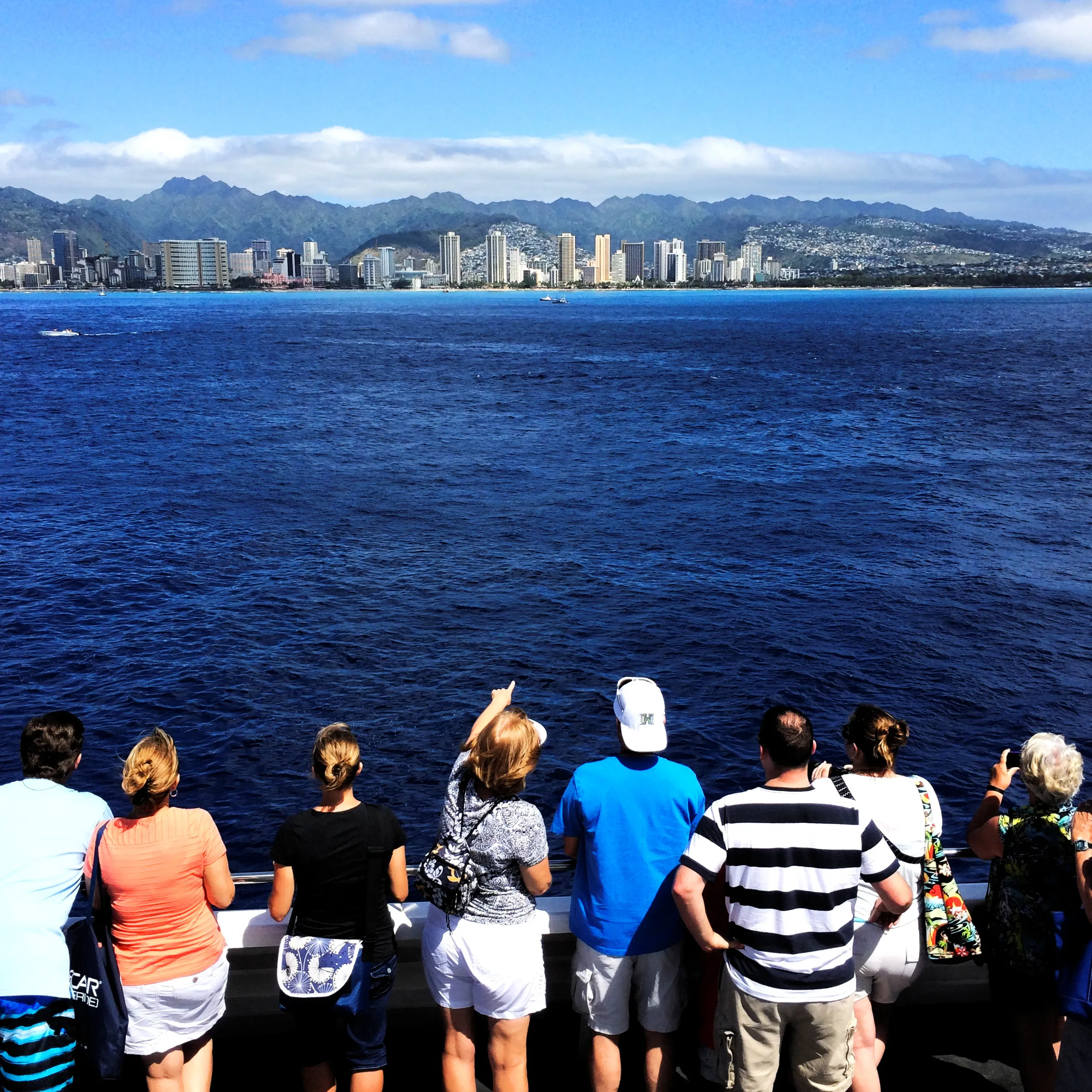
Prime humpback whale season off Oahu runs mid-December to March, bringing frequent sightings from both whale-watching boats and coastal lookouts
Consider Viator tours for verified reviews, hotel pickup, free cancellation, and reserve now pay later. Scientists use acoustic monitoring to track whales across the calving grounds, and you’ll often hear their eerie songs through onboard hydrophones.
Pack binoculars; skip drones.
Best Time of Day and Weather for Oahu Whale Watching
You already know winter is prime whale season on Oahu, but the hour you head out and the weather you sail into can make or break your sightings.
Early mornings win. Light winds keep the sea calmer for clear morning glassing, and the low sun helps you spot blows and tails.
By late morning, trade winds roughen the surface and whales get harder to track. Cloud cover is fine, but heavy rain cuts visibility and comfort, so check weather patterns before you book. For especially calm seas and easier photography, look for morning departures during the core January–March peak.
- Aim for tours leaving before 8 am for smoother water and fewer crowds.
- Pack a light jacket, hat, and reef-safe sunscreen; mornings can feel cool offshore.
- Skip days with strong wind advisories, since boats ride rough and spotting suffers.
- Bring binoculars.
Oahu’s Windward vs. Leeward Coasts for Whale Watching
From Oahu’s shores, whale season feels very different on the windward and leeward coasts, and where you go shapes your whole day.
The windward side faces the open Pacific, so you’ll feel more breeze, rougher water, and a wilder mood. It fits slow drives, picnic stops, and soaking up Windward traditions before scanning the ocean.
The leeward side sits in Oahu’s rain shadow, with calmer seas, hotter sun, and resort energy driven by Leeward development. You’ll find more sunset-focused cruises here, often with bar service and higher prices.
Families usually like leeward predictability. DIY spotters often prefer windward space and lower costs. For a different ocean adventure on the Windward side, you can also explore the Kaneohe Sandbar tour where conditions and timing matter just as much as they do for whale watching.
If you want a structured outing, Viator whale-watching cruises offer verified reviews, hotel pickup, and free cancellation, plus reserve now, pay later.
Still comparing Oahu Whale Watching?
Ask for tour ideas, hotel suggestions, or a simple trip plan that combines both.
Trip Helper
Best Oahu Shore Lookouts for Spotting Whales
Although whale cruises get most of the attention, some of Oahu’s best sightings happen from land at a handful of high, open lookouts.
Start at Makapuʻu Point Lighthouse Trail, where you gain height quickly and scan deep blue channels.
Hit the railings by Halona Blowhole and Lanai Lookout for close, foamy action and moody coastal photography.
For a wilder feel, hike late afternoon to Kaʻena Point and watch for flukes against sunset light.
- Arrive just after sunrise or two hours before dusk, when glare softens.
- Bring binoculars, a light jacket, water, and patience.
- Skip parking illegally; fines easily ruin the day.
- Listen for locals sharing moʻolelo; it adds cultural storytelling to each breach.
Pack a tripod if you love sharp, zoomed whale shots today.
Winter visitors should bring binoculars to Makapuʻu, where whale season typically runs from November through April with peak sightings January through March.
Oahu Whale Watching: Shore vs. Boat Tours
After scanning the channels from Makapuʻu or Kaʻena Point, the big question becomes whether to stick to shore or book a whale watching boat.
From land, you spend nothing, stay flexible, and can linger with a coffee as long swells roll past. Follow shore etiquette: keep noise low, avoid blocking others’ tripods, and park only in marked spots. Pack light binoculars; steady your elbows on a rock for clearer views. Since Oahu in winter brings cooler trade winds and more whales close to shore, patient spotters often enjoy frequent sightings from these lookouts.
Boat tours get you closer, sometimes within a few hundred yards of breaching whales and spinning dolphins.
Expect motion, sea spray, and prices from about $90 per adult for two to three hours. Online platforms like Viator help you compare departure times, read verified reviews, and lock in hotel pickup. Most trips include snacks.
How to Choose an Oahu Whale Watching Tour
When you start comparing Oahu whale watching tours, you’ll want to size up the boat first, from nimble rafts that skim close to the water to larger catamarans with shade, restrooms, and calmer rides. Since mid‑winter brings cooler temps, passing showers, and slightly rougher north shore swells, many visitors time their tours around Oahu in February when whale activity and tour options are both at their peak.
Next, look at tour length and timing, aiming for morning departures in peak season, when seas are smoother, light is softer, and sightings tend to increase.
Finally, stick to eco-certified or clearly conservation‑minded operators, and use platforms like Viator to filter for top‑rated, small‑group tours with free cancellation and hotel pickup so you’re not wasting time or money.
Choosing the Right Vessel
Choosing the right boat can make the difference between a choppy blur of tails and a calm, close-up encounter with humpbacks.
On Oahu, start by thinking about your comfort level and how close you want to be to the water. Small charters feel intimate and flexible, with fewer people crowding the rail, although motion can feel stronger. Larger luxury catamarans glide more steadily, add shaded seating, upgraded restrooms, and often a bar. For extra comfort and amenities, many travelers look for whale watching tours that also rank among Oahu’s top cruises, snorkel boats, and sunset trips.
Consider:
- Check group size limits so you’re not packed shoulder to shoulder along the rail.
- Look for naturalist guides and hydrophones for richer whale behavior insight.
- Compare deck space, shade, and seating versus standing room only layouts.
- Use Viator for verified reviews, hotel pickup, and easy, flexible booking options and free cancellation.
Tour Length And Timing
Long before you step on board, the length and timing of your whale watch will shape almost everything about your experience.
Two hour trips suit first timers and kids; you get open ocean views and likely sightings without testing anyone’s patience. Three to four hours let you reach quieter waters and linger with a pod. Aim for morning departures for calmer seas, softer light, and smaller crowds. During peak season, some operators align their schedules with Sanctuary Ocean Count days, when coordinated sightings around the islands highlight just how many whales use these waters.
Afternoons can still deliver breaching shows, but winds rise and motion sickness hits harder. Try to avoid the midday lull, when heat builds and whales often sound deeper.
If you’re car free, look for tours on Viator with hotel pickup, verified reviews, free cancellation, and reserve now pay later. Bring a jacket, reef safe sunscreen, and water.
Eco-Friendly Operators Only
Before you click “book now,” focus on tours that treat humpbacks like honored guests, not floating attractions. Look for small boats, slow speeds near whales, and crews who talk more about behavior than selfies. Ask operators how they follow federal distance rules and what training guides receive.
Check websites for sustainable tour certifications and clear wildlife guidelines. Responsible outfits often limit passengers, skip loud music, and use quieter engines or sails. In Hawaiʻi, that same respect helps protect vulnerable species like sea turtles in Hawaiʻi, which face threats from fishing gear, marine debris, and human disturbance.
- Choose companies that publish whale-watching rules and actual sighting data.
- Ask if they support carbon offset programs or local research groups.
- Skip tours that chase animals, feed wildlife, or promise “guaranteed touching.”
- Use Viator for vetted options with verified reviews, hotel pickup, free cancellation, and reserve now pay later.
What to Expect on an Oahu Whale Watching Trip
On a typical Oahu whale watching trip, you’ll check in at the harbor 30–45 minutes before departure, board a mid-size catamaran or power boat, and spend 2–3 hours tracing the coastline in search of blowing spouts and breaching tails. You can expect close yet respectful views of humpbacks, plus bonus sightings of spinner dolphins, sea turtles, and soaring seabirds, all with guides calling out behavior so you actually know what you’re seeing. Because humpbacks are most active off Oahu from January–March, planning your boat tour in this window gives you the best odds of frequent sightings and dramatic surface displays. Onboard, you’ll find shaded seating, railings, life jackets, and often light snacks, though you should still bring water, sun protection, a light windbreaker, and skip bulky bags that clutter the deck.
Typical Tour Itinerary
Although each operator adds its own twist, a typical Oahu whale watching trip follows a simple, relaxed rhythm you can plan around.
You’ll check in at the harbor 30 to 45 minutes before departure, pay any balance, and pick up motion‑sickness tablets if you need them.
After a short safety briefing, you’ll cruise out for 2 to 3 hours, with crew explaining humpback seasonal behaviors and sharing guest testimonials to keep things real.
Because mornings usually have calmer ocean conditions, early departures tend to be more comfortable and better for photos.
Expect basic snacks, shaded seating, and plenty of time for photos.
Back at the dock, you’re free within 15 minutes, which makes morning trips easy to pair with a beach afternoon.
- Arrive early for parking
- Bring light jacket and sunscreen
- Skip heavy breakfast
- Book via Viator for verified reviews and pickup
Wildlife Encounters Highlights
Once the boat clears the harbor and Honolulu slips behind you, the real show starts out on the open water.
Early in the season you might scan the horizon, then suddenly a dark dorsal fin cuts the swells. Peak months bring frequent breaching behavior, the full body slam that everyone quietly hopes for. You often see mothers and playful calf interactions a bit closer to shore, so keep binoculars handy. Long pauses can mean surface logging, when whales rest like giant driftwood. Bring a light jacket, polarized sunglasses, and a zoom lens instead of a drone. Crowds thin on weekday mornings. Viator tours help with hotel pickup, verified reviews, free cancellation, and reserve now pay later logistics. Skip huge telephoto gear; boats approach responsibly. For the most consistent sightings, plan your trip during the January–March peak whale‑watching window on Oahu.
Onboard Comfort And Safety
Before your captain throttles up, you’ll get a quick safety briefing that sets the tone for a relaxed, low‑stress trip.
Crew show you life jackets, railings, and how to move around when the swell picks up.
You’ll find sturdy benches, decent seat ergonomics, and usually shaded areas to dodge the noon glare.
Morning cruises feel cooler and calmer, so pick those if you get seasick.
To stay comfortable and safe, keep a few habits in mind:
- Wear non‑slip sandals or sneakers; skip flip‑flops on wet decks.
- Pack a light windbreaker and reef‑safe sunscreen; Oahu’s breeze surprises.
- Secure phones and small bags, and follow crew directions during turns.
- Notice lighting ambiance on sunset trips so you move safely between seats, even when the boat rocks.
Before or after your cruise, you can also check Beach and Ocean Alerts from Honolulu’s Ocean Safety Department to stay informed about unusual ocean conditions and nearby public hazards.
How to Watch Whales Responsibly on Oahu (And What to Pack)
For a front‑row seat to Oahu’s humpback show that’s good for both you and the whales, you’ll need a mix of smart choices and a light but intentional packing list.
For Oahu’s humpback show, pair ocean‑friendly choices with a thoughtful, keep‑it‑light whale‑watch packing list
Respect distance rules, never ask the captain to edge closer, and skip any operator that cuts across a whale’s path. Remember that federal rules require staying at least 100 yards from humpback whales in Hawaiʻi, whether you’re on a boat or on a board.
Build a simple packing checklist: reef-safe sunscreen, windproof layer, hat with a chin strap, water, and dry bag for camera gear.
For ethical photography, zoom with your lens, not the boat, avoid flash, and keep drones grounded near marine mammals.
If you book a Viator tour, use filters for top verified reviews, free cancellation, and hotel pickup so you’re not driving sleepy before sunrise departures.
That way you support science, safety, and island oceans.
Frequently Asked Questions
Is Oahu Whale Watching Suitable for Young Children or Non-Swimmers?
Yes, you can bring young children and non-swimmers, journeying like cautious sailors on a gentle sea; choose calm-day tours, prioritize child friendly viewing decks, confirm life jacket options, and stay near guides who reassure hearts.
Are Whale Watching Tours on Oahu Wheelchair Accessible or Mobility-Friendly?
Many Oahu whale watching tours offer wheelchair access, but options vary. You should confirm ramp boarding, accessible restrooms, space for mobility aids, companion seating, and transfer assistance when booking so staff can accommodate your needs.
How Can I Prevent or Manage Seasickness on an Oahu Whale Cruise?
You manage seasickness by planning motion sickness prevention strategies: eat light, hydrate, pick midship seating, and use ginger or acupressure bands as natural remedies; even a VR gramophone couldn’t beat air, horizon-gazing, and onboard comforts.
What Camera Settings Work Best for Photographing Humpback Whales From Oahu?
Use a fast shutter around 1/1000s, continuous autofocus, and burst mode; pair a long lens (200–400mm) with mid-range aperture f/8–f/11, auto-ISO, and image stabilization, and track whales early, anticipating breaches for sharper, dramatic action shots.
Can I Combine Whale Watching With Snorkeling or Dolphin Tours on the Same Trip?
You can absolutely combine whale watching with a snorkel combo or dolphin tour; picture testing the theory that one ocean day can feel like three adventures, while you respect dolphin etiquette and seasonal whale‑watching rules.
Conclusion
On Oahu, whale season can hijack your whole trip in the best way. Aim for a dawn boat in January or February, book ahead on Viator for vetted guides, hotel pickup, free cancellation, and skip the pier hawkers. Pack a light jacket, reef safe sunscreen, and motion pills. Bring patience too; thirty quiet minutes can explode into tail slaps, calf breaches, and a memory that makes every other beach day feel a bit ordinary afterward.