Most visitors don’t realize Waikiki’s best certified dives often happen in just 30 to 40 feet of water, where you get long bottom time and surprisingly busy reefs. You can drift over Koko Craters’ sandy bowls, spot turtles at cleaning stations, and still make it back to the boat before your tank feels rushed. Add small-group charters and easy departures from town, and the real question becomes which reef fits you best.
Key Takeaways
- Koko Craters is a top shallow Waikiki reef dive, around 40 feet, with sandy bowls, coral edges, turtles, and bright reef fish.
- Angler’s Reef and Pawa’a are excellent certified diver options near Waikiki, offering easy reef scenery, coral heads, and lively marine life.
- Best certified trips are usually two-tank boat dives lasting three to four hours, often departing from central Waikiki or Kewalo Basin Harbor.
- Certified divers wanting more bottom time should choose two shallow reef sites, typically 40 feet or less, instead of deeper wreck-focused schedules.
- Reef-and-wreck combo trips pair sites like Sea Tiger or YO-257 with a shallow reef for variety without taking half a day.
What Are the Best Waikiki Reef Dives?
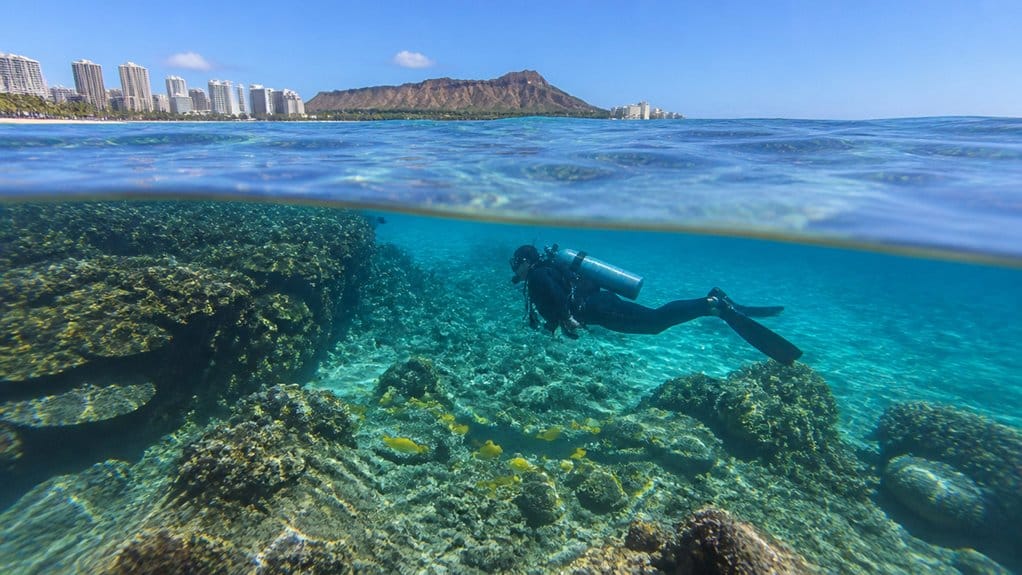
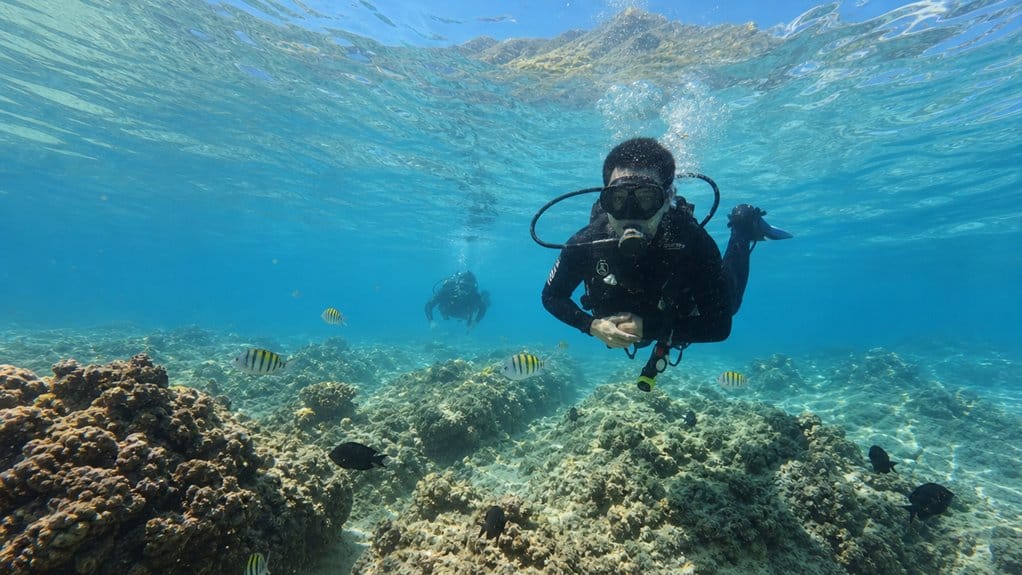
Where should you start if you want the best Waikiki reef dive? Begin with Koko Craters, a standout Waikiki Dive where sandy bowls and coral edges sit in shallow water around 40 feet. You’ll often spot green sea turtles cruising in for a cleaning stop, plus bright reef fish flickering through the blue.
Angler’s Reef and Pawa’a also rank high if you want easy reef scenery and lively marine life close to Waikiki. Like the best snorkeling spots on Oahu, these sites are especially appealing for divers who want approachable conditions and good visibility. On especially calm days, clear water can make these shallow reef sites even better for spotting turtles and reef fish. The best tours usually run as two-tank boat trips lasting three to four hours. Many leave from central Waikiki and include rental SCUBA gear, which keeps planning simple. Some operators also pair the outing with a cocktail open bar option after the dive for a more relaxed Waikiki-style finish. Look for operators with small groups, often six divers per guide, so you can actually follow the action instead of playing underwater traffic cop with fins and bubbles everywhere nearby.
Which Reef Dives Suit Your Skill Level?
You’ll have the best time near Waikiki when you match the reef to your comfort in the water, from easy shallow options like Koko Craters at about 40 feet to trips with more depth or current. If you’re new or training, pick a small-group intro reef session with instruction first, calm coral, and a good chance of spotting turtles cruising by like they own the place. If you’ve got more experience, you can start looking at intermediate depth and drift conditions or even a 2-tank wreck-and-reef trip that adds sites like Sea Tiger or YO-257 to the plan.
Beginner-Friendly Reef Options
A good beginner reef dive near Waikiki starts with honest comfort in the water and the right trip format. If you’ve got basic scuba control, book a Guided Shallow Dive led by a certified instructor. Beginner divers do best on reef dives with small groups, so you can get quick help with buoyancy and stay relaxed. Oahu also offers several scuba certification courses that help new divers build confidence before booking reef trips.
Look for max depths around 40 feet. Koko Craters gives you a sandy bottom and a turtle cleaning station where Hawaiian green sea turtles glide past like regulars. Angler’s Reef is another easy pick, with coral heads and the chance to spot octopuses tucked into cracks. If you’re certified, choose two shallow reef boat dives or a 2-tank certified trip. You’ll still keep things simple while watching turtles, rays, and bright reef fish nearby. In winter, whale watching is another popular Oahu ocean activity for visitors who want to mix diving with seasonal wildlife experiences. For divers traveling with friends or family, private boat charters can also make it easier to keep the group together on a flexible Waikiki outing.
Intermediate Depth And Drift
Once you’re ready to move past the easiest reefs, step up to sites that top out around 40 feet and ask for cleaner buoyancy and calmer finning. On a reef boat dive, you’ll feel the difference fast. These Dive sites reward steadier trim and a relaxed kick. At Koko Craters, sandy bottom and turtle cleaning station visits keep training practical and memorable. Angler’s Reef adds mild drift energy, plus octopus and spotted eagle rays if luck smiles. Pawa’a tests your positioning around ledges without pushing you deep. Before booking, confirm your guide’s plan so you stay near 40 feet, not on deeper wrecks.
| Site | Feeling |
|---|---|
| Koko Craters | Calm focus |
| Angler’s Reef | Excited curiosity |
| Pawa’a | Quiet precision |
| Mild drift | Alert fun |
Still comparing Turtle Canyon And Waikiki Turtle Snorkeling?
Ask for tour ideas, hotel suggestions, or a simple trip plan that combines both.
Trip Helper
Advanced Site Selection
If your logbook says “certified” but your comfort level still leans shallow, pick reef dives that truly match your skills instead of chasing the flashiest boat schedule. For smart advanced site selection, start with guided shallow reefs like Koko Craters or Angler’s Reef, where max depth sits near 40 feet and sightings can include turtles, octopus, and spotted eagle rays. Much like a guided snorkel at Hanauma Bay helps visitors choose conditions and routes that match their experience, a guided shallow reef dive can make site selection easier and safer for certified divers easing into Oahu diving.
When you want more variety on a Honolulu scuba trip, book a Wreck & Reef two tank plan linking Sea Tiger or YO-257 with a calmer reef stop. Similar to Plan Your Visit advice that breaks preparation into simple steps, comparing depth, currents, and surface conditions before booking helps certified divers choose the right reef itinerary. If a boat lists Deep Wreck/Shallow Reef, treat the wreck depth as the real test and ask about nitrox. For stronger divers, night or pelagic style formats add navigation challenges. Also confirm split groups, and whether deep segments require dive computers for everyone onboard.
Why Dive Waikiki’s South Shore Reefs?
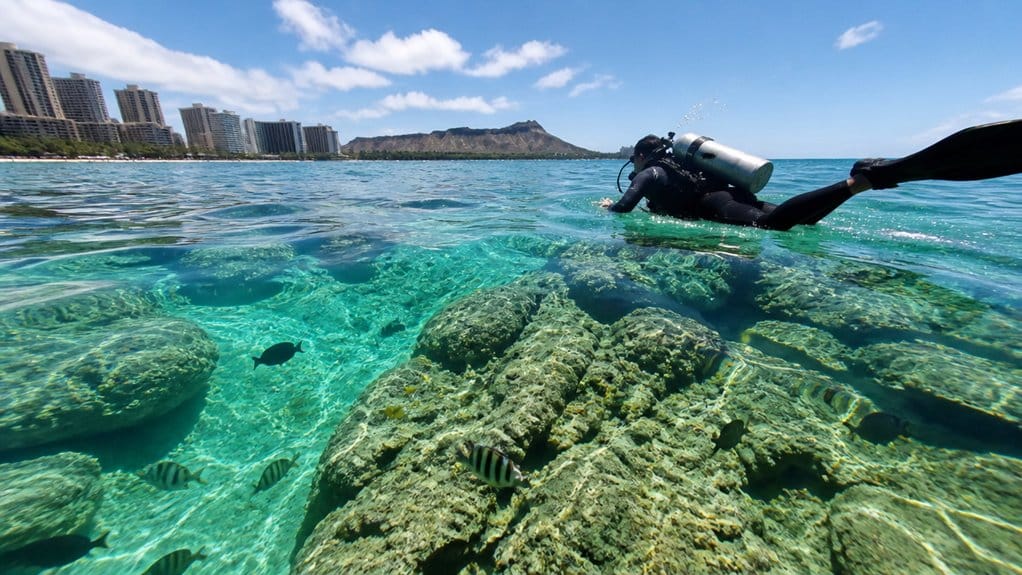
Because Waikiki’s South Shore reefs keep things shallow and lively, you can spend less time managing depth and more time watching the show unfold. On a South Shore Reef trip, you’ll often hover around 40 feet or less, where coral, reef fish, and green sea turtles keep your attention busy. Among the best places to spot sea turtles around Oahu, Waikiki’s nearby reef systems stand out for easy, reliable encounters.
You also get easy planning. Many operators run guided two-dive outings that last about three to four hours, with gear and tanks included and no surprise charges. Small groups, often just six divers per instructor or Dive Master, make the experience feel calm and personal. That setup lets you focus on the crunch of coral below, flashes of rays in blue water, and the chance that an octopus or turtle will casually steal the scene. Not bad for a half day. Remember to keep a respectful distance during any turtle encounter, since these protected animals are best enjoyed without disturbance. Some nearby water tours even build their reputation around turtles guaranteed, which shows how reliably Waikiki-area marine life delivers memorable encounters.
Best Shallow Reef Dives for Certified Divers
If you want an easy certified boat trip near Waikiki, choose a 3 to 4 hour shallow reef outing with two shallow reef sites, since you’ll usually get more bottom time and two different coral scenes. You might cruise over to places like Koko Craters or Angler’s Reef, where green sea turtles circle through cleaning stations and reef fish, octopus, and even spotted eagle rays can turn a calm morning into a great story. Most guided trips include rental scuba gear, so you can keep things simple, skip the pre-trip drinks, and focus on the reef instead of your checklist. For certified divers comparing options, a two-tank dive usually means choosing between shallow reef exploration and a deeper wreck adventure on Oahu.
Top Reef Sites
While Waikiki is famous for deep wrecks, its best shallow reef dives give certified divers a different kind of thrill. You can explore shallow reefs that stay around 40 feet and still feel packed with life. Koko Craters stands out as a sandy cleaning station where Hawaiian green sea turtles cruise in like regulars at their favorite spa. Many divers also compare these reefs with Oahu turtle spots known for reliable sea turtle encounters while snorkeling. Oahu is also home to turtle beaches that are well known for frequent green sea turtle sightings from shore. Pawa’a adds variety with a ledge that connects into the Koko Craters zone, so you can trace reef habitat and turtle activity in one dive. Angler’s Reef offers a different mood. You’ll scan coral heads for octopuses and keep an eye on the blue for spotted eagle rays. Calm summer mornings often bring clear snorkeling conditions similar to the visibility patterns seen at other protected Oahu beaches. Turtle Canyon often gets the attention, but these Waikiki-adjacent reefs reward you with turtles, rays, and bright reef fish without making the day all about wrecks alone.
Guided Certified Trips
Book a guided certified trip that mixes a deep wreck with a shallow reef, and you’ll get the best of Waikiki in one tidy 3 to 4 hour window. A classic 2 tank Wreck Dive lets you descend on Sea Tiger or YO-257, then drift over coral heads in warm Open Water alive with motion. Many operators market these as two-tank options for certified divers exploring Oahu’s South Shore.
- Pick a daily South Shore 2 tank wreck and reef run.
- Choose a small group, often 6 divers per guide.
- Check if two tanks, gear, and Kewalo Basin transport are included.
- Ask for turtle cleaning stations, octopus spots, and eagle ray passes.
You’ll want that guided reef portion. Your divemaster can fine tune buoyancy and navigation while you watch turtles hover like regulars at a spa. Koko Craters stays around 40 feet, which leaves room for long, lively shallow time.
Best Beginner Reef Dives Near Waikiki
For a first ocean dive near Waikiki, shallow reef trips keep things friendly and full of life. A Discover Scuba Diving experience usually runs 3 to 4 hours on a 2-tank boat, with morning or afternoon departures from Waikiki. You’ll practice buoyancy and simple navigation, then follow your guide over coral gardens, reef fish, and maybe a green sea turtle. Many tours are designed as beginner-friendly introductions to scuba in Honolulu. These trips often include basic scuba training before you enter the water.
Many visitors compare a few Dive Shop Oahu options before booking to find the best beginner-friendly reef trip.
| Feature | What to expect | Why it helps |
|---|---|---|
| Depth | Around 40 ft or less | Easier comfort |
| Site | Koko Craters reef | Turtle cleaning station |
| Timing | Arrive 15 minutes early | Smooth check-in |
Choose a shallow reef dive built for beginners, not certified groups. Many operators welcome ages 10 and up, so your first descent feels manageable, colorful, and surprisingly calm too.
Best Reef-and-Wreck Combo Dives Near Waikiki

If you want two very different underwater moods in one outing, a reef-and-wreck combo off Waikiki’s South Shore delivers exactly that. You’ll drop onto a classic wreck like the Sea Tiger’ Wreck or YO-257, then shift to a shallow reef alive with turtles, rays, and bright reef fish. It’s a smart Scuba Diving Adventure for certified divers who want contrast without losing half a day. For a gentler topside contrast on another day, Ocean Voyage at Kualoa Ranch offers an easy scenic coastal experience.
- Pick a 2 Tank Wreck and Reef boat dive
- Try a Morning Dive, deep wreck then shallow reef
- Expect premium gear and two tanks included
- Enjoy small groups, often six divers per guide
You get steel hull shadows first, then sunlit coral gardens. That wreck-first rhythm works beautifully, and it keeps the second dive relaxed, scenic, and full of easy surprises. Oahu also offers submarine tours for travelers who want another way to experience the island’s underwater world without diving. If you are also comparing ocean outings on Oahu, it helps to know that shared or private charters are a common choice for Honolulu deep sea fishing.
Dive Oahu vs Other Waikiki Operators
Once you’ve had your wreck-and-reef fix, the next question is simple: which Waikiki operator fits your style best? If you want a big, proven dive center on oahu, Dive Oahu stands out fast. You get 25-plus years of history, PADI-licensed insured instructors, and a shelf of awards that smaller outfits can’t always match.
For certified divers, that often means smoother shallow-reef planning near Waikiki. Dive Oahu leans into guided two-dive trips, reef sessions, modern boats, and gear that feels current instead of tired. Travelers also weighing a snorkel cruise may compare Ko Olina and Waikiki based on location and overall trip style. The logistics help too. Free transportation from Kewalo Basin Harbor cuts hassle before you even hit the water. Safety details feel concrete, not vague. Their boats carry oxygen and emergency radio beacons, with USCG-coordinated vessel checks. Some travelers planning a full island activity lineup may also compare a rum tasting experience before or after their dive day. Some rivals may feel more DIY. Travelers comparing ocean activities across the island often also research jet ski tours in Oahu before deciding how to spend a Waikiki day.
What Marine Life Can You See?
On Waikiki’s shallow reefs, you’ll often spot green sea turtles cruising over sandy patches and reef fish flashing through coral gardens in clear, lively water. These reefs are known for clear water and generally calm conditions that make marine life easier to spot. You might also catch eagle rays gliding past, and on the right day, you can even see sharks or a Hawaiian monk seal that seems far too calm about stealing the scene. What you see changes with the site and conditions, but these trips are built around memorable encounters with turtles, rays, and busy reef life. Keep a 10-foot distance from turtles and avoid chasing or diving down toward them, since respectful viewing helps protect both the animals and the experience.
Reef Fish And Turtles
Beneath Waikiki’s easy blue surface, the shallow reefs give you the kind of marine-life mix that keeps your mask pointed in every direction. On waikiki shallow reef dives, reef fish and turtles share the same busy coral neighborhoods, so every fin kick can reveal something new.
- Green sea turtles cruise cleaning stations near Koko Craters in about 40 feet.
- Colorful reef fish gather over coral gardens around Turtle Canyon and nearby reef zones.
- You might spot rare Hawaiian species mixed into schools flashing over the reef.
- Even on wreck-adjacent shallow routes, turtles, eels, and octopus still work these habitats.
Expect steady action rather than one big moment. You’ll scan coral heads, sandy patches, and ledges, then suddenly notice green sea turtles gliding past like calm regulars who know the route. Turtle Canyon is also known for non-swimmers and beginners because of its calmer, approachable reef experience. Before entering, always check currents and conditions so reef viewing stays comfortable and safe. When you encounter green sea turtles, keep a respectful distance and avoid touching or chasing them so these reef encounters stay safe for both divers and wildlife.
Rays, Sharks, And Seals
If your timing lines up, Waikiki’s shallow reef dives can add a bigger cast to the usual turtles and reef fish, with spotted eagle rays winging over the sand and white tip reef sharks resting near wreck and reef edges like Baby Barge.
On the same reef dive, you might peer into coral gardens and find octopus, moray eels, and schools of Hawaiian fish flashing by. Some operators also log monk seal encounters, so ask for each site’s animal history before you book. If you’re hoping for rays and seals, shallow reef routes give you the best odds. During whale season, you may even hear humpbacks booming in the blue like a giant sea bass with better rhythm. Keep your eyes on the sand channels, and don’t rush. The ocean often rewards patient divers there. At Shark Cove, summer usually brings the calmest conditions, which is why that season is best for snorkeling and easy reef spotting.
On Oʻahu’s North Shore, places like Sharks Cove can add reef life around Three Tables, where shallow coral habitat and nearby ledges attract fish, eels, and other common marine encounters in calm summer conditions. If you explore in summer, follow 7 safety steps for Shark Cove, since calm conditions are the best time for snorkeling there.
How Much Do Waikiki Reef Dives Cost?
A certified reef dive near Waikiki usually starts around $145 for a two-shallow-reef trip, which gets you a solid half day on the water without blowing up your vacation budget. That price usually covers a 3 to 4 hour Dive and gives you classic Reef scenery, warm blue water, and a Great experience. If you also enjoy surface exploration, planning a separate stop for Shark’s Cove snorkeling can round out your North Shore water time nicely.
- Two-shallow-reef trips start from about $145
- Beginner-style four-hour options start around $299 per adult
- Two-tank wreck and reef charters often start near $225
- Discover Scuba deals can dip to about $141.10
You’ll notice prices shift by tour style, date, and whether you book a fully certified outing or a beginner session. If you’re already certified, compare the common two-tank formats first. That’s often the sweet spot for value in Waikiki.
What’s Included on Waikiki Dive Charters?
Once you’ve compared prices, the next question is simple: what do you actually get on a Waikiki charter? Usually, Gear is included, and you’ll get two tanks on a four-hour trip. That means less packing and more time thinking about reef fish instead of buckles and straps.
You’ll also get a boat ride out from Kewalo Basin Harbor, plus complimentary transportation during set windows after check-in at 424 Nāhua St. Many of the Waikiki scuba tours available now follow this same basic setup for certified divers heading to shallow reef sites near Oahu. A Dive Master guides the trip, and check-in requires a government-issued ID and the matching credit card. Food, drinks, and gratuities aren’t included, so bring your own water and snacks unless you enjoy a post-dive hunger lesson. The good news is simple: there are no hidden booking fees, so the price you see is the price you pay.
Why Boat and Group Size Matter
When you choose a smaller charter, you usually get more one-on-one guidance, a calmer pace, and more room to settle your buoyancy without feeling like you’re in a fin parade. The boat itself shapes the whole outing too, from safety standards and deck space to whether the ride and reef stop feel easy or crowded. And when transit runs smoothly with set pickup windows and organized group splits, you can reach sites like Koko Craters ready to focus on the reef instead of the chaos.
Small Group Advantage
Because group size shapes almost every part of a reef dive, booking a smaller charter near Waikiki often leads to a smoother and more personal trip. You feel the small group advantage right away, from easier briefings to calmer deck space and more divers time in the water.
- Up to six divers per guide means less crowding
- You get more personalized attention for buoyancy and pacing
- Entries and exits run faster with less waiting around
- Crews spot turtles, rays, and reef fish more efficiently
On dedicated boats like Snoopy V for 13 or Submariner for 25, space feels better distributed. That makes the ride quieter and the dive less rushed. If you want a reef trip tailored to your pace, a smaller-group charter usually delivers exactly that near Waikiki.
Boat Safety Standards
Smaller groups make the trip feel calmer, and they also make it easier to see who’s running a safe boat. When you compare operators, check their boat safety standards first. You want oxygen on board, an emergency radio beacon, and guides who follow clean entry and exit routines.
Small group sizes give you more attention when the deck gets busy and fins start clacking. A solid benchmark is no more than six divers with each instructor or Dive Master. That setup cuts crowding and helps the guide watch buoyancy and spacing. Boat capacity matters too. A smaller vessel often feels more personal than one packed to its limit. Also confirm licensed, insured leadership, current certifications, and organized check-in procedures. Those details signal a crew that takes safety seriously every day.
Transit And Site Access
If you want more reef time and less standing around in fins, boat and group size shape the whole morning. The best dive shops keep groups tight, sometimes just six divers per instructor, so your scuba dive starts faster and feels calmer. Boat size matters too. A 13-passenger boat moves differently from a 25-passenger one, and you’ll notice that in crowding, loading, and overall time.
- Smaller groups usually mean quicker briefings and easier entries.
- Charter windows help you plan around 6:45 to 10:00 or later departures.
- Two-shallow-reef trips often wrap in 3 to 4 hours.
- Return logistics stay simple when boarding starts early.
On Oahu’s South Shore, smooth site access is half the experience. You board, hear the harbor sounds, gear up, and go. Less waiting. More reef.
How Safe Are Waikiki Reef Dives?
While every ocean dive asks for respect, Waikiki reef dives generally feel well controlled and professionally run. You’ll usually board U.S. Coast Guard-collaborating boats with strong safety procedures, onboard oxygen, and an emergency radio beacon. Guides check that you’re a certified diver by confirming your PADI certification number before entry.
You also benefit from small groups, often no more than six divers per instructor or Dive Master, which keeps briefings clear and the underwater pace calm. Check-in enforces medical rules, physician approval when needed, no alcohol before diving, and no flying within 18 hours after. That structure helps make the trip a great Experience. Still, stay curious. Some reviews mention older gear or divers skipping computers on deeper dives, so ask about equipment condition and dive-computer use before you go.
When Should You Book Your Dive?
Ideally, you should book your dive as soon as your Waikiki dates are set. Popular options for the best diving, including Shallow Reef trips and Discover Scuba sessions, can sell out fast, especially in busy months. Early booking also helps if weather shifts or minimum traveler counts change.
- Reserve early for Two-Tank Shallow Reef dives, since certified spots fill quickly.
- Want turtles at Koko Craters? Book sooner because demand runs high there.
- For a 4-hour Shallow Reef or Sea wreck and reef dive, arrive 15 minutes early at 424 Nahua Street.
- Need flexibility? You can cancel up to 24 hours ahead, but changes usually need 48 hours’ notice.
Book early, then relax. If conditions don’t cooperate, you’ll have more alternate dates to choose from later.
How to Pick the Right Waikiki Dive Charter
How do you spot a great Waikiki dive charter before you ever step on the boat? Start by looking for small groups and modern, state-of-the-art gear. You’ll avoid cattle-boat chaos and get more time to actually watch reef life.
| What to ask | Good sign | Why it matters |
|---|---|---|
| Group size | Six or fewer per guide | Less crowding |
| Trip match | Reef or wreck by cert level | Right experience |
| Logistics | 424 Nāhua St and harbor shuttle windows | Smoother morning |
| Safety | PADI-insured leads, oxygen, beacon | Better backup |
Next, check safety and leadership details. Ask about pre-dive briefings, post-dive procedures, and what’s included. Two tanks and SCUBA gear should be standard, without sneaky fees. If you love wrecks, ask about nitrox too.
Frequently Asked Questions
Do I Need Reef-Safe Sunscreen for Waikiki Dive Trips?
Yes, you should use reef-safe sunscreen for Waikiki dive trips. You protect marine life by following Reef safe guidance, avoiding harmful sunscreen chemicals, and supporting coral protection. You can also wear rash guards for extra coverage.
Are Underwater Cameras Allowed on Shallow Reef Charters?
Yes, you can usually bring underwater cameras on shallow reef charters, framing sunlit coral and darting fish. For Capturing marine life, follow reef safe practices, secure gear tightly, and ask crews for dive timing tips.
Where Can I Park Near Waikiki Dive Departure Points?
You can park near Waikiki dive departure points using nearby paid garages, metered curbside options, and limited hotel lots; follow street parking tips, arrive early, read signs carefully, and keep quarters or a payment app handy.
What Should I Bring Besides My Certification Card?
Bring your mask, swimsuit, towel, reef-safe sunscreen, water, snacks, seasickness meds, and a dry bag, but don’t stop there. Pack Weight checklists, dive logs, emergency contacts, cash, and photo ID, so you’re fully ready.
Can Non-Diving Companions Join Waikiki Dive Charters?
Yes, your non-diving companions can often join Waikiki dive charters, but you should confirm Snorkeling Options, Gear Rentals, and Child Policies first. You’ll usually pay a ride-along or snorkeler fee, and availability varies by operator.
Conclusion
Choose your Waikiki reef dive like you’d pick a trail into Atlantis. You want clear briefings, a small boat, and a site that fits your comfort at 40 feet or less. At Koko Craters, turtles hover over sandy bowls like regulars at a favorite café. At Angler’s Reef or Pawa’a, coral fingers, bright fish, and easy entries keep the mood light. Book early, check conditions, and let the south shore show you its quiet, blue theater.