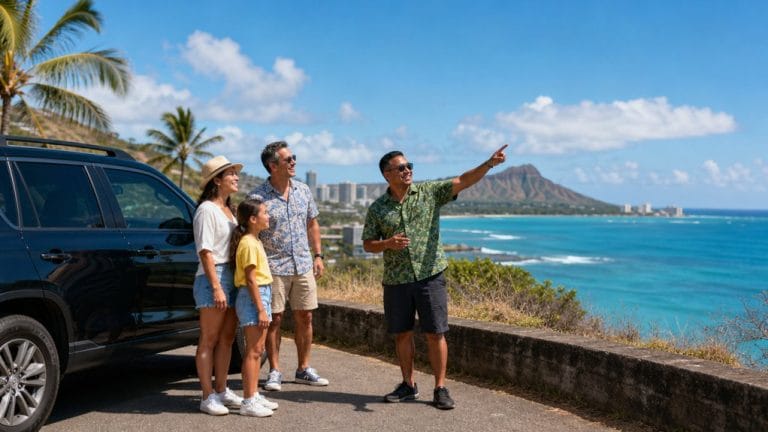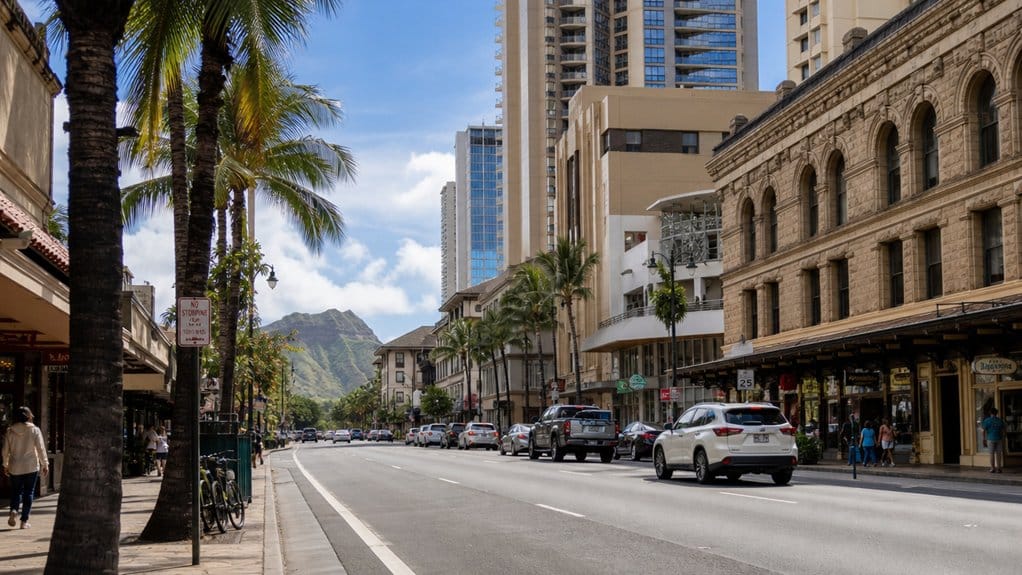
If you stand at Honolulu Harbor at sunrise, you can see why this place took hold: calm water, a workable channel, and green ridges catching first light. You start with a name often tied to a sheltered harbor, then trace how Polynesian settlers used valley streams, safe landings, and smart timing to build a home here. Add foreign ships, Kamehameha I, war, and Waikiki’s boom, and the city starts to reveal its next turn.
Key Takeaways
- Honolulu means “sheltered harbor,” and the area was earlier known as Ke ʻAwa O Kou, reflecting its calm, protected waters.
- Polynesian settlers lived in the Honolulu area by about 1100 CE, relying on Nuʻuanu Valley streams and a naturally sheltered bay.
- Honolulu Harbor’s deep channel and freshwater flow made it a strong working port, driving trade, shipping, and 19th-century growth.
- After Captain William Brown’s 1794 arrival, Kamehameha I moved his court to Oʻahu, and Honolulu rose into a political center.
- Honolulu became the Hawaiian Kingdom’s capital in 1845, then shifted under the 1893 overthrow, 1898 annexation, and 1900 territorial government.

Pearl Harbor USS Arizona Memorial Tour from Waikiki
Turn back time as we explore WWII history at Pearl Harbor and relive the infamous Sunday morning of December 7, 1941. Enjoy a half-day tour from Honol...

Honolulu: Pacific Star Sunset Dinner Cruise and Show
Indulge in the original Pacific Rim cuisine, where each dish serves as a gateway to the rich flavors of the region...
Honolulu: Three Star Deluxe Sunset Dinner Cruise and Show
As the sun sets over the Pacific, enjoy a luxurious Honolulu dinner cruise along the scenic coastline near Diamond H...

Oahu Ka Moana Lūʻau at Aloha Tower Oceanfront Luau Show
Ka Moana Lūʻau – Oceanfront Hawaiian Luau in HonoluluExperience the spirit of Hawaiʻi at Ka Moana Lūʻau, a...
How Honolulu Began and Got Its Name
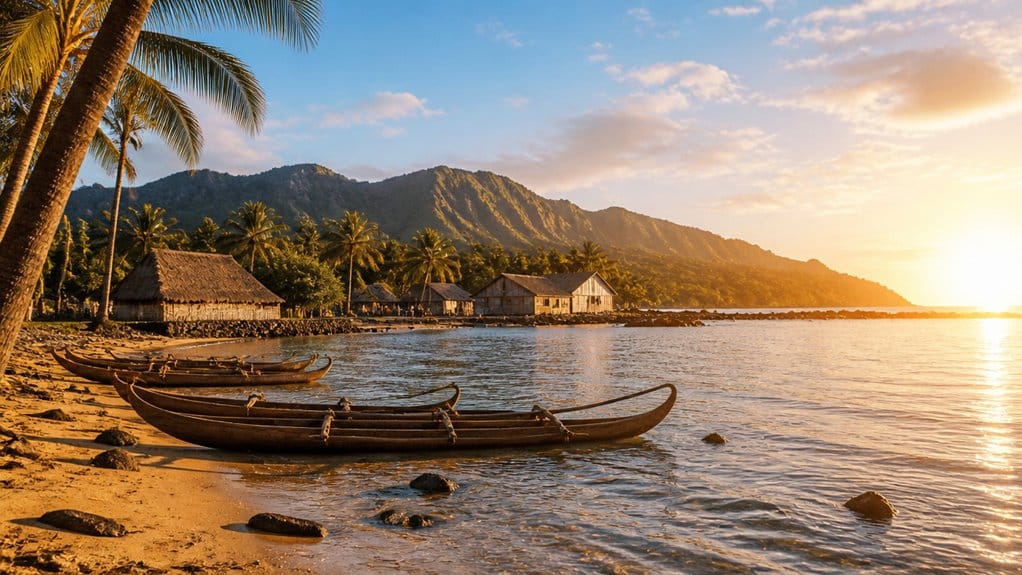
Long before Honolulu turned into Hawaiʻi’s busy capital, people knew this place for the harbor itself. You can see why when you picture a calm bay tucked behind reef, with a narrow channel leading ships toward deeper water. Fresh streams from Nuʻuanu Valley helped shape that passage, giving the Harbor a natural welcome. The name Honolulu meaning is often translated as “sheltered harbor” or “calm port,” reflecting the bay’s protected waters.
Before Honolulu became the lasting name, this waterfront belonged to Kou. Hawaiians called Honolulu Harbor Ke ʻAwa O Kou, or the harbor of Kou. That older name tied the port to the local district rather than to a future city. As European contact increased, naming shifted too. Captain William Brown entered the harbor in 1794, and outside visitors used new labels, including Fair Haven. Over time, Honolulu stuck, and the sheltered port became the city’s name. Modern visitors exploring Honolulu today can also use unlimited rides through Biki subscription options to move around the city at their own pace. For travelers exploring Oʻahu, Pearl Harbor is also on the same island, connecting Honolulu’s story to other major historic sites nearby.
Early Polynesian Settlement in Honolulu
By about 1100 CE, Polynesian settlers had already made their lives in the future Honolulu area, arriving centuries before foreign ships appeared on the horizon. You can picture these families reaching the Hawaiian archipelago through Polynesian Voyaging, reading stars and swells with celestial navigation and hard-earned skill. The island name Oʻahu is commonly pronounced oh-AH-hoo, a reminder that place names carry meaning as well as history.
In Honolulu, they settled near Nuʻuanu Valley, where streams once slipped toward a reef-protected channel. Fresh water mattered. So did the naturally sheltered bay, whose calm shoreline helped shape daily life. The name Honolulu, often understood as sheltered harbor, fits that scene perfectly. Long before the early 19th century changed local patterns, many Hawaiians favored Waikīkī’s oceanfront spaces. Still, this area remained part of an older world of canoe landings, fishing grounds, wet taro patches, and salt on the breeze each dawn. Like the famed Banzai Pipeline, these coastal environments later became closely associated with specific places along Oʻahu’s shore. These early communities reflected the deep seafaring knowledge highlighted in Polynesian Voyaging, a tradition essential to the settlement of Oahu.
Why Honolulu Harbor Mattered
Picture a harbor that almost built itself. Fresh water from Nuʻuanu Valley kept coral from sealing the basin, leaving Honolulu with a deep channel sailors could actually use. You can see why Hawaiians called it Ke ʻAwa O Kou, and why the name Honolulu stuck to this working harbor. Visitors heading onward to Pearl Harbor should remember the Visitor Center is open daily from 7:00 am to 5:00 pm.
As Pacific trade grew, you’d have heard hammers on the 1825 wharf, waves slapping hulls, and carts rolling toward warehouses. Dredging widened access, harbor lights guided ships, and spoil even formed Sand Island for quarantine. During the gold rush, traffic surged. After Hawaiʻi was annexed by the United States in 1898, US planners expanded capacity again. Long before the attack on Pearl Harbor, this harbor had already become Hawaiʻi’s essential overseas cargo gateway and commercial heartbeat. Visitors pairing this story with nearby wartime sites should note the Visitor Center hours can affect when they arrive at Pearl Harbor. Travelers connecting Honolulu’s maritime past to nearby wartime history often plan ahead for the USS Arizona Memorial program, which is free but requires Recreation.gov reservations with a $1 nonrefundable fee per ticket.

Oahu: 60 Min Royal Crown Helicopter Tour - Doors Off or On
See every stunning sight on Oahu from the white sands of Waikiki to the epic big waves of Norh Shore on our incredib...

Pearl Harbor Complete Experience Passport
Visit All 4 Museums in One day on this tour, tickets and admissions are included. See how the US entered into and en...

Pearl Harbor USS Arizona Memorial & Battleship Missouri
Visit USS Arizona and Battleship Missouri, as they represent both the beginning and the end of World War II. The acc...
Honolulu’s First Foreign Contact in 1794
When Captain William Brown sailed into Honolulu Harbor in November 1794, he wasn’t discovering an empty inlet so much as arriving at a place Hawaiians already knew well as Ke ʻAwa O Kou. You can picture the British captain easing through a deep reef-cut channel, where freshwater from Nuʻuanu Valley had slowed coral growth and opened a clear path.
That made Brown the first foreigner recorded in Honolulu and the first European tied to this harbor in surviving accounts. Visitors today often connect that early harbor history with Pearl Harbor on a short Honolulu history tour. Soon, a British captain called it Fair Haven, a name Hawaiians rendered as Honolulu. If you stand by Honolulu Harbor today, it’s striking to think this quiet first contact came long before booming trade, whaling ships, and even World War II. The harbor already had a local name, a working shoreline, and a future waiting just offshore.
Kamehameha I and Honolulu’s Rise
You can trace Honolulu’s rise to Kamehameha I, who moved his court to Waikīkī in 1804 and then to downtown Honolulu by 1809. As you picture canoes in Ke ʻAwa O Kou and the busy harbor ხმ with trade and arrivals, you can see why this shoreline quickly became Oʻahu’s power center. Long before Honolulu officially became the capital in 1845, those court moves had already turned the harbor settlement into the kingdom’s political heart. Visitors exploring this legacy today may also want to plan ahead with Iolani Palace parking options near the historic site. Today, visitors can deepen that story with an Iolani Palace tour, which explores the royal residence that later anchored Honolulu’s political and ceremonial life. When adding the palace to your itinerary, a little visit planning can help make the experience smoother and more memorable.
Court Move To Oʻahu
As Kamehameha I tightened his hold on the islands, he moved the royal court to Oʻahu in 1804 and began using the area of modern Honolulu as his political center. You can see this as a turning point in the history of Honolulu. By 1809, the court settled fully in downtown Honolulu, and the town grew quickly around royal business, voices, and footsteps.
- Kamehameha made Honolulu the kingdom’s working center.
- This move marked the first step toward the capital of the Kingdom.
- It set Honolulu on a path toward a wider Pacific World role.
You can imagine messengers arriving, decisions echoing through busy compounds, and new energy filling dusty paths. The court’s move shifted power to Oʻahu and gave Honolulu momentum that would shape the city for centuries to come. The royal legacy later found a lasting symbol in ʻIolani Palace, the only official royal residence in the United States. Later, the city’s royal legacy would be reflected at Iolani Palace, where rooms and exhibits help tell the story of Hawaiʻi’s monarchy. This shift became a key moment in Oahu Through Time, linking ancient Hawaiian leadership with Honolulu’s later growth into the center of island life.
Harbor And Power Center
Because Honolulu had something every growing kingdom needed, a harbor that worked, the town could turn shoreline into power. You can trace that edge to Honolulu Harbor, where fresh water from Nuʻuanu Valley slowed coral growth and left a deep channel through the reef. In 1794, Captain William Brown sailed in, and outside ships soon followed.
When Kamehameha I shifted his court to Waikīkī in 1804, then downtown by 1809, Honolulu became the working heart of the Hawaiian Kingdom. You’d have heard hammering at early wharves by 1825 and seen warehouses crowd the waterfront. As trade grew, Kamehameha III moved the government here in 1845, making it the capital of the Hawaiian Kingdom. Later, Iolani Palace would rise just inland, close enough to smell the salt air.
Still comparing Honolulu And Oahu History?
Ask for tour ideas, hotel suggestions, or a simple trip plan that combines both.
Trip Helper
Why Honolulu Became Capital
You can see why Honolulu won the capital role when you look at its harbor, where a deep reef-cut channel welcomed ships and kept trade moving. Honolulu is the capital of Hawaii, a status that reflects the city’s long-standing political importance. As the royal court shifted here in the early 1800s, you watch Honolulu grow from a busy waterfront into the kingdom’s political center. By 1845, with wharves, supplies, and the sound of ships in the port, it just made sense for King Kamehameha III to make Honolulu the capital. Visitors interested in nearby civic landmarks can use 5 steps to plan a stop at the Honolulu Capitol Building. Today, visitors exploring nearby government landmarks can plan for State Capitol parking and entry before heading into the historic district.
Strategic Harbor Location
Why did Honolulu become the capital instead of another Hawaiian town? You can trace the answer to Honolulu harbor. At Ke ʻAwa O Kou, freshwater from Nuʻuanu Valley slowed coral growth and left a long, deep channel through the reef. Ships could enter more safely here, which mattered in an island kingdom where good anchorages weren’t everywhere.
- The harbor offered a rare deep route into open water.
- Early wharf work around 1825 made arrivals easier and faster.
- Later upgrades, including Quarantine Island, improved ship handling.
Today, visitors can still reach this historic area by car, organized tours, or TheBus while exploring Oahu.
Political And Trade Center
A good harbor brought ships in, but it also pulled power ashore. In Honolulu, you can see why rulers stayed close. A deep channel welcomed foreign vessels, and wharves and warehouses soon followed. That traffic made Honolulu a major Pacific trade hub and a practical seat of government. Access from the crater side still relies on the Diamond Head tunnel, a reminder of how specific routes can shape movement and activity around major Honolulu landmarks. Honolulu is also the capital of Hawaii, a role officially established in 1845. Today, the Historic Honolulu route highlights many of the civic and royal sites that grew from that early concentration of power.
| Date | Why it mattered |
|---|---|
| 1804 | Kamehameha I moved court nearby |
| 1809 | Royal court shifted downtown |
| 1845 | Kingdom of Hawaii made Honolulu capital |
Honolulu Under the Hawaiian Kingdom
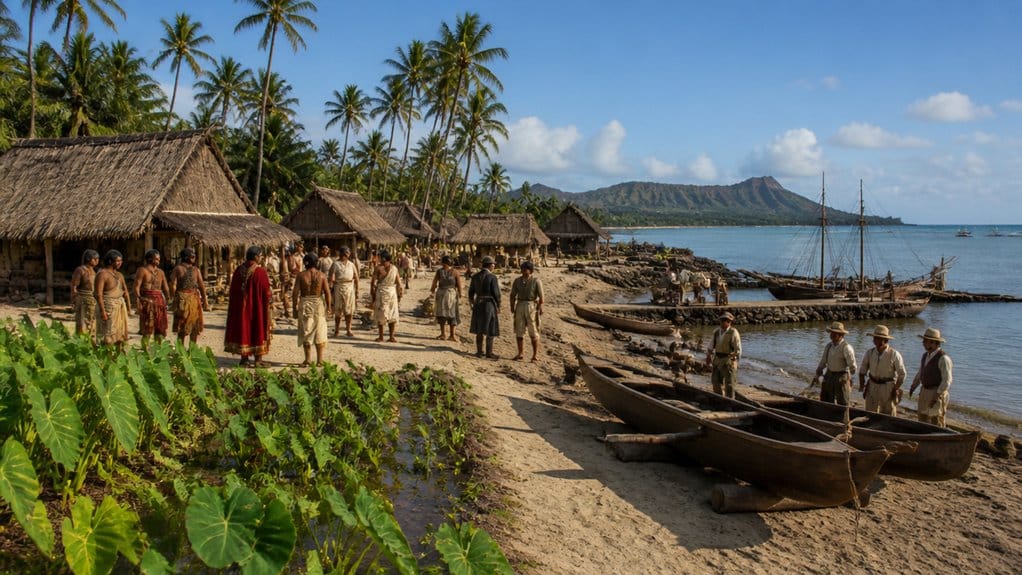
When Kamehameha I moved his royal court from Hawaiʻi Island to Oʻahu in 1804, power began to gather around the harbor and the low plain of present-day Honolulu, and by 1809 the area had become the kingdom’s working center. You can picture canoes, masts, and market noise as the Hawaiian monarchy tightened its hold there. Even beyond the capital, places like Alii Beach Park in Haleiwa reflect how Oʻahu’s shorelines remained central to daily life, gathering, and ocean culture.
- In 1845, Honolulu became the capital of the Kingdom under Kamehameha III.
- The harbor’s deep channel drew traders, ships, and bigger wharves.
- ʻIolani Palace rose in 1882, while Queen Liliuokalani later faced house arrest there.
Downtown walking routes now connect key landmarks such as ʻIolani Palace, the King Kamehameha Statue, and nearby Chinatown, making this history easier to see on foot. You can trace how Honolulu linked the Kingdom to the United States through commerce and diplomacy. Visitors can still connect with this legacy at the King Kamehameha Statue in downtown Honolulu. Still, this era ended hard. The 1893 overthrow broke royal rule and pushed the islands toward annexation. History here rarely whispers today.

Waikiki Glass Bottom Boat Cruise
Experience the beauty of Oʻahu South Shore as we sail toward Lēʻahi (Diamond Head) aboard the spacious Haleiwa Qu...

Oahu: Roundtrip Shuttle From Waikiki to Dole Plantation & Haleiwa
Skip Circle Island and visit two of the most popular places to visit here on the Island of Oahu. Experience a unique...

Waikiki 2 Hours Friday Night Fireworks Catamaran Cruise
Enjoy the spectacular FRIDAY NIGHT FIREWORKS show along the beautiful coastline of Waikiki while we get up close and...
Iolani Palace in Honolulu
Set just inland from downtown Honolulu, ʻIolani Palace gives you a vivid look at how royal power took shape in the city. Completed in 1882, Iolani Palace served as the official royal residence and showed how Honolulu Became the islands’ political heart. Visitors without a car can reach the site easily by using public transit from central Honolulu and nearby visitor areas.
As you approach, you notice Italian Renaissance lines mixed with Hawaiian motifs. The result feels formal yet rooted in the Hawaiian Islands. Inside, the palace once offered electricity, indoor plumbing, and telephones before many royal homes elsewhere caught up. That modern edge still surprises visitors who may have just landed through Honolulu International. If you are planning a broader sightseeing day, it helps to check fees and hours for major Honolulu attractions in advance. Visitors interested in Oʻahu’s wider cultural landscape can also make time for the Byodo-In Temple, a Hawaii state landmark in Kaneohe built in 1963. The building also stood as a symbol of monarchy after authority centralized in Honolulu. Later, when Hawaiʻi became a United States territory, the palace remained a powerful landmark, quiet but impossible to ignore today.
The 1893 Overthrow in Honolulu
By 1893, the calm grounds around downtown Honolulu held a crisis that changed the islands for good. As you walk Honolulu today, it’s hard to picture the tension. Native Hawaiian leaders and Queen Liliʻuokalani pushed back as foreign control grew sharper.
- The Bayonet Constitution had already cut royal power in 1887.
- The overthrow unfolded in Honolulu under heavy political pressure.
- Queen Liliʻuokalani was later confined inside ʻIolani Palace.
You can almost hear the boots on stone and the worried voices near government buildings. The kingdom’s capital since 1845 suddenly felt fragile. After the coup, Honolulu no longer stood only as a royal seat. It became the place where a new order took shape. That shift changed daily life, public power, and the meaning of downtown streets you can still explore now on foot. Visitors exploring Hawaii’s past often pair this story with Pearl Harbor museums to understand how later turning points also reshaped power and memory in the islands. Many also choose a USS Arizona tour to connect Honolulu’s political upheaval with the islands’ later wartime history. For most first-time visitors, a half-day tour is the most realistic way to add Pearl Harbor without overwhelming the rest of a Honolulu history-focused day.
How Annexation Reshaped Honolulu
After annexation in 1898, you see Honolulu change fast from a royal capital into the busy seat of a new U.S. territory. You can trace that shift from government offices downtown to the harbor, where wharves and piers stretched along the water and trade picked up speed. As streets filled with more ships, workers, and official business, you start to see the Honolulu that would anchor American power in the Pacific. From Oahu ports, shore excursion timing and tour options to Pearl Harbor help visitors connect harbor growth with Honolulu’s expanding role in regional strategy. For visitors exploring this era today, guided narration on Pearl Harbor tours from Waikiki can help connect Honolulu’s political rise to its growing military importance. This period also laid the groundwork for Honolulu’s rise as the capital of Hawaii, reinforcing its political and economic importance in the islands.
Territorial Administrative Shift
When the United States annexed the Hawaiian Islands in 1898, Honolulu didn’t just grow bigger on the map. You can see how the city became the working nerve center of a new US territory. Then the 1900 Organic Act reorganized government and made Honolulu the place where rules, records, and decisions gathered.
- Offices and officials clustered in Honolulu, shaping the future consolidated City and County.
- Territorial power centered here long before Hawai‘i State arrived in 1959.
- Pearl Harbor in 1941 sharpened Honolulu’s role under United States oversight.
As you walk downtown, that legacy still feels close. Government blocks, harbor routes, and civic landmarks point toward Honolulu’s later role as the State Capitol. The city didn’t become central overnight, but annexation clearly reset the map and the paperwork.
Urban And Economic Expansion
Although annexation started as a political change on paper, it quickly remade Honolulu into a busier, tougher, more connected city. You can see that shift along Honolulu Harbor, where by 1900 the east side bristled with wharves while private firms pushed the western waterfront outward for trade.
As Urban Honolulu grew, Downtown Honolulu and the rebuilt Chinatown district gained a harder, more permanent look after the Chinatown Fire, with stone and brick replacing older structures. That rebuilding strengthened the local economy and gave the County of Honolulu a denser commercial core. Under U.S. control, global wars also reached your doorstep. World War I slowed shipping, pinched supplies, and raised prices. Later, World War II pulled growth toward Pearl Harbor, while Honolulu Harbor kept freight and military logistics moving steadily each day.
The 1900 Chinatown Fire
As Honolulu’s Chinatown surged with new shops, boarding houses, and street life, disaster struck in 1900 with a fire that tore through one of downtown’s busiest immigrant neighborhoods. You can picture smoke rolling above Honolulu as crowded wooden buildings fell fast, and whole blocks of Chinatown changed overnight.
- Older stores and homes burned across the district.
- Rebuilding pushed owners toward stone and brick.
- The fire became a lesson in safer city planning.
When you look at Chinatown after this turning point, you see more than loss. You see how Honolulu responded. New construction standards took shape, and sturdier walls replaced many aging structures. The disaster also fed broader downtown growth in the early territorial years. Even in ruin, the neighborhood showed resilience, and the city learned not to gamble with fire again.
How World War II Changed Honolulu
After the attack on Pearl Harbor in 1941, you see Honolulu shift almost overnight into the beating hub of America’s Pacific war effort. You can trace that change along the waterfront, where dredged lagoons, bigger basins, new piers, and busy cargo routes turned the harbor into a hard-working military machine with little patience for beachy calm. When the war ended in 1945, you’d find a city already reshaped, ready for new roads, expanded shorelines, and the postwar growth that followed.
Pearl Harbor Impact
When Japanese planes struck Pearl Harbor on December 7, 1941, Honolulu changed almost overnight from an island capital into a front-line military city. You can trace how the surprise attack by Japanese forces on Oʻahu pushed the United States into World War II and reset island life fast. Honolulu experienced a military surge, and Honolulu Harbor became an essential backup to Pearl Harbor.
- Ships, crews, and supplies moved through crowded docks with constant urgency.
- Harbor work expanded with dredging, new piers, and seaplane support at Keehi Lagoon.
- After 1945, military control eased and postwar growth reshaped the waterfront.
You’d have heard engines, boots, and cargo gear clanging by the water. Even daily routines shifted as defense work grew and Pacific shipping patterns changed around Honolulu during the war.

Oahu: Mauka Warriors Luau Honoring Polynesia's Forgotten History
Step into the vibrant heart of Hawai‘i and experience a luau like no other—where culture, history, and celebrati...

Oahu Grand Circle Island Experience from Waikiki
Enjoy Grand Circle Island experience tour with breathtaking views of Amelia Earhart Lookout on Diamond Head, admire...

Waikiki Starlight Luau on The Great Lawn-Hilton Hawaiian Village
Waikiki Starlight Luau has moved to the Great Lawn at Hilton Hawaiian Village. Voted Best Luau in Hawaii - 10 Best L...
Wartime Urban Transformation
Because war remade priorities in a flash, Honolulu didn’t just support Pearl Harbor in 1941. On December 7,1941, you see the city pivot almost overnight toward wartime mobilization. Pearl Harbor became the navy’s center, while Honolulu Harbor changed its job and pace. Dredges widened channels, crews expanded piers and basins, and the waterfront rang with engines, boots, and orders.
When the war ended in 1945, you can trace another fast turn. The military returned Honolulu Harbor to the Territory of Hawaii, opening the door to postwar rebuilding. Prosperity followed with practical upgrades you still notice today, including Nimitz Highway, a second harbor entrance, and more seawalls. Together, those projects pushed Honolulu beyond its prewar scale, shaping the busy maritime city you experience now on Oahu.
Postwar Honolulu and Waikiki’s Boom
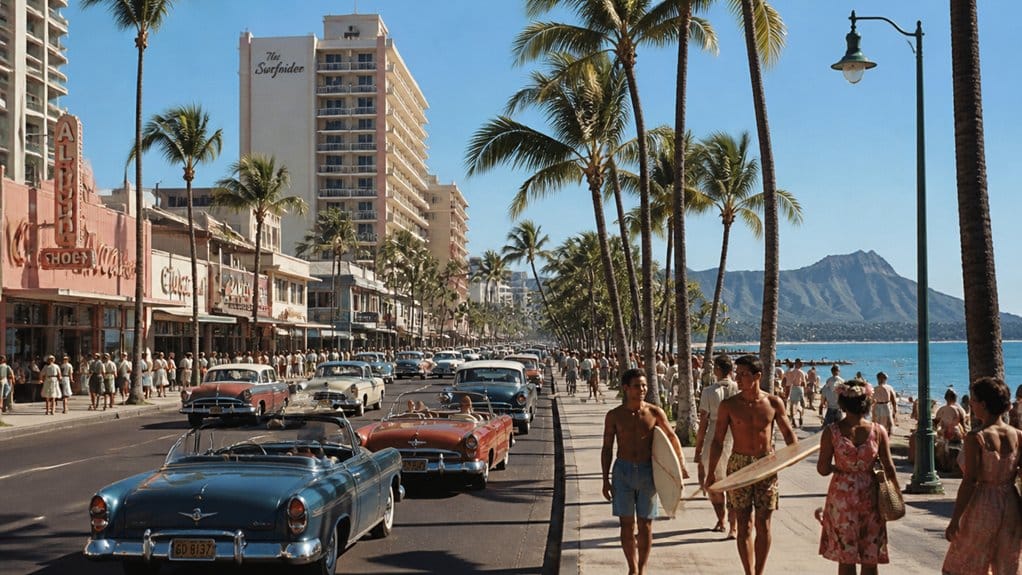
As World War II faded into memory, Honolulu rushed into a new era and remade its shoreline with striking speed. You can trace postwar Honolulu in seawalls, filled land, and roadwork like Nimitz Highway, all built to move people and cargo faster.
- Waikīkī led the tourism boom with new hotels.
- High-rise buildings began to redefine Honolulu’s skyline.
- Hawaii statehood in 1959 sped development even more.
As you walk Waikīkī, you can picture wealthy Pacific travelers arriving for sun, surf, and polished lobbies. The neighborhood became Honolulu’s economic showpiece. Downtown grew too, while military and business roles stayed tightly linked near the harbor and Pearl Harbor. You see a city balancing beach glamour with working waterfront grit. That contrast gave postwar Honolulu its energy, and maybe its parking headaches too, for visitors and residents alike.
Modern Honolulu: Rail, Tourism, and Climate Pressure
Today’s Honolulu feels like a city solving tomorrow’s problems in plain view. You can see that in Honolulu’s Skyline rail, which launched its first phase in 2023 and signals a practical push to move people faster across town. From Aloha Tower to Waikīkī, the city still runs on a powerful tourism economy. Nearly 1.5 million visitors arrived in 2024, and more than 30,000 hotel rooms help absorb the flow.
Yet the view comes with pressure. You notice hotter, drier stretches, tighter water supplies, and flooding that reaches beaches, streets, and coastal hotels. Rising sea level makes every storm feel less theoretical, especially in a Hawaiian capital built so close to the shore. Add high costs and homelessness, and you see a city balancing paradise with maintenance, planning, and grit.
How History Shapes Honolulu Today
Walk through Honolulu and you can feel how the past still sets the street plan, the skyline, and even the pace of the harbor. You see it in Honolulu’s deep port, shaped by Nuʻuanu Valley and echoed along Nuuanu Avenue. You feel it in a city that grew from Polynesian roots into the Kingdom’s capital, then the state capital.
- The harbor still drives trade, ferries, and daily motion.
- Pearl Harbor keeps military history close to home.
- USS Missouri reminds you history here isn’t behind glass.
As you move from Chinatown to the waterfront, old shocks still guide modern life. The 1900 fire, annexation, and war pushed growth into new districts. Even today, rail lines, roads, and jobs follow choices made generations ago. History doesn’t just survive here. It directs traffic, shapes views, and whispers everywhere.
Frequently Asked Questions
How Expensive Is It to Live in Honolulu Today?
You’ll find Honolulu very expensive today: Median home prices soar, housing rent rates sting, and the cost of living climbs with utility expenses, grocery costs, and uneven healthcare affordability, so you’ll need a strong budget.
What Are Honolulu’s Best Beaches for First-Time Visitors?
Like a postcard unfolding, you’ll love Waikiki for easy swimming, Diamond Head Views, and Kalakaua Avenue access; try Kuhio too. Pair beach time with Historic Walking, Waikiki Origins, Native Traditions, and Chinatown Legends nearby.
How Do I Get Around Honolulu Without Renting a Car?
You can get around Honolulu using public transit options, with bus routes explained online, plus Waikiki walking tips. Use bike share services, check ride share availability, and plan getting to beaches by bus, foot, or bike.
What Foods Should I Try While Visiting Honolulu?
You should try traditional poke, garlic shrimp, spam musubi, and a plate lunch first. Don’t miss local laulau for authentic flavor, then cool off with shave ice. You’ll taste Honolulu’s island comfort and culinary variety.
When Is the Best Time of Year to Visit Honolulu?
You’ll strike travel gold in April-May and September-October, the Best seasons for sunshine and fewer crowds. You can catch whale watching in winter, dodge winter storms, score hotel deals, enjoy shoulder months, and savor cultural festivals.
Conclusion
As you walk Honolulu, you follow a canoe becoming a city. The harbor still gathers light like a bowl, and Nuʻuanu’s old water paths echo under streets and glass towers. You can hear trade winds, bus brakes, and surf in the same hour. That mix is the clue. Honolulu keeps changing, yet it still steers by shelter, exchange, and arrival. Look closely at the shoreline and downtown blocks. You’ll see history tying the knots, one harbor rope at a time.
Honolulu: Three Star Deluxe Sunset Dinner Cruise and Show
As the sun sets over the Pacific, enjoy a luxurious Honolulu dinner cruise along the scenic coastline near Diamond Head. Indulge in a gourmet steak an...
Oahu Ka Moana Lūʻau at Aloha Tower Oceanfront Luau Show
Ka Moana Lūʻau – Oceanfront Hawaiian Luau in HonoluluExperience the spirit of Hawaiʻi at Ka Moana Lūʻau, a...
Pearl Harbor USS Arizona Memorial Tour from Waikiki
Turn back time as we explore WWII history at Pearl Harbor and relive the infamous Sunday morning of December 7, 1941...

Paina Waikiki Luau at Waikiki Beach Marriott
Everything that makes renowned Waikiki, Oahu, a unique and exciting place is celebrated at Pāʻina Waikīkī!A u...