If you stand on Oʻahu and look at its sharp green ridges, broad surf beaches, and old crater rims, you’re looking at an island that’s about 3 to 4 million years old. That sounds ancient until you compare it with Kauaʻi, which is older, and Maui, which is younger. Oʻahu didn’t appear all at once. It rose from two huge volcanoes, then weather and waves went to work for ages. Even Diamond Head showed up later, like a bonus round. So how do scientists pin down that age?
Key Takeaways
- Oʻahu is about 3 to 4 million years old, based on radiometric dating of its volcanic rocks.
- The island formed above the Hawaiian hot spot as the Pacific Plate moved northwest.
- Oʻahu is made from the eroded remains of two extinct shield volcanoes, Waiʻanae and Koʻolau.
- Most shield-building volcanism ended around 2.5 to 3 million years ago, followed by erosion.
- Oʻahu is older than Maui and the Big Island but younger than Kauaʻi.

Electric Bike Ride & Diamond Head Hike Tour
*During the busy summer months, please check with us for last minute bookings (1 or 2 days before your desired ride date) to ensure Diamond Head hikin...

Oahu Majestic Circle Island Tour with Waimea Falls and Byodo Inn
Since 1974, E Noa Tours has specialized in showing visitors the real Oʻahu through immersive experiences led by passionate local guides. Our mission...
How Old Is Oʻahu?

Think of Oʻahu as the middle child in Hawaiʻi’s island family. If you’re wondering how old Oʻahu is, the short answer is 3 to 4 million years ago. That’s when volcanic activity at the Hawaiian hot spot built the island you see today.
You’re standing on the worn remains of two giant shield volcanoes, Waiʻanae in the west and Koʻolau in the east. Lava once spread here over tens of thousands of years as the Pacific Plate drifted northwest. Now the volcanoes are extinct, and erosion has carved the ridges into deep valleys and sharp cliffs. Kaʻala rises from the Waiʻanae Range to just over 4,000 feet, giving you a high perch with sweeping views. Diamond Head, by contrast, is much younger than Oʻahu’s main shield volcanoes and formed during a later phase of volcanic activity. In Hawaiʻi’s timeline, Oʻahu sits older than Maui and the Big Island, but younger than Kauaʻi.
How Scientists Estimate Oʻahu’s Age
Although Oʻahu looks timeless when you’re tracing a ridgeline or staring up at a sheer green cliff, scientists can estimate its age with some surprisingly exact tools. They use radiometric dating on old lava from Waiʻanae and Koʻolau to clock Oʻahu at roughly 3 to 4 million years old.
| Clue | What scientists check | What you learn |
|---|---|---|
| Lava | Potassium-argon dates | Absolute rock ages |
| Ridges | Weathering and erosion | Long exposure time |
| Sediments | Deposited layers | Multi-million-year history |
| Island chain | Nearby island ages | Fit with regional pattern |
You can also compare Oʻahu’s place in the Hawaiian hotspot chain. It sits between older Kauaʻi and younger Molokaʻi, matching the Pacific Plate’s steady motion. Even cliffs and dusty trail cuts quietly back up the numbers. On a modern visit to Honolulu, the State Capitol offers a very different way to read Hawaiʻi’s history through architecture and civic design.
How Oʻahu Formed From Volcanoes
Long before you see Oʻahu’s green ridges and sharp cliffs, the island started as fire on the seafloor. About 3 to 4 million years ago, the Pacific Plate drifted over a stationary hot spot, and molten rock piled up into a massive Hawaiian volcano.
What you visit today is the worn-down remains of two shield volcanoes. The Waiʻanae Range rose in the west, and the Koʻolau Range grew in the east. Between them, a broad central valley opened up. Repeated lava flows built Oʻahu over many thousands of years, layer by layer. Then the eruptions stopped. Wind, rain, and landslides carved steep mountain walls and trimmed the coasts, exposing older volcanic cores. Today, Oʻahu’s size and shape reflect both its volcanic beginnings and millions of years of erosion. That’s why Oʻahu looks rugged, dramatic, and a little battle-tested, in the best possible way today.
Why Is Oʻahu Older Than Maui?
When you line up the Hawaiian Islands on a map, you can see the pattern: the farther northwest you look, the older the land gets. That’s because the Pacific Plate kept moving over a hot spot, so Oʻahu formed earlier about 3 million years ago, while Maui rose later and stays much younger. You can even spot the age gap in the scenery, since Oʻahu’s worn-down volcanoes look older and softer while Maui’s flanks still feel fresher and steeper. Learning about the volcanoes of Oahu helps explain how the island’s fiery past shaped the landscape you see today.

Oahu: Full or Half Day Grand Circle Island Tour
Choose from two exciting ways to experience Oahu's top attractions, scenic beauty, and local culture.Option 1: Dol...
Oahu Majestic Circle Island Tour with Waimea Falls and Byodo Inn
Since 1974, E Noa Tours has specialized in showing visitors the real Oʻahu through immersive experiences led by pas...
Hot Spot Progression
Trace the islands from northwest to southeast and you can almost watch time unfold across Hawaiʻi. If you picture the Pacific Plate sliding over a steady hot spot, Oʻahu makes sense. It rose about 3 million years ago, then drifted northwest as the plate kept moving.
That motion kept the volcanic action going farther southeast, where Maui formed later above the same source. Radiometric dates back this up. Oʻahu’s main shield building had mostly stopped by about 2.5 to 3 million years ago. Parts of Maui formed much later, around 0.75 to 1.3 million years ago. Diamond Head, by contrast, came from one explosive eruption long after Oʻahu’s main shield-building stage. So when you stand on Oʻahu and compare it with Maui, you’re seeing a travel timeline in rock. The islands don’t just sit there. They quietly record motion, heat, and remarkable geological timing.
Northwest Age Pattern
Although Oʻahu and Maui sit in the same island chain, they don’t belong to the same moment in geologic time. When you look at the Hawaiian island lineup, you’re seeing a northwest age pattern created as the Pacific Plate drifts northwest over a hot spot.
Oʻahu formed about 3 million years ago, so it had a much earlier start than Maui. Its geologic age is separate from basic island facts like Oahu’s area, which is often described in square miles. As Oʻahu moved off the hot spot, its volcanoes shut down, and rain and surf carved the worn Waiʻanae and Koʻolau ranges you see today. Maui tells a younger story. West Maui is about 1.3 million years old, and Haleakalā is only about 750,000. So if you’re wondering why Oʻahu is older, the answer is simple: this island formed first, then rode west and northwest away from the heat.
How Oʻahu Compares With Other Islands
In the Hawaiian chain, Oʻahu sits in a fascinating middle ground. At about 3 million years old, Oʻahu falls between the youngest islands and the oldest survivors. If you compare age across the chain, you’ll find it older than Maui and much older than the Big Island, yet younger than Kauaʻi. That gives Oʻahu a useful in-between story.
You can see that history in its two extinct shield volcanoes, Waiʻanae and Koʻolau, which built the island roughly three to four million years ago. Unlike the Big Island, where volcanoes still add fresh land, Oʻahu’s volcanoes have gone quiet. Compared with the far western islands, some around 65 million years old, Oʻahu is still relatively young. Even so, you can already spot strong mountain divisions and a more weathered look today. Its age and erosion also help explain why Oʻahu’s size and landscape look so different from younger volcanic islands.
How Oʻahu’s Age Shaped Its Landscape
Oʻahu’s age shows up everywhere once you know what to look for. As you cross Oʻahu, you’re really moving across the worn remains of two extinct shield volcanoes. The Waiʻanae range rises in the west, the Koʻolau range stands in the east, and a broad valley stretches between them.
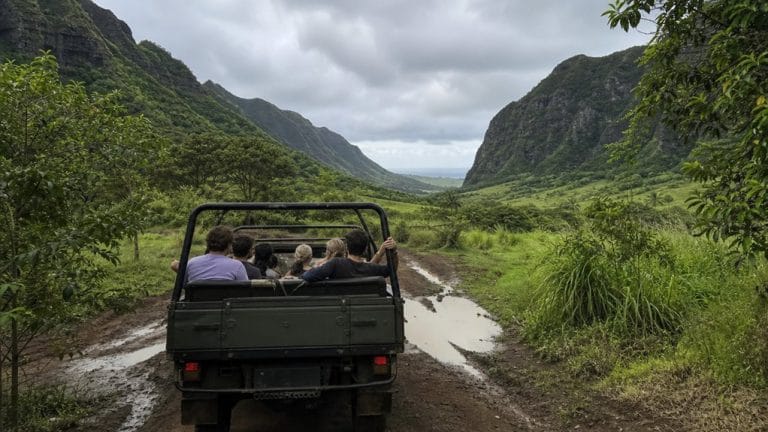
Millions of years of erosion carved those once-massive volcanoes into steep ridges, sharp cliffs, and narrow coastal plains. You can see it in the nearly vertical mountain faces and hear it in surf working the 227-mile shoreline. Those same ridges now define many of Oʻahu’s top hiking trails, where views often reveal how deeply erosion has shaped the island. At Kaʻala, Oʻahu’s highest point, the island still feels rugged, but not raw like the Big Island. Its soils sit in the middle too, older and more weathered than Hawaiʻi, younger than Kauaʻi. Even the greenery tells you Oʻahu has been around a while.
Frequently Asked Questions
Can You Visit Extinct Volcano Craters on OʻAhu Today?
Yes, you can visit several extinct volcano craters on Oʻahu today, including Diamond Head and Hanauma Bay. Check crater access rules, respect preservation etiquette, and enjoy trails and exhibits that highlight volcanic ecology and geology.
What Is the Best Time of Year to Visit OʻAhu?
You’ll find April–May and September–October best: sunny yet cheaper, lively yet less crowded. Visit during shoulder seasons for great weather, whale watching in winter, and cultural festivals year-round; choose summer for snorkeling, winter for surf.
How Many People Currently Live on the Island of OʻAhu?
You’ll find about 998,747 people currently living on Oʻahu in 2024. You can see population trends show a slight decline from 2020, while census estimates highlight the island’s high demographic density around Honolulu.
Which Beaches on OʻAhu Are Best for Families?
You’ll hit the jackpot with Kailua Beach, Lanikai Lagoon, and Ala Moana for family fun: calm water, soft sand, nearby restrooms, picnic spots, and easy access. You can also try Waikīkī or Ko Olina.
Are There Legends About OʻAhu’s Creation in Hawaiian Culture?
Yes, you’ll find Hawaiian cosmogony in Oʻahu traditions, though not one single origin story. You can trace creation through the Kumulipo chant, Pele traditions, and place-based moʻolelo linking ancestors, gods, and sacred landscapes together.
Conclusion
So when you stand on Oʻahu, you’re looking at land about 3 to 4 million years old. That may not sound ancient next to dinosaurs, but for Hawaiʻi it puts Oʻahu in a sweet middle spot between older Kauaʻi and younger Maui. You can see that age in the island’s sharp ridges, red craters, and broad valleys. Drive an hour, hear surf below, touch rough lava stone, and the timeline suddenly feels real.
Electric Bike Ride & Diamond Head Hike Tour
*During the busy summer months, please check with us for last minute bookings (1 or 2 days before your desired ride date) to ensure Diamond Head hikin...
Oahu Majestic Circle Island Tour with Waimea Falls and Byodo Inn
Since 1974, E Noa Tours has specialized in showing visitors the real Oʻahu through immersive experiences led by pas...
Oahu: Full or Half Day Grand Circle Island Tour
Choose from two exciting ways to experience Oahu's top attractions, scenic beauty, and local culture.Option 1: Dol...

Oahu: Grand Tour Around Island with Snorkeling
Come join on a circle island adventure led by some of Hawaii’s most knowledgeable local guides and experience brea...
Experiences to explore
 Explore experience ↗
Oahu Grand Circle Island: Discover the Heart & Soul of Hawaii
◷ 9 hr
Let us show you the wonders and beauty that makes Oahu the “Heart of Hawaii”. This complete full day tour is the perfect way to experie
From $139.00 USD
View dates Explore experience ↗
Diamond Head Hiking Tour with Tickets and Shuttle Included
◷ 3 hr
The Diamond Head Hike is a 3-hour round-trip adventure, including pick-up and drop-off from your Waikiki hotel. This 1.6-mile trail alo
From $35.00 USD
View dates Explore experience ↗
Diamond Head Hike Shuttle with Reservation Tickets Included
◷ 2 hr 30 min
Our Diamond Head Shuttle Tour offers a perfect blend of convenience, adventure, and unforgettable vistas. Stress-Free Convenience: We p
From $39.99 USD
View dates