
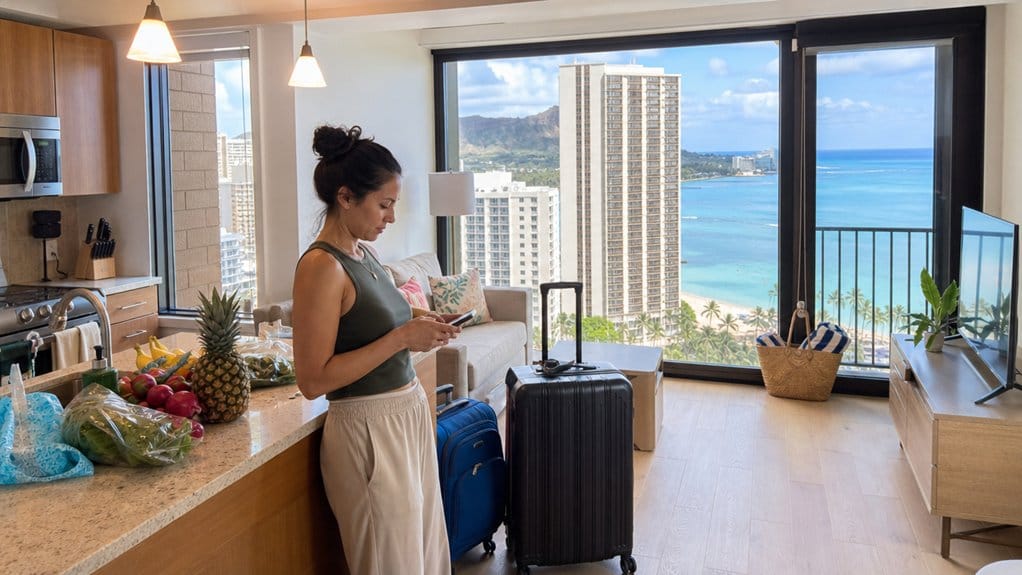
You step out into warm Waikiki air, hear surf under city traffic, and feel salt on your skin before your suitcase even hits the hotel cart. On Oahu, the easiest stay isn’t always the one with the prettiest lobby or the biggest lanai. It depends on how you move through a trip. Do you want fresh towels and tour desks, or a kitchen, laundry, and room to spread out? The answer gets more practical, and more surprising, fast.
Key Takeaways
- For most Oahu trips, hotels are easier because tour pickups, walkable Waikiki locations, and on-site service reduce planning and rental-car needs.
- Vacation rentals are easier for families or groups needing multiple bedrooms, shared living space, laundry, and one kitchen for simpler day-to-day routines.
- Compare all-in cost, not nightly rate: hotels add resort and parking fees, while rentals add cleaning, service, taxes, and sometimes parking.
- Short stays usually favor hotels because one-time rental cleaning and platform fees can outweigh any nightly savings.
- A split stay often works best: start in a Waikiki hotel, then move to a condo for space, cooking, and quieter exploring.

Oahu: Roundtrip Shuttle From Waikiki to Dole Plantation & Haleiwa
Skip Circle Island and visit two of the most popular places to visit here on the Island of Oahu. Experience a unique fusion of convenience, affordabil...

Oahu: Full or Half Day Grand Circle Island Tour
Choose from two exciting ways to experience Oahu's top attractions, scenic beauty, and local culture.Option 1: Dole Plantation & Haleiwa Town (6.5 H...
Oahu Hotel or Vacation Rental: Which Fits Best?

If you’re choosing between an Oahu hotel and a vacation rental, start with how you want your days to feel. Do you want someone else handling the details, or do you want space to spread out and live a little like a local?
Hotels in Waikiki make things easy. You get predictable service, daily housekeeping, pools, on-site dining, and concierge help. That works well if it’s your first Oahu trip or you want resort ease after beach days. They can also be simpler if you plan to skip a rental car, since many Oahu tours handle transportation from major hotel areas.
Vacation rentals shine when your group wants room to breathe. Families or friend groups can stay together instead of splitting into hotel rooms. Shared living areas feel social, and a full kitchen helps with simple breakfasts or late poke runs. In-unit laundry also keeps sandy clothes under control, which feels oddly heroic by day three.
Oahu Hotel vs Vacation Rental Costs
At first glance, you might spot Oahu vacation rentals averaging about $313 a night in 2024 while hotels sit closer to $335, but the real story starts when the extra charges roll in. You’ll want to watch for hotel resort and parking fees that can add $40 to $70 or more per day, while rentals often tack on cleaning and service fees that quietly puff up the total. If you’re traveling with family or friends, one condo with sandy towels on the lanai and a single shared bill can beat booking multiple hotel rooms, so it pays to compare the full all-in price. Starting Jan. 1, 2026, Hawaii’s state TAT rises by 0.75%, which adds about $1.50 per night on a $200 room.
Nightly Rates Compared
Start with the sticker price and Oahu vacation rentals usually look a bit cheaper per night. In statewide November 2024 data, vacation rentals averaged about $313, while hotel prices averaged about $335. That gap isn’t huge, but it matters when you’re watching the budget and comparing neighborhoods.
The pattern gets clearer when you match the stay to your trip. For couples, a small Airbnb can undercut many hotels. For families or friends, one condo or house often beats booking two hotel rooms, so your per person cost drops fast. Platform mix shapes the picture too. Airbnb leans toward smaller, cheaper units, while Vrbo and local agencies often list bigger condos and homes. Hotels can look close at first, but resort fees often push the nightly total higher before you even unpack. If you stay in a Waikiki hotel, hotel pickup tours can also reduce the need for a rental car on sightseeing days.
Hidden Fees Breakdown
While the nightly rate grabs your eye first, the real price on Oahu usually shows up in the fine print. Hotels often add a daily resort fee and parking fees that tack on $40 to $70 per night, and upscale places can push that total past $100 before you’ve even hit the beach.
Vacation rentals play a different game. You may see a lower nightly rate, then run into cleaning and platform service fees, often $100 to $400 once, plus 5 to 15 percent. That stings most on short stays. Taxes hit both, though rentals usually show them later. Always check parking too. A condo may include it, or not. For families, rentals can win big because one fee spread across more people hurts less than hotel extras. Before booking either option, scan recent reviews and Google Street View for nearby noise sources like bars, loading bays, bus stops, or construction.

Oahu: Grand Tour Around Island with Snorkeling
Come join on a circle island adventure led by some of Hawaii’s most knowledgeable local guides and experience brea...

Pearl Harbor USS Arizona Memorial Tour from Waikiki
Turn back time as we explore WWII history at Pearl Harbor and relive the infamous Sunday morning of December 7, 1941...

Waikiki Parasailing in Hawaii from Oahu
Experience the thrill of parasailing over Hawaii’s stunning coastline as you glide above crystal-clear waters and...
Oahu Hotel vs Vacation Rental Space
When you compare space on Oahu, your group size changes everything. A hotel room usually gives you about 400 square feet and a couple of beds, while a condo can give you extra bedrooms, a real living room, and room to hear everyone laugh without sitting knee to knee. If you’re traveling with five or more people, you’ll want to think about whether two hotel rooms can really match one shared space where you can eat, relax, and spread out. For families or larger groups, a private Oahu tour can also make exploring the island easier because the day can be customized around your group.
Group Size Fit
For groups of five to seven, space often decides the whole Oahu stay. If you’re traveling with a large group, a vacation rental usually fits better than a hotel room. In Waikiki, standard rooms run about 300 to 400 square feet and often sleep only two to four, so your family of five may need two rooms or a costly suite.
- You keep everyone under one roof, which feels calmer after a windy beach day.
- You avoid surprise resort and parking fees piling onto multiple rooms at night.
- You get extra bedrooms, more beds, and often laundry, which saves sanity fast.
Hotels still win on predictable bedding and daily housekeeping. But when your trip includes grandparents, kids, or cousins, one roomy rental often feels simpler. And less like musical chairs. If your plans lean toward a relaxed Oahu itinerary with plenty of beach time, having shared space to regroup between outings can matter even more.
Shared Living Areas
Often, shared living space is the detail that makes an Oahu trip feel easy instead of cramped. In a vacation rental, you usually get a living room, dining area, and maybe a breezy lanai, often across 800 to 2,000-plus square feet. That extra room changes the trip.
You can spread out sandy bags, eat poke at a real table, and pack lunches at the kitchen island before heading out. If you’re comparing quieter home-base options, the Leeward Side of Oahu can be worth considering for a vacation rental stay. If you’re traveling with five or more people, multiple bedrooms and one big common area keep everyone together without feeling stacked like surfboards. Hotels do offer lobbies, pools, and restaurants, which feels convenient, but private hangout space is limited unless you book a suite. A rental often adds laundry too, so you can rinse out swimsuits and pack less for the flight home.
Oahu Hotel vs Vacation Rental Amenities
Step into the amenities question, and the difference gets practical fast. Your hotel often gives you daily housekeeping, a concierge, restaurants downstairs, and pools or spas ready when you are. That kind of ease feels great after a salty beach day.
A vacation rental changes the rhythm. You get a real kitchen, laundry, more bedrooms, and living space that doesn’t feel like one crowded box.
- You wake up and make breakfast barefoot instead of hunting for coffee.
- You toss sandy towels into the washer and keep the day moving.
- You spread out with your group and hear fewer suitcase zippers at midnight.
Still, fees matter. A hotel may add nightly resort and parking charges. Rentals often skip resort fees but add cleaning and service costs, changing total value. If sightseeing around Honolulu is part of your plan, your amenities choice can also affect whether a Waikiki Trolley pass or rental car feels easier day to day.
Still comparing Oahu Hotel Vs Vacation Rental Planning?
Ask for tour ideas, hotel suggestions, or a simple trip plan that combines both.
Trip Helper
When an Oahu Vacation Rental Works Best
The sweet spot for an Oahu vacation rental shows up when your trip starts to look less like a quick crash pad and more like real island living. If you’re planning a family vacation or traveling with three or more people, a vacation rental often gives you more room, fewer surprise fees, and a kitchen that saves real money. You can cook breakfast, wash sandy swimsuits, and spread out after the beach.
| Best for | Why it helps | Watch for |
|---|---|---|
| Groups | One roof, lower total cost | Cleaning fees |
| Longer stays | More space, laundry | Taxes |
| Self-catering | Kitchen cuts meal costs | Grocery runs |
A Hawaii Vacation Rental also suits you if you want quieter streets, a lanai, easy parking, and a neighborhood feel. Areas like Kailua and the North Shore can be especially appealing if you want a more relaxed stay away from the busiest Waikiki hotel scene.
When an Oahu Hotel Works Best
If you want your Oahu trip to feel easy from the minute you land, a hotel usually makes the most sense. In Waikiki, you can drop your bags, grab a room key, and let Hawaii unfold without much planning. Pools, on-site restaurants, daily housekeeping, and a concierge keep your days simple and smooth.
- You wake up to ocean light and coffee downstairs, not a sink full of dishes.
- You step outside and reach beaches, shops, tours, and buses without hunting for parking.
- You check in fast, log onto reliable Wi-Fi, and keep a short work trip moving.
Staying in Waikiki can also make it easier to join Oahu pickup-friendly tours that collect guests directly from nearby hotels.
A hotel also helps when rates bundle resort fees or loyalty perks. For many travelers, that predictability feels like a quiet vacation superpower on busy Oahu days.
Split Your Oahu Stay Between Hotel and Rental

Many Oahu trips work even better when you split the stay in two. Try a split-stay strategy: spend your first 3 to 4 nights in a Waikiki hotel, where pools shimmer, towels appear daily, and the concierge can line up easy excursions. Keep those nights car-light so you can skip steep parking fees.
Then move to a multi-bedroom condo for the final 3 to 4 nights. You’ll get a kitchen, laundry, and room to breathe, which matters when your crew starts spreading out like beach gear. This second half works best when you plan to cook, picnic, or explore quieter areas like the North Shore or Kaneohe. A personalized private tour can also make the transition day easier by turning checkout-to-check-in downtime into a flexible Oahu sightseeing day. Rentals averaged about 10 percent cheaper statewide in 2024, but always check cleaning fees, parking, and legal status before you book.
Frequently Asked Questions
Are Vacation Rentals Legal in All Oahu Neighborhoods?
No, you can’t assume vacation rentals are legal in all Oahu neighborhoods. You need to check zoning restrictions, verify permit requirements, and watch for neighborhood enforcement, since many residential areas ban short-term whole-home stays outright.
How Far in Advance Should I Book Oahu Accommodations?
You should book Oahu accommodations 3–6 months ahead during peak seasonal demand; for larger rentals, 4–9 months works better. Coincidentally, off-peak booking windows shrink to 4–8 weeks, though last minute availability can still appear unexpectedly.
Do Oahu Vacation Rentals Require Minimum Night Stays?
Yes, you’ll often find Oahu vacation rentals require minimum stays, usually 2–7 nights. Expect seasonal minimums during holidays and summer. You can sometimes find owner exceptions, but you should always check listing rules, fees, and legality.
What Transportation Works Best From Oahu Rentals Without Parking?
Like a Swiss Army knife, you’ll get around best by combining Public buses for daily routes, Rideshare apps for flexible longer trips, and Bicycle rentals for nearby errands, while booking airport shuttles or occasional day-use cars.
How Do Cleaning Fees Affect Short Oahu Rental Stays?
Cleaning fees hit your short Oahu rental hardest: you’ll spread fixed Cleaning deposits, Amenity laundering, and Turnover schedules across fewer nights, so your effective nightly cost jumps. You should compare total fees against hotel rates before booking.
Conclusion
Think of Oahu as a canoe ride. If you want smooth strokes, easy landings, and someone else to carry the gear, you’ll likely like a hotel. Keys appear fast. Towels return clean. Tour vans hum outside. If you need room to spread out, fry eggs, wash sandy swimsuits, and hear neighborhood roosters at dawn, a rental can feel right. For many trips, the easier path is the one that matches your pace, not just your budget.
Oahu: Roundtrip Shuttle From Waikiki to Dole Plantation & Haleiwa
Skip Circle Island and visit two of the most popular places to visit here on the Island of Oahu. Experience a unique fusion of convenience, affordabil...

Oahu: Mauka Warriors Luau Honoring Polynesia's Forgotten History
Step into the vibrant heart of Hawai‘i and experience a luau like no other—where culture, history, and celebrati...
Oahu: Full or Half Day Grand Circle Island Tour
Choose from two exciting ways to experience Oahu's top attractions, scenic beauty, and local culture.Option 1: Dol...


