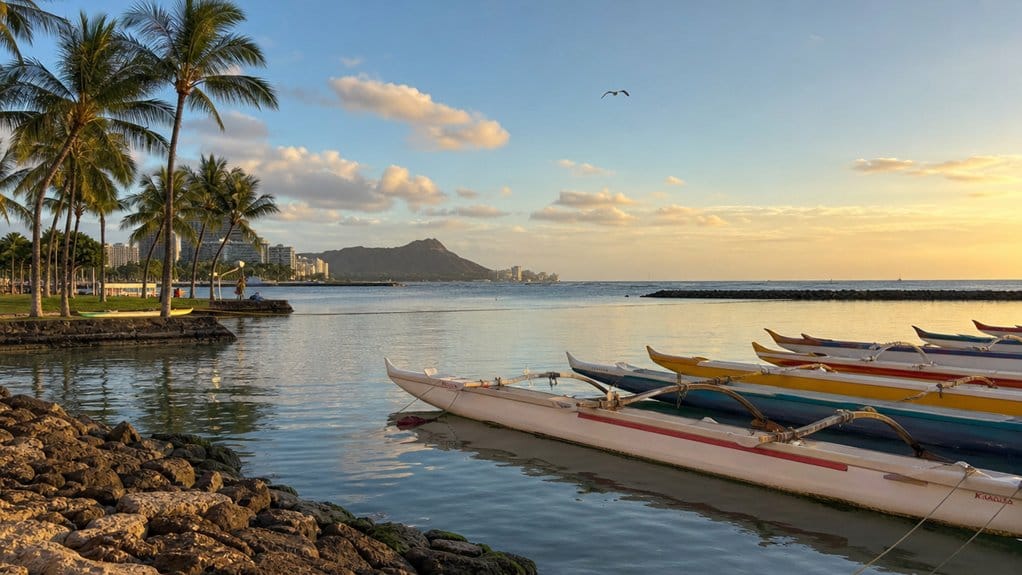
When you hear Honolulu, you’re hearing more than a city name. In Hawaiian, it’s commonly understood as a sheltered harbor or calm port, which fits the glassy blue water and protected shoreline you see from the harbor. The name also carries Native Hawaiian memory, tying place to language and story. You may even spot the older form Hanalulu in history. So why did this harbor keep that name, and what changed along the way?
Key Takeaways
- Honolulu commonly means “sheltered harbor” or “calm port” in Hawaiian.
- The name reflects Honolulu’s geography beside naturally protected, safe anchorage waters.
- In Hawaiian tradition, place names preserve cultural memory and describe land, feeling, and history.
- Honolulu is a living Hawaiian name tied to ʻŌlelo Hawaiʻi and Oʻahu’s Native heritage.
- “Hanalulu” appears as an older variant, but Honolulu is the accepted modern spelling.
What Does Honolulu Mean?
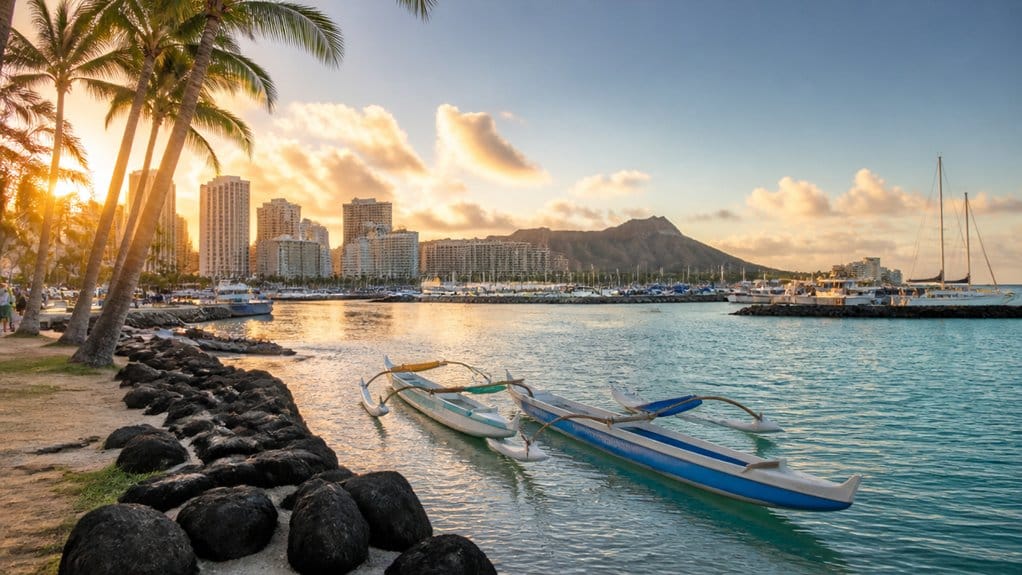
Names can feel like tiny maps, and Honolulu is a great example. In the Hawaiian language, Honolulu usually means sheltered harbor or calm port. When you picture Oahu island, that meaning clicks fast. You can almost see the protected blue water and busy canoes near Honolulu Harbor.
As you travel through the Hawaiian Islands, you notice how Hawaiian place names tie land to story. Honolulu reflects geography, but it also carries Native Hawaiian heritage through ʻŌlelo Hawaiʻi. Oahu itself also carries meaning rooted in Hawaiian origin, showing how island names preserve cultural memory. Pronunciation matters in Hawaiian, since marks can shift meaning and sound. That’s part of why the name feels alive, not frozen on a sign. Like Honolulu, words such as manu meaning also show how Hawaiian language ties everyday terms to culture and place. Long before Honolulu became the capital, the word already suggested refuge, welcome, and protection. Articles about Hawaiian roots often emphasize how the name connects both translation and cultural history. So when you hear Honolulu, you’re hearing a place shaped by water, language, and memory.
Why Is Honolulu Called Honolulu?
Because Honolulu sits beside a naturally protected stretch of water, the city got a name that fits the view. You can see why Honolulu Mean points to a sheltered harbor. In Hawaiian culture, names describe place and feeling. Here, the bay offered safe anchorage beside the Pacific Ocean. A visit to Pearl Harbor can also deepen your understanding of how Oʻahu’s harbors shaped memory, history, and meaning.
| Clue | What you notice | Why it matters |
|---|---|---|
| Hono | bay | supports harbor meaning |
| Harbor | calm water | welcomes canoes and trade |
| City role | growing port | spreads the name |
| 1845 era | King Kamehameha III | made it capital of the Hawaiian |
| Today | Honolulu Hale (City Hall), Pacific University | keeps Honolulu visible |
You hear history in Honolulu. The name suited a working port, then the city carried it statewide. Honolulu is also the capital of Hawaii State. As one of the facts about Oahu, its role as the island’s urban and political center helps explain why the name is so widely recognized. It still feels protective, open, and memorable today.
Why Do Some Say Hanalulu?
If you’ve heard someone say Hanalulu, you’re catching a small echo of older Hawaiian usage rather than a different city entirely. When you visit this island capital, you’ll still see that the accepted name is Honolulu. Waikiki is not a separate city but a famous Honolulu neighborhood on Oʻahu.
You might hear Hanalulu when people explain that Honolulu shouldn’t sound like “Hannah-lulu.” Older references sometimes used Hana and Hono in related place-name patterns, especially around harbor meanings. That makes Hanalulu a historical spelling or dialect-style variant, not a new definition. As you pass Honolulu Hale (City Hall), drive through Urban Honolulu, or look toward Diamond Head, the name stays Honolulu. The same goes for Pearl Harbor and stories of the Japanese attack. In a tropical climate with a warm average temperature, local pronunciation still carries subtle history, like trade winds through palms. Similar care with pronunciation also matters across Hawaiʻi, including Oahu pronunciation, where meaning and sound are closely connected. Hawaiian place names often preserve layers of meaning, much like Waikiki meaning reflects both translation and deep local roots.
Frequently Asked Questions
How Is Honolulu Pronounced Correctly in Hawaiian?
You pronounce Honolulu hoh-NAH-loh-loh. When Pronouncing Honolulu, you’ll follow Hawaiian speakers’ syllable stress and “Ho nu lu lu” breakdown; note vowel length, not glottal stops. Avoid common mispronunciations; use phonetic spelling, native pronunciation tips, audio practice methods.
When Was Honolulu First Settled by Native Hawaiians?
You’d place Honolulu’s first Native Hawaiian settlement around 1100 A.D., based on settlement evidence, archaeological findings, traditional place legends, and voyaging settlement patterns shaping coastal fishing communities, landmark coastal districts, shifting land use, and population growth timeline.
What Is Honolulu’s Significance in Hawaiian History?
Honolulu shapes Hawaiian history through Honolulu royal connections, Kamehameha era growth, and Hawaiian kingdom governance. You see Oahu cultural crossroads, maritime trade heritage, temple and heiau ties, fishing village origins, aliʻi (chiefs) influence, traditional chant storytelling.
Are There Other Hawaiian Place Names With Similar Meanings?
Right off the bat, you’ll find Honokōhau, Hanalei, and Hanapēpē share sheltered-bay meanings. Through Common Hawaiian naming patterns, you’re Discovering Honolulu legends, Exploring ancient Oahu names, and tracing Similar meanings in island names across shorelines.
How Did Honolulu Become Hawaii’s Capital City?
You see Honolulu become Hawaii’s capital through Formation of Honolulu’s royal residence, Rise of Kamehameha’s influence, harbor trade routes, sandalwood commerce, whaling vessels, missionary urban changes, administrative reforms, and later shift to territorial governance.
Conclusion
When you say Honolulu, you’re naming more than a city. You’re pointing to a sheltered harbor, bright blue water, and a place where canoes and ships could rest. The name works like a compass, guiding you back to land, language, and memory. If you hear Hanalulu in older sources, you’re catching an echo from the past. Either way, you can almost hear the harbor hush, as if the island itself is saying, come ashore.