
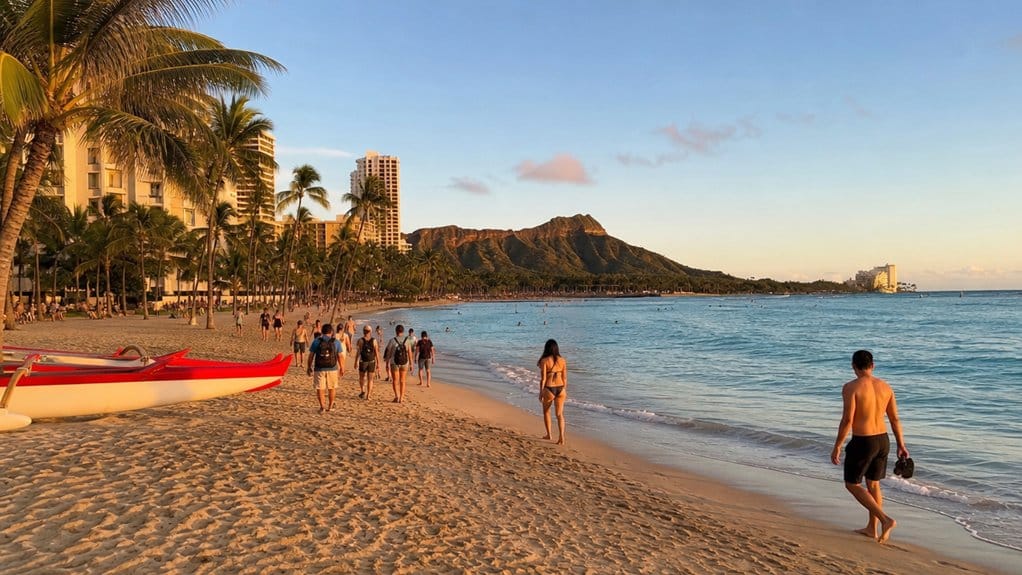
When you hear Waikīkī, you’re hearing a place name that once described the land with surprising accuracy: “spouting fresh water.” Before the high-rises and surf lessons, springs bubbled up here and streams spread through marshy ground, feeding taro patches and gardens near the shore. That older Waikīkī was wet, green, and busy with life. The beach is still famous, of course, but the name points to a very different scene, and that shift tells you a lot.
Key Takeaways
- Waikīkī means “spouting fresh water” in Hawaiian.
- The word combines wai, meaning “water,” and kīkī, meaning “spouting” or “spraying.”
- The name reflects Waikīkī’s original springs, streams, and wetlands.
- Officially, Waikīkī is spelled with macrons, but Waikiki without marks keeps the same meaning.
- The name connects Hawaiian language directly to the area’s historic landscape and water sources.

Paina Waikiki Luau at Waikiki Beach Marriott
Everything that makes renowned Waikiki, Oahu, a unique and exciting place is celebrated at Pāʻina Waikīkī!A unique dinner party lūʽau setting...

Oahu Ka Moana Lūʻau at Aloha Tower Oceanfront Luau Show
Ka Moana Lūʻau – Oceanfront Hawaiian Luau in HonoluluExperience the spirit of Hawaiʻi at Ka Moana Lūʻau, a...

Oahu: The Magical Mystery Show! at Hilton Waikiki Beach Hotel
Step back in Hawaii's history to 1881 when King Kalakaua visited London. You've found the hidden gem of Oahu. This i...
What Does Waikīkī Mean in Hawaiian?
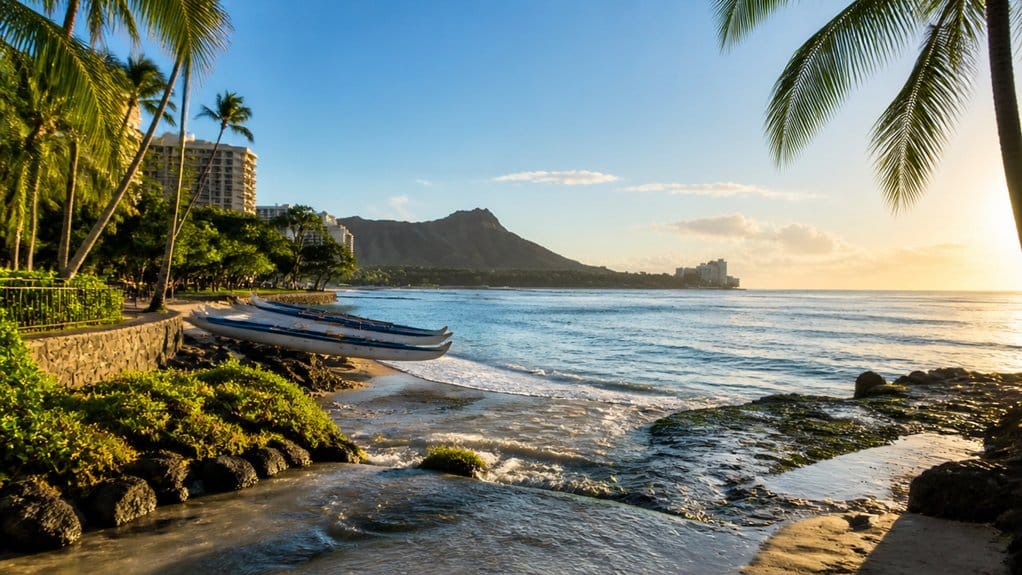
In Hawaiian, Waikīkī means “spouting fresh water,” and the name tells you exactly what this place once felt like on the ground. When you hear Waikīkī in the Hawaiian language, you’re hearing a place name rooted in water, motion, and landscape. It points to springs and streams that once fed wetlands across the area. You can almost picture damp soil underfoot and water slipping through reeds nearby. This meaning reflects spouting fresh water as a defining feature of the area’s original landscape.
Like the Hawaiian roots explored in Oʻahu’s name, Waikīkī also preserves a direct connection between language and the natural features of the land. The official spelling is Waikīkī, with a macron that marks the long vowel sound. You’ll still see “Waikiki” on signs and brochures, but the fuller spelling carries the original sound more clearly. The name also connects to how the land once worked, with watery ground helping set this coastal area apart from Oʻahu’s interior. On Oʻahu, Waikīkī is often understood in contrast to places on the Leeward Side, which refers to the island’s drier western coast. Pretty practical for such a beautiful name, really.
Why the Name Waikīkī Means “Spouting Fresh Water
That meaning gets even clearer when you break the word apart. In Hawaiian, wai means water, and kīkī points to something spouting or spraying. Put them together, and you get spouting fresh water, a name that feels vivid the moment you say it. You can almost hear a quick burst and picture water moving toward shore.
Although nearby Diamond Head volcano is a well-known landmark above Waikīkī, the name Waikīkī itself points to water rather than geology. On Oahu, top snorkeling spots are often chosen by skill level, which reflects how differently people experience the island’s coastal waters.
| Part | Meaning | What you notice |
|---|---|---|
| wai | water | the life-giving source |
| kīkī | spouting, spraying | motion and energy |
You’ll also see the spelling as Waikīkī, with macrons that guide Hawaiian pronunciation. In tourist signs, it often appears as Waikiki. Either way, the meaning doesn’t change. The name still carries the image of fresh water rising and flowing, which is pretty memorable for a beach neighborhood.
How Springs and Wetlands Shaped Waikīkī
When you picture old Waikīkī, you can see a web of freshwater springs and streams turning the area into marshy wetlands, which is exactly why its name means “spouting fresh water.” You can imagine loʻi, fishponds, and gardens thriving in that wet, fertile ground before the land shifted into farms and a royal retreat with muddy edges and quiet flowing water. Travelers planning to explore Oʻahu’s cultural sites often look up best arrival time details before visiting major attractions. This same relationship between water and landscape still echoes elsewhere on Oʻahu at places like Hoʻoleʻinā and Loko Waimaluhia, a 32-acre lake at Hōʻomaluhia Botanical Garden. Oʻahu also preserves coastal places shaped by water and history, including Hanauma Bay, which is protected today as Hawai‘i’s first Marine Life Conservation District. Then you reach the early 1900s, when drainage projects like the Ala Wai Canal changed the flow for good and set Waikīkī on its path toward the resort district you know today.

Luau Na Lei Aloha: Boutique Premium Dinner Show in Waikiki
Nā Lei Aloha Luau is a spectacular celebration weaving together the culture, storytelling, music and hula of Hawai'...
Paina Waikiki Luau at Waikiki Beach Marriott
Everything that makes renowned Waikiki, Oahu, a unique and exciting place is celebrated at Pāʻina Waikīkī!A u...
Oahu Ka Moana Lūʻau at Aloha Tower Oceanfront Luau Show
Ka Moana Lūʻau – Oceanfront Hawaiian Luau in HonoluluExperience the spirit of Hawaiʻi at Ka Moana Lūʻau, a...
Freshwater Springs Network
Across old Waikīkī, freshwater didn’t just pass through. You can read the place name itself as a map. Waikīkī joins wai, water, with kīkī, meaning spouting, so the name points to springs and lively flow. Long before hotels lined the shore, you’d have found streams that fed wetlands and spread across the low plain.
That freshwater network shaped how Waikīkī sat on Oʻahu. Flow moved from inland toward the coast, then into marshy ground and out to the sea. For a long time, those wet areas formed a natural buffer between Waikīkī and the island interior. Nearby, land that became Ala Moana Regional Park was once swampy marshland before it was reclaimed and developed beginning in the 1920s. Visitors today can also stay safer by checking ocean alerts before heading to the beach. Like Honolulu, whose name is often translated as sheltered harbor, Waikīkī’s place name also reflects a defining natural feature of the landscape. By the early 1900s, though, people also saw mosquito habitat, not paradise. That concern helped drive the dredging of the Ala Wai Canal from 1921 to 1928. Nature had other plans first, of course.
Wetlands And Loʻi
Those springs didn’t stop at flowing through Waikīkī. You can picture their spouting fresh water spreading into marshy ground, where streams and springs fed broad wetlands. That soggy landscape gave Waikīkī its name and helped loʻi thrive, with taro rooted in cool mud and shallow water.
- You’d have seen wetlands between the shore and the island’s interior.
- You could trace daily life to water moving, pooling, and soaking the earth.
- You might’ve noticed frogs, birds, and yes, mosquitoes enjoying the habitat.
- You can imagine farmers using that wet ground for taro and other crops.
Before later drainage changed everything, these wetlands shaped how people moved, planted, and lived. If you stood there then, your feet probably wouldn’t stay dry long at all.
Canal And Landscape Shift
By the early 1900s, Waikīkī’s spring-fed wetlands had turned from life-giving ground into a problem officials wanted to solve. If you look back at the name itself, you can hear the old landscape in it. Wai means water, and kīkī suggests spouting, a nod to the springs and streams that once spread across the flats. Similar traces of Oʻahu’s older watery terrain still appear at places like Hanauma Bay, where a wave-cut bench lines parts of the crater shoreline just above sea level.
Those waters fed marshes that formed a soft barrier between Waikīkī and the island’s interior. Then came drainage plans and the Ala Wai Canal, dredged from 1921 to 1928 by Walter F. Dillingham. Visitors comparing modern ocean experiences sometimes weigh a Waikiki underwater tour against other ways of seeing Oʻahu’s changing environment. Today, some visitors explore Oʻahu’s changing landscapes through an electric bike ride paired with a Manoa Falls hike. As wetlands disappeared, you’d watch the coast shift toward hotels, harbors, and firmer ground. Later engineering kept changing the shoreline too, interrupting natural sand flow. It’s a reminder that streams, shore, and city rarely sit still for long.
Still comparing Waikiki Meaning And Hawaiian Cultural History?
Ask for tour ideas, hotel suggestions, or a simple trip plan that combines both.
Trip Helper
Why Waikīkī Mattered in Hawaiian History
When you look at Waikīkī in Hawaiian history, you quickly see it wasn’t just pretty shoreline. From 1795 to 1796, you’d find the first capital of the Kingdom of Hawaiʻi here, and later the area stayed close to royal life with surfboards, canoes, and salt-bright beaches. That mix of power, play, and gathering helps you understand why Waikīkī’s name still carries so much weight. The island of Oʻahu, often explained through its correct pronunciation, provides important context for Waikīkī’s place in Hawaiian culture and history. Honolulu later grew into the political and economic center of Oʻahu, making Honolulu facts essential for understanding Waikīkī’s wider place in the island’s story. Its connection to Honolulu Hawaii history also shows how Waikīkī fits into the broader growth of Honolulu from island roots to city life.
Royal Retreat And Surfing
Long before hotel towers lined the shore, Waikīkī served as a royal retreat where Hawaiian aliʻi came to rest, gather, and enjoy a landscape fed by springs and streams that seemed to spill fresh water right to the sea.
You can still picture why it mattered. The water invited people in. The shoreline gave Waikīkī Beach its easy rhythm. Over time, surfing and canoe racing turned this coast into a cultural stage. Today, places like Pearl Harbor Aviation Museum help preserve Hawaiʻi’s broader historical legacy through public education and engagement. Honolulu also continues to host major live entertainment, with recent interest in a Cirque du Soleil show highlighting the city’s evolving cultural scene. Oʻahu also celebrates its living traditions through New Year’s Eve luaus and cruise experiences that bring people together by the water.
- Aliʻi favored Waikīkī long before resorts arrived.
- Springs helped make it lush and welcoming.
- Longboard surfing grew into a local signature.
- Duke Kahanamoku carried Waikīkī’s name worldwide.
When you connect royal life with wave riding, you see more than scenery. You see a place that shaped identity, inspired pride during the Kingdom of Hawaii, and helped define Hawaiʻi through motion, skill, and salt spray.
Early Capital Significance
Although most people know Waikīkī for beaches and boards, it once held a much heavier job. When you look past the hotels, you find the first capital of the Kingdom of Hawaiʻi, active from 1795 to 1796. Springs, streams, and wetlands made this lowland practical, not just pretty. Those waters fed people, supported settlement, and helped anchor royal power in a very real way. A well-planned Honolulu itinerary often pairs Waikīkī’s shoreline with its deeper royal and historical background.
| Feature | Why it mattered | What you notice |
|---|---|---|
| Waterways | Supported settlement | A fertile lowland |
| Capital era | Guided early rule | Political weight |
| Royal retreat | Kept prestige alive | Lasting fame |
Later, Hawaiian royalty returned here to rest and gather. That prestige carried forward into surfing stories and Native Hawaiian memory, even after tourism arrived with umbrellas and room keys. Visitors interested in royal context often connect Waikīkī with Iolani Palace and other downtown Honolulu landmarks. Visitors exploring nearby landmarks often also check fees and hours before heading to places like Diamond Head.
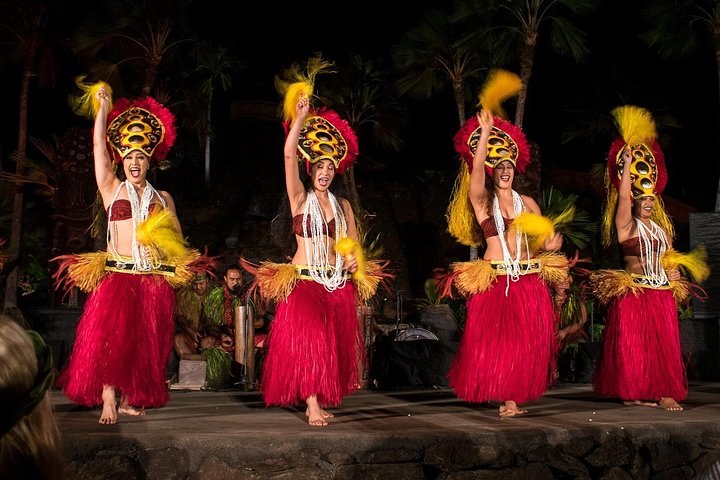
Oahu: Chief's Luau Admission
Attend a luau on Oahu produced by the Original World Fire Knife Dance Champion, Chief Sielu. During this 3 to 3.5-...

Oahu: Germaine's Luau
Come visit us at Germaine's Luau, where you will experience a traditional Hawaiian Luau on our beachfront property o...
Paina Waikiki Luau at Waikiki Beach Marriott
Everything that makes renowned Waikiki, Oahu, a unique and exciting place is celebrated at Pāʻina Waikīkī!A u...
How Waikīkī Changed From Royal Retreat to Resort
Before Waikīkī filled with hotels and beach chairs, it served a very different role. You’d have found a place once separated Waikīkī from Honolulu by wetlands and fishponds, yet close enough for royalty to escape there after its brief time as the kingdom’s capital. On Oʻahu, places like the Ko Olina Lagoons also show how coastal spaces can become beloved visitor destinations.
- In the 1800s, you could hear surfboards slap the water as Waikīkī became famous for surfing.
- Small lodgings appeared by the late 1800s, including Sans Souci, renamed by George Lycurgus in 1893.
- The Ala Wai Canal changed everything from 1921 to 1928 by draining marshy land and opening room to build.
- By 1955, high-rises rose fast, and later icons like Hilton Hawaiian Village, the Moana Surfrider, and the Royal Hawaiian defined the shoreline visitors recognize today.
- Today, travelers interested in Oʻahu’s layered past can also explore sites beyond Waikīkī through a Pearl Harbor tour that adds historical context to a broader Honolulu visit.
- For a different kind of ocean experience, Oʻahu also offers cage diving tours that have become popular with adventure seekers.
What Waikīkī Represents in Hawaiʻi Today
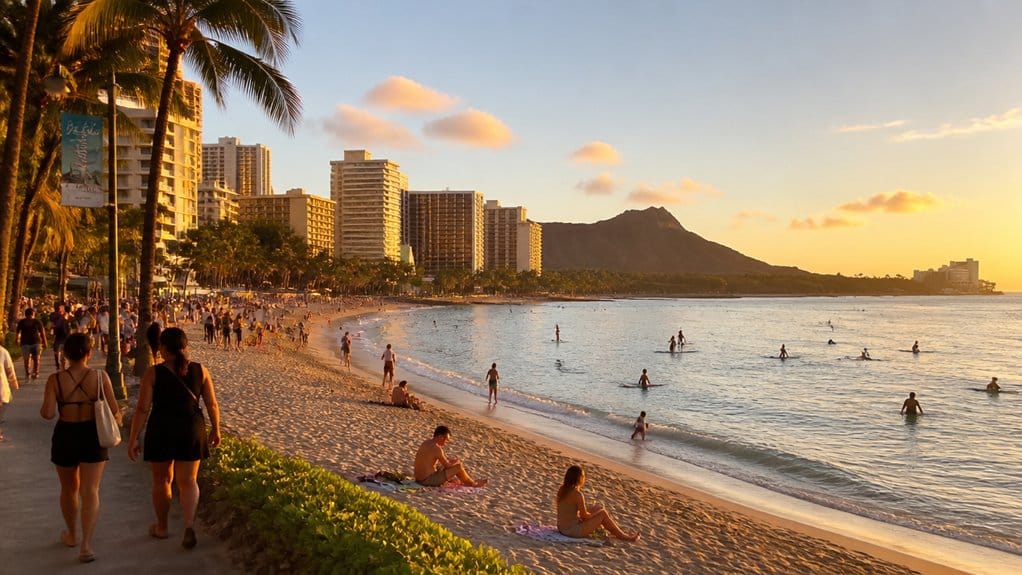
Today, Waikīkī stands for more than a famous beach strip. When you hear its meaning, “spouting fresh water,” you’re hearing an old description that still shapes the place. The name points to springs and streams that once fed wetlands and set Waikīkī apart from Hawaii’s interior.
You can still trace that coastal identity from the Ala Wai Canal toward Diamond Head, with the beachfront at its heart. You also see why Waikīkī remains a living Hawaiian gathering place. Cultural events fill the neighborhood year round, so traditions stay visible beside surf schools and hotel towers. Modern Waikīkī also represents global beach culture, thanks in part to Duke Kahanamoku’s surfing legacy. Even the Hawaii Tourism Authority promotes that mix of roots, waves, and postcard shine, with barely a dry towel.
Frequently Asked Questions
How Do You Pronounce WaikīKī Correctly in Hawaiian?
You pronounce Waikīkī as wahy-KEE-kee, with both long ī sounds held evenly. Use local speech guidance, avoid common mispronunciations today, and follow modern pronunciation tips. You won’t need a Learn Hawaiian glottal stop here.
What Is the Difference Between WaikīKī and Waikiki Spelling?
Like a hashtag, you’ll see Waikīkī as the accurate Hawaiian spelling with macrons, while Waikiki drops them. You’re still naming the same place; Waikiki name origins and Waikīkī royal connections don’t change, just pronunciation precision.
Are There Still Freshwater Springs Visible in WaikīKī Today?
No, you won’t clearly see freshwater springs in Waikīkī today. Ancient water sources mostly disappeared through development and canal dredging, though you can still trace their history. Modern spring preservation remains limited in the resort district.
Which Ancient Hawaiian Chiefs Lived or Visited WaikīKī?
You’ll find Kahekili and Prince Jonah Kūhiō tied to Waikīkī; coincidentally, Kānaka Maoli history also remembers early aliʻi residents through royal canoe landings, while Waikīkī royal visits preserved chiefs’ names, status, and enduring cultural memory.
What Are the Best Cultural Sites to Visit in WaikīKī?
Visit Kapiolani Park for monuments, Waikīkī Beach for Duke’s statue, Kūhiō Beach Park for performances, and Bishop Museum to Learn History of Waikīkī. You can Experience Royal Palaces nearby and Explore Honolulu Night Market, too.
Conclusion
So when you hear Waikīkī, you’re not just hearing a beach brand. You’re hearing fresh water push through old wetlands, rustle taro leaves, and slip under today’s sidewalks and hotel towers. You can walk the strip in sandals, iced coffee in hand, and still catch the echo if you listen past the traffic. Not bad for a place famous for pool decks. Waikīkī still means spouting fresh water, and that older story quietly keeps the shoreline honest.
Oahu: The Magical Mystery Show! at Hilton Waikiki Beach Hotel
Step back in Hawaii's history to 1881 when King Kalakaua visited London. You've found the hidden gem of Oahu. This is Honolulu’s #1-rated evening sh...
Oahu Ka Moana Lūʻau at Aloha Tower Oceanfront Luau Show
Ka Moana Lūʻau – Oceanfront Hawaiian Luau in HonoluluExperience the spirit of Hawaiʻi at Ka Moana Lūʻau, a...
Paina Waikiki Luau at Waikiki Beach Marriott
Everything that makes renowned Waikiki, Oahu, a unique and exciting place is celebrated at Pāʻina Waikīkī!A u...