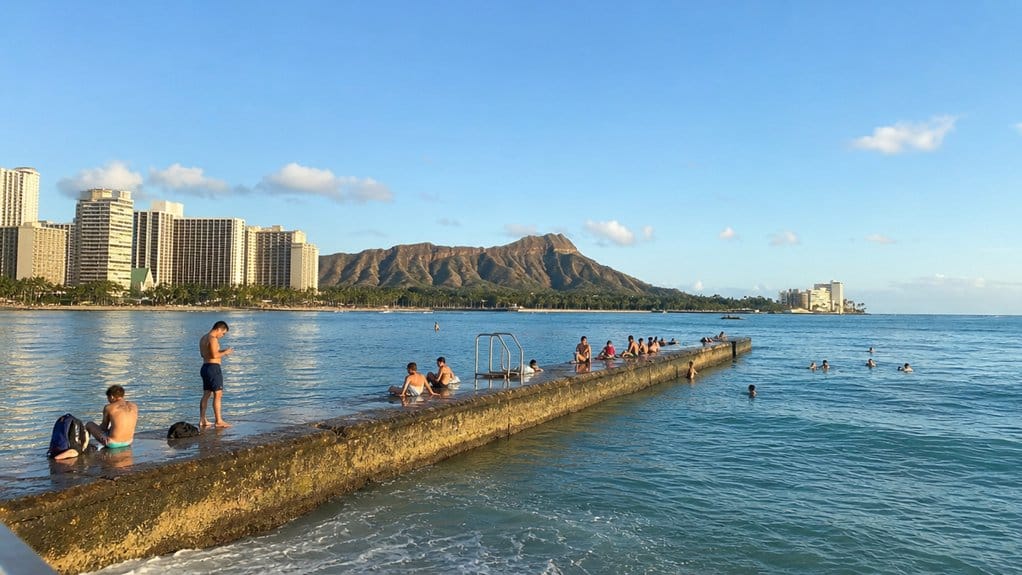
If you spot a low wall stretching along Waikiki near Diamond Head, you’re looking at one of the beach’s quiet engineers. Built in 1951, the Waikiki Wall and its Kapahulu Groin push into the water like a giant sand catcher, holding the shoreline in place and calming the inshore surf. You’ll see gentler water on one side and shifting ocean energy on the other. That contrast is where the story gets interesting.
Key Takeaways
- Waikiki Wall is a seawall-like shoreline structure at the Diamond Head end of Waikiki Beach near Kapahulu Avenue and Kuhio Beach.
- Built in 1951, it was designed to catch drifting sand and help stop Waikiki from losing its beach.
- The structure, also called the Kapahulu Groin, extends from shore into the ocean like a long concrete barrier.
- It acts like a giant sand catcher, holding more than 100,000 cubic yards of imported beach sand in place.
- By slowing and redirecting currents, it creates calmer water on one side and rougher surf beyond the wall.

Waikiki Glass Bottom Boat Cruise
Experience the beauty of Oʻahu South Shore as we sail toward Lēʻahi (Diamond Head) aboard the spacious Haleiwa Queen, a 50ft power catamaran, with...

Waikiki 2 Hour Sunset Sailing Catamaran Swim and Sail Adventure
There’s no better place to take a dip than the crystal-clear waters of Waikiki—and no better way to experience a...

Parasailing Experience in Waikiki, HI
Experience the thrill of Oahu parasailing on this unforgettable 1-hour adventure from Waikiki. Soar up to 1,000 feet...

Oahu: Atlantis Submarine Adventure in Waikiki
Explore Waikiki’s marine mysteries while diving more than 100 feet underwater in an air-conditioned, eco-friendly...
What Is Waikiki Wall?
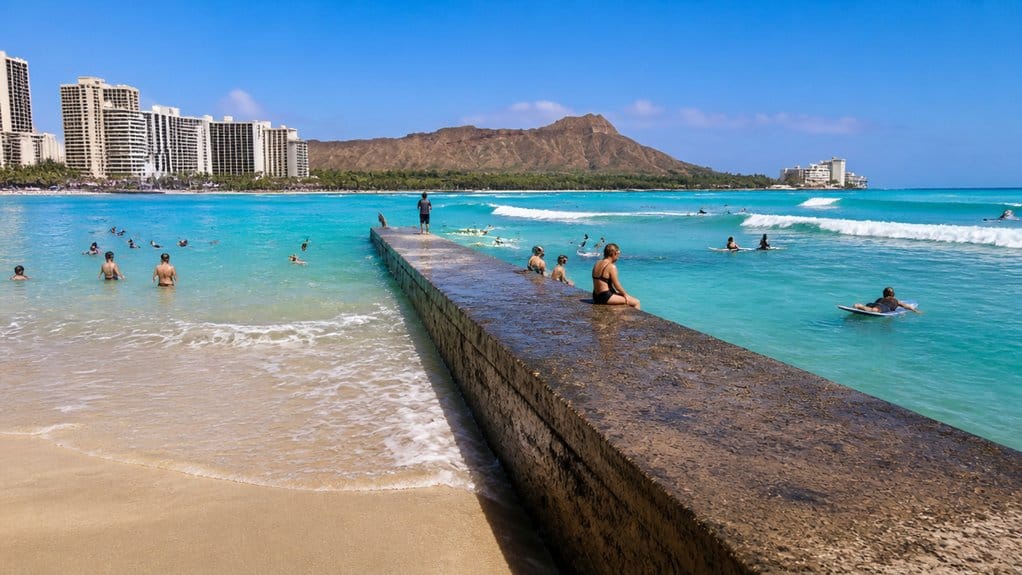
What exactly is Waikiki Wall? You’re looking at the Kapahulu Groin, a long concrete barrier that reaches from shore into the ocean and quietly shapes the beach experience. Built in 1951, it works like a giant sand catcher. It helps hold more than 100,000 cubic yards of sand in place instead of letting waves sweep it away. Like many Oahu shorelines, nearby ocean conditions can shift with currents and conditions, so swimmers should always assess the water before entering.
If you’re planning a wider Oahu itinerary, Pearl Harbor is on the same island, making it easy to pair historic sightseeing with beach time in Waikiki.
You can also think of it as a split personality landmark. On the inshore side, the water turns calmer and more protected. On the ocean side, surf lines up and breaks. Visitors arriving through Honolulu Airport often head straight to Waikiki to see landmarks like this soon after landing. That contrast gives the Waikiki Wall its character. You can walk out easily, feel the rough concrete underfoot, hear water slap both sides, and watch surfers, swimmers, and sunset fans claim their favorite spots. It’s practical, scenic, and a little iconic too.
Where Is Waikiki Wall Located?
You’ll find Waikiki Wall at the Diamond Head end of Waikiki near Kapahulu Avenue and Kalakaua Avenue, right by Queen Kapiolani Park and the Honolulu Zoo. It stretches into the water beside Kuhio Beach and Waikiki Beach, so when you walk along Kalakaua Avenue, it’s hard to miss the long concrete line cutting into the surf. Nearby, a Waikiki Beach map can help you spot where to swim, surf, and find shade along this stretch of shoreline. You can get there easily by heading to 151 Kapahulu Avenue or taking TheBus routes #2, #13, or #22 to Kuhio Avenue and walking a few minutes. If you plan to visit Diamond Head before or after, check the fees and hours in advance so you can time your stop more easily.
Waikiki Beach Position
If you’re walking east along the Waikiki beachfront, the Waikiki Wall appears at the north end of Waikiki Beach where Kuhio Beach meets the more open stretch of Waikiki proper. You’ll spot this breakwater near Kalakaua and Kapahulu, close to the Honolulu Zoo and the Kapiʻolani Beach connection.
- It marks the edge between Kuhio Beach and Waikiki proper.
- It creates calmer water on the Kuhio side.
- It faces rougher, surfier water beyond the wall.
- It extends from shore into the ocean at Waikiki.
From the pier and walkway area near the zoo, you get a clear look at the Waikiki Wall stretching into the water. On one side, waves soften. On the other, the ocean sounds busier and a little bolder. It’s a handy visual cue, not a treasure map. The calmer side near Kuhio Beach helps make it the easiest spot to swim in this part of Waikiki. Many visitors recognize this stretch as one of Waikiki’s top swim areas because of the gentler conditions created by the wall. Travelers comparing nearby water activities often weigh this calmer shoreline against a Waikiki snorkel cruise when deciding how to enjoy the ocean.

Waikiki Parasailing in Hawaii from Oahu
Experience the thrill of parasailing over Hawaii’s stunning coastline as you glide above crystal-clear waters and...

Waikiki 2 Hours Friday Night Fireworks Catamaran Cruise
Enjoy the spectacular FRIDAY NIGHT FIREWORKS show along the beautiful coastline of Waikiki while we get up close and...

Oahu 5-in-1 Deluxe Cruise: Turtle Snorkeling & Ocean Activities
In addition to the amazing turtle snorkeling in the beautiful waters of Waikiki, our 135-passenger boat offers a uni...
Getting There Easily
Where exactly is the Waikiki Wall? You’ll find it in Waikiki on Oahu near the corner of Kapahulu Avenue and Kalakaua Avenue, right by Waikiki Beach. If you know the Honolulu Zoo, you’re close already. The wall sits a quick walk away, just across Queen Kapiolani Park, where palms sway and traffic hums nearby.
If you’re driving, plug 151 Kapahulu Avenue, Honolulu, HI into your GPS. Zoo parking is usually the closest option, though spaces disappear fast at busy times. Nearby access roads can also get backed up around the Diamond Head tunnel area during peak hours. If you’re taking the bus, routes #2, #13, and #22 stop along Kuhio Avenue, followed by a short walk. From Ala Moana, #23 and #24 make easy connections. Best part? There’s no entry fee, and once you’re in the area, walking is easiest. If you’re planning a bigger Oahu itinerary, a Pearl Harbor private tour can be a useful upgrade for timing and convenience on another day. If you’re exploring more of Honolulu afterward, popular Downtown Honolulu Walking Tours often include stops like Iolani Palace, the Kamehameha Statue, and Chinatown.
How Waikiki Wall Shapes the Beach
Although it looks like a simple concrete line in the water, the Waikiki Wall quietly remade the beach. Built in 1951, the Waikiki Wall works like a giant sand catcher. You see the result underfoot: a broader, smoother shoreline held in place by more than 100,000 cubic yards of imported sand.
- It slows and redirects currents.
- It helps hold the beach together.
- It pairs with the offshore breakwater.
- It creates distinct water zones.
Together, those structures form a protected inshore lagoon where waves feel smaller and family swim conditions stay gentler. Step farther out, though, and the ocean side changes character fast. Water energy builds. Surf breaks appear. That means you can move from calm, shallow water near shore to more active wave zones within the same Waikiki stretch. Pretty clever for plain concrete.
Best Things to Do at Waikiki Wall
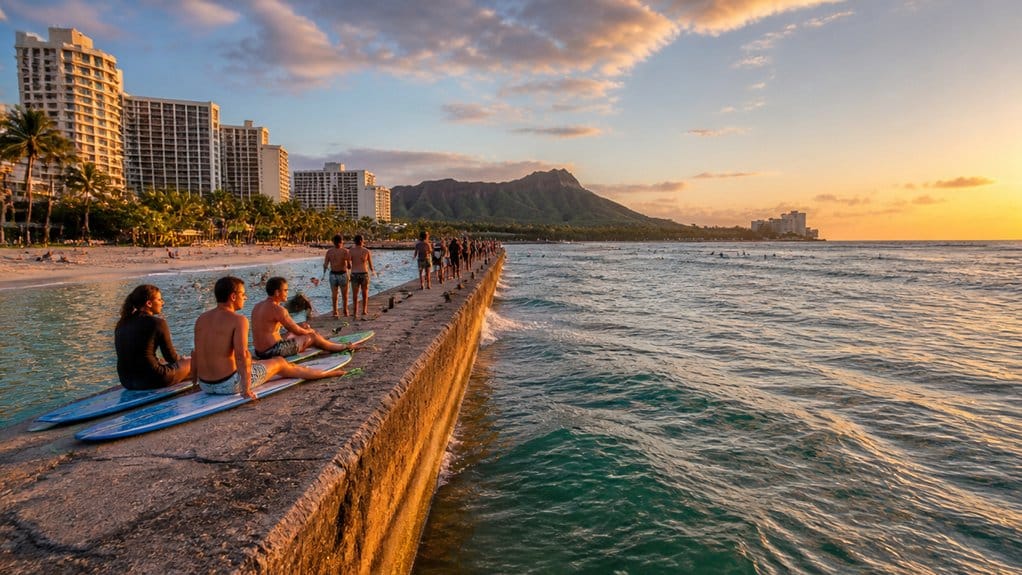
That protected water shape doesn’t just change the beach. At Waikiki Wall, you can actually use it. The calmer side is great for beginner surfing, especially if you want easy longboard-style rides without getting tossed around. You can also try stand-up paddleboarding, kayaking, or bodyboarding nearby. If you bring a mask, snorkel along the wall and look for bright tropical fish. You might even spot a sea turtle cruising past. The area is also known for calm reefs and clear water, which makes casual snorkeling even more inviting. Snorkelers often appreciate clear, calm water here because it can make visibility better for spotting marine life. If you want the best snorkeling conditions, go earlier in the day when clear water is often at its best.
Stay on land and Waikiki Wall still delivers. Walk out for sunset photos near the Waikiki end by the Honolulu Zoo and watch the sky shift from orange to pink to purple. Spread out a picnic, roll into beach yoga, or take a moonlit stroll beside the wash of waves. Check local surf conditions and event calendars too.
Still comparing Waikiki Wall?
Ask for tour ideas, hotel suggestions, or a simple trip plan that combines both.
Trip Helper
Best Time to Visit Waikiki Wall
You’ll catch Waikiki Wall at its prettiest around sunset, when the sky turns orange, pink, and purple and the concrete edge frames the water like it knows you brought a camera. If you want a quieter visit, go early in the morning, when the crowds are thinner and you can hear the surf, watch the surfers, and ease into the day. For a fuller coastal experience, pair your stop with a sunrise route or sunset stroll along Waikiki Beach Walk. On busy event days and in summer, plan ahead because the wall fills up fast and the waves can get punchy before you’ve even found your footing.
Sunset For Best Views
At sunset, Waikiki Wall shows off its best angle. You’ll watch the pier and breakwater frame Waikiki Beach while the horizon turns orange, pink, and purple. For classic views, head to the concrete pier area along Kapahulu Avenue near the Honolulu Zoo. You can walk over through Queen Kapiolani Park. Bring your camera, not your swim plans. This hour is mostly about photos and looking out.
- Arrive a little early to claim your spot
- Expect crowds as the light gets better
- Try the pier for the strongest framing
- Plan parking before you circle forever
Waikiki Wall feels busiest at sunset, so timing matters. During daylight, lifeguards are usually on duty, but this window is really for viewing. Settle in before the sun drops, and let the colors do the work.
Early Mornings For Calm
Often, the best time to visit Waikiki Wall is early morning, when the shoreline feels quieter and the day hasn’t revved up yet. You get fewer people, softer light, and a calmer mood before beach energy starts humming. If you surf, the gentler waves near the wall create a friendlier setup for beginners and longboarders. For visitors planning a full day, knowing realistic estimates for nearby hikes can help you pace your morning well.
You can also claim a peaceful photo spot. Morning light sharpens views of the concrete pier and the lagoon-like water beside Waikiki. Families usually appreciate this hour too. The protected shallows feel more relaxed, so you can keep an easy eye on kids without the midday swirl. Lifeguards are generally on duty during daylight hours, which adds reassurance. Show up early and you’ll likely have an easier time parking near the zoo. If you are staying elsewhere on the island, TheBus can also be a practical way to reach Waikiki without dealing with parking. For visitors planning more adventure later, Oahu also offers ATV tours as one of the island’s top off-road experiences beyond Waikiki.
Event Days And Crowds
Usually, Waikiki Wall gets its biggest crowds near sunset, when people line the pier and shore for that classic sweep of Waikiki Beach and the open ocean. On event days, expect even more buzz. Surf contests and cultural festivals pull in extra foot traffic, and parking near the Honolulu Zoo fills fast. Summer adds bigger waves, more surfers, and families watching the protected Kuhio Beach side. Oahu’s monthly festivals can also boost visitor numbers in Waikiki, so it helps to know what’s worth planning around. For fewer people overall, target shoulder season months like April, May, September, or October.
- Come early for quieter photos
- Check Waikiki event calendars first
- Expect pay lots to fill quickly
- Watch both surf and shoreline action
If you want more elbow room, aim for early morning. You’ll hear softer surf, see fewer selfie sticks, and get easier views along the wall. Sunset is gorgeous, but if crowds aren’t your thing, timing matters. Think of it as Beach strategy, not luck. On major North Shore surf days like Banzai Pipeline, Oahu’s surf buzz can draw extra attention island-wide.

Pearl Harbor Complete Experience Passport
Visit All 4 Museums in One day on this tour, tickets and admissions are included. See how the US entered into and en...

Oahu: Roundtrip Shuttle From Waikiki to Dole Plantation & Haleiwa
Skip Circle Island and visit two of the most popular places to visit here on the Island of Oahu. Experience a unique...

Waikiki Snorkeling & Ocean Waterpark Adventure from Oahu
Skip the crowded snorkel tours and experience Oahu’s ultimate ocean adventure for families, couples, and guests of...
Waikiki Wall Safety Tips
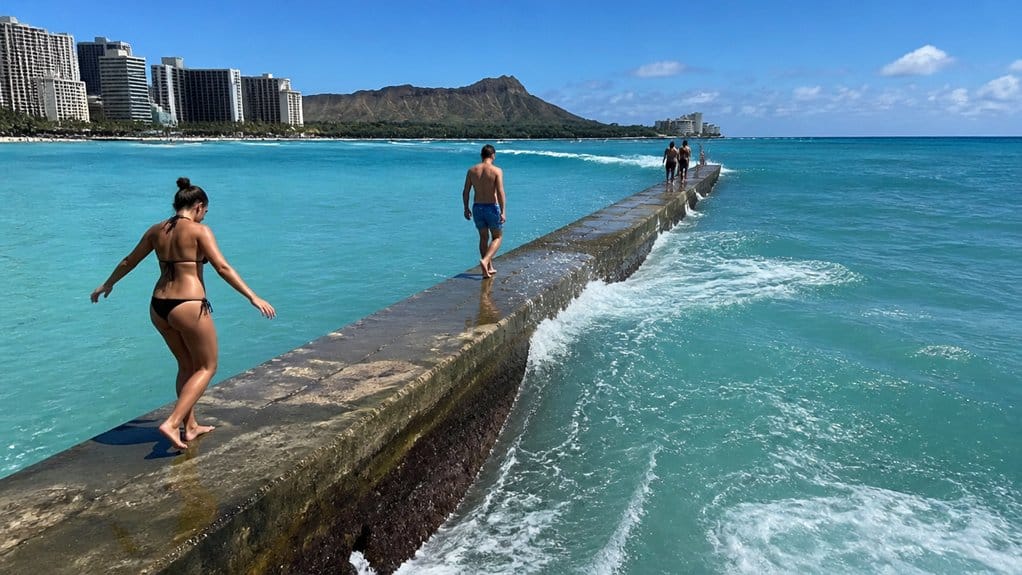
Before you head onto the Waikiki Wall, check the local surf report and read the lifeguard signs, because the water can shift fast when the swell starts building. Follow posted guidance and stay alert if waves look larger than expected. The Wall may seem calm from shore, but currents can sneak around it. You can also check ocean alerts before your visit for unusual conditions or tower closures.
Skip climbing or jumping from the concrete wall or pier unless you’re in a supervised area. Wet surfaces get slick, and the break can change fast. If surf is forecast near 10 feet, pay extra attention to official advisories for south-facing shores in Hawaiʻi. If you swim in the protected water, keep watching the surface for stronger movement. Oahu swimmers should stay aware of rip currents, even in spots that appear protected or calm. Swim in daylight when lifeguards are usually on duty, and use extra caution at dusk. Keep your bag and sandals close too. This stretch gets busy, and a wandering flip-flop can vanish faster than your beach snack.
How to Get to Waikiki Wall
Once you’ve got the safety basics in mind, getting to Waikiki Wall is remarkably simple. You’ll find it at 151 Kapahulu Avenue in Honolulu, near the Honolulu Zoo and just beyond Kuhio Beach. From Waikiki, you can stroll across Queen Kapiʻolani Park and reach the Wall in minutes. As you cross the park, you’ll be passing through Kapiʻolani Regional Park, a 200-acre public space dedicated by King David Kalākaua in 1877. It’s also a convenient starting point for a Kapiolani Beach Park day if you want to extend your visit beyond the Wall.
- Ride TheBus routes #2, #13, or #22 along Kuhio Avenue.
- Coming from Ala Moana? Hop on #23 or #24.
- Drive and use the Honolulu Zoo parking lot.
- Set your GPS to 151 Kapahulu Avenue for easy directions.
Once you arrive, expect a quick walk from the zoo area. The route feels easygoing, with palms, passing surfers, and the low hush of traffic. Nearby parking disappears fast, so don’t test your luck unless circling blocks sounds fun today. If you’re planning a bigger beach day afterward, it helps to think about the best time to go for Oʻahu’s most popular shorelines.
Why Was Waikiki Wall Built?
Although it looks like a simple seawall, Waikiki Wall was built for a very practical reason: Waikiki kept losing its sand. You’re seeing a shoreline shaped in 1951 to catch drifting sand and hold over 100,000 cubic yards of imported beach. That helped create today’s postcard view. Visitors exploring Oahu’s swim spots can see how engineered shorelines like this also help make some beach areas feel more accessible.
| Why it mattered | What you notice |
|---|---|
| Sand washed away | Wider beach |
| Built in 1951 | Engineered shoreline |
| Caught imported sand | Softer place to lounge |
| Changed currents | Calmer swimming water |
| Affected sea life | Trade-offs, rights reserved |
When you stand there, you’re looking at a tool, not just a wall. It changed how water moved, which also shifted marine habitat nearby. Similar shoreline management goals appear in nearby planning efforts that include sand replenishment to address erosion and sea level rise. Even so, it still helps protect Waikiki’s shore and makes the water feel friendlier for families today. Travelers planning a broader Honolulu stop can also use a 10-step visit plan to organize nearby neighborhood outings.
Frequently Asked Questions
Is Waikiki Wall Suitable for Beginner Snorkelers?
Yes, you’ll find Waikiki Wall suitable for beginner snorkelers on the protected Kuhio Beach side, where gentler waves help. Stay shallow, check conditions, use Safety equipment, snorkel by daylight, and don’t go without a buddy.
Are There Restrooms Near Waikiki Wall?
Yes, you’ll find restrooms near Waikiki Wall, like welcome pit stops after sun and surf. Nearby Amenities also include outdoor showers by the walkway near the zoo side, and you should go early during busy hours.
Can You Fish From Waikiki Wall?
Yes, you can fish from Waikiki Wall, and you’ll often find anglers there. Check posted rules, watch swimmers and surf, and use caution while casting. Tuna Presence varies, so review local advisories before you go.
Is Waikiki Wall Wheelchair Accessible?
Yes, you’ll find wheelchair access a million times easier along the paved shoreline paths, where you can enjoy Scenic Views for free. Stick to flat viewing areas, use nearby amenities, and ask daytime lifeguards about current accessible routes.
Are There Lifeguards Stationed at Waikiki Wall?
Yes, you’ll usually find lifeguards stationed at Waikiki Wall during daylight hours. You should still follow Safety guidelines, check surf conditions before swimming or surfing, and confirm current coverage times on-site or at a nearby station.
Conclusion
So now you know Waikiki Wall is more than a wall, which is a neat bit of island irony. You come for a beach view, then find a long concrete barrier quietly shaping the sand, the currents, and your swim. You can walk out, hear waves slap the edge, and watch calm water shimmer on one side. It’s easy to reach, easy to enjoy, and oddly good at making paradise look effortless for visitors every single day.

Oahu Grand Circle Island Experience from Waikiki
Enjoy Grand Circle Island experience tour with breathtaking views of Amelia Earhart Lookout on Diamond Head, admire Chinaman’s Hat in front of Kualo...

Waikiki: 2-hour Turtle Canyon Snorkeling Adventure
Join us for a 2-hour snorkeling adventure at Turtle Canyon, one of Oahu’s top snorkeling spots! Cruise along the s...
Waikiki, Hawaii: Turtle Canyon Snorkel Excursion
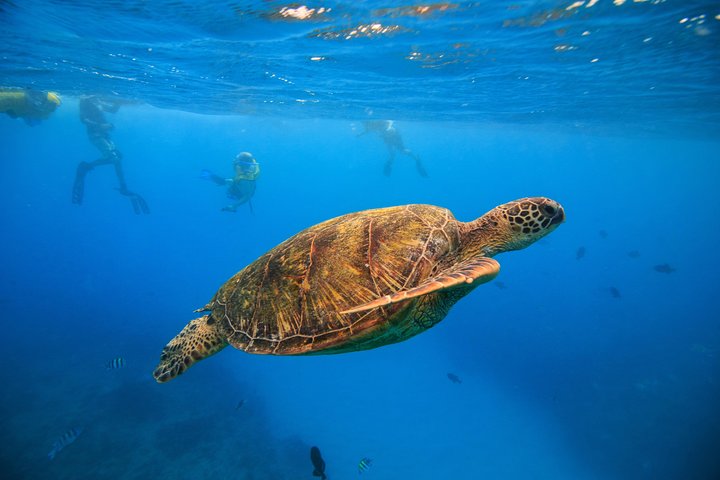
Discover the magic of snorkeling with Hawaiian Green Sea Turtles at Waikiki’s famous Turtle Canyon. On this 2-hour...

Oahu: 60 Min Royal Crown Helicopter Tour - Doors Off or On
See every stunning sight on Oahu from the white sands of Waikiki to the epic big waves of Norh Shore on our incredib...